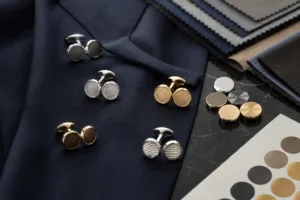
Screen Printing and UV Printing on Metal Badges
Modern brands want metal badges that stand out—vivid colors, crisp lines, and durability that matches their image. Two leading methods deliver on this promise: screen printing and UV printing. When complex logos, photo-style graphics, or tiny details are required, choosing the right technique makes all the difference. This guide explores both methods in depth, compares their strengths, and helps you decide the best path for your next project.
Understanding Screen Printing on Metal Badges
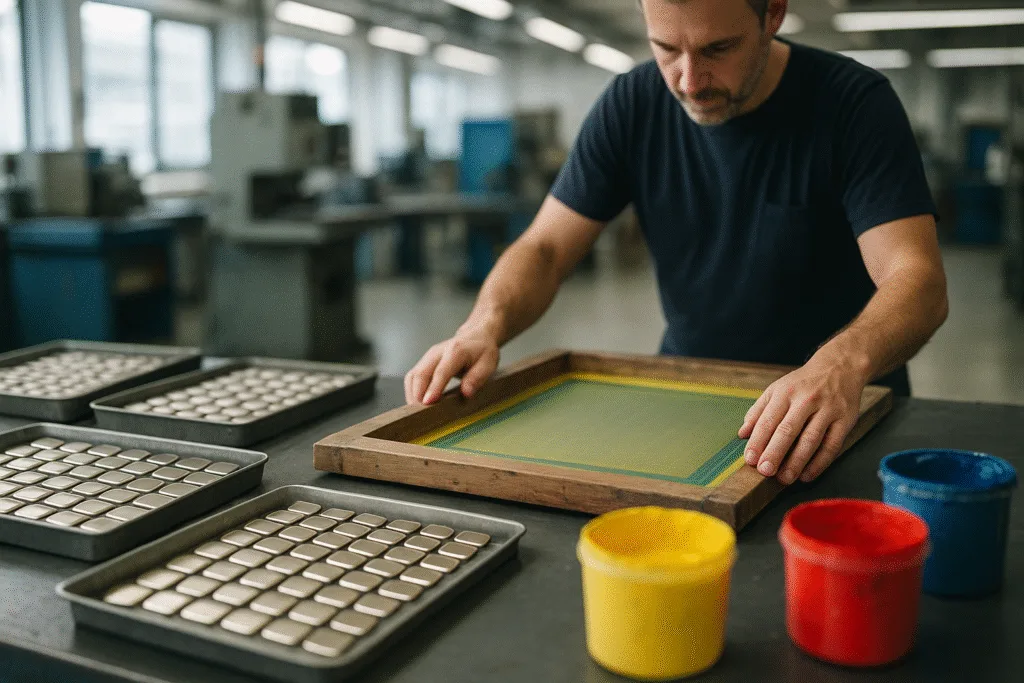
Screen printing is a classic method used on metals like zinc alloy, brass, stainless steel, iron, and aluminum—ranging from 0.5 mm to 2 mm thick. It starts with a tightly stretched mesh screen. Technicians add a stencil for each color, then press special inks through the mesh onto the prepared metal surface. Each color layer dries individually, usually cured by heat. This method delivers sharp lines, accurate Pantone color matching, and solid fills.
Materials and Inks
Screen inks must bond strongly to metals. Epoxy-based and two-component polyurethane inks resist abrasion and everyday use. Gairun uses baking ovens for optimal ink adhesion, often checked using ASTM D3359 cross-hatch tape tests.
Color Performance and Detail
Screen printing delivers excellent results for two to four spot colors, with line thickness down to 0.15-0.2 mm. However, complex photo effects or tight fades have limits. Each additional color means more screens, making multi-color artwork more expensive and time consuming.
Durability
With proper inks and post-bake curing, screen printing resists moderate abrasion, sweat, and UV exposure. An added epoxy dome (a clear resin layer) can further protect the design on sports medals, nameplates, or club badges.
- Best for: Simple logos, bold colors, low to medium quantity runs
- Finish options: Matte, semi-gloss, gloss (depends on clear coat used)
- Typical MOQ: 100 pieces and up for cost efficiency
What Is UV Printing on Metal Badges?
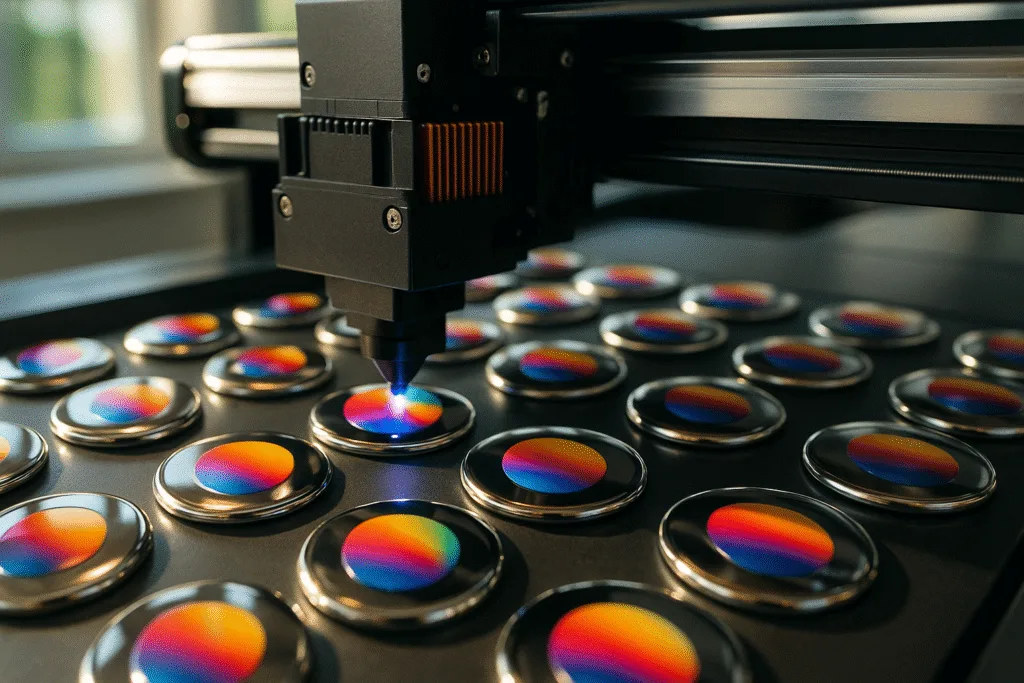
UV printing, also called UV digital printing or UV inkjet, is a modern digital process. Printers deposit liquid inks directly onto flat metal surfaces, then instantly harden them using ultraviolet light. This system allows the reproduction of full-color CMYK graphics, gradients, shadows, and fine photographic artwork in one pass—no mesh screens or color separations required.
Materials and Process
Aluminum (both anodized and raw), stainless steel, and electroplated brass cooperate well with UV printing due to their smoothness. Surface pretreatment ensures ink anchoring, and white ink can be printed beneath color for strong opacity on dark substrates.
Color Accuracy and Detail
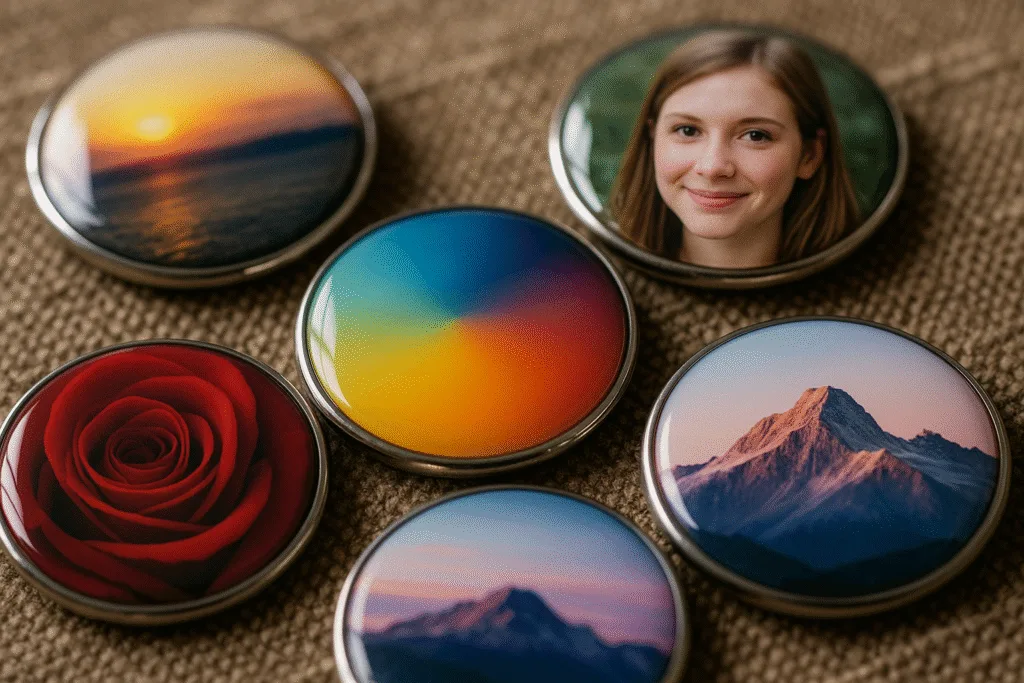
With high-resolution heads, UV printing achieves minimum line thicknesses as fine as 0.1 mm and supports pixel-sharp, continuous-tone images. It can reproduce gradients, tiny type, and four-color photos—ideal for sponsor badges, award medals, or branded luggage tags featuring complex art or QR codes.
Durability and Testing
UV prints are cured instantly to resist smudging or scratching on day-one use. After curing, most prints meet 250–500 hour salt-spray test standards (ASTM B117) for corrosion, and colorfastness tests (ΔE<2) ensure the design won’t fade quickly. For high-wear items, Gairun often recommends a scratch-resistant clear UV overcoat.
- Best for: Multicolor artwork, photorealistic logos, small and variable runs
- Finish options: Matte, gloss, textured effects depending on ink and primer
- MOQ: As low as 1–10 pieces, great for small-batch prototyping or personalization
Main Differences: Screen Printing vs. UV Printing on Metal Badges
Both methods have strengths, but the choice depends on design needs and application. The table below highlights the key comparison points relevant to badge buyers and brand managers.
| Feature | Screen Printing | UV Printing |
|---|---|---|
| Color Range | Solid spot colors, up to 6 (Pantone) | Full color (CMYK), gradients, photorealistic images |
| Minimum Line Thickness | 0.15–0.2 mm | 0.1 mm |
| Durability | Strong with correct ink/bake, enhanced with epoxy dome | Excellent outer durability, improved with clear UV overcoat |
| Setup & Lead Time | New screen per color, longer prep | Digital file only, fast prototyping |
| Low MOQ Suitability | 100 pieces and up | 1–10 pieces possible |
| Cost for Multicolor | Higher—more colors = higher cost | Flat pricing—complex art at no extra charge |
| Best Use Cases | Classic logos, branded badges, simple medals | Photo badges, event medals, variable data, QR codes |
Printing vs. Enamel: Which Wins for Complex Logos?
Traditional soft or hard enamel infills, poured into engraved metal cavities, work best for bold logos and simple color blocks. However, there are limitations. Minimum metal lines must be at least 0.2–0.3 mm to prevent color bleeding, and each color is sharply separated by a metal ridge. Enamel can’t reproduce fine halftones or photographic images.
Printing—especially UV printing—outshines enamel for:
- Very fine lines or small text: Digital heads lay down color without the need for separating ridges.
- Complex gradients or photo artwork: Full CMYK control means subtle fades and high-resolution logos are crystal clear.
- Multiple logos or serial numbers: Digital print files allow infinite artwork variations at no extra setup cost.
When to Choose Printing Over Enamel
- The logo has blended colors, shadows, or detailed illustrations.
- The artwork includes photographic images or QR codes.
- The project involves short runs or individual personalization.
- Your badge design needs to match exact brand Pantone or digital color references.
- You require microtext or secure anti-counterfeit features—UV can handle fonts down to 0.1 mm height.
Expert insight: “For creative agencies, complex sponsor logos, or commemorative badges with photos, UV printing delivers unmatched clarity and color reproduction. Enamel remains king for tactile depth and a timeless, jewelry-like appearance.”
Screen Printing and UV Printing on Metal Badges
Choosing between screen printing and UV printing depends on the design, finish, and batch size needed. For clothing brands, race medals, corporate ID badges, or high-quality promotional gifts, both deliver professional results—when used wisely.
Key Factors to Consider
- Color accuracy: UV printing achieves photographic and ultra-precise Pantone matches; screen is robust for solid, classic colors.
- Complexity: Bold, simple art favors screen; highly detailed, photographic, or variable designs favor UV.
- Volume and cost: Large, repeat orders often lean to screen for best value; UV fits prototypes or signature pieces.
- Finish and durability: Both methods can be sealed with epoxy domes or clear topcoats for heavy-use items.
Gairun specializes in both screen and UV processes, ensuring durability with thorough surface prep, ink adhesion tests, and surface finishes certified to RoHS/REACH and CPSIA standards where needed.
How Badge Design Affects Printing Choices
The badge base matters. High-polish or satin-plated backgrounds reflect light differently. Etched surfaces reduce glare, helping colors appear richer. Pre-treated stainless steel or aluminum ensures crisp ink lines by minimizing surface tension and beading.
Mounting and After-Treatment
Printed badges can be fitted with butterfly clutches, magnets, or industrial adhesives like 3M VHB for quick display. Medals often use ribbon mounts, with packaging options from polybags to velvet-lined display boxes. For harsh environments, ask for UV-stable doming resin or double-layer topcoats for the best wear resistance.
Applications: Where Printing on Metal Badges Shines
Screen and UV printed badges serve industries where style and details matter. These are just a few real-world scenarios:
- Sports events & marathons: Event medals feature sponsor logos, variable text, and color-rich iconography.
- Corporate branding: ID badges and branded labels for uniforms or merchandise, often requiring personalization.
- Souvenirs & tourism: City crests, landmark artwork, or QR codes linking to digital tours.
- Promotional electronics: High-tech gift tags or product authentication badges benefit from microtext and photo-quality labels.
For designers aiming to make an impact, working with OEM/ODM partners like Gairun provides flexibility across production runs, as well as guidance on optimizing thickness, substrate, finish, and compliance.
Quality Assurance: What to Look for in a Reliable Manufacturer
For perfect printed badges and medals, select suppliers with ISO-certified workshops and modern, dust-controlled print rooms. Tolerance control (±0.05 mm), adhesion and plating thickness tests, and AQL sampling under ANSI/ASQ Z1.4 keep batch quality high. Ask for a color proof or sample before mass production. For wearable items, confirm EN 1811 testing to check nickel release.
Ordering Metal Badges: Steps from Artwork to Delivery
The process begins with artwork confirmation, followed by substrate sample and surface prep. Screen or UV print files are separated and proofed. Production includes careful ink or resin mixing, test runs to verify color density and adhesion, then full batch printing. Finished badges are inspected, packed, and shipped with clear documentation for customs and brand use.
Frequently Asked Questions
What’s the minimum order quantity for printing on metal badges?
UV printing allows for extremely low minimums—even one piece—while screen printing usually starts at 100 pieces for cost efficiency.
How durable are UV printed badges compared to enamel?
UV prints are highly durable and resist daily abrasion. For extra protection, a clear UV overcoat or epoxy dome can be added, making them hardy for long-term wear.
Can screen or UV printing match exact Pantone colors?
Both methods offer Pantone matching. Screen uses spot color mixing, while UV achieves precise colors through full CMYK plus white overlays for strong bases.
Which printing method is best for photo-style logos or complex gradients?
UV printing captures full-color photographic images and detailed gradients, making it ideal for intricate or realistic logo designs on metal badges.
Does UV or screen printing work on all metal types?
Both techniques work on most badge metals, including zinc alloy, stainless steel, brass, iron, and aluminum. Surface preparation and pre-treatment match ink type to the substrate.
What finishes can be added to printed metal badges?
Badges can be topped with matte, gloss, or epoxy domes. Electroplating (like gold, nickel, or matte black) and textured backgrounds are also available for extra effect.