Unveiling Ribbon and Accessory Assembly for Medals: Loops, Rings and Ribbons Explained
Medals represent achievement, honor, and pride—whether awarded at sports events, corporate ceremonies, or military parades. But a medal’s impact is not just in its design or metalwork. The ribbon assembly, attachment accessories, and how these elements are combined play a critical role in presentation, durability, and practicality. From the vibrant colors of custom medal ribbons to the subtle engineering of jump ring assembly, every detail speaks to quality and intention.
This guide explores the full spectrum of medal ribbon attachment, comparing materials, assembly processes, and choosing the best options for various occasions. With insights from manufacturers like Gairun, known for their craftsmanship and strict standards, you’ll gain a clear path to designing and sourcing perfect medal accessories—built for both aesthetics and performance.
Understanding Medal Ribbons: Foundations of Award Assembly
The ribbon is often the first thing people notice when a medal hangs around someone’s neck. Its color, sheen, width, and texture set the tone for the entire award. Selecting the right ribbon is both an art and a science, balancing tradition, function, and the intended message.
Ribbon Widths: Standard Choices and Their Uses
- 15mm–20mm: Common for children’s and small commemorative medals.
- 25mm: Standard for marathon, sports, and most corporate awards—offering a substantial look and comfortable wear.
- 32mm–38mm: Popular in military and ceremonial medals, providing increased visibility and space for printing.
Width influences not just appearance but also how the medal sits and moves. Thicker ribbons carry heavier medals without digging into the neck, while slim options fit discreetly under uniforms.
Materials: Polyester, Nylon, Satin, and Beyond
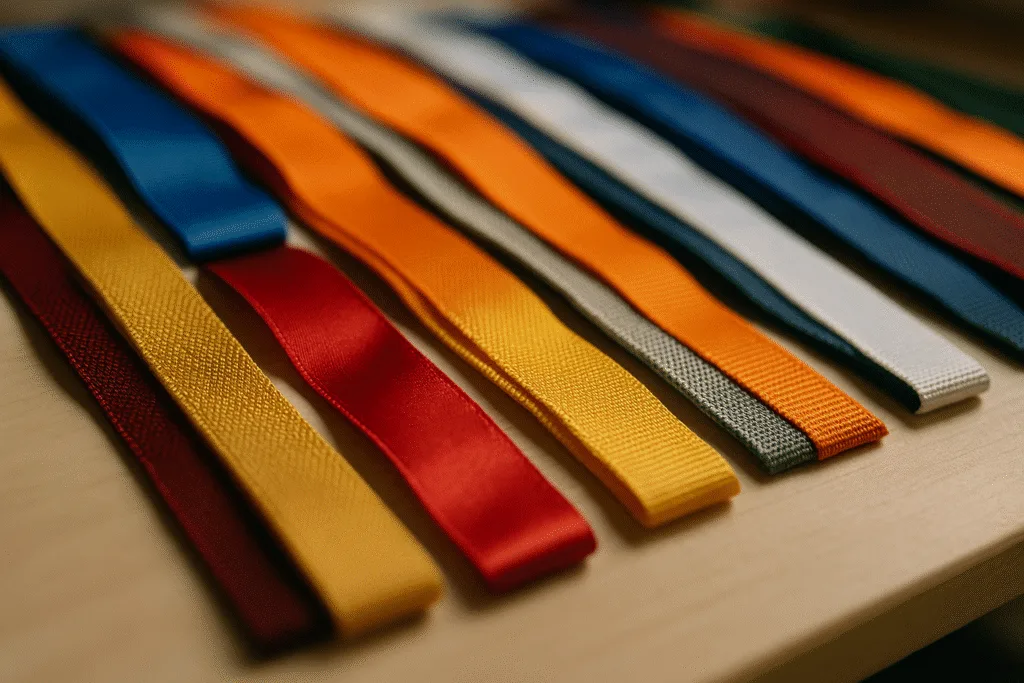
The majority of custom medal ribbons use polyester for its durability, affordability, and broad color range. Nylon offers a smoother finish with slightly higher gloss, making it preferred for elegant awards. Satin provides a luxurious feel and soft shine, suitable for VIP events and prestigious recognitions. In rare cases, cotton or silk may accent historical or upscale themes, though these tend to be less durable over intense wear.
Printing, Weaving, and Color Options
| Method | Finish/Visual | Cost | Best Use |
|---|---|---|---|
| Screen Printing | Sharp, vivid logos; Pantone matching possible | $ | Brand and event logos, quick turns |
| Sublimation | Full-color gradients, detailed imagery | $$ | Complex graphics, multicolor events |
| Woven | Patterns and logos woven directly into ribbon | $$$ | Premium, durable military/heritage awards |
| Hot Stamp Foil | Metallic/reflective finishes, high contrast | $$ | Special accents, VIP/corporate medals |
Color selection typically follows event branding, national/regional colors, or organizational symbolism. Accurate Pantone color matching—especially crucial for high-profile brands—ensures consistency across batches. Gairun uses in-line color checks to avoid variances (Delta E ≤ 2.0).
Medal Ribbon Attachment: Methods and Considerations
How a ribbon joins with the medal—known as the medal ribbon attachment—affects both looks and longevity. Some medals display at the chest; others hang around the neck. The chosen method must support the medal’s weight, endure frequent handling, and present a polished finish.
Loops: Integrated vs. Added Options
- Cast Loops: Moulded directly on the medal (usually during die casting or stamping), offering a seamless look and high strength. Often seen in sports and military medals.
- Soldered Loops: Separate wire loops attached and welded post-production. Provides flexibility in orientation and replacement; common for badges and medallions with unusual shapes.
- Pressed or Folded Tabs: Thin, flattened loop extensions bent into shape. Ideal for lighter medals or badge accessories where cost matters.
Jump Ring Assembly: Linking Ribbon and Medal
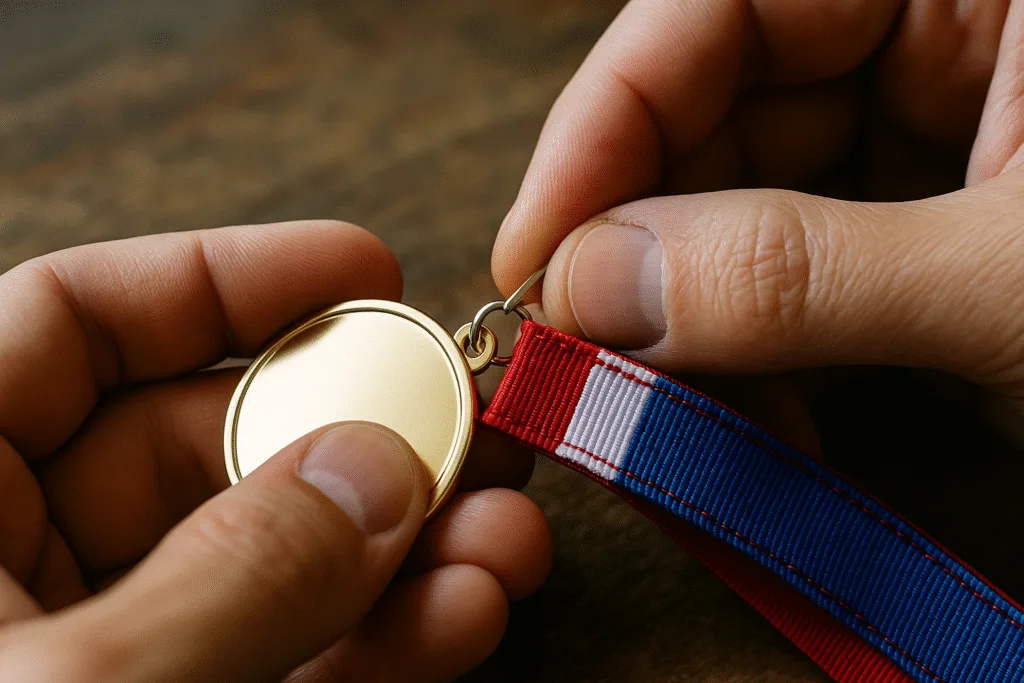
The jump ring assembly is a critical yet often overlooked step. A jump ring is a small metal loop that connects the medal’s attachment point to the ribbon’s sewn loop or clasp. These rings are typically stainless steel, brass, or iron (plated as needed). Gairun selects jump rings based on medal thickness, required tensile strength, and finish compatibility.
- The ribbon (often stitched at the end, forming a (V) loop or straight pass) is threaded through a split ring or solid jump ring.
- The jump ring is then opened slightly (using specialty pliers); the medal’s loop is inserted.
- The ring is securely closed. For high-strength needs, soldering or laser welding ensures the ring cannot bend open.
Key Factors in Jump Ring Choice
- Diameter: 15–20mm common for standard medals; must match loop aperture.
- Gauge: 1.2–2mm wire for sports/ceremonial medals; thicker wire = higher load tolerance.
- Finish: Plated to match medal (nickel, gold, antique bronze, black nickel).
Safety Pins, Butterfly Clutches, and Fastener Accessories
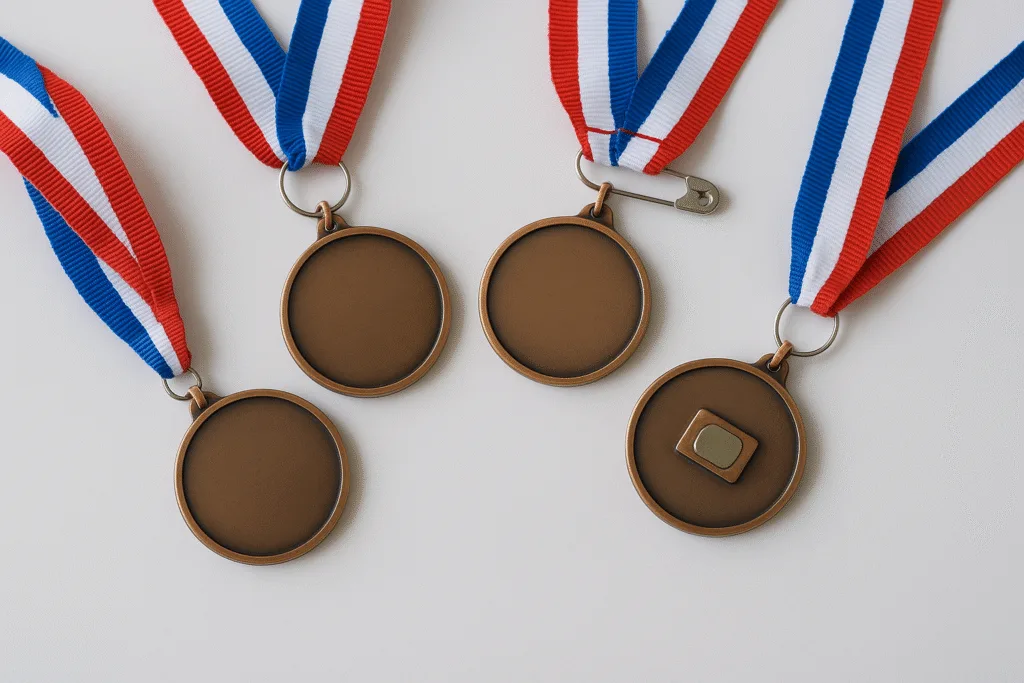
For medals intended for lapel or chest display, accessories like safety pins, butterfly clutches, or magnetic backs are attached to the ribbon’s reverse using rivets or strong adhesives (such as 3M VHB tape). These make for quick, safe mounting and minimize garment damage. Military medals often specify manufacturer testing per EN 1811 for nickel release and use high-retention pins to prevent loss during marching or strenuous movement.
Custom Medal Ribbons: Personalizing for Every Event
No two medal events are the same. Whether recognizing a marathon winner, an employee’s years of service, or military valor, the custom medal ribbons set the tone and message.
Event-Specific Ribbon Solutions
- Sports Events: Vibrant, screen-printed or sublimated ribbons in bold colors, featuring event logos and year. Emphasis on comfort (25–38mm width) and sweat resistance.
- Corporate Awards: Sleek satin or high-thread woven ribbons, often with hot-stamped text for a refined look. Narrower ribbons suit formal attire and lapel display.
- Military Medals: Woven ribbons with defined stripes reflecting regimental heritage. Colorfast polyester or nylon for uniformity and durability. Typically wider with regulatory-compliant fasteners.
Designing for Comfort and Impact
Custom ribbons can include anti-slip backing (textured for better grip), double/dual-layer construction for strength, and specialty ends (angled, V-cut, laser-sealed) to resist fraying. Careful edge finishing prevents discomfort during wear, an essential consideration for long ceremonies or athletic use.
Assembly Process: How Ribbon and Accessories Come Together
The assembly process determines the finished medal’s structural integrity, visual quality, and how well it stands up to real-world use. Here’s how Gairun and top manufacturers approach the job:
1. Medal Preparation
After die casting, stamping, or etching, medals are polished, plated (e.g., antique brass, nickel, gold), and finished. Integrated loops are checked for burrs and strength.
2. Ribbon Cutting and Printing
- Batches of ribbon material are cut to precise length (usually 800–900mm for neck ribbons; shorter for chest medals).
- Printing (screen, dye-sublimation, or weaving) is completed. Pantone colors and logo placement are verified.
- Ribbon ends are heat-sealed or sonic-welded to prevent fraying; V-cuts are made if required.
3. Stitching Ribbon Ends
Ribbons are folded to form loops—either simple passes or doubled at the end for reinforcement. Industrial stitching machines use high-tensile polyester thread. Stitch density is checked (minimum 8 stitches/cm) for durability.
4. Attaching Jump Rings or Split Rings
Using purpose-built jigs, production teams open jump rings, thread them onto the ribbon loop and medal attachment, then close and, if specified, solder or laser-weld for extra strength.
5. Mounting Additional Accessories
For lapel medals, pins, clutches, or magnets are riveted or adhered. Adhesion is tested to ASTM D3359 standards to ensure parts won’t detach—critical for military or high-value medals.
6. Quality Control and Packaging
Finished medals are checked for color difference (Delta E), plating thickness (via XRF), and assembly accuracy. Defective units are rejected per ANSI/ASQ Z1.4 AQL sampling.
- Each medal is packed in an OPP bag, velvet box, or blister packaging, depending on client requirements and event profile.
How to Choose the Right Medal Ribbon Attachment and Accessories
The right combination of ribbon and accessories depends on your project’s purpose, budget, and brand or organizational requirements. Here’s a guide to key decision points.
Event Type and Medal Weight
- Light, Decorative Medals: Narrow (15–20mm) polyester ribbons, pressed loops, and small jump rings suffice.
- Standard Sports Medals: 25–38mm polyester or nylon ribbons, integrated or soldered loops, solid jump rings (1.5–2mm), extra stitching.
- Military/High-Value Medals: Woven or premium satin ribbons, wide format, robust cast or soldered loops, soldered jump rings or special chest fasteners.
Finish, Branding, and Aesthetics
Match ribbon and metal finishes for consistency—antique effect medals pair with matte or woven ribbons. Colorful, glossy medals suit bright printed ribbons. Where branding is paramount, choose screen/sublimation prints with sharp logos and Pantone-matched dyes.
Safety and Compliance
- Confirm metals and fasteners are RoHS and REACH compliant to minimize allergy risks.
- For wearable medals in the US and EU, ensure EN 1811 nickel release and, for children’s events, CPSIA-compliance for non-toxic materials and finishes.
- If your event attracts international participants, consider EU and US standards for packaging and labeling.
Special Accessories: Creativity Beyond the Basics
While classic ribbon-loop-jump ring assemblies dominate, some projects demand unique touches for greater impact or convenience.
Quick-Release Clasps
Lobster clasps, D-rings, or snap hooks enable fast swapping. These are ideal for staff or security events requiring badge changes without hassle. Usually added to the jump ring or ribbon end, these can be zinc alloy for strength and come in plated finishes for brand cohesion.
Magnetic Mounts
Increasingly popular for lapel and pocket display—especially where traditional pins risk garment damage. Use rare-earth magnets set in backplates, mounted with strong epoxy. Tip: always test magnetic force (measured in Newtons) to prevent accidental loss during use.
Decorative Hardware
Custom die-cut sliders, embossed ribbon labels, and miniature charms elevate corporate awards and club medals. Gairun can engineer these with precision CNC engraving and add soft/hard enamel fills for color branding.
Ribbon and Accessory Assembly for Medals: Loops, Rings and Ribbons Explained
At the heart of every esteemed medal lies a combination of structure, style, and careful assembly. The ribbon and accessory assembly for medals involves both visible and hidden craftsmanship: integrated metalwork for the loops, precise selection of ribbon width and material, and reliable finishing of every joint and seam. Jump ring assembly may seem small, but these micro-accessories bear the weight of the entire presentation. Choices in stitching method, fastener type, and color not only create physical bonds but also emotional resonance for recipients.
Innovations in manufacturing allow for endless combinations. Whether awarding marathon finishers, corporate stars, or military heroes, details in ribbon attachment and accessory selection ensure each medal stands as a symbol of quality and intent. Gairun’s approach blends exacting production standards with flexibility, supporting OEM, ODM, and tailored B2B needs across the industry spectrum.
Troubleshooting and Best Practices in Medal Assembly
Even with robust planning, issues can emerge. Awareness of common problems helps avoid delays and defects:
- Ribbon Fraying: Can result from poorly sealed ends or low-grade material. Use heat-sealing or laser cutting for polyester/nylon.
- Jump Ring Failure: Under-gauged or poorly closed rings can open during use. Always match ring gauge to medal weight. Solder for additional strength.
- Color Fading: UV exposure or subpar dyes lead to faded branding. Insist on industry-grade, UV-resistant inks and Pantone checks.
- Fastener Loosening: Adhesive-based pins/clutches can fail over time. Rivet or use high-tack epoxies and test adhesion to ASTM D3359 standards.
Partnering with manufacturers experienced in these nuances, like Gairun, ensures attention to these details, resulting in medals that meet both functional and aesthetic demands.
Future Trends: Sustainability and Smart Accessories
The medal industry is embracing new directions for both environmental responsibility and functionality:
- Eco-Ribbons: Recycled PET and organic fibers are now available for sustainable events.
- QR Code Labels: Printed or woven into ribbons for interactive experiences—race results, event replay, or donor information.
- Antimicrobial Materials: Special coatings or ribbon blends for medals likely to be worn or handled by many (relevant for health-focused events).
- Personalized Fasteners: 3D-printed or laser-engraved buckles, clasps, and tags improve bespoke branding.
Manufacturers who invest in new materials and digital printing techniques (including variable data for personalized ribbons) offer partners greater flexibility and value. Consult with suppliers about sourcing practices and compliance documentation.
Frequently Asked Questions
What is the best ribbon width for sports event medals?
Most sports event medals use 25–38mm wide polyester ribbons, offering a balance of durability, visibility, and wearer comfort during activity.
How do I ensure the jump ring assembly will not break?
Select the correct ring diameter and gauge for the medal’s weight. Soldered or welded rings provide the highest strength for heavy or high-value medals.
Are custom medal ribbons washable and colorfast?
Quality polyester and nylon ribbons with industry-grade inks are machine-washable and UV-resistant, ensuring vibrancy and longevity even with repeated handling.
What are the fastest lead times for medal ribbon assembly?
Lead times depend on design complexity; standard printed ribbon assemblies can ship in as little as 10–14 days with streamlined OEM processes.
Can I use magnetic backs for all medals?
Magnetic backs suit lightweight lapel or chest medals. For heavier pieces, opt for pins or clutches to ensure safe, secure wearing in all settings.
How does Gairun manage quality control in medal accessory assembly?
Gairun leverages multiple checks—including plating thickness, color matching, and adhesion testing—following international standards, to deliver consistent, reliable medal assemblies.