Introduction: The Backbone of Modern Metal Products
Metals shape the world of custom products, from stylish medals and badges to precision hardware and branded souvenirs. Choosing the right metal forms the foundation for quality, durability, and the look you want. Each alloy brings its strengths—controlling cost, appearance, and performance.
This guide explores the most common metals for custom products, their properties, processing methods, finishes, and typical uses. Whether you design unique coins, functional hardware, or standout promotional items, understanding these metals helps you select the best fit for your project.
Overview of Common Metals Used in Custom Metal Products

Manufacturers like Gairun, trusted for precision and reliable service, offer a broad palette of metals. The most common are zinc alloy, brass, stainless steel, aluminum, and iron/steel. Each suits different product requirements and production methods. Factors such as hardness, weight, corrosion resistance, cost, and finish options influence selection.
- Zinc Alloy – Great for die casting, detailed 3D shapes, and affordable pricing.
- Brass – Classic color, good machinability, and premium appeal for medals and badges.
- Stainless Steel – High strength, rust resistance, and modern appeal for labels and tags.
- Aluminum – Lightweight, corrosion-resistant, ideal for nameplates and luggage tags.
- Iron/Steel – Excellent for cost-effective coins, challenge tokens, or heavy-duty hardware.
Key Factors in Metal Selection
- Desired Appearance: Finish and color options vary by metal.
- Strength & Durability: Consider expected wear, exposure, and handling.
- Manufacturing Process: Not all metals fit every method (e.g., die casting vs. stamping).
- Budget & Scale: Material cost and minimum order quantities influence choices.
Zinc Alloy: Versatile and Cost-Effective
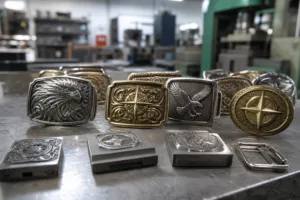
Zinc alloy stands out as a favorite for custom products needing complex 2D/3D shapes. The material works well with die casting, a process that injects molten metal into steel molds for fine detail. Gairun often uses zinc alloy for medals, coins, keychains, and belt buckles thanks to its flexibility and value.
Properties of Zinc Alloy
- Density: About 6.6 g/cm³—heftier than aluminum, lighter than steel.
- Shaping: Excels at capturing detailed, high-relief designs.
- Corrosion resistance: Good, especially when plated or coated.
- Hardness: Vickers (HV) typically 80–120, suitable for moderate wear.
Common Zinc Alloy Processes
- Die Casting: Allows detailed, high-volume production with low per-unit costs.
- Deburring & Tumbling: Achieves smooth surfaces before finishing.
Finish Options
- Electroplating (antique brass, gold, silver, black nickel, matte/bright chrome)
- Color fill (soft or hard enamel, epoxy dome)
- Sandblasting, mirror, or brushed polish
Zinc alloy products balance intricate detail and affordability, making them a top choice for event medals, pins, coins, and custom crafts.
Brass: The Premium Look and Feel
Brass gives custom metal products a rich golden tone and heavier feel, popular in medals, keychains, badges, and antique-finish hardware. Its copper-zinc composition offers durability, corrosion resistance, and ease of engraving or etching. Brass accepts fine detail and shines in both high-polish and satin finishes.
Why Brass?
- Aesthetics: Warm gold color, excellent for high-end products.
- Machinability: Suitable for stamping, CNC milling, and photo etching at thicknesses from 0.6–3 mm.
- Corrosion resistance: High, especially with lacquer or plating.
Surface Finishes for Brass
- Antique (brass/bronze/copper)
- Bright or satin polish
- Nickel, gold, or silver plating
Brass is often chosen for coins or medals requiring deep relief and visible engravings. Wearable items made from brass are frequently tested for nickel release according to EN 1811 standards.
Stainless Steel: Durable and Modern
Stainless steel is favored for its unmatched durability, corrosion resistance, and cool, contemporary look. Gairun often uses grades 304 and 316, with 316 offering superior resistance to salt and chemicals—ideal for marine and outdoor applications.
Main Features
- Corrosion Resistance: High, even without coating or plating.
- Strength: Excellent—resists bending, scratching, and impact.
- Versatile Processing: Laser cutting, photo etching, stamping, and CNC machining.
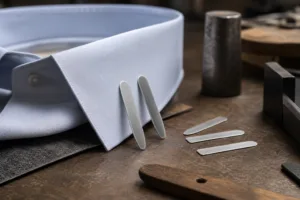
- Thickness Range: Typically 0.3–3 mm for labels, tags, and plates.
Finish Choices
- Brushed, satin, or mirror polish
- Laser engraving or chemical etching for logos and details
- PVD (Physical Vapor Deposition) for colored finishes (e.g., gold, black, rainbow)
Stainless steel’s robust nature means it’s perfect for high-wear items, security tags, or products needing lasting luxury with minimal care.
Aluminum: Lightweight and Versatile
Aluminum attracts designers and engineers who need low weight and corrosion resistance. Alloys like 6061 and 5052 combine strength with formability, making them suitable for stamped nameplates, stylish luggage tags, and even belt buckles. Aluminum accepts a wide palette of finishes and colors after surface treatments.
Advantages
- Extremely light—density about 2.7 g/cm³
- Natural oxide film gives good corrosion resistance
- Accepts anodizing for colored, durable surfaces
Processing Methods
- Stamping or pressing for thin plates and intricate designs
- CNC milling for shaped hardware
- Anodizing, brushing, and laser marking for details
Aluminum products excel in markets where lightweight construction, modern look, or vibrant colors matter. Applications include ID plates, furniture hardware, promotional gifts, and branded keychains.
Iron and Carbon Steel: Strength on a Budget
Iron and low-carbon steel stand out for their strength, cost-effectiveness, and suitability for magnetic products. They’re often used in custom coins, bottle openers, furniture hardware, and decorative plaques. Steel accepts various finishes, from nickel plating to powder coating.
Core Features
- Strength: Higher than zinc or aluminum, resists deformation.
- Magnetism: Useful for magnetic name badges or signs.
- Corrosion Risk: Needs proper coating or plating to prevent rust.
- Processing: Stamping, pressing, laser cutting, and CNC machining.
Factory standard checks such as salt-spray testing (ASTM B117), adhesion (ASTM D3359), and plating thickness (XRF measurement) ensure toughness and finish durability.
Comparative Table: Common Metals for Custom Products
| Metal | Process Compatibility | Finish Options | Strength | Corrosion Resistance | Best Applications |
|---|---|---|---|---|---|
| Zinc Alloy | Die Casting, Stamping | Plating, Color Fill, Epoxy | Moderate | Good (if plated) | Medals, Coins, Keychains, Badges |
| Brass | Stamping, Etching, CNC | Antique, Plating, Polish | High | Very Good | Medals, Badges, Nameplates, Souvenirs |
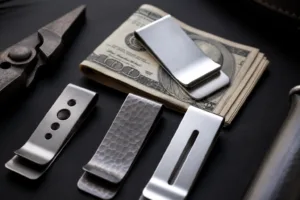
| Stainless Steel | Laser Cut, CNC, Etching | Brushed, PVD, Etched | Very High | Excellent | Labels, ID Tags, High-Wear Hardware |
| Aluminum | Stamping, CNC | Anodizing, Brushed, Laser | Moderate | Very Good | Nameplates, Luggage Tags, Belt Buckles |
| Iron/Steel | Stamping, Laser, CNC | Nickel/Gold Plate, Powder Coat | High | Low (if bare); Good (if coated) | Coins, Hardware, Magnets, Plaques |
Relief, Color, and Branding Considerations
The choice of metal also shapes how relief (raised or recessed artwork), color, and logo details appear in the final custom product:
- Zinc Alloy Die Cast: Best for deep 3D relief and color separation. Supports both soft and hard enamel for vibrant branding.
- Brass or Copper: Crisp edges and fine details. Works well with photo etching and selective color fill.
- Steel & Aluminum: For clean, modern engravings and flat or debossed logo treatments.
Advanced techniques, like Pantone-matched colors, laser or CNC engraving, and deep chemical etching, guarantee brand fidelity—even on complex projects. Gairun applies tight tolerance controls (often ±0.1 mm), and matches customer designs for a professional finish every time.
Finishing Techniques: Protecting and Beautifying Metals
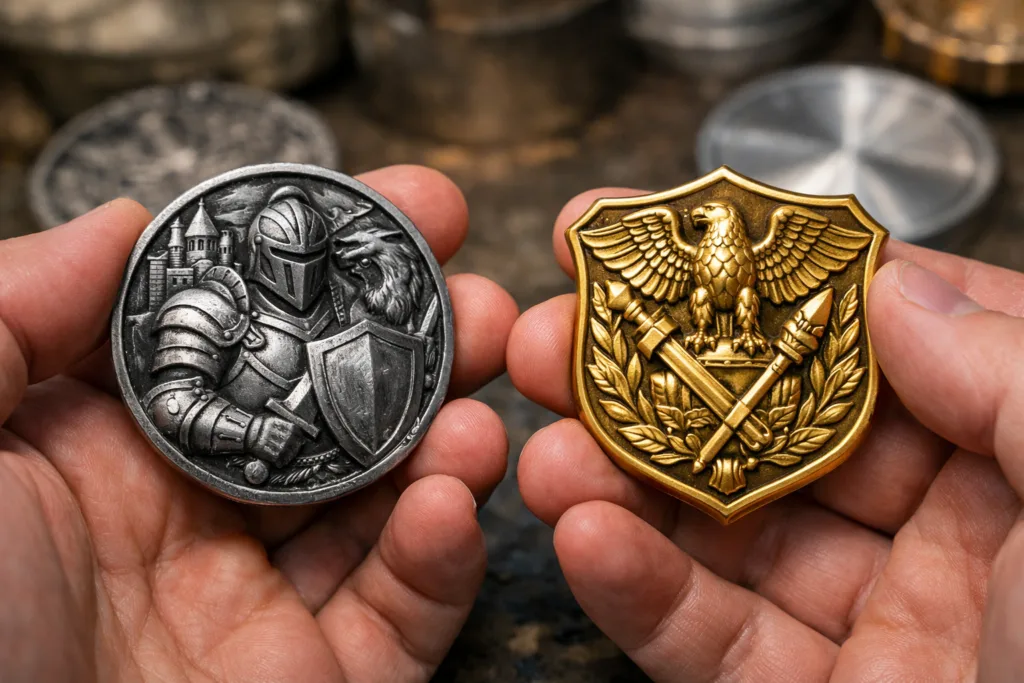
Custom metal products rely on surface treatments for both looks and protection. Here are common finishing options:
- Electroplating: Adds gold, silver, nickel, rose gold, gunmetal, or black finish; controls thickness (5–25 μm) by XRF.
- Anodizing: Aluminum only; gives vibrant, wear-resistant colored layers.
- PVD Coating: Stainless and brass; offers extra-hard colored finishes.
- Powder Coating: Thicker, colored or textured coats for weather and scratch resistance.
- Brushed, Satin, or Mirror Polish: Refined surface for premium look.
- Sandblasting: Subtle matte texture that hides fingerprints and provides grip.
Each finish affects durability, perceived value, and product lifespan—key for any branded giveaway, premium hardware, or collectible Medal.
Assembly, Mounting, and Packaging Solutions
The final steps of assembly and presentation complete the user experience. Metal products may include:
- Split rings, lobster clasps, or key loops for keychains
- Butterfly or magnetic clutches for badges
- 3M VHB adhesive, screw posts, or rivets for nameplates and hardware
- Packing options: OPP bags, custom cards, velvet boxes, or blisters
Custom assembly secures products for transport, retail display, or gifting, ensuring they arrive flawless and ready to impress.
Quality and Compliance in Metal Products
Well-made custom metal products pass strict inspections and industry tests:
- Dimension and Tolerance Control: Precise machining (e.g., within ±0.1 mm) for proper fit and feel.
- Plating Thickness: Verified with XRF for long-term durability.
- Salt Spray Testing: Assesses corrosion protection (ASTM B117 standard).
- Hardness: Measured in HV for wear resistance.
- Color Consistency: Checked using ΔE measurements for visual standards.
- Safety & Substance Compliance: RoHS, REACH, EN 1811 (for nickel), and CPSIA/Prop 65 for special markets.
Responsible manufacturers like Gairun provide detailed inspection reports and certificates for large B2B orders, building trust with global clients.
Applications: Where Metal Matters Most
The metals featured here serve a wide range of industries and projects:
- Medals: Sporting events, marathons, clubs, or corporate awards (zinc, brass, iron)
- Challenge Coins and Tokens: Military, police, club collectibles (zinc, brass, iron)
- Badges and Pins: Uniform, event, or membership identification (brass, zinc, steel)
- Nameplates and Hardware: Brand labeling for machinery, furniture, or luggage (aluminum, stainless steel, brass)
- Promotional Gifts: Keychains, bottle openers, or branded accessories (aluminum, zinc, iron)
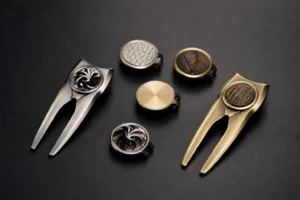
- Decorative Hardware: Buckles, emblems, plaques, drawer pulls (brass, zinc, steel)
Each application highlights different aspects—durability, cost, finish, and branding—ensuring custom metal products always make a lasting impression.
Common Metals Used in Custom Metal Products
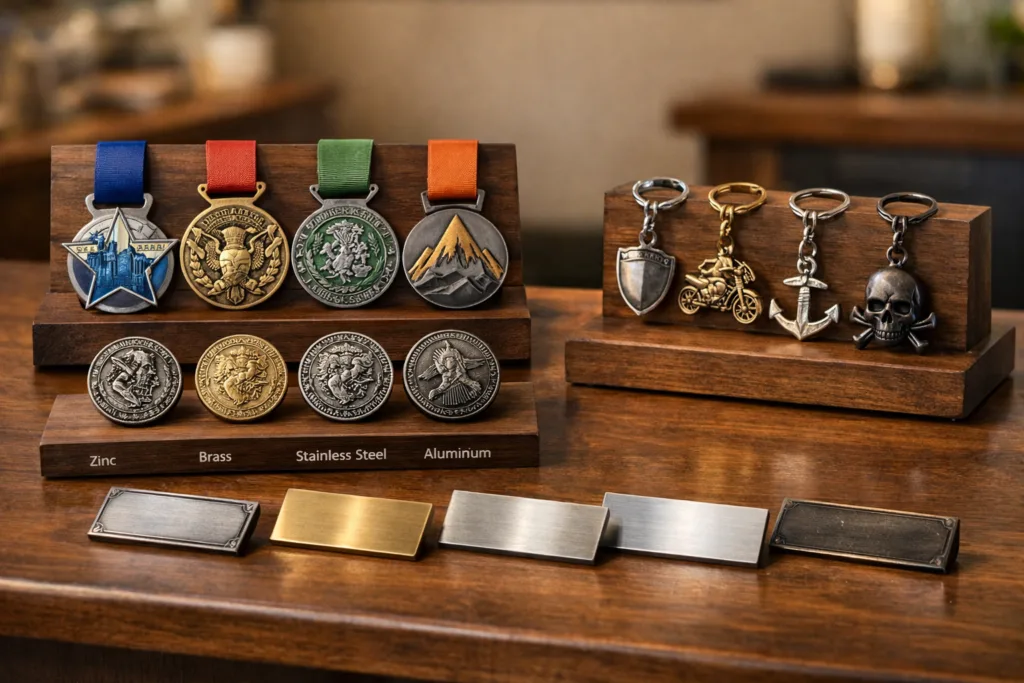
The choice of metal drives your product’s feel, finish, price, and performance. Zinc alloy excels at detail and value for high-volume medals and coins. Brass delivers luxury and tradition for premium souvenirs. Stainless steel remains the gold standard for durability and clean branding, especially in harsh environments. Aluminum stands out in applications needing lightness and vivid colors. Iron or mild steel solve cost challenges for simple coins and rugged hardware.
Partnering with a capable manufacturer such as Gairun ensures your material choice matches your exact expectations. With the right metal, finish, and assembly methods, your custom project becomes a standout badge of quality and creativity.
Expert Takeaway: Alloys and finishes matter as much as shape or engraving. Get material advice early in your custom project to save time, cost, and future headaches.
Frequently Asked Questions
What is the most popular metal for custom medals?
Zinc alloy is the most popular metal for custom medals due to its affordability and ability to support detailed 2D or 3D designs.
Which metal offers the best corrosion resistance for outdoor use?
Stainless steel, especially grade 316, provides the highest corrosion resistance for outdoor and marine environments.
How is color added to custom metal products?
Color is typically added using soft or hard enamel fills, epoxy domes, or by anodizing aluminum for vibrant, durable hues.
Why choose brass for custom coins or badges?
Brass offers a premium weight and finish, excellent corrosion resistance, and sharp engraving clarity for collectible or high-value items.
Can metal products be tested for safety and durability?
Yes; tests such as XRF plating thickness, salt-spray (ASTM B117), and EN 1811 nickel release ensure compliance and product performance.
What factors impact the cost of custom metal products?
Material type, complexity of shape, finish, order quantity, and required certifications (like RoHS/REACH) all influence project cost.