Introduction: The Art and Precision of Medal Manufacturing
Every award medal tells a story—of achievement, pride, and careful craftsmanship. To create medals that inspire and endure, manufacturers rely on a refined medal manufacturing process. This process blends modern technology, traditional skill, and attention to detail. From the first sketch to the final polish, each step matters for quality, appearance, and value.
The Medal Manufacturing Process
The medal manufacturing process covers a journey that starts with design and ends with detailed finishing. Choosing the right material, shaping with precision, and selecting the best surface treatment are keys to a standout medal. Reliable manufacturers like Gairun emphasize these steps for perfect results every time. Let’s walk through each stage, from mould creation to shining electroplating.
Initial Design and Digital Prototyping
Every great medal begins with a design. Artists develop concepts based on the event theme, brand identity, and technical requirements. Digital tools like CAD (Computer-Aided Design) shape intricate details and 3D relief effects. This step sets the specification for every subsequent phase, ensuring customer ideas translate neatly to metal.
Design Considerations
- Size and Shape: Determines impact and comfort for wearers.
- Relief Depth: Defines how raised or sunk details appear. Deeper 3D relief creates a striking look.
- Branding Elements: Company logos, event names, and serial numbers add identity and value.
- Color Areas: Spotting areas for soft/hard enamel or printed colors during later steps.
- Attachment Method: Planning for ribbon loops, pin backs, or other mounts.
Mould Making: Laying the Foundation
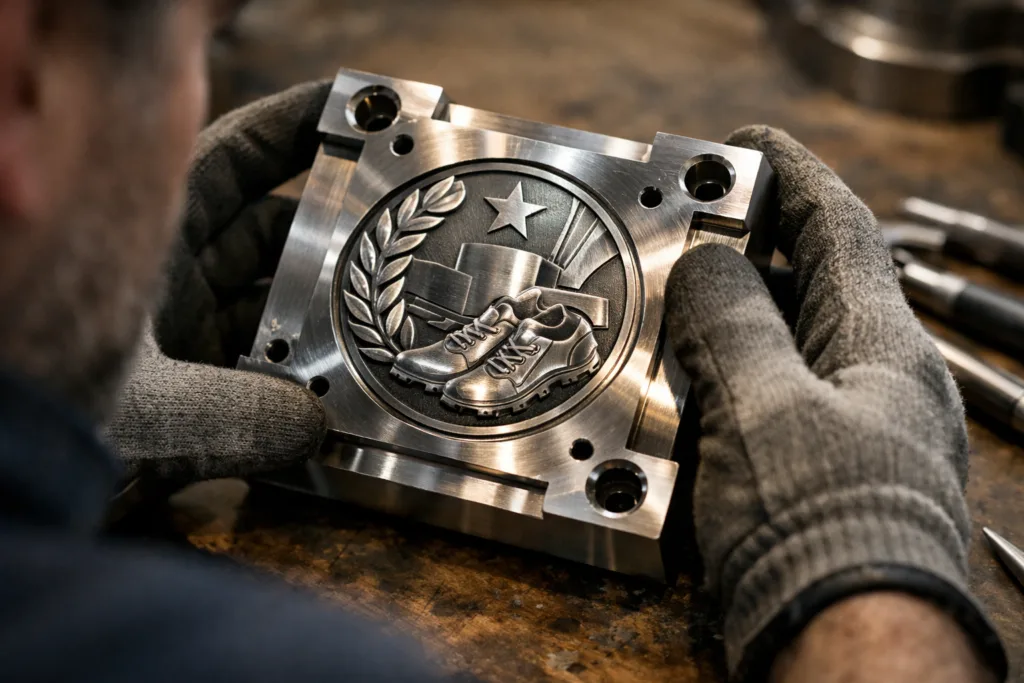
Once the digital design is set, it’s time to make the mould. The mould forms the heart of the medal manufacturing process. Precise moulds ensure consistent, detailed output for mass production.
Mould Material and Method
- Steel Dies: High-grade tool steel (like H13 or S136) is used for durability and repeated stamping or casting.
- Wire EDM: Wire-cut Electric Discharge Machining (EDM) shapes the mould with fine detail, handling even tiny text or logos.
- CNC Milling: Computer-controlled milling machines carve deep reliefs and complex contours for 3D designs.
For medals with intricate shapes or low run quantities, silicon or rubber moulds may be used in spin casting. However, for premium awards, hard steel dies deliver sharper definition and longer life.
Mould Quality Control
- Hardness Check: Instruments test the mould’s surface for durability—typically aiming for 48–52 HRC (Rockwell Hardness).
- Tolerance Verification: Calipers and gauges check dimensions, with tolerances often within ±0.05 mm.
Material Selection: Metals That Last
Medals must look impressive and survive handling. Choosing the right metal affects cost, finish, and impact. Popular metals include:
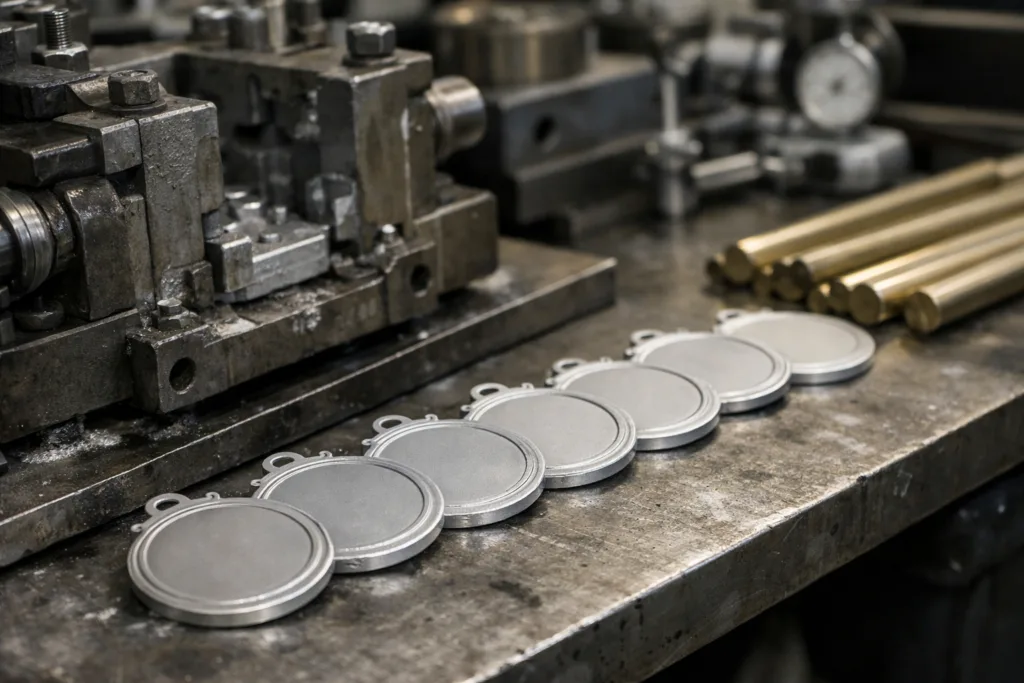
- Zinc Alloy: Widely used for die-cast medals; balances cost, weight, and detail. Typical thickness: 2–5 mm.
- Copper/Brass: Offers good hardness and crisp details for struck or pressed medals; adds a classic feel.
- Stainless Steel (304/316): Used for hypoallergenic, high-durability medals; ideal for sports or outdoor events.
- Iron / Steel: Suitable for cost-effective, strong medals, especially for simple stamping.
- Aluminum (6061/5052): Lightweight, used when minimal weight is key.
Each material offers distinct benefits for wear resistance, plating compatibility, and relief details. Gairun carefully matches material to project requirements, ensuring medals meet both function and fashion goals.
Medal Forming: Shaping by Die Casting, Stamping, or Etching
This stage brings the design to life. Depending on the design and budget, different processes mold the raw metal:
- Die Casting: Molten zinc alloy is injected into the steel mould, hardening quickly. This approach is ideal for high-relief, complex shapes, or detailed logos. Minimum order quantities (MOQs) are usually 500 pcs and up, providing cost efficiency in bulk.
- Stamping/Pressing: Thick sheets of brass or iron are pressed with the steel die, creating sharp 2D or shallow 3D reliefs. This process suits simpler medals and lower production volumes.
- Photo-Etching: For fine patterns and lightweight medals, photoresist and chemical baths carve patterns into thin metal sheets. Not suited for deep relief but excellent for detailed line work.
Deburring and Trimming
Post-forming, medals are trimmed by hand or press, and all sharp edges are removed. Deburring, shot blasting, and tumbling smooth out burrs, ensuring touch-safe, uniform surfaces for coloring and plating.
Coloring Techniques: Enamel and Print
Colors set medals apart, highlighting event logos or national symbols. Two main coloring techniques are used:
- Soft Enamel: Colored resin fills the recessed areas, then bakes for a hard, glossy finish. Slightly sunken compared to the raised metal.
- Hard Enamel (Cloisonné): Ground glass pigments are fired at high heat and polished flush to the surface. The finish is ultra-smooth and scratch-resistant, ideal for luxury medals.
For vibrant graphics, offset or screen printing adds patterns atop a base. All colors are Pantone-matched for consistency. An optional epoxy dome adds a protective, crystal-clear layer, extending color life where medals face frequent handling.
Electroplating and Finishing: Creating the Medal’s Final Character
The finish sets the mood. Electroplating and other treatments determine both color and resilience. The main finishes in the medal manufacturing process include:
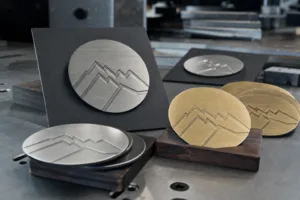
| Finish | Look/Feel | Durability | Best For |
|---|---|---|---|
| Antique Brass | Warm, vintage patina | High | Commemorative, military |
| Nickel/Gunmetal | Modern, semi-gloss grey/silver | Very high (up to 48h ASTM B117) | Marathons, club events |
| Gold/Gilt | Rich yellow shine | Medium to high (thicker plating = higher) | Top awards, ceremonies |
| Matte Black | Modern, understated | High | Corporate, minimalist medals |
| PVD/Chrome | Mirror finish, extra hard | Ultra high (wear-resistant) | Badge, nameplate, and display medals |
Electroplating deposits a precise layer of metal ions for color and corrosion protection, measured in microns (μm). Salt-spray tests (ASTM B117) confirm the medal’s resistance to tarnish. Each finish is selected to match event mood, expected wear, and brand visuals.
Assembly: Ribbons, Attachments, and Packaging
Attachment is more than function—it shapes the medal’s first impression. Common options are split rings, ribbon loops, lobster clasps, or magnetic/adhesive backs. For wearables, tests follow the EN 1811 nickel release standard to ensure safety. Packaging choices range from simple OPP bags to velvet boxes, enhancing perceived value and protection.
Common Medal Attachments
- Woven or printed ribbons (common in sports events)
- Lapel pins or butterfly clutches (for presentation medals)
- Velvet or custom gift boxes (for premium awards)
Packaging Trim
- Custom cardboard sleeves and blister packs for retail distribution
- Reusable pouches for eco-friendly branding
Quality Control: Standards that Ensure Excellence
Strict quality control runs throughout the medal manufacturing process. Gairun applies multiple checks at every stage:
- Dimensional Checks: Calipers and gauges compare every batch against CAD specs, within tight tolerances (±0.1 mm typical for finished medals).
- Plating Thickness Tests: X-ray fluorescence (XRF) measures coatings down to the micron for consistent wear resistance.
- Adhesion and Salt Spray: Painting and plating are tested for flake-off (ASTM D3359 crosshatch) and corrosion (ASTM B117).
- Hardness Testing: Ensures medals withstand handling, sampling per ANSI/ASQ Z1.4 for batch reliability.
- Color and Visual Checks: Each piece compares against a color standard (ΔE), ensuring perfect Pantone matches.
Medals for children or wearables follow RoHS and CPSIA standards to screen for hazardous substances.
Applications and Business Outcomes
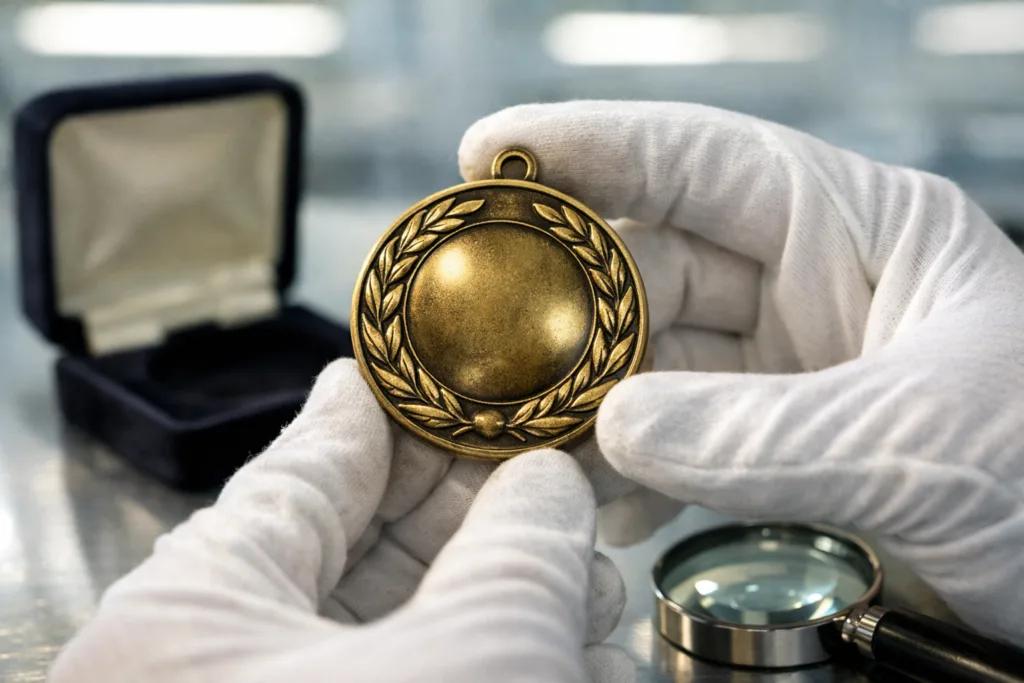
The right combination of materials, finishes, and processes delivers awards suited for every use. For marathons, lightweight, hypoallergenic medals are key. For commemorations, rich antique finishes and deep relief make the memory last. Choosing a manufacturer with OEM and ODM experience—like Gairun—ensures flexible, on-time delivery with branding precision, low defect rates, and clear project communication. End buyers benefit from predictable quality, event-ready presentation, and medals worth treasuring.
Frequently Asked Questions
What is the best metal for manufacturing award medals?
Zinc alloy is most common for die-cast medals due to its balance of detail, weight, and cost. Brass and copper create sharp, classic medals for premium events, while stainless steel is ideal for wearable, hypoallergenic pieces.
How long does the medal manufacturing process take?
From design to finished medals, production usually takes 2–5 weeks. Lead time depends on order size, design complexity, and chosen finish.
What types of plating finishes are most durable for medals?
Nickel, antique brass, and PVD finishes provide high resistance to wear and oxidation. Thicker plating coatings further boost durability, especially for medals that see frequent handling.
Can the design include multiple colors or gradients?
Yes, medals can have several Pantone-matched colors using soft or hard enamel. For gradients or photographic effects, offset or screen printing methods are applied.
Are there minimum order quantities for custom award medals?
Most manufacturers require minimum orders, typically 100–500 pieces for die-cast or stamped medals, as setup costs are significant for mould-making and tooling.
How are medal designs protected for client confidentiality?
Reputable manufacturers sign non-disclosure agreements (NDAs), keep digital files secure, and produce custom tooling marked with client codes to protect intellectual property.