Unlocking the World of Custom Bottle Caps Manufacturing
Custom bottle caps play a vital role in product packaging, branding, and safety. From craft beverages to pharmaceuticals, these small components protect valuable contents and support unique brand identities. People often underestimate the complexity behind a bottle cap until they need one designed to specific needs—size, fit, finish, and function. This guide explores the materials, manufacturing, and sealing processes behind custom bottle caps, with practical details for business buyers and design professionals.
Materials Used in Custom Bottle Caps
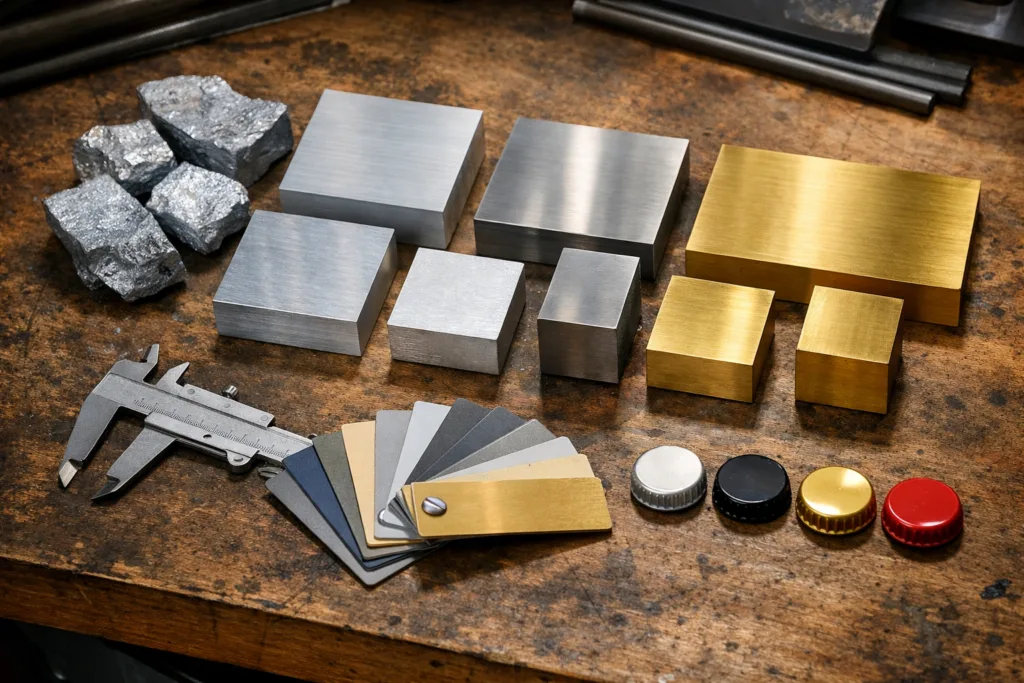
Material selection defines both functionality and aesthetics for custom bottle caps. Depending on needs, manufacturers work with several metals to achieve performance, cost, and appearance. Below are the materials most commonly used.
Zinc Alloy
Zinc alloy combines strength and workability. It’s ideal for die-cast custom caps requiring crisp detail, 2D or 3D logos, and unique shapes. Zinc alloy offers resistance against corrosion, giving it a long service life and consistent appearance. Typical thickness ranges from 1.5 mm to 4 mm, and its moderate hardness allows fine detailing alongside robust sealing properties.
Aluminum (6061, 5052)
Aluminum is popular for lightweight caps. Grades like 6061 and 5052 balance durability and machinability, making them suitable for anodized finishes and color customization. Aluminum naturally resists rust and is widely used for beverage, spirit, and specialty bottle closures. Cap thickness often ranges from 0.8 mm to 2 mm, delivering both security and easy removal.
Stainless Steel (304, 316)
Stainless steel (grades 304 and 316) is the go-to for premium, reusable caps, especially where hygiene is paramount. This material stands up to aggressive contents and harsh environments without degrading. It is selected for applications in high-end spirits, lab samples, or food service due to its superior resistance to corrosion and its lasting luster. Typical cap wall thickness varies between 0.5 mm and 2 mm.
Brass and Other Metals
Brass delivers a unique vintage look and substantial feel, often seen in luxury product lines. Iron or low-carbon steel is less common but may be chosen for specialty industrial uses. Gairun’s OEM manufacturing capabilities cover these variants, ensuring optimal results for brands seeking differentiation.
| Material | Cost | Finish Options | Durability | Best Uses |
|---|---|---|---|---|
| Zinc Alloy | Moderate | Plating, Enamel | High | Detailed Decorative Caps |
| Aluminum | Low-Moderate | Anodizing, Printing | Medium | Beverage, Light Closures |
| Stainless Steel | High | Polish, Brushed | Very High | Premium, Reusable Caps |
| Brass | High | Antique, Plating | Medium | Luxury Goods |
Custom Bottle Caps Manufacturing Process
Each custom bottle cap begins as an idea—something tangible, reliable, and unique. The manufacturing process ensures concepts translate to functional, brand-ready products. Here’s how the journey unfolds.
Mold Creation
Precision begins at the mold stage. Using wire EDM (Electrical Discharge Machining) or high-tolerance CNC milling, craftsmen build robust molds. These are the foundation for all subsequent shaping, ensuring part repeatability and minimal defects in mass production.
Forming Techniques
- Die Casting: For zinc alloys and some aluminum caps, molten metal is injected into molds under high pressure. The result is strong, detailed caps perfect for branding.
- Stamping/Pressing: Stainless steel and aluminum sheets are punched and drawn into cap shapes with custom dies, yielding smooth walls and consistent seals.
- CNC Turning and Milling: For specialty caps, CNC machining carves precise features, threads, or knurling directly from solid bar stock.
- Photo-etching & Laser Cutting: Used for intricate decorations, serial numbers, or limited-run projects requiring sharp lines and shallow engraving.
Deburring and Surface Preparation
After forming, each cap undergoes deburring—mechanical tumbling, shot blasting, or hand scraping—to remove sharp edges and ensure user safety. This also prepares the surface for finishing, which improves paint or plating adhesion.
Finishes and Decoration
The finish sets the first impression. Custom bottle caps can be engineered toward any visual or tactile goal, from elegant to playful, classic to modern. Multiple finishing options exist, usually determined by brand requirements and target audience.
Electroplating
Electroplating applies a thin, even layer of metal to the cap’s surface. Available platings include antique brass, nickel, gold, matte black, gunmetal, and more. The finish thickness is carefully controlled (usually 5–20 microns) and verified via X-ray fluorescence (XRF) testing for both durability and corrosion resistance.
Anodizing
Aluminum caps benefit from anodizing—a process that enhances corrosion resistance and allows vivid, permanent color. It adds just 7–15 microns in thickness while sealing the natural metal.
PVD, Powder Coating, Paint, and Enamel
- PVD (Physical Vapor Deposition): Delivers extra-tough finishes for wear-prone or premium caps.
- Powder Coating: Creates thick, scratch-resistant layers in nearly any shade.
- Enamel/Soft Enamel Filling: Adds color and separation to logos or text through precise mold cavities.
Logo and Customization Methods
Detailed logos or patterns can be rendered with 2D or 3D relief, laser engraving, color fill (Pantone matched), epoxy domes, or screen printing. Each method suits different branding goals and usage conditions.
Thread Design, Fit, and Function
A perfect seal depends on accurate threads and dimensions. The thread profile—whether continuous, stepped, or snap-fit—determines how easily a cap opens or closes, the torque required, and the consistency of sealing under repeated use.
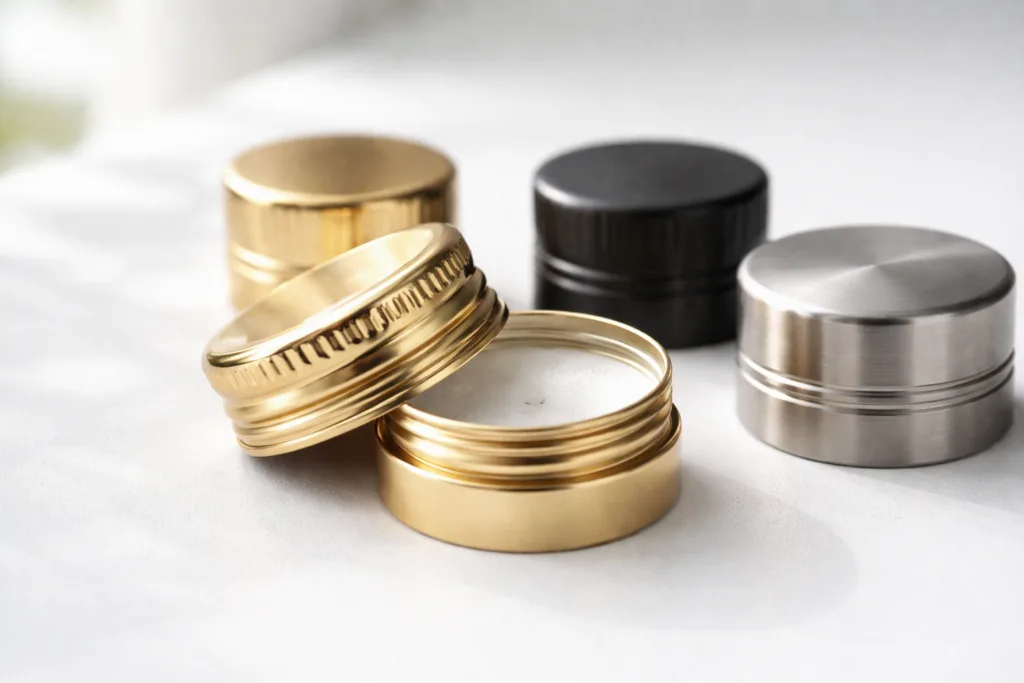
Measurement and Inspection
- Thread gauges and plug gauges check fit against your bottle design.
- Tolerances often held at ±0.05 mm ensure reliable assembly on high-speed lines.
- Adhesion tests per ASTM D3359 confirm paints or plating will not peel.
Sealing Technologies in Custom Bottle Caps
Sealing is the core function of any custom bottle cap. It protects contents from leakage, tampering, and contamination over time. Manufacturing choices impact both cap and bottle compatibility.
Types of Seals
- Compression/Friction Seal: Relies on a precise mechanical fit between the cap and neck. Used in many beverage, sample, and test vials.
- Liner-Based Seal: Involves a gasket material pressed into the cap, such as EVA, PE foam, silicone, or TPE. Liners create chemical resistance and allow for soft, easy closure torque.
- Induction Seal: Utilizes a foil liner, bonded under heat and pressure, favored in pharmaceuticals and food products for tamper evidence.
Liner Material Selection
Liner choice varies with application. PE foam is common for water and soft drinks; silicone or TPE handles oils or aggressive chemicals. Some high-end custom caps are engineered with double or triple sealing rings, enhancing protection and backing up single-liner integrity if damaged.
Custom Bottle Caps Manufacturing: Gairun’s Approach
As a specialist in metal and engineered caps, Gairun prioritizes craftsmanship and functional reliability. Every project begins with technical drawings and material reviews, moving through rapid prototyping and stringent QA processes. Finishes withstand aggressive salt-spray testing (ASTM B117), and all wearable items meet EN 1811 nickel release standards. Gairun’s OEM and ODM services provide custom tooling, small trial runs, and production capacities scaling to over 500,000 units monthly.
Expert Take: “Plan tolerances, surface treatment, and liner choices at the design stage for best performance and long-term cost savings.”
Assembly, Mounting, and Packaging
Assembly methods adapt to cap design, material, and intended use:
- Screw Threads and Snap Fits: Machined or stamped directly, ensuring easy application and secure closure.
- Adhesive Mounts: High-strength 3M VHB adhesive supports seamless integration with difficult substrates.
- Special Assemblies: Hinged or magnetic closures, tamper bands for security, or integrated pouring spouts.
Packaging ranges from simple OPP bags for industrial supply, to retail-ready blister packs or velvet boxes for premium gift presentation.
Applications for Custom Bottle Caps
Custom bottle caps extend across a wide range of fields:
- Beverage and spirit brands requiring signature colors or embossed logos.
- Promotional and souvenir markets, adding collectible value to special editions.
- Industrial, medical, or lab sample vials needing precise sealing and traceability.
- Cosmetic and luxury goods—where touch, weight, and detail reinforce brand values.
Testing, Quality, and Compliance
Every cap is measured against strict standards. AQL sampling (ANSI/ASQ Z1.4) controls defect rates. Plating thickness (5–20 μm) is measured with XRF meters. Salt-spray hours ensure corrosion resistance. Cap liner adhesion is evaluated following ASTM D3359, while critical dimensions are inspected with calibrated gauges. All caps for food and cosmetic use are RoHS/REACH compliant and, where wearable, nickel release tested per EN 1811.
Ordering Custom Bottle Caps: Key Considerations
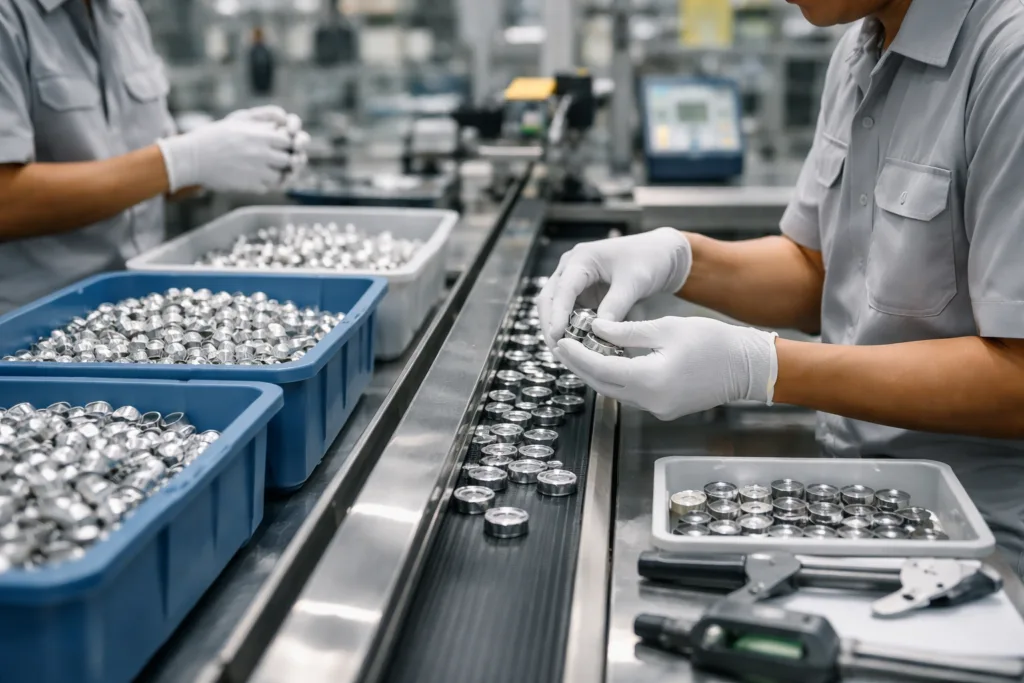
Business buyers should clarify these factors to streamline the procurement process:
- Specify bottle neck finish and dimensions in detail (drawing or sample ideal).
- Select metal, finish, and logo requirements—provide Pantone numbers for color fidelity if needed.
- Define sealing needs: liner type, chemical resistance, tamper evidence.
- State expected MOQ, lead time, packaging, and delivery terms.
Partner with an experienced manufacturer, like Gairun, who will guide you through technical challenges, prototyping, and production for a fully custom solution.
Frequently Asked Questions
What metals are most suitable for custom bottle caps?
Zinc alloy, aluminum, stainless steel, and brass are most common. Each offers distinct benefits for durability, finish, and application fit.
How is a leak-proof seal achieved in custom bottle caps?
Leak-proof seals depend on precise threads, cap-to-bottle fit, plus a gasket liner (PE, silicone, or induction foil) matching the contents.
Which finishes are available for metal bottle caps?
Popular finishes include electroplating (nickel, gold, black), anodizing (for aluminum), powder coating, PVD, soft/hard enamel, and brushed or mirror polish.
What quality checks are important for custom bottle caps?
Key checks are dimension control (±0.05 mm), plating thickness testing, liner adhesion (per ASTM D3359), and salt-spray corrosion testing (ASTM B117).
Are custom bottle caps suitable for food and beverage packaging?
Yes. When produced from food-safe metals and with tested liners, custom caps meet RoHS/REACH and, if needed, EN 1811 standards for safety.
How are logos and designs applied to custom caps?
Options include 2D/3D cast relief, laser engraving, enamel color fill, epoxy domes, and printed overlays—selected by material and branding goals.