The Essential Guide to Zinc Alloy in Metal Manufacturing
Zinc alloy has become a staple in the world of metal products, valued for its versatility, durability, and attractive cost profile. From high-end medals to functional keychains, zinc alloy supports both creative designs and reliable performance. Businesses, designers, and buyers in the metal products sector frequently choose zinc alloy for its unique combination of properties—quick forming, fine details, good strength, and broad finishing options.
Understanding the strengths and weaknesses of zinc alloy is critical for those looking to produce metal items at scale. Whether you’re sourcing commemorative coins, branded badges, or decorative hardware, knowing when and why to use zinc alloy can make a big difference in product quality, turnaround, and market success.
What Is Zinc Alloy?
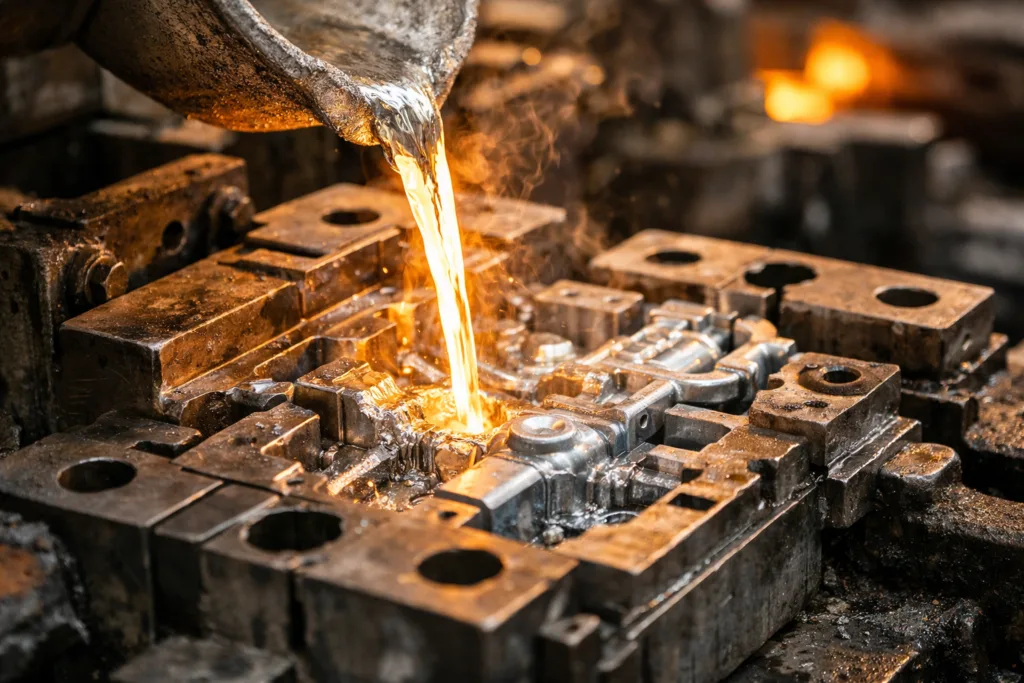
Zinc alloy is a blend of zinc with small amounts of other metals—most often aluminum, copper, and magnesium. These additions improve key properties like strength, hardness, and corrosion resistance. Common types include Zamak 3, Zamak 5, and ZA-8, each optimized for specific manufacturing needs. Zinc alloy is best known for its die casting performance, where hot molten metal is injected into precise molds under pressure to create detailed 2D and 3D forms.
Why Zinc Over Pure Zinc?
Pure zinc is soft and easily deforms. Blending with other metals creates an alloy that delivers much higher strength, stability, and longevity. This makes zinc alloy a favorite for both decorative and mechanical parts.
Advantages of Zinc Alloy Metal Products
Zinc alloy stands out in metal manufacturing for a range of reasons. Here are the key advantages:
- Outstanding castability: Zinc alloy flows into tiny details, making crisp logos, letters, and 3D effects possible.
- High dimensional accuracy: Die cast zinc parts can hit tolerances within ±0.05mm, ideal for precision-fit applications.
- Low production cost: Tooling is generally less expensive and lasts longer compared to brass or aluminum molds.
- Durable finishes: Zinc alloy supports a full spectrum of finishes—electroplated (nickel, gold, gunmetal), powder coated, brushed, or even soft/hard enamel fill.
- Rapid production: Fast cooling and quick cycle times mean large runs can be made efficiently, usually with shorter lead times.
- Environmental benefit: Zinc is 100% recyclable, making it a sustainable choice for manufacturers and brands focused on reducing waste.
Ideal Applications
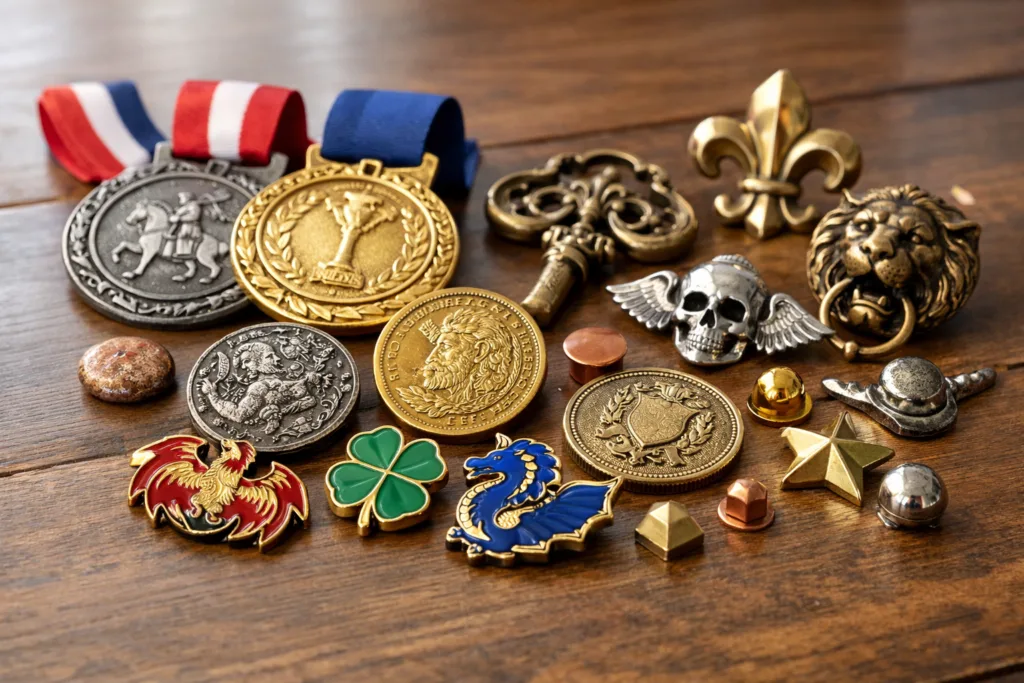
Because zinc alloy is strong yet formable, it’s the material of choice for custom die-cast medals, souvenir coins, brand badges, quality nameplates, luggage tags, belt buckles, and decorative hardware. Its ability to support both thick and thin wall sections allows for flexibility in design.
Zinc Alloy in Metal Manufacturing
Zinc alloy’s role in metal manufacturing is central. At Gairun, for example, high-quality zinc alloy is chosen to create medals, coins, badges, and custom metal crafts for a global B2B market. The process usually starts with mold design using CAD and CAM, followed by precise tooling manufactured by methods like wire EDM for superior crispness and repeatability.
Common Production Processes
- Die Casting: The main process for zinc alloy; allows for fine details, fast cycles, and complex shapes.
- Stamping/Pressing: Used for lighter relief designs, though less common for zinc alloy.
- CNC Machining: Employed for secondary operations or special customizations, though typically not the primary method for zinc alloy due to efficiency of casting.
Quality Standards
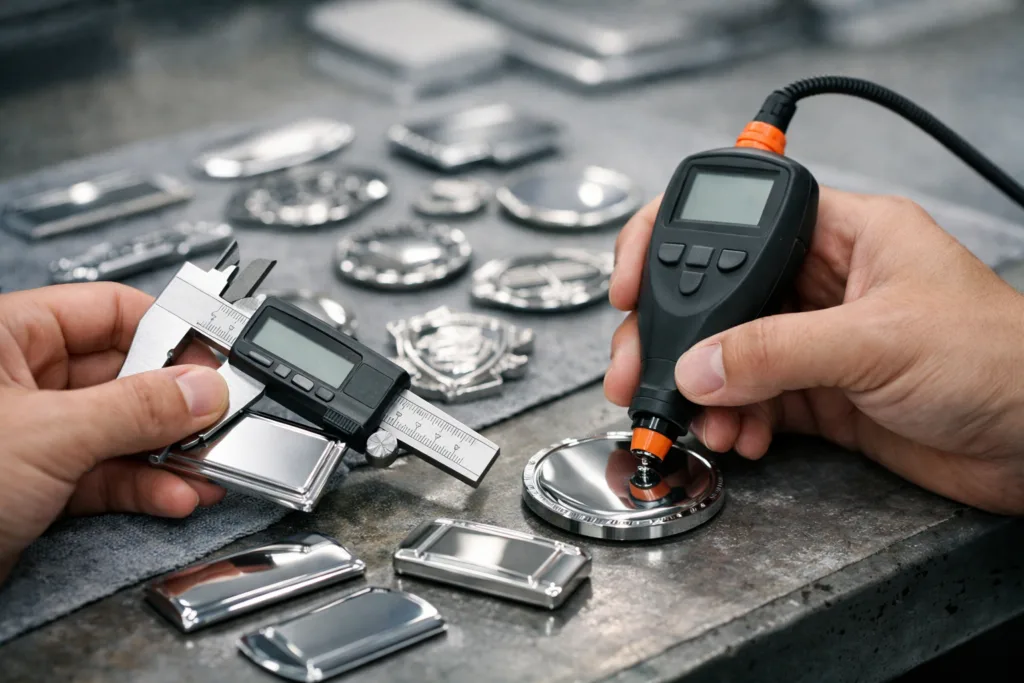
Quality control relies on international standards—dimensional checks, plating thickness by XRF, color matching (using Pantone guides), salt spray testing (ASTM B117) for corrosion resistance, and surface hardness by Vickers or Rockwell methods. For wearable items, compliance with EN 1811 (nickel release) and RoHS/REACH is essential to meet health and safety requirements.
Disadvantages and Limitations of Zinc Alloy
No metal is perfect for every application. While zinc alloy offers many upsides, it has a few drawbacks to consider:
- Lower mechanical strength than steel or brass: For parts facing high loads or repeated stress, zinc may not be ideal.
- Relatively low melting point (about 385°C): This limits use in high-heat environments.
- Not suitable for ultra-thin or extra-thick parts compared to sheet metal or solid steel: Beyond 10mm thickness, casting defects (voids or porosity) can appear.
- Potential for creep (slow deformation over time) under constant load: For structural applications, alternative metals may be better.
- Surface defects (flow lines, cold shuts): While rare with proper tooling, casting problems can arise with complex shapes or under-filled molds.
When to Avoid Zinc Alloy
It’s best to avoid zinc alloy in situations demanding extreme strength, prolonged thermal stability, or aerospace-grade performance. In such cases, stainless steel, brass, or specialty aluminum alloys serve better.
Comparing Zinc Alloy with Other Metals
Businesses often compare zinc alloy against brass, aluminum, and steel to make informed choices for their products. The table below provides a snapshot across essential dimensions.
| Metal | Typical Process | Strength | Finish Options | Cost per kg | Best-Use Case |
|---|---|---|---|---|---|
| Zinc Alloy | Die casting | Medium | Wide; plating, enamel, texture | Low | Medals, badges, hardware, crafts |
| Brass | Stamping, turning | High | Polishable, antique patinas | High | Coins, premium gifts, hardware |
| Stainless Steel | Stamping, CNC, laser cutting | Very high | Polished, brushed, colored | Medium | Tags, heavy-duty parts |
| Aluminum | Stamping, machining | Medium | Anodized, color fill | Medium | Lightweight tags, labels |
Which Is Right for You?
If you’re looking to combine fine detail with low unit cost and reliable delivery, zinc alloy is likely your best bet. For ultra-high strength or luxury feel, brass or stainless steel might be better—at a higher price.
Surface Finishes for Zinc Alloy Products
Finishing defines the look, feel, and longevity of metal products. Zinc alloy offers broad finishing choices, helping brands achieve their desired style and function:
- Electroplating: Zinc alloy can be coated with nickel, gold, gunmetal, rose gold, chrome, or antique effects for both shine and corrosion resistance.
- Powder Coating: Offers colored or textured surfaces; more resistant to chips and scratches.
- Enamel Filling: Both soft and hard enamel give vibrant color areas, with depth and visual contrast.
- Brushed/Polished/Sandblasted: Satin, mirror, or matte appearance, suitable for hardware and nameplates.
Process Control
Professional manufacturers like Gairun ensure finish thickness (e.g., plating ≥0.1 μm), adhesion (meeting ASTM D3359), and color accuracy (ΔE < 2 per industry standards). This means longer product life and consistent appearance across batches.
Design and Production Techniques in Zinc Alloy Metal Products
The production journey for zinc alloy metal products involves a sequence of skilled steps to deliver a quality outcome:
- Mold Making: Using CNC machining and wire EDM for detailed, long-lasting casting molds.
- Die Casting: Automated injection of molten zinc alloy into molds. Quick cooling keeps product dimensions sharp.
- Deburring & Finishing: Tumbling, shot blasting, or hand deburring removes excess material and smooths surfaces.
- Surface Treatment: Electroplating, powder coating, or color filling as specified for the end product.
- Assembly & Quality Check: Mounting split rings, clutch pins, or adhesives. Quality control includes visual checks, thickness measurements, and function tests.
- Packing: Products packed per customer requirements (OPP bag, velvet box, card), ensuring safe transit and presentation.
Branding Impact
Zinc alloy allows for sharp logos, custom shapes, and vibrant colors, making it a go-to for promotional or commemorative items where branding matters. Fast turnaround and repeatable quality give companies like Gairun an edge in fulfilling urgent or high-volume orders with consistent quality.
Lead Time, MOQ, and Cost Considerations
Zinc alloy’s compatibility with die casting translates to excellent lead times and feasible MOQs (Minimum Order Quantities) for B2B projects. Typical lead times can range from 10 to 25 days for bulk orders after mold setup. MOQs often start at 100–300 pieces, depending on item complexity and surface finish choices. The cost per part remains competitive thanks to fast cycle times and efficient material use.
Factors Influencing Cost
- Design complexity and mold life—detailed, multi-level molds cost more but enable unique 2D/3D features.
- Finish selection—multiple plating layers or color fills can increase price and lead time.
- Assembly and packaging—custom mounts or gift packaging add to unit cost but can boost perceived value.
Case Studies: Zinc Alloy for Medals, Coins, Badges, and Hardware
To see zinc alloy’s impact, consider three common product types:
Custom Medals and Coins
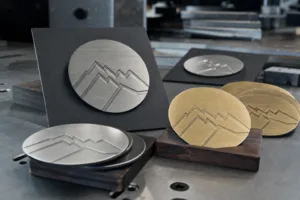
Zinc alloy is ideal for sports medals and military commemorative coins, offering 2D/3D relief, sharp edge profiles, and design flexibility. The combination of soft/hard enamel or antique finishing highlights brand logos and event details.
Brand Badges and Nameplates
Zinc alloy badges and nameplates can be produced with magnetic, adhesive, or pin mountings. Electroplated surfaces provide corrosion resistance for both indoor and outdoor use. Pantone-matched colors and laser-engraved serial numbers are also possible.
Decorative and Functional Hardware
For furniture or luggage, zinc alloy hardware offers the look and feel of heavier brass or steel, but with lower cost and weight. Plating options such as matte black or satin nickel deliver longevity with minimal upkeep—essential in commercial and hospitality environments.
How to Choose the Right Zinc Alloy Metal Products Supplier
The success of any zinc alloy product starts with the right manufacturing partner. Here’s what to look for:
- Manufacturing expertise—deep knowledge of mold making, casting, and finishing technology
- Rigorous quality controls—regular testing for tolerance, plating thickness, color, and hardness
- B2B experience—ability to manage high-volume orders and strict timelines
- Compliance awareness—familiarity with global standards like RoHS, REACH, and EN 1811
- Design support—help in optimizing product drawings for manufacturing, durability, and cost
Gairun, with its established OEM/ODM capability, stands as a reliable supplier for businesses demanding crafted, precise, and durable zinc alloy metal products.
Frequently Asked Questions
What are the main benefits of using zinc alloy in metal products?
Zinc alloy combines fine detail casting, good durability, flexible finishes, and competitive costs, making it ideal for items like medals, badges, coins, and hardware.
Are zinc alloy items suitable for outdoor use?
Yes, when finished with quality plating or powder coating, zinc alloy products resist corrosion and weathering, making them fit for outdoor or heavy-use environments.
What is the typical minimum order quantity (MOQ) for zinc alloy metal products?
MOQs are usually between 100–300 pieces, depending on complexity, size, and finishing requirements of the product.
How does zinc alloy compare to brass or stainless steel?
Zinc alloy is more affordable, easier to cast into complex shapes, and offers similar finish options, but it has lower strength than brass or steel for structural uses.
What quality standards should zinc alloy metal products meet?
Key quality standards include tight dimensional tolerances, sufficient plating thickness, proper adhesion, color matching, and compliance with RoHS and EN 1811 for wearables.
Can zinc alloy be recycled?
Yes, zinc alloy is 100% recyclable without significant loss of properties, helping reduce environmental impact in metal manufacturing.