Introduction: The Power of Choices in Metal Buttons
When you choose buttons for uniforms, apparel, or accessories, the material makes all the difference. Zinc alloy buttons and brass buttons look similar, but their properties, cost, and appearance set them apart. Whether you’re sourcing for branded garments or furniture hardware, understanding these options helps you make smart decisions. This guide explores zinc alloy buttons and brass buttons with a focus on strength, cost, and aesthetic impact.
Zinc Alloy vs Brass Buttons
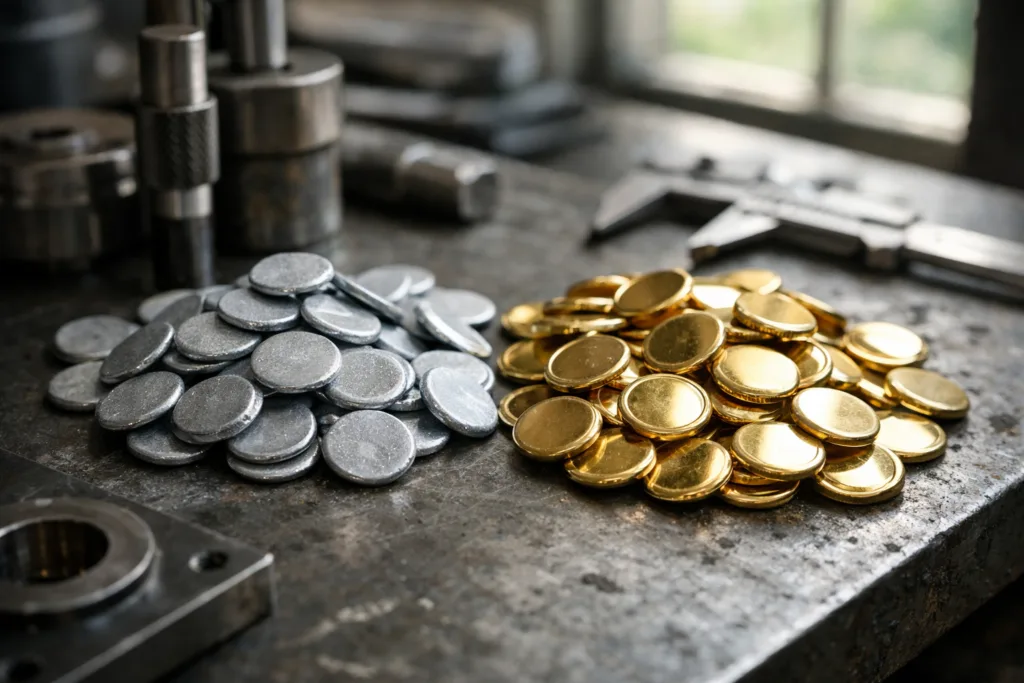
Zinc alloy buttons and brass buttons dominate the market in metal fasteners. Their durability, customization, and finish quality earn them wide use in fashion, furniture, and branded products. Gairun, as a leader in metal crafts manufacturing, offers both types with precision and customization.
- Zinc alloy buttons: Made from zinc mixed with other metals for improved performance.
- Brass buttons: Composed of copper and zinc, prized for their classic golden hue and corrosion resistance.
Manufacturers choose between these based on the final application’s needs, budget constraints, and branding goals.
Strength: Comparing Physical Performance
Material Composition
Zinc alloy combines zinc with elements such as aluminum, magnesium, or copper. Brass is an alloy of copper and zinc. Both offer solid strength, but their structure affects real-world performance.
Hardness & Durability
| Property | Zinc Alloy Buttons | Brass Buttons |
|---|---|---|
| Hardness (Vickers) | 60-120 HV | 70-150 HV |
| Wear Resistance | Moderate | Excellent |
| Corrosion Resistance | Good (with plating) | Superior (natural alloy property) |
| Impact Strength | Fair | High |
Real-World Performance
Brass buttons offer greater long-term strength, especially for outdoor or heavy-use items. Zinc alloy buttons withstand daily wear, especially when protected by plating. Both types pass basic stress and fatigue tests common in garment and hardware inspection.
- For uniforms and workwear, brass buttons hold shape under frequent washing.
- Zinc alloy suits decorative pieces and lighter applications, especially when cost matters.
Production & Manufacturing: Die Casting vs. Stamping
Zinc Alloy Button Production
Zinc alloy buttons often use die casting, a process that injects molten metal into detailed molds. This method supports complex 2D and 3D shapes, crisp relief, and customized branding (company logos, emblems, or patterns).
Key Steps:
- Design mold using CAD and wire EDM for precise geometry.
- Inject zinc alloy at 400–420°C into the mold cavity.
- Cool and release the part, trim excess.
- Deburr and finish (shot blasting, tumbling).
- Apply electroplating or paint for color and corrosion protection.
Brass Button Production
Brass buttons usually involve stamping or pressing flat brass sheets into shape. For high-relief or shaped buttons, CNC machining or deep draw pressing may be employed. Stamping supports high accuracy and repeatability, and brass’s workability makes it ideal for detailed textures.
Key Steps:
- Cut brass sheet to size; clean and prepare surface.
- Stamp design using hardened steel dies.
- Machine details if needed.
- Deburr and polish (satin, mirror, or brushed finishes).
- Apply optional plating or lacquers for enhanced protection.
Both processes allow for 2D or 3D relief and color infill (soft/hard enamel, epoxy dome). Gairun maintains tight quality tolerance and plating thickness checks (using XRF measurement) for consistent results.
Cost: Budget Considerations and Price Drivers
Base Material Pricing
Zinc is more abundant and easier to mine than copper, making zinc alloy generally cheaper than brass. Brass contains a high percentage of copper, a much costlier raw material. This means brass buttons typically command a premium.
Production Cost
- Zinc alloy buttons: Die casting supports fast, high-volume production. Low waste and rapid cycle times keep overall costs low, especially for complex designs or large batches.
- Brass buttons: Stamping and machining take more energy and time. Brass is heavier, raising transport and handling costs. Labor for machining details adds to final cost.
Finishing Options
Both buttons can be plated in gold, antique brass, nickel, matte black, gunmetal, or chrome. Zinc alloy needs robust plating to match brass’s natural shine and anti-corrosion. Plating costs can narrow the price gap for high-spec orders.
- Minimum Order Quantity (MOQ) is generally lower for zinc alloy due to flexible casting.
- Lead time for zinc alloy is often faster, especially in mass production.
If cost is your key concern, zinc alloy buttons deliver the best value for decorative or seasonal garments. For prestigious brands, military insignia, or heritage products, clients may justify brass’s higher spend.
Appearance: Style, Finish, and Branding Impact
Surface and Color
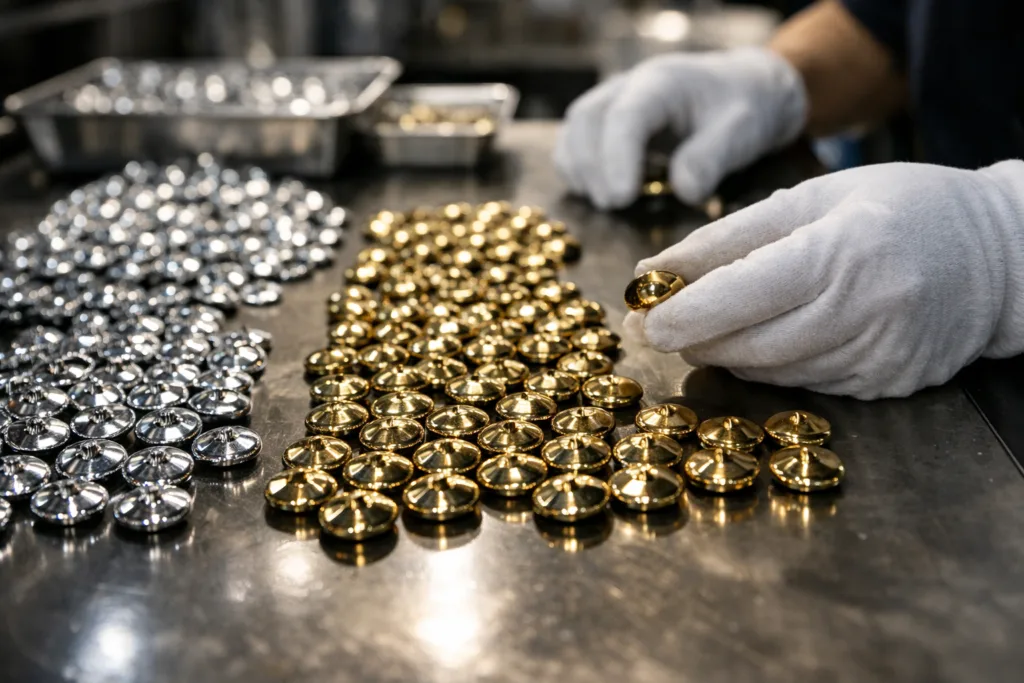
Brass buttons have a natural golden look and warm luster. They age gracefully, developing a subtle patina over time. Zinc alloy buttons rely on surface plating or coatings for color; they can mimic brass, nickel, matte black, gold, or other finishes but lack brass’s natural depth. Both varieties accept enamel fills and custom Pantone color matches.
Branding and Customization
Die-cast zinc alloy offers more freedom for shapes—curved logos, 2D/3D emblems, and fine detail. Brass supports intricate patterning in tradition-rich designs. Furniture brands often prefer brass for classic appeal, while fashion brands use zinc alloy for bold, modern styling.
Texture and Relief
- Brass: Best for brushed, satin, and antique finishes. Polishes to a mirror shine for luxury items.
- Zinc Alloy: Excels at complex, multi-level relief; supports sandblasting, powder coating, and matte effects.
Both materials enable hard and soft enamel, embossed lettering, and even epoxy domes for added dimension.
Expert Take:
“If you want a classic look that lasts decades, choose brass. For standout, modern branding, zinc alloy brings flexibility.” — Gairun Metal Crafts
Applications: Where Each Button Shines
Fashion & Apparel
- Zinc alloy buttons: Used on jackets, jeans, coats, and sportswear for design flexibility and cost control.
- Brass buttons: Featured on formal jackets, uniforms, and heritage outerwear for timeless looks.
Furniture & Hardware
- Zinc alloy: Decorative hardware, furniture pulls, and nameplates that need unique shapes or branding.
- Brass: Classic nameplates, drawer pulls, and hardware for luxury and vintage pieces.
Souvenirs & Branding
- Zinc alloy: Custom company badges, promotional lapel pins, and logo keychains.
- Brass: Premium club coins, military insignias, and collectible crafts.
For all wearables (buttons, badges, coins), compliance with standards like EN 1811 for nickel release and RoHS/REACH for chemical safety is essential.
Quality Control & Compliance
Testing and Inspection
- Plating thickness: XRF testing ensures consistent finish (5–20 μm typical).
- Salt-spray resistance: ASTM B117 for 24–96 hour exposure.
- Adhesion: Coating pull-off checks per ASTM D3359.
- Color consistency: ΔE measurements for Pantone matching.
- AQL sampling per ANSI/ASQ Z1.4 for shipment inspection.
Wearable items undergo extra scrutiny. Buttons for children’s clothing follow CPSIA and Prop 65 guidelines. Gairun implements reliable quality tracking throughout production to meet varied international requirements.
Customization & Ordering: Making Your Project Stand Out
Design Options
- Relief: Choose 2D or 3D relief for logos and signature styles.
- Finish: Select color and texture—antique, matte, polished, or sandblasted.
- Mounting: Options include rivets, screw posts, magnetic backs, or adhesive pads.
- Packaging: OPP bag, velvet box, blister pack, or custom carding for branding impact.
Lead Times & MOQs
Zinc alloy delivers fast prototyping and lower MOQs. Brass suits established brands ready for larger runs. Both types support ODM/OEM customization. Contact Gairun for sample development and pricing tailored to your brand specs.
Decision Guide: Zinc Alloy vs Brass Buttons
Best Use Scenarios
| Scenario | Zinc Alloy Buttons | Brass Buttons |
|---|---|---|
| Fast fashion | ✓ | |
| Premium uniforms | ✓ | |
| Luggage/Hardware | ✓ | ✓ |
| Collectibles | ✓ | |
| Custom branding | ✓ | ✓ |
Buyer’s Checklist
- Identify the product’s target style, durability needs, and brand position.
- Estimate cost vs. visual impact for your market segment.
- Confirm finish, compliance, and necessary certifications.
- Plan sample runs and pilot tests before full orders.
Summary: Crafting the Perfect Button Solution
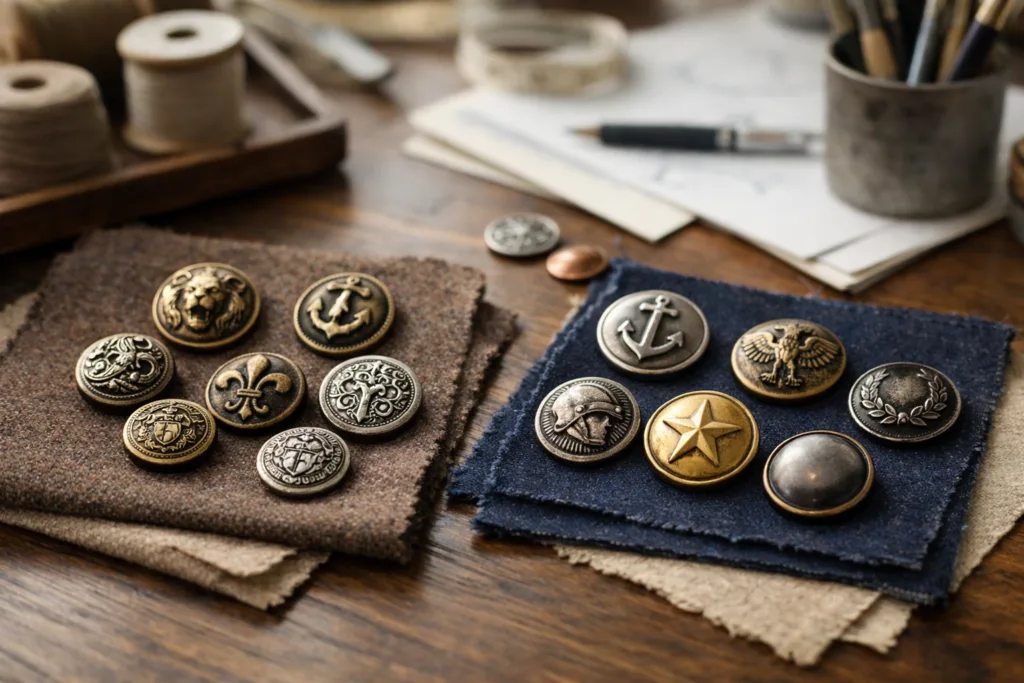
The choice between zinc alloy buttons and brass buttons depends on your project’s requirements. Zinc alloy offers flexibility and affordability, ideal for on-trend styles or branded merchandise. Brass brings timeless elegance and robust strength, adding value to premium products. With careful selection of process, finish, and quality control, every button can showcase your brand’s commitment to craftsmanship and style.
Frequently Asked Questions
What are the main differences between zinc alloy buttons and brass buttons?
Zinc alloy buttons use die casting for detailed designs, cost less, and rely on plating for finish. Brass buttons are stamped or machined, offer greater natural strength and corrosion resistance, and feature a classic golden hue.
Which type is better for uniforms or heavy-duty apparel?
Brass buttons excel in uniforms and heavy-duty wear because of superior durability and resistance to repeated washing and abrasion.
Can zinc alloy buttons mimic the look of brass?
Yes, zinc alloy buttons can be electroplated to resemble brass, gold, or antique finishes. The appearance is similar, though brass provides a richer natural tone over time.
Which button type offers lower production costs?
Zinc alloy buttons generally cost less to produce due to cheaper material and faster die-casting processes, making them ideal for bulk orders or budget-sensitive projects.
Are both button types safe for direct skin contact?
Both types can be made skin-safe. Brass is naturally hypoallergenic, while zinc alloy buttons require proper plating to avoid nickel exposure, adhering to standards like EN 1811.
How do I order custom zinc alloy or brass buttons for my brand?
Contact a specialized manufacturer like Gairun, specifying your material, design, finish, MOQ, and packaging needs. Sample development precedes mass production to ensure precision and brand alignment.