Introduction: Designing Enamel Pins for Retail Brands
Enamel pins have become more than decorative accessories—they are storytelling tools and brand statement pieces that attract new audiences and build deeper connections. For retail brands, designing enamel pins that resonate requires much more than creativity alone. It demands a thoughtful approach to brand identity, audience insight, material selection, and production methods. This guide will walk you through every step involved in designing enamel pins for retail brands, bridging creative ideas with manufacturing realities and proven retail strategies.
Understanding Brand Identity in Enamel Pin Design
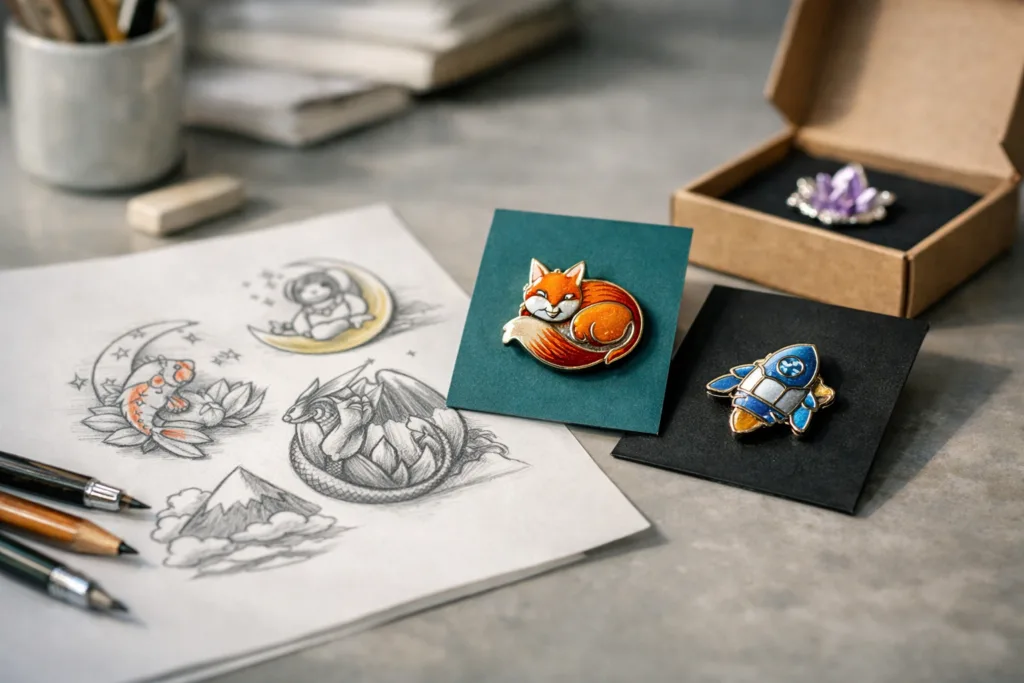
A successful enamel pin begins with a clear grasp of your brand’s identity. The essence of any retail brand—its colors, values, and visual style—should shine through each pin. Pin designs that reflect brand personality, whether playful or sophisticated, help customers connect emotionally. Consider elements from existing logos, packaging, or signature patterns, building off these hallmarks for instant recognition.
Identifying Your Target Audience
Knowing who you’re designing for influences every creative decision. For instance, youth-targeted streetwear brands often favor bold color blocks and oversized pins, while luxury beauty lines might opt for subtle metallic finishes and delicate forms. Retailers benefit from surveying customers or analyzing sales data to target themes, shapes, and sizes that spark engagement in specific segments.
From Concept to Mockup: Creative Process Steps
The journey starts with ideation. Sketch out diverse concepts that mirror your brand voice. Mood boards, digital illustrations, and even paper cutouts help designers visualize textures and colors. Iterative feedback with your marketing or product team ensures alignment before moving to technical artwork required for manufacturing.
Material Choices: Hard vs. Soft Enamel
Material selection is pivotal for retail appeal and durability. Hard enamel pins are polished smooth and offer jewelry-like finishes. Soft enamel pins feature raised metal lines that add tactile appeal and highlight vibrant color fills. Both materials have their strengths for retail—hard enamel suits premium collections, while soft enamel provides cost-effective options with standout textures. For a deeper exploration, see Hard vs. Soft Enamel Pins: The Only Guide You’ll Need for a Smart Choice.
Pin Size, Shape, and Thickness: Key Considerations
Retail pins are often between 20mm–35mm wide, balancing visual impact with wearability. Unique shapes—custom die cuts, geometric outlines, or branded silhouettes—catch eyes on shelved displays. Carefully choose thickness to ensure the pin feels substantial without being bulky.
Choosing a Color Palette That Pops
Color selection can make or break a design. Use Pantone guides for precise brand matching. Metallic plating (gold, silver, black nickel) adds elegance, while enamel fill colors should contrast enough to be visible on clothing or accessories. Limit to 4–6 colors for clarity and cost control, unless showcasing high artistry or limited editions.
Designing Pin Backs and Accessories for Retail
Beyond the artwork, back attachments are critical for user experience. Locking backs prevent loss, while butterfly clutches are quick and affordable. Consider branded backstamps or custom card packaging for retail display impact. For top-tier design, manufacturers like Gairun use precision CNC engraving for sharp logo features.
Prototyping: Turning Art into Reality
Digital artwork is translated into 3D mold files. High-precision manufacturers focus on crisp linework, even color separation, and proper mold tolerance. Always request a physical sample before mass production—it’s easier to catch issues like color mismatch or sharp edges at this stage.
Material Integrity: Purity Matters
For brands seeking jewelry-grade pins, virgin alloys outshine recycled materials for smoothness and long-term shine. High-grade brass offers crisp stamping details, while Zamac alloys provide strong bases for detailed engraving. Manufacturing partners that prioritize lead-free and nickel-free compositions ensure safety and global compliance, like those found at Lead-Free and Eco-Friendly Materials for Metal Medals and Badges.
Production: Choosing the Right Manufacturer
Retail success hinges on partnering with reliable manufacturers who can deliver consistent quality. Research those specializing in fashion hardware or packaging accessories. Ask about their mold making, finishing methods, and quality control practices. For context, see Common Design Mistakes in Metal Products to avoid pitfalls.
Finishes That Elevate: Plating and Coating Options
Finish matters for both appearance and longevity. Popular choices include gold, silver, black nickel, and antique coatings. Premium pins receive multi-stage polishing for mirror-shine before plating. Some manufacturers employ rack plating over barrel plating for higher gloss and precise detail—essential for retail presentation.
Texture and Depth: Adding Visual Interest
Combining flat and raised elements, sandblasted backgrounds, or 3D reliefs can make pins stand out on crowded shelves. Experimenting with textures is an easy way to create perceived value in retail environments.
Ethical Sourcing and Sustainability
Modern consumers appreciate transparency. Use eco-friendly alloys, recycled packaging, or lead-free plating to appeal to responsible buying trends. Communicate these choices on your product tags or marketing materials for added trust.
Retail-Ready Packaging for Enamel Pins
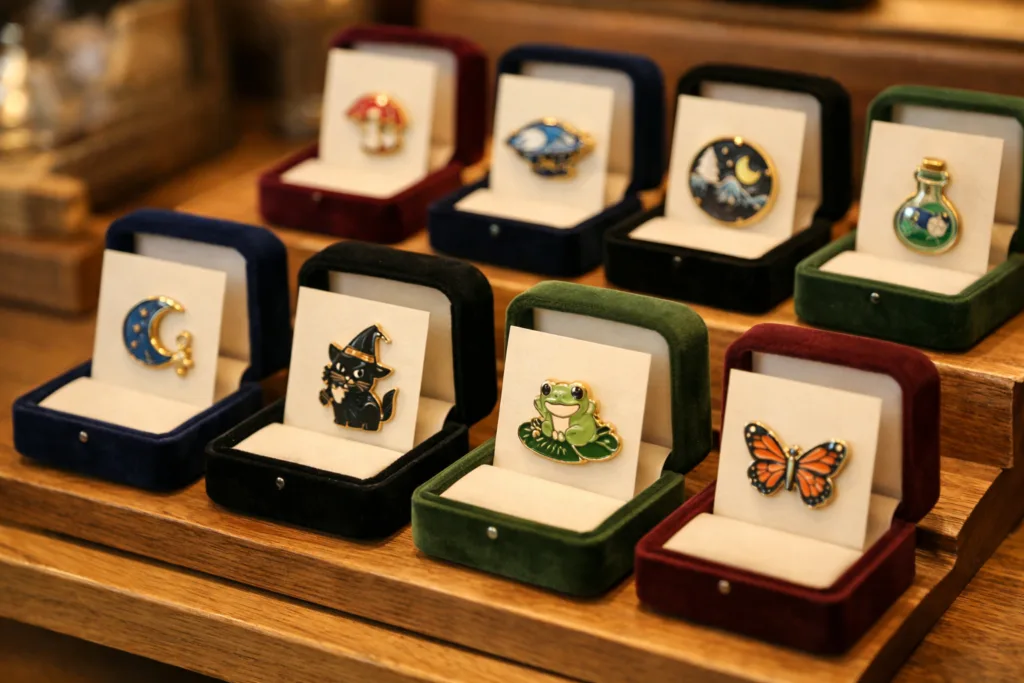
Package design is a branding opportunity. Sleek velvet display boxes or creative cardboard sleeves set your pins apart, making gifting easy. Proper packaging also protects pins during shipping and shelf display. Learn more with The Art of Display: 11 Essential Velvet Box Secrets for Medals and Coins.
Pin Storytelling: Creating Emotional Connections
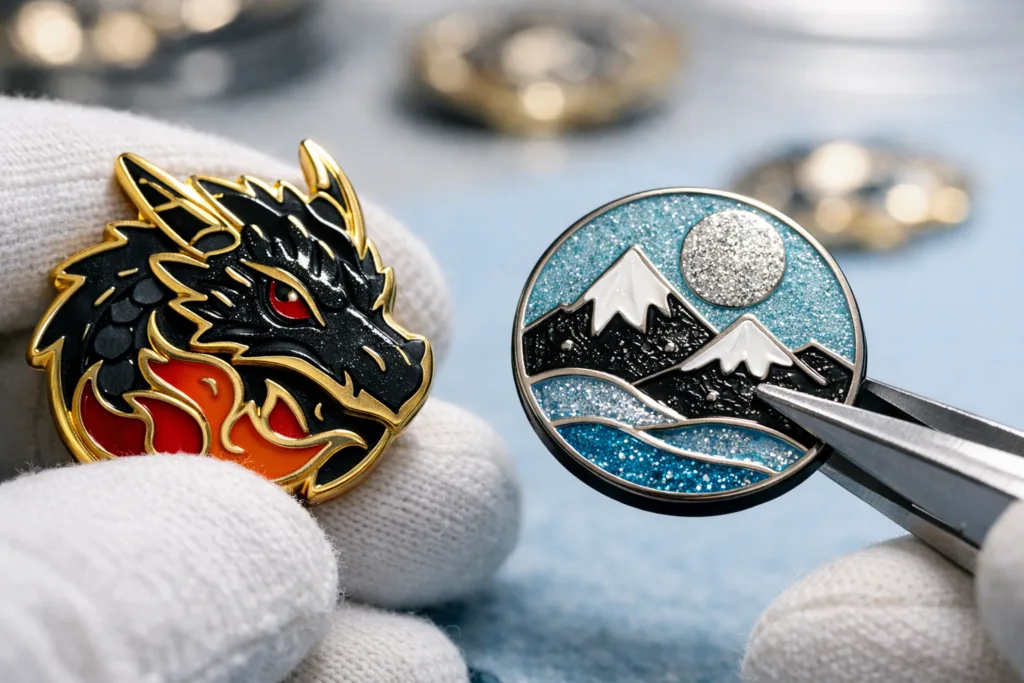
Think beyond aesthetics. Great retail pins suggest stories—icons that celebrate local culture, playful characters that echo brand campaigns, or meaningful quotes. Storytelling makes products memorable and drives repeat purchases. Consider how your pin fits into a larger brand narrative for lasting impact.
Legal Protection: Trademark and Copyright Concerns
Safeguard your designs by checking for copyright conflicts before launching. Register unique artworks or logos as trademarks to prevent future disputes and maintain brand integrity in retail settings.
Crafting Compelling Marketing Strategies for Retail Pins
Attract attention with themed social media launches, influencer partnerships, or in-store displays. Pin bundles, seasonal exclusives, or loyalty schemes can turn simple collectibles into sought-after brand items. Use professional photography to highlight texture and detail in online retail channels.
Retail Display Techniques That Sell
Effective display turns pins into impulse purchases. Consider high-contrast background cards, shadow boxes, or rotating stands near checkout counters. Ensure your branding is visible and the product remains easily accessible.
Price Point Decisions for Retail Success
Factor in production cost, retail markups, and perceived value when setting the price. Limited editions or premium packaging allow for higher pricing, while entry-level designs should stay competitive to attract wider audiences.
Quality Control: Ensuring Consistent Results
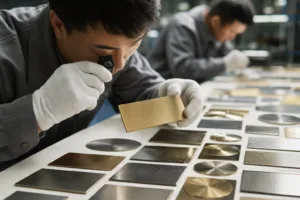
Rigorous quality checks spot flaws before pins reach the shelf. Leading manufacturers conduct thorough plating inspection, salt spray corrosion resistance, and color verification. For a closer look, see Quality Control in Custom Medal Manufacturing: What Buyers Should Look For.
Case Studies: Successful Retail Enamel Pin Brands
Brands like Disney and Supreme use character-driven and street culture themes to consistently sell out pin collections. Their success boils down to authentic storytelling, bold design, and seamless retail integration. Small brands thrive by tapping local pride or inside jokes—look for inspiration and adapt clever strategies.
Common Design Mistakes and How to Avoid Them
Overly complex artwork, unbalanced color choices, or weak pin backs lead to low sell-through rates. Always validate production feasibility and test unseen design details prior to launch. Reference detailed guides such as Common Design Mistakes in Metal Products for a smoother process.
How to Design Enamel Pins for Retail Brands
Designing enamel pins for retail brands involves creative, technical, and marketing expertise. Begin with thorough brand and audience research. Sketch ideas, select materials suited to your product tier, and partner with manufacturers who value precision and durability. Storytelling, responsible sourcing, and strategic packaging elevate your pins and your brand’s retail performance. Monitor trends, embrace rigorous quality assurance, and keep innovating—memorable pins stand the test of time both on shelves and in the hearts of customers.
Frequently Asked Questions
How do I choose between hard and soft enamel pins?
Consider durability, texture, and brand positioning. Hard enamel offers a smooth, premium finish; soft enamel is textured and cost-effective for vibrant designs.
What is the best size for retail enamel pins?
Most retail pins range from 20mm–35mm. This size balances visibility with comfort, perfect for apparel and accessories.
How many colors should I use in my pin design?
Limit to 4–6 colors for clarity and cost efficiency. More colors increase production complexity and may impact legibility.
What packaging works best for retailing enamel pins?
Custom card backing with branding is popular. Velvet boxes or unique sleeves add perceived value and protect pins during storage and display.
How can I ensure my pin designs are unique?
Base designs on your brand story or customer insights. Avoid direct copying and add novel shapes, textures, or storytelling elements.
What retail strategies help enamel pins sell faster?
Pins move quickest when displayed near checkouts, launched with themed campaigns, or paired with social media contests to drive engagement.
Related Reading
- Definitive Comparison: Choosing Hard vs. Soft Enamel for Your Brand’s Pins
- Critical Metal Design Mistakes You Can Easily Avoid
- Why Safe, Eco-Friendly Materials Matter Most for Retail Metal Goods
- The Insider’s Guide to Retail-Ready Metal Quality Control
- Secrets to Elevating Product Display with Velvet Packaging