Introduction: The Creative and Functional Edge of Spinning Medals for Running Events
Designing spinning medals for running events isn’t just about making awards—it’s about capturing achievement in an unforgettable way. As event organizers seek new ways to motivate and honor runners, spinning medals have risen in popularity due to their dynamic look, engineering ingenuity, and storytelling capacity. In this comprehensive guide, we delve deep into the interplay of creativity and functionality, share best practices for medal engineering, and reveal how meaningful design touches inspire both designers and runners alike.
The Unique Appeal of Spinning Medals for Running Events
Runners participate in events for personal triumph, camaraderie, and the thrill of the finish line. Receiving a spinning medal adds a layer of excitement—they’re kinetic, interactive, and memorable. Unlike standard medals, spinning medals become fidget-worthy souvenirs that reflect the energy of the race itself.
What Is a Spinning Medal?
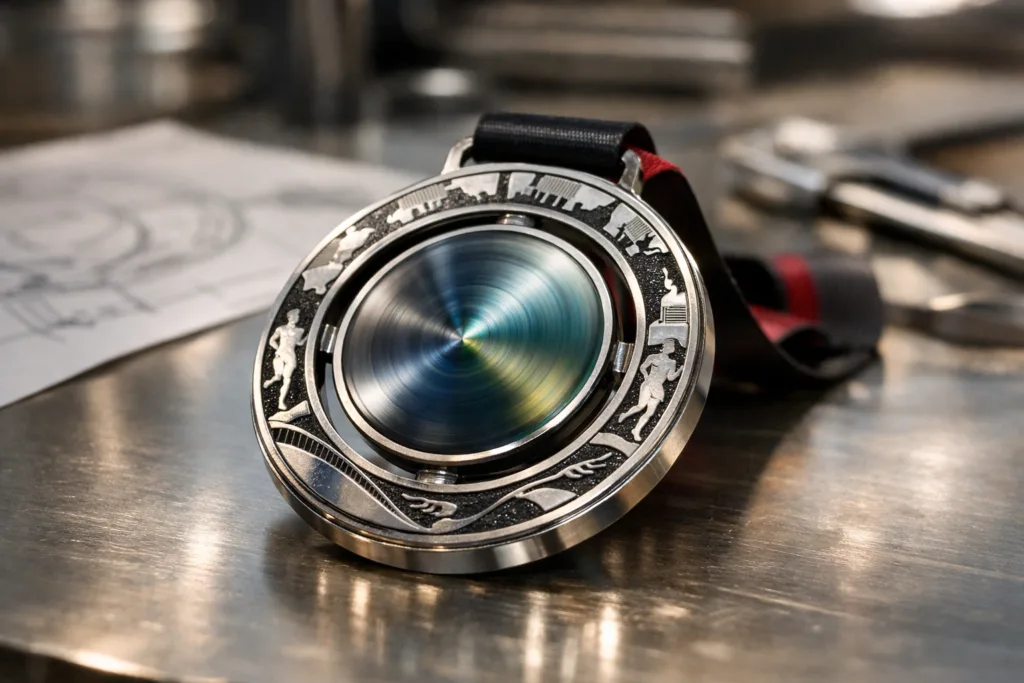
A spinning medal features a central or distinct design element that rotates independently inside an outer frame or border. This movement is more than a gimmick; it symbolizes momentum, progress, and unending motivation—ideals rooted deeply in running culture.
Why Choose Spinning Medals for Running Events?
Choosing spinning medals can set your event apart. Their interactive and mechanical nature appeals to participants seeking unique race experiences and showpiece items for their collection. Spinning medals are proven to boost post-race photo sharing, medal displays, and repeat registrations.
The Interplay of Creativity and Engineering in Spinning Medal Design
Designing a spinning medal demands collaboration between creative minds and experienced engineers. Creativity inspires the shapes, motifs, and story, but functionality guides material selection, balance, and the mechanics of spinning. Only by blending artistry with technical know-how can a medal both delight and endure repeated handling.
Inspiration from Running Culture and Iconography
Great spinning medals pull inspiration from local landmarks, course scenery, race mascots, or cause-related symbols. Event colors, slogans, and year-specific graphics often find their way into the design. Even textures—like simulated running tracks or sneaker soles—can connect medal design directly to the running event itself.
Engineering Essentials Behind the Spin: How Spinning Medals Work
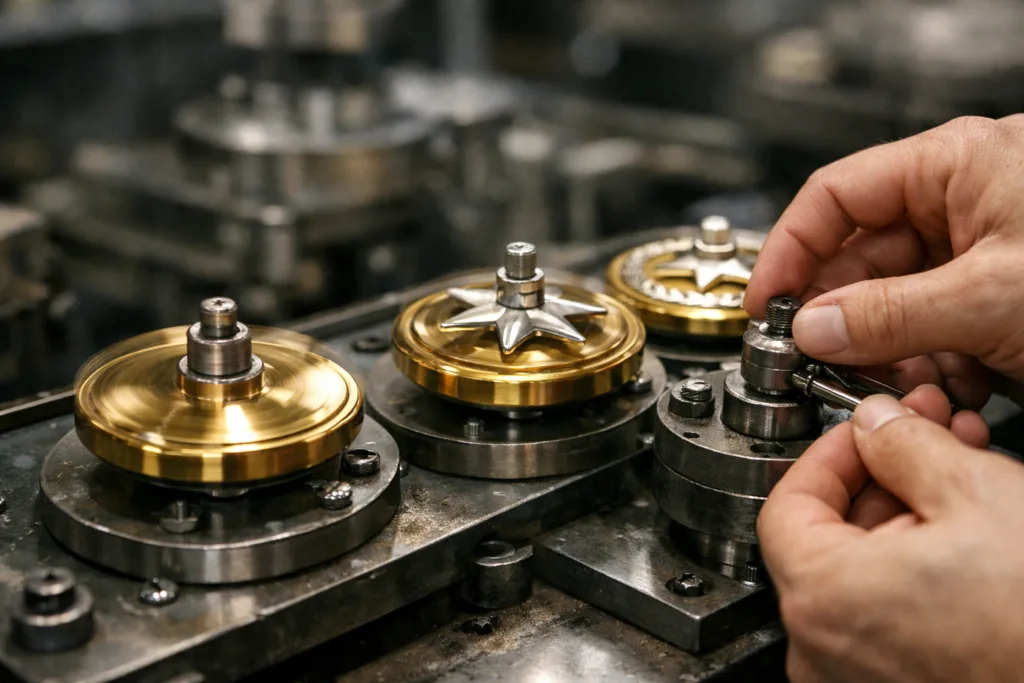
The spinning feature depends on sound engineering. Typically, the central disc or motif is suspended via a precision axle, pin, or rivet, allowing smooth, friction-minimized motion. Material tolerance is crucial: too loose, and the centerpiece may wobble; too tight, and it won’t spin. Manufacturers like Gairun use strict CNC mold standards to ensure the engineering matches design expectations and long-term durability. Choices in metals—like high-grade zinc alloy or brass—impact not only spin quality but also the medal’s weight and feel.
The Role of Materials in Spinning Medal Design
Material choice influences aesthetics, tactile response, and functional integrity. Zinc alloy is favored for its strength-to-weight ratio, while brass offers crisp detailing. When surface purity matters for smooth spins and luxury feel, some manufacturers opt for virgin alloys over recycled content—a small detail that can maximize surface perfection.
Step-by-Step: The Spinning Medal Manufacturing Process
- Concept & Artwork Submission: Designers translate event inspiration into detailed medal illustrations with clear callouts for moving parts.
- Mold Creation: High-precision CNC tools render both the outer frame and the spinning element, accounting for metal shrinkage and part tolerances.
- Casting or Stamping: Selected materials are shaped via die-casting or stamping processes. Multi-part assembly is planned from this stage.
- Polishing & Surface Treatment: Mirror polishing, sandblasting, or texturing is applied per design requirements.
- Color Application: Hard or soft enamel, paint, or printing adds vividness and brand identity.
- Assembly: The spinning centerpiece is attached using a low-friction axis system, such as a press-fit pin or micro-screw, then tested for motion.
- Plating & Finishing: Gold, silver, antique, or custom platings enhance luxury and contrast.
- Quality Control: Each medal is spin-tested, surface-inspected, and measured before packing.
For details on manufacturing nuances, see How Award Medals Are Manufactured.
Designing for Smooth Functionality: Secrets to a Perfect Spin
A great spinning medal should rotate easily with a gentle push, stay balanced in any position, and return to rest without rattling. This means builders must factor in weight distribution, pin tension, metal thickness, and even post-finishing clearances.
Metal Finishing and Color Options for Event Branding
Spinning medals adapt beautifully to a broad range of finishes: matte, satin, mirror, black nickel, antique bronze, or custom patinas all play roles in complementing your event theme. Custom color fills in the spinning element can reinforce team branding or express charity colors, maximizing social sharing and emotional connection.
Adding Personal Touches: Engraving and Customization
Many spinning medals feature laser engraving for runner names, race distances, or personal times. Some events incorporate QR codes into the medal’s reverse side for instant access to result pages or digital event photos. For a closer look, read about Laser Engraving on Medals and its value in mass events.
Medal Ribbon Choices and Their Impact on Finish
The right ribbon makes a world of difference. Wide, dye-sublimated ribbons offer ample branding; narrow, textured ones ooze vintage charm. Ribbon attachment methods—like jump rings, eyelets, or integrated pins—can subtly change the way a spinning medal sits against the chest or hangs on a display wall. Explore Ribbon and Accessory Assembly for Medals for options and best practices.
Balancing Size, Thickness, and Comfort for Runners
While larger spinning medals stand out visually, they must remain wearable—even after a long, sweaty race. Designers typically aim for a diameter between 60–90mm and a thickness that provides sturdiness without excess weight. For nuance on how these factors affect experience, see How Thickness and Weight Influence the Feel of a Custom Medal.
From Concept to 3D: Bringing Design Ideas to Life
Modern design begins with hand-sketched ideas before moving to digital 3D modeling. This transition helps visualize how elements will overlay, where spinners will sit, and how mechanical clearances play out. Adjustments at this stage save countless hours and material during manufacturing. For step-by-step guidance, visit How Custom Metal Product Design Works.
Avoiding Common Design Pitfalls in Spinning Medals
Pitfalls include overcomplicating the rotating mechanism, using artwork with weak attachment points, or neglecting negative space that enhances medal motion. Partnering with manufacturers who understand event medal construction, like those practicing the standards seen in Common Production Problems in Medal Manufacturing—and How a Good Factory Prevents Them, ensures medals meet both creative and functional goals.
Sustainable & Safe: Eco-Friendly Considerations in Modern Spinning Medals
Many event organizers now request lead-free and nickel-free medals for runner safety and eco-friendliness. Packaging alternatives—OPP bags, recyclable boxes, or velvet cases—reduce environmental impact while safeguarding delicate spinning mechanisms. Insight on safe, green options can be found in Lead-Free and Eco-Friendly Materials for Metal Medals and Badges and Packaging Solutions for Medals and Coins.
Packaging for Protection and Presentation
High-quality spinning medals deserve presentation worthy of the event’s prestige. Satin-lined velvet boxes, protective OPP sleeves, or custom foam inserts not only wow recipients but also preserve the medal between events or during shipping. Discover creative medal presentation ideas in the Art of Display: Essential Velvet Box Secrets for Medals and Coins.
Event Branding Success Stories with Spinning Medals
From city marathons to community fun runs, unique spinning medals have been at the heart of viral social media campaigns and press coverage. These celebratory awards often become the focal point for finish-line photos and post-event storytelling, deepening the emotional bond between runners and their accomplishments.
Runner Testimonials: Why Spinning Medals Matter
Runners consistently mention that spinning medals feel more meaningful and are more likely to be displayed at home. The novelty encourages sharing on social platforms—and sometimes, healthy competition to collect editions from several races. For athletes, a spinning medal signifies not just a finished race, but a memory set in motion.
Design Collaboration: Working with Runners and Designers
Open communication between medal designers, race organizers, and runners fosters awards that reflect authentic event spirit. Surveys, prototype feedback sessions, and collaborative mood boards can refine theme, color, and feature decisions before finalizing production.
Ensuring Quality: Testing and Quality Control for Spinning Medals
Medals undergo strict visual, functional, and endurance testing. This includes repeated spinning, drop tests, and plating adhesion checks. Manufacturers like Gairun perform spot checks and grade out any component with less-than-perfect movement or finish, guaranteeing only memorabilia-quality medals reach the finish line.
Spinning Medals for Running Events
Choosing spinning medals for running events offers a powerful combination of creativity, innovative engineering, and timeless runner motivation. By focusing on thoughtful design and high-precision manufacturing, event organizers can deliver medals that capture the story, energy, and pride of their races—medals runners will cherish and remember long after the last mile.
Trends and Innovations: The Future of Spinning Medals
Expect more interactivity in future designs: glow-in-the-dark accents, translucent enamel, and augmented reality QR codes are just a few on-trend upgrades. Commitment to eco-friendly manufacturing and custom packaging options will also set races apart.
Conclusion: Achieving Both Beauty and Performance
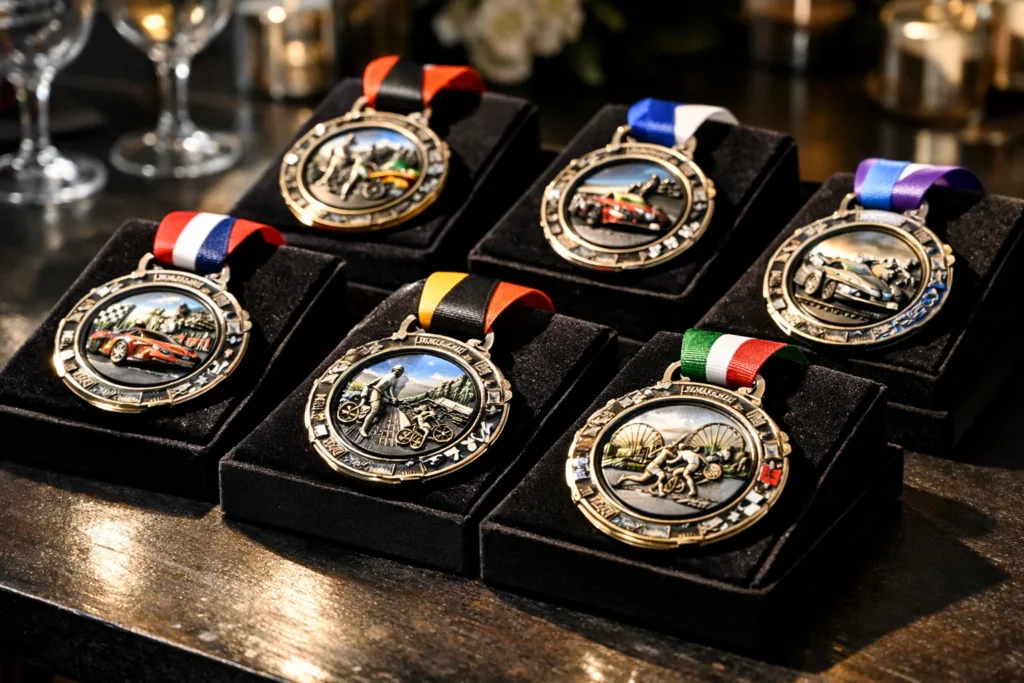
Designing spinning medals for running events is a meticulous process balancing artistry and engineering. Medals must look extraordinary, work flawlessly, and tell a unique event story. When creativity and technical mastery converge, the result is more than just a prize—it’s a kinetic symbol of accomplishment, ready to spin tales for years to come.
Frequently Asked Questions
What makes spinning medals different from standard race medals?
Spinning medals feature a moving part, typically a central disc, that rotates, offering a unique tactile and visual experience compared to static medals.
How do organizers ensure spinning medals remain durable?
By using high-quality alloys, precise assembly, and robust quality control, manufacturers ensure medals withstand repeated spinning and handling.
Can spinning medals be personalized for individual runners?
Absolutely! Laser engraving, color accents, and even QR codes allow medals to be personalized with names, finish times, or race details.
Are spinning medals suitable for all types of running events?
Yes, spinning medals can be adapted for marathons, 5Ks, fun runs, or themed races, making them popular across different event types.
What are popular finishes and color options for spinning medals?
Options include gold, silver, antique finishes, and bright enamel colors that can be customized to match event branding and runner preferences.
How should spinning medals be packaged for best presentation?
Velvet boxes, custom insert packaging, or branded OPP sleeves not only protect the spinning mechanism but elevate the medal’s visual impact.