Introduction: PVD vs Electroplating for Zinc Alloy Packaging Parts
If you’re responsible for sourcing luxury packaging hardware—think perfume caps, spirits bottle tops, and bespoke gift box details—you’ve likely encountered two surface finishing giants: PVD (Physical Vapor Deposition) and traditional electroplating. Both methods transform raw zinc alloy (Zamac) into stunning, durable packaging features that define a brand’s tactile appeal. But as global brands push for ever-tougher requirements—wear resistance, expanded color choices, cost efficiency, and consistently short lead times—the differences between PVD and electroplating become critical for procurement decision-makers.
Understanding Zinc Alloy Packaging Parts
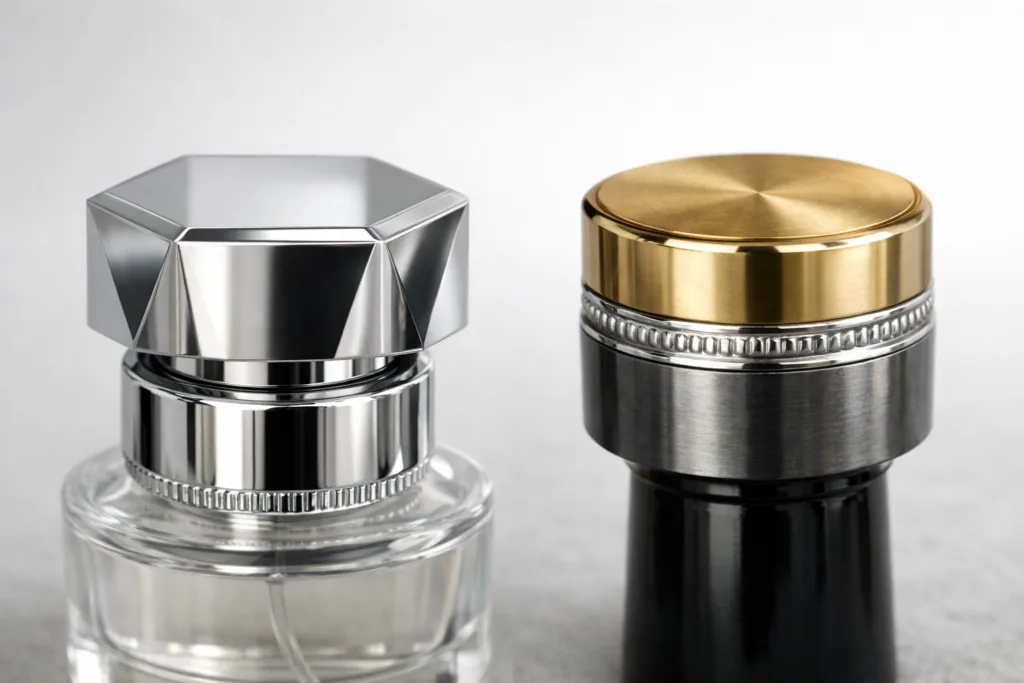
Zinc alloy, commonly Zamac 3 or Zamac 5, is prized for its balance of fluidity, strength, and ability to accept intricate finishes. Widely used in perfume caps, bottle closures, and box clasps, its versatility makes it the go-to option for luxury packaging hardware. Manufacturers like Gairun emphasize alloy purity (virgin Zamac, not recycled stock) to ensure flawless surfaces before any finish.
The Role of Surface Finishes in Brand Perception
Surface finishing elevates packaging from mere protection to statement-making luxury. A perfect finish ensures tactile pleasure, visual allure, and robust durability—qualities that define premium brands. Poor finishing, on the other hand, leads to color fading, abrasion, and brand reputation risks. When choosing between PVD and electroplating for zinc alloy packaging parts, these factors hold extra weight.
PVD vs Electroplating for Zinc Alloy Packaging Parts: The Core Differences
PVD and electroplating both create attractive, protective finishes on zinc alloy, but their core mechanisms differ.
- PVD: Uses vacuum-based vapor deposition to bond metal molecules (e.g., titanium, chromium) directly onto the substrate. Results in ultra-dense, wear-resistant layers.
- Electroplating: Immerses parts in an electrolyte bath, passing current to deposit metal ions (nickel, gold, chrome) onto the surface. Control of thickness and color is high, but layers tend to be softer.
Quick Comparison Table: PVD vs Electroplating (Zinc Alloy Hardware)
| Factor | PVD | Electroplating |
|---|---|---|
| Wear Resistance | Very High | Moderate |
| Color Range | Wide, but metallic shades | Extremely broad (gold, antique, vibrant) |
| Cost Gradient | Higher, especially for batch setup | Lower, scalable for simple colors |
| Lead Time | Longer (specialized equipment) | Shorter (standard lines) |
| Best Use Cases | High-wear, premium items | Showy effects, lower abrasion parts |
Wear Resistance: Longevity in Daily Use
Wear resistance is crucial for items like perfume caps and box locks that face regular handling. PVD’s dense molecular bond offers superior abrasion protection; even after thousands of cycles, the finish remains glossy and intact. Electroplated parts can form micro-scratches and lose shine over time, especially if plated in softer metals.
Case Study: Salt Spray Test for Perfume Caps
Luxury manufacturers—including Gairun—routinely perform 48-hour salt spray tests to simulate real-world handling. PVD-finished zinc alloy caps retain brightness and show minimal corrosion, while electroplated versions may exhibit dullness or slight discoloration at edges.
Color Range: Brand Identity and Customization
If brand specificity demands a precise hue or finish effect, the choice of process matters. Electroplating offers a dazzling range—high-polish gold, antique brass, two-tone effects, and even matte black—making it ideal for decorative wine closures and gift box hardware. PVD’s palette, while expanding, largely covers metallic shades (black, gunmetal, rose gold), with slightly less flexibility for intricate color blends.
Expert Tip: Two-Tone Effects and Logo Details
Electroplating’s ability to handle dual colors and highlight embossed details is unmatched. If a logo or emblem requires crisp separation, zinc alloy logos & emblems for premium packaging benefit from the precision of rack electroplating methods.
Cost Gradient: Budget vs Prestige
Procurement teams weigh finishing costs carefully. PVD’s batch setup and vacuum requirements drive higher per-piece costs, especially for small runs. Electroplating’s scalability and process familiarity mean lower price points, particularly for simple finishes.
Deducting Long-Term Value
While PVD costs more upfront, its longevity may offset future replacement costs for high-wear parts such as magnetic closures or frequently handled clasps. For cost-sensitive but occasional-use elements (decorative trims on wine packaging), electroplating remains a smart option.
Lead Time & Supply Chain Risks
Lead times for surface finishing can affect packaging project launches. Electroplating is robust, with broad supplier base and quick turnaround (5–14 days typical for standard colors). PVD requires specialized equipment; lead times stretch from 10–25 days depending on volume and complexity. If your timeline is tight, electroplating can minimize production risk.
RFQ Efficiency: Streamlining Decisions
Using an RFQ template for zinc alloy packaging parts helps clarify lead time, material, and finishing requirements, ensuring no costly delays at the supplier end.
Adaptability to Scene: Choosing the Right Finish for Each Application
Different packaging parts have distinct needs. Perfume hardware (caps, collars) require both visual glamour and robust durability; spirits bottle tops (often twisted or pulled repeatedly) demand wear resistance. Gift box hardware (locks and hinges) focuses on tactile appeal and color harmony.
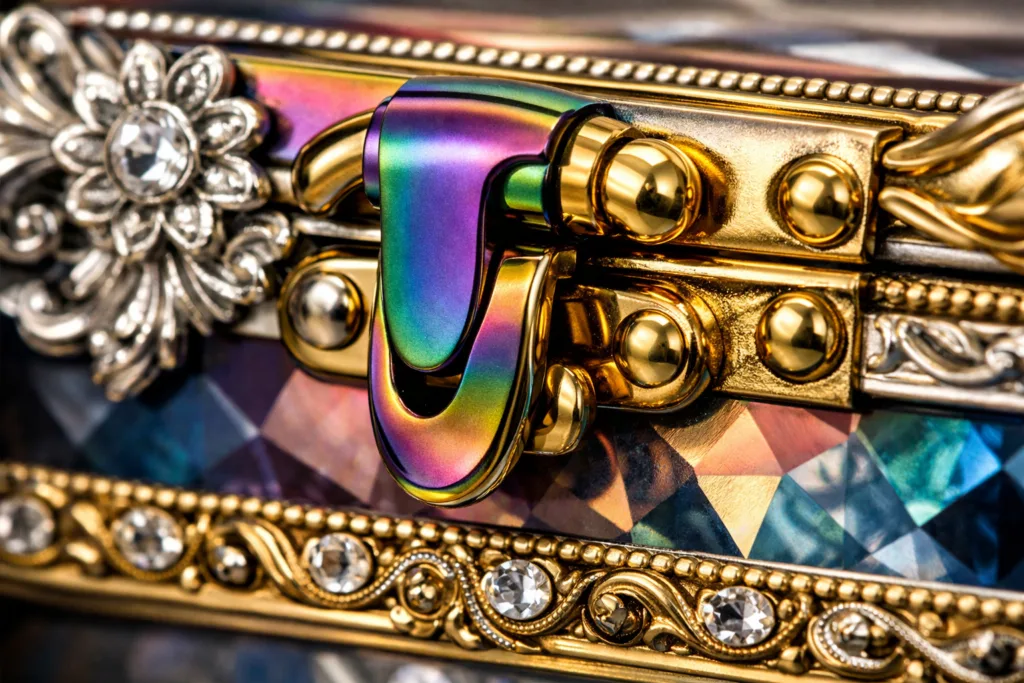
- Perfume: PVD—ideal for high-touch premium caps; Electroplating—creative effects for bottle collars.
- Wine/Spirits: PVD for bottle closures facing frequent opening; Electroplating for decorative lids or antique effects.
- Gift Boxes: Electroplating for lock/hinge details needing color variety; PVD for parts exposed to frequent handling.
Technical Limitations: What Each Process Can and Cannot Do
PVD—a champion for abrasion resistance—struggles when ultra-bright or deeply colored effects are needed. Electroplating, though visually versatile, is less stury when exposed to constant friction or accidental knocks.
Design Feasibility: The Impact of 3D Complexity
For highly detailed, raised, or recessed designs (like custom box corners), precision mold engraving and finishing technique determine the clarity of the final appearance. Gairun’s CNC mold tech ensures crisp detail, regardless of finishing choice, but plating can sometimes accentuate micro-porosity if the base alloy is substandard.
PVD vs Electroplating Zinc Alloy Finish: Procurement Decision Table
| Scenario | Best Choice | Why |
|---|---|---|
| High-wear perfume cap | PVD | Superior abrasion/scratch resistance |
| Decorative wine bottle lid | Electroplating | Wide color/texture options |
| Luxury gift box clasp | PVD | Long-lasting shine, repeated use |
| Antique-effect packaging part | Electroplating | Rich, multi-tone finishes possible |
| Cost-sensitive order | Electroplating | Lower per-piece cost, scalable |
| Short lead time project | Electroplating | Quick turnaround, less risk |
| Brand requires metallic tones | PVD | Better metallic purity, modern look |
QC & Quality Control: Ensuring Lasting Value
Finishing integrity depends on rigorous quality checks—salt spray tests, pull-force evaluations, and visual inspections. In Gairun’s routine, parts failing shine or showing porosity—even if functionally sound—are rejected to maintain a luxury standard.
Environmental & Regulatory Compliance
With rising demand for sustainable packaging, both PVD and electroplating must meet global lead-free and nickel-free standards. Electroplating is moving toward eco-friendly baths, while PVD is regarded as a cleaner, less wasteful process due to its controlled environment.
Maintenance and Repair: Planning for Longevity
PVD finishes require less upkeep and resist routine cleaning agents, whereas electroplating may dull with aggressive polishing. If long-term maintenance is a concern, PVD offers greater peace of mind for high-touch parts.
Procurement Checklist: Making the Right Choice
- Assess part wear rate—perfume cap vs decorative lid
- Match brand colors and finish effects
- Weigh cost vs cycle frequency
- Evaluate supply chain lead time risk
- Confirm environmental compliance standards
- Request QC reports from supplier
Practical Insights: Real-World Sourcing Decisions
Experienced buyers rely on open communication with manufacturers to determine finish feasibility. A detailed technical brief—clarifying alloy grade, finish requirement, and test standards—removes ambiguity and enables faster, smarter decisions.
Gairun’s Approach: Raising the Bar in Zinc Alloy Finishing
Gairun stands apart for its commitment to surface purity, CNC precision in mold fabrication, and strict rejection of visually imperfect parts—even those that function well. This means every closure, clasp, or bottle cap delivered meets the highest tactile, visual, and durability standards, ideal for luxury brands prioritizing longevity.
Quick Decision Table: PVD vs Electroplating for Zinc Alloy Packaging Parts

| Scenario | PVD | Electroplating |
|---|---|---|
| Wear resistance | Best | Good |
| Color range | Narrow (metallic tones) | Wide (all effects possible) |
| Cost | Higher | Lower |
| Lead time | Slightly longer | Shorter |
| Eco compliance | High | Improving |
| Application fit | High-touch parts | Decorative, low-wear |
Conclusion: Making Confident Sourcing Choices for Zinc Alloy Packaging Parts
PVD and electroplating both serve vital roles in the world of zinc alloy packaging hardware. Your decision comes down to wear resistance, color requirements, cost targets, and project timelines. PVD is the champion for premium, high-touch components demanding longevity and shine. Electroplating delivers dazzling versatility and budget-friendly options ideal for decorative parts and tight lead times. Armed with supplier transparency, strict QC, and smart scenario analysis, procurement teams can confidently select finishes that elevate brand appeal and ensure lasting value.
Frequently Asked Questions
Which finish lasts longer on zinc alloy, PVD or electroplating?
PVD coatings offer superior wear and abrasion resistance, making them the better choice for parts handled frequently.
Can electroplating achieve true gold and antique finishes?
Yes, electroplating is ideal for bright gold, antique brass, and multi-tone effects, giving brands a wide palette of finishes.
Are PVD finishes more eco-friendly than electroplating?
PVD operates in a closed vacuum, producing less waste and fewer hazardous by-products, especially compared to older plating baths.
Does PVD or electroplating accommodate faster lead times?
Electroplating generally delivers faster, with widely available facilities and shorter process cycles for standard colors.
What type of packaging parts benefit most from PVD?
High-wear items such as perfume caps, box locks, or bottle closures gain durability and lasting shine from PVD.
How can I minimize defects in plated zinc alloy hardware?
Choose pure alloy and request precision CNC mold work from your supplier, and insist on rigorous QC before shipment.
Related Reading
- How to Specify Electroplating Zinc Alloy for Packaging: Effects & Defect Prevention
- When Zinc Alloy Clasps Outperform Magnet Closures in Packaging
- The Pro’s Template: Fast Quoting for Zinc Alloy Packaging Parts
- Expert Rules for Flawless Zinc Alloy Logos on Premium Packaging
- Unlocking Reliability: Zinc Alloy Hinges for Premium Box Durability
- Design Guide: Zinc Alloy Box Corners for Packaging—Types & Installation