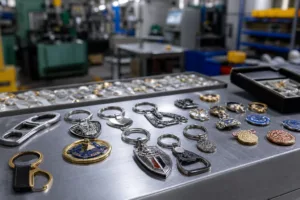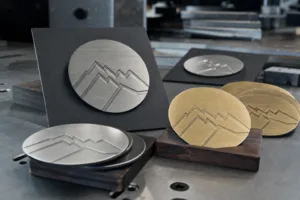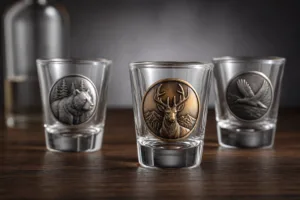
Introduction: The Manufacturing Choices Shaping Premium Packaging Accessories
When brands develop packaging metal accessories—think luxury Zamac bottle caps, cosmetic jar lids, striking branding tags—the choice among die casting, CNC machining, and stamping fundamentally determines the final product’s appeal, cost, and reliability. This article provides a deep yet approachable comparison of die casting vs CNC vs stamping for packaging metal accessories, focusing on the strengths, limits, and best-use cases for each method.
We’ll examine which metal structures suit each process, compare appearances and detail levels, break down costs (including mold fees), analyze turnaround times, and highlight mass production consistency. By the end, you’ll know exactly which method aligns with your packaging vision, budget, and brand standards.
Understanding The Manufacturing Methods: Die Casting vs CNC vs Stamping for Packaging Metal Accessories
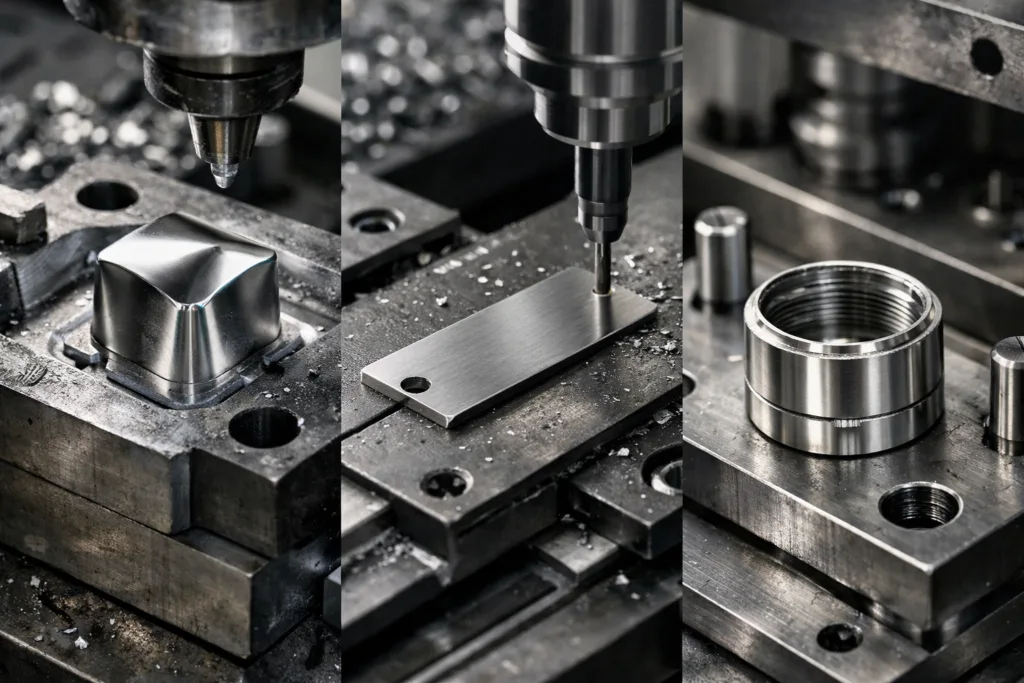
Before diving into comparisons, it’s crucial to understand how each process works:
- Die Casting: Molten metal (often Zamac or aluminum) is injected under high pressure into a precision steel mold. The result is a near-net-shape part with fine textures and complex geometries.
- CNC Machining: Precision computer-controlled tools carve parts from solid metal blocks, ideal for intricate details, sharp edges, and super-high tolerances.
- Stamping: Flat metal sheets are cut and pressed into shape using customized dies and punches. This cold-forming technique suits thin, flat, high-volume parts.
Structural Suitability: Which Designs Match Each Manufacturing Method?
Die Casting: The King of 3D and Integrations
Die casting excels for any accessory requiring dimensional depth, undercuts, or integrated features—such as stand-out perfume caps, box corners, or 3D logo tags. Hollow shapes, curved profiles, internal threads, and overhanging elements are all die casting’s playground. If you need your component to possess a certain “weight-in-hand,” this is the go-to process.
CNC Machining: Unbeatable for Precision & Customization
CNC shines when your design demands razor-sharp lines, milled slots or holes, or ultra-consistent tight tolerances. It’s the method of choice for prototypes, low-volume luxury projects, or where a tailor-made fit is crucial—such as twist-off caps matching glass threads perfectly.
Stamping: Best for Slim, Flat, and High-Speed Parts
Stamping is most suitable for flat, thin components—think metal badges, embossed plates, or springy closure elements. If your desired part is slim, needs high production output, and doesn’t require deep relief or 3D contours, stamping is fast, efficient, and cost-effective.
Comparing Appearance: Detail Levels, Finishing, and Consistency
| Process | Surface Detail | Finish Options | Visual Consistency |
|---|---|---|---|
| Die Casting | Good 3D relief, slightly rounded edges | Smooth or textured, high-polish by hand, various platings | Very consistent if mold is well-maintained |
| CNC Machining | Extremely sharp, crisp features | Mirror polish, brushed, sandblasting, PVD, custom textures | Exceptionally high consistency per part |
| Stamping | Sharp 2D edges, shallow 3D relief | Brushed, matte, simple plating; minimal handwork | High, but minor tool wear can affect impressions |
Luxury brands often prefer hand-polished finishing, especially on die-cast or CNC-milled parts, to achieve a flawless mirror effect before electroplating. Stamped parts tend to feature more straightforward, utilitarian finishes but can be beautiful when designed thoughtfully. Eliminating burrs and sharp edges in die-cast or stamped components is crucial for both safety and luxury feel.
Cost Comparison: Unit Price, Mold Fees, and Economic Order Quantities
| Process | Unit Cost (USD)* | Mold/Setup Fee (USD)* | MOQ |
|---|---|---|---|
| Die Casting | Med-Low (at scale) | High ($1200–$5000+) | 1000–2000 pcs |
| CNC Machining | High per unit | Low ($0–$300) | 1+ pcs |
| Stamping | Low (high-vol) | Medium ($500–$2000+) | 500–3000 pcs |
*Typical values for packaging hardware; actuals vary by size/complexity
Die casting’s higher mold investment only makes sense beyond a certain volume—yet it yields the lowest piece price at quantity. CNC eliminates mold fees but is labor and machine intensive, making it efficient only for small batches or unique prototyping. Stamping sits in the middle: lower up-front tool cost than die casting, very fast at mass scale, but unit prices beat CNC only for larger lots. For the details behind $/per piece and mold costs, see Unlocking Real Zinc Alloy Die Casting Costs.
Lead Time Analysis: From Design to Delivery
- Die Casting: Standard mold build is 14–25 days; sample production in 5–7 days; bulk run 2–3 weeks.
- CNC Machining: Fastest at prototype stage—few days for setup; can ship production within 1–2 weeks for small orders.
- Stamping: Tooling in 10–18 days; samples in 3–5 days; bulk in 1–2 weeks for most flat parts.
Tip: Design complexity, part volume, and post-processing all influence actual timelines.
Mass Production Consistency and Quality Control
When you need thousands of flawless accessories matching every time, process stability matters. Die casting delivers high repeatability as long as molds are maintained and machine parameters are tightly controlled. Stamping is rapid for simple shapes but can suffer edge wear requiring periodic die repair. CNC machining offers near-perfect repeatability—especially when each part must adhere to a custom fit or critical assembly tolerance. For luxury packaging, advanced manufacturers like Gairun reject even tiny visual defects to uphold brand value standards.
Where Die Casting Excels: Complex, Dimensional Metal Accessories
Die casting’s true strength lies in creating thick, dimensional, integrated structures—imagine 3D crest bottle caps, dramatic monogram box corners, or closures with hidden threads. When you require the piece to “feel expensive” in the hand, or blend weight and detail, die casting is unmatched. However, it’s not optimized for super fine engraving, sharp internal profiles, or ultra-thin sheet-metal effects. For these, other methods will serve better.
Best Fit for CNC Machining: Precision, Flexibility, and Prototyping
CNC machining allows for the sharpest logo engravings, precise hole or slot placement, and flexible design changes on short notice. It is perfect when you need to match components exactly (like threaded closures to glass bottles) or when customizing on-demand for artisan or low-batch runs. It is, however, costlier at volume, and may have design limitations if sculptural, organic forms are needed.
When Stamping is Superior: High-Speed Simplicity for Flat Components
Stamped metal accessories win for badges, ribbons, or minimalist branding plates. They deliver sharp, clean 2D lines, are fast to produce, and are highly cost-efficient in bulk runs. Stamping is not suited to deep relief, undercuts, or integrated, multi-part structures. Use it where sleekness and efficiency matter most.
Material Choices: How Alloys Affect Method Selection
The type of metal—zinc alloy (Zamac), brass, aluminum, or steel—impacts both manufacturing feasibility and the final look. Die casting is almost exclusively used for zinc alloy or aluminum, while brass shines in stamping for crisp details. CNC can work with almost any metal, including stainless steel for ultra-premium applications. For a deeper dive into material selection for packaging hardware, read Zinc Alloy vs Brass vs Stainless Steel.
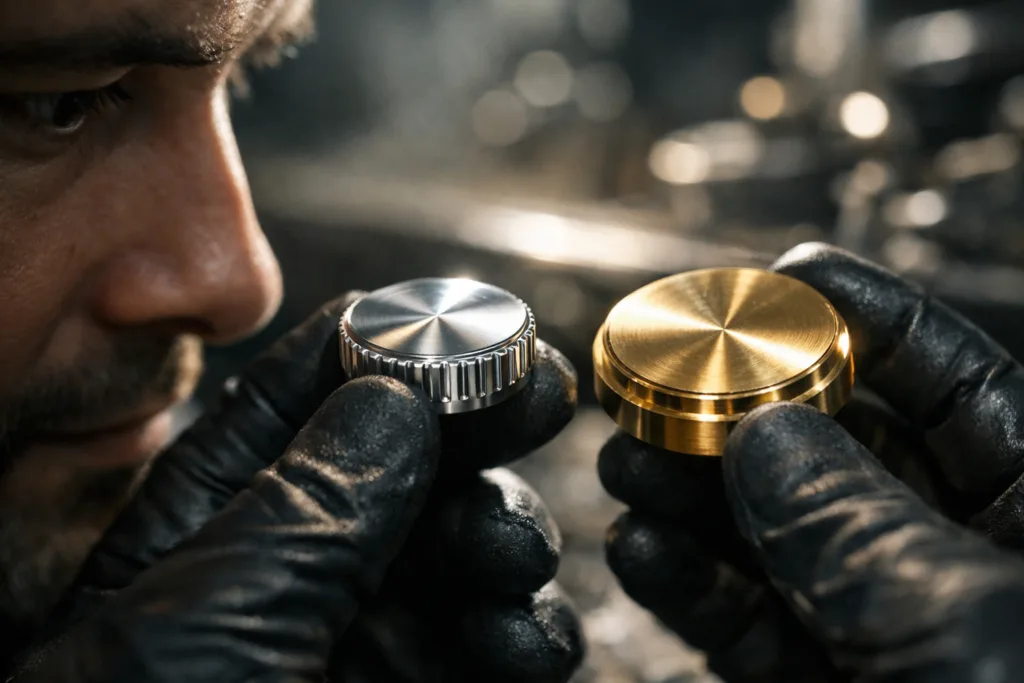
Surface Finish Limitations & Opportunities
Every process has unique finish strengths. Die cast surfaces must be polished by hand for mirror finishes; CNC can achieve micro-brushed or diamond-cut patterns; stamping is ideal for broad, uniform textures. Some high-end finishes (such as PVD) are best supported by smoother base metals and require expert pre-treatment. Precision finishing also keeps plating peeling or pitting at bay—a common luxury QC point addressed in Zinc Alloy Plating Peeling, Pitting, Spots.
Design Feasibility: Engineering Out Defects Early
Experienced engineers tweak design subtleties—wall thickness, fillet radius, draft angle—to match the process, prevent defects, and ensure stable mass production. For die casting, this means avoiding sharp internal corners that create air traps or porosity. CNC designs benefit from specifying radii for better tool access. Stamping needs clean separation lines and uniform thickness to avoid warping. Consulting early can save weeks later—and brands like Gairun routinely perfect these details for jewelry-grade results.
Environmental and Production Sustainability
Stamping and CNC both generate scrap (chips or offcuts), but some alloys (especially Zamac in die casting) are efficiently recycled. Manufacturers committed to sustainability prioritize closed-loop metal streams, tool longevity, and waste minimization. Metal scrap from CNC or stamping often returns to the foundry, reducing overall waste and supporting environmental goals.
Design Complexity: Creative Boundaries and Freedom
- Die Casting: Complex multi-level geometries, undercuts, and integrated features—but limited by draft angles and minimum wall thickness.
- CNC Machining: Any geometry reachable by the tool head—best for open designs and simple 3D curves.
- Stamping: Limited to 2.5D forms—excellent for intricate flat designs, but not for hollow or thick items.
Unit Cost Breakdown: What Drives Price Differences?
For die casting, mold complexity and finishing labor (polishing, plating) are major drivers. CNC part cost comes from machine time, tool wear, and programming setup. Stamping cost is highly dependent on run volume, tool maintenance, and sheet metal prices. For a real-world scenario, detail your project with engineering partners to forecast actual cost splits. Minimum order quantity (MOQ) is another balancing act; see Your Reality Check: What MOQ for Custom Zinc Alloy Packaging Parts Really Means for more.
Lead Time Factors: Beyond Manufacturing Alone
Beyond tooling and production, lead times are impacted by logistics, post-processing (plating, coloring, assembly), and QA steps. Complex projects can benefit from parallel processing (finishing some components while others are made). Clear upfront communication with your manufacturer shortens surprises down the road.
Customization and Logo Application: Achieving Distinct Brand Identity
The three processes differ in logo application flexibility. Die casting supports raised or recessed 3D logos within the mold. CNC can mill, engrave, or deboss detailed logos to precise depths, often favored for crisp branding. Stamping is adept at surface logos or shallow embossing, best for clean, iconic insignias.
Tolerance and Assembly Requirements: Getting the Perfect Fit
Precision fit can make or break the user’s tactile experience with packaging hardware—imagine a closure cap that clicks satisfyingly every single time. CNC offers the tightest tolerances (±0.02mm typical), followed by die casting with a little play (±0.05–0.1mm), and stamping (±0.1–0.2mm). High-end brands should clarify fit requirements with their supplier upfront, especially for multi-part assemblies.
Real-World Examples: Packaging Accessories Matched to Process
- Die Casting: Zamac perfume caps, luxury box feet, 3D crest branding medallions
- CNC: High-tolerance bottle closures, artisan cosmetic jar lids, custom prototype tags
- Stamping: Branding plates, flat ribbon tags, metal label badges
Choosing The Right Process: Decision Framework for Brands
- Choose die casting for dimensional, heavier, sculpted parts at volume with integrated features.
- Opt for CNC machining when you need pinpoint accuracy, low quantities, or quick design changes.
- Pick stamping for simple, flat, high-quantity parts where speed and price are key.
Die Casting vs CNC vs Stamping for Packaging Metal Accessories
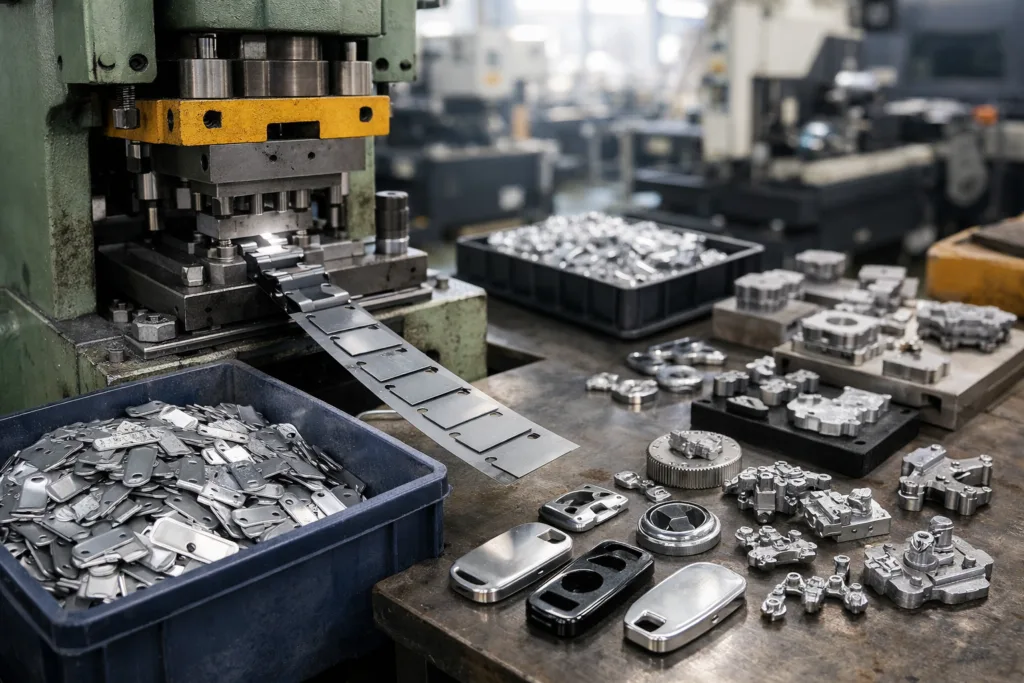
Each process—die casting, CNC, and stamping—offers unique advantages and limitations for packaging metal accessories, and their “适用边界” (design boundaries) are clear with a little engineering awareness. Die casting suits thick, ornate, multidimensional caps and locks; CNC perfects fit-critical or high-detail one-offs; stamping rules in slim, flat, logo-driven accents.
A confident choice means weighing unit price, tooling/investment, lead time, ideal structure, appearance, and mass production consistency. Leading luxury packaging manufacturers never compromise on the details that separate merely functional hardware from pieces that leave a lasting impression.
Conclusion: Engineering The Perfect Packaging Accessory
The choice between die casting, CNC, and stamping depends on your packaging component’s structure, visual goals, target budget, and production scale. By matching the process to the project’s priorities—dimensional form, tactile feel, production speed, or perfect fit—you ensure a product that not only meets expectations but amplifies your brand value. The best results come from early dialogue with experienced manufacturers, who can help steer your project along an efficient, high-quality path.
Frequently Asked Questions
When is die casting not suitable for packaging metal accessories?
Die casting isn’t ideal for ultra-thin, flat parts, extremely sharp internal features, or when low volume and fast changeover are needed. Stamping or CNC may suit better.
What type of details can CNC machining achieve compared to die casting?
CNC allows for much sharper edges, deeper engravings, and tighter tolerances than die casting, which naturally rounds and softens fine features due to the molten metal process.
How do mold/set-up fees influence manufacturing method choice?
Die casting requires high upfront mold fees but lowers unit costs at scale. CNC has minimal setup costs but high per-unit prices, suiting small runs or prototypes. Stamping is in between.
Can packaging accessories combine multiple processes?
Yes. Some luxury items use die casting for the main body, CNC for logo plates, and stamping for decorative badges, blending strengths for best effect.
What factors affect consistency in large mass production?
Mold/tooling maintenance, machine calibration, and rigorous QA are essential. Die casting and CNC both offer high repeatability if monitored. Stamping consistency can decline with tool wear.
Is one process more environmentally friendly than the others?
All can reduce waste through recycling. Die casting efficiently recycles scrap alloy, while CNC and stamping recycle metal chips. Tool longevity and energy use also play a role.