Introduction: The Art and Science of Challenge Coin Design
Challenge coins carry history, pride, and stories—sometimes in the thickness of their edges or the depth of their sculpted faces. The decision between a 3D relief or a 2D design isn’t just technical; it shapes how a coin feels, looks, and endures. In this comprehensive guide, we explore every facet of 3D Relief vs. 2D Design on Challenge Coins, revealing how each style alters aesthetic value, collectability, and the craftsmanship behind these small but mighty tokens. Whether you’re an event organizer, a collector, or designing your first unit’s coin, understanding these options is critical for exceptional results.
What Does “3D Relief” Mean in Challenge Coins?
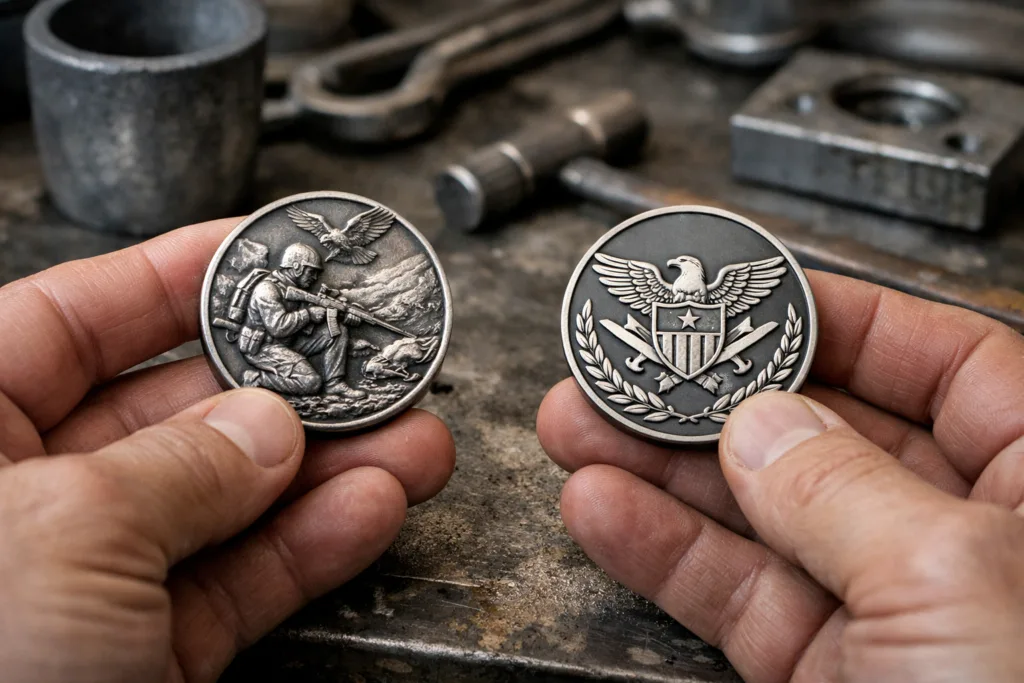
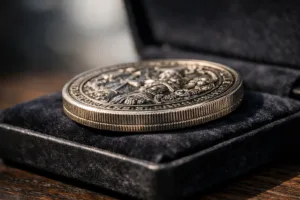
3D relief refers to a sculpted effect where the surface rises and falls, creating lifelike depth and shadow within the coin’s design. Instead of sharp, flat levels, a 3D coin features smooth gradations, rounded contours, and dimensional highlights. This process gives faces, logos, or landscapes a vivid, tactile quality. It mimics traditional sculpture on a miniaturized scale, often drawing the eye and hand in equal measure.
Understanding the Basics: What Is 2D Design?
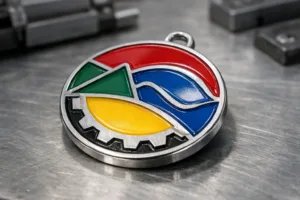
2D design uses distinct, separate levels—usually two heights—to create a strong graphic contrast. The artwork relies on bold lines, flat planes, and crisp separation between raised and recessed areas. This technique excels for logos, text, and geometric motifs, producing clear, high-impact visuals that remain instantly legible (even at a glance or in smaller formats).
3D Relief vs. 2D Design on Challenge Coins: Direct Comparison
| Feature | 3D Relief | 2D Design |
|---|---|---|
| Visual Depth | High; multi-level, sculpted surfaces | Low; two flat levels only |
| Detail Complexity | Excellent for nuanced curves & faces | Best for logos & line work |
| Legibility | Stunning in hand, subtle at a distance | Crisp, immediate recognition |
| Production Cost | Higher (complex molds, finishing) | Lower (faster, simpler die striking) |
| Best Use Cases | Portraits, mascots, scenes, texture | Insignia, motto, dates, icons |
| Collectability | Highly prized by advanced collectors | Loved for tradition & clarity |
Visual Aesthetic: How Each Style Alters Impact
The choice between 3D relief and 2D design dramatically affects a coin’s presence. 3D coins play with light and shadow, producing dynamic highlights as the coin is tilted. A 2D design, meanwhile, delivers punchy, unmistakable imagery—ideal for classic military challenge coins or corporate awards. The selection isn’t just functional; it’s emotional, shaping the initial “wow” or the slower, more sophisticated appreciation of detail.
Emotion and Storytelling in Metal: 3D Relief’s Signature
3D relief enables lifelike reproduction of faces, buildings, scenes, and natural motifs. For commemorative coins celebrating heroism, anniversaries, or locations, sculpture-like depth turns a logo into a story. Companies like Gairun uphold strict material standards, using high-purity Zamac or brass to ensure undercuts and detail aren’t lost, even in complex multi-level designs. This level of detail enhances narrative: be it an eagle in flight or a portrait, you feel the realism under your fingertips.
Clean Lines and Timeless Clarity: 2D Design Strengths
2D coins thrive when clarity is king. Many military traditions prefer 2D for unit logos, mottos, and easily recognizable symbols. These coins emphasize contrast and readability. Text is sharply defined, insignias are instantly recognizable, and enamel colors appear flat and vibrant. For situations where information must stand out—official ceremonies, quick visual ID—a crisp 2D layout is typically the top contender.
Production Methods: Crafting Each Style
The technical process for each design type differs notably:
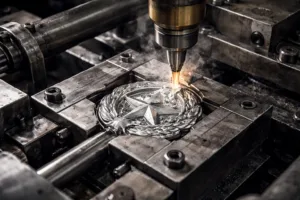
- 3D relief: Created with advanced CNC-engraved molds, casting or die-casting, then hand-polished and finished with fine detail brushes and buffs. Every subtle rise or valley requires clean mold lines and expert finishing.
- 2D design: Typically struck in one or two-step dies. Surfaces receive a uniform polish, and boundaries between elements are more easily protected during plating or enameling.
Examples of Coins That Master Each Style
3D coins often highlight intricate symbolism, such as an anniversary coin displaying a historic building in raised relief or a mascot’s lifelike head. By contrast, 2D designs excel at crisp military insignia or memorable event logos. The dos and don’ts for designing military coins highlight why 2D clarity can sometimes surpass added dimensionality, especially for everyday carry.
When to Choose 3D Relief: Scenarios & Showcase Ideas
3D relief is ideal when:
- You want to commemorate people, animals, or architectural elements—for example, museum or city landmark coins.
- Texture, shadow, and “sculpture-in-hand” appeal are top priorities.
- Creating a collector’s edition or limited run that prioritizes artistry over strict tradition.
When 2D Design Is Superior: Use Cases for Simplicity and Impact
2D design shines when:
- Visual clarity and immediate recognition are crucial (think security or command coins).
- Traditional or heritage appearance is desired.
- The design relies on bold color fills, sharp text, or specific insignia fidelity.
Visibility and Legibility: Size, Lighting, and Wear
Think about the environments your coins will live in. 3D coins can lose detail in low light or if scaled down. 2D coins maintain crispness at most sizes, ideal for lapel display or quick ID. Both can withstand daily wear, but high-relief 3D coins may show scratches on the raised areas more quickly.
Durability and Longevity: Practical Considerations
The number of high or low points on a coin affects how it withstands friction, keychains, or casual handling. 2D coins, with their even surfaces, tend to show wear less obviously. 3D relief coins, if manufactured by experienced outfits, benefit from deeper, resilient plating and careful polishing to reduce vulnerability.
Finishing Techniques: How Plating and Color Work Differently
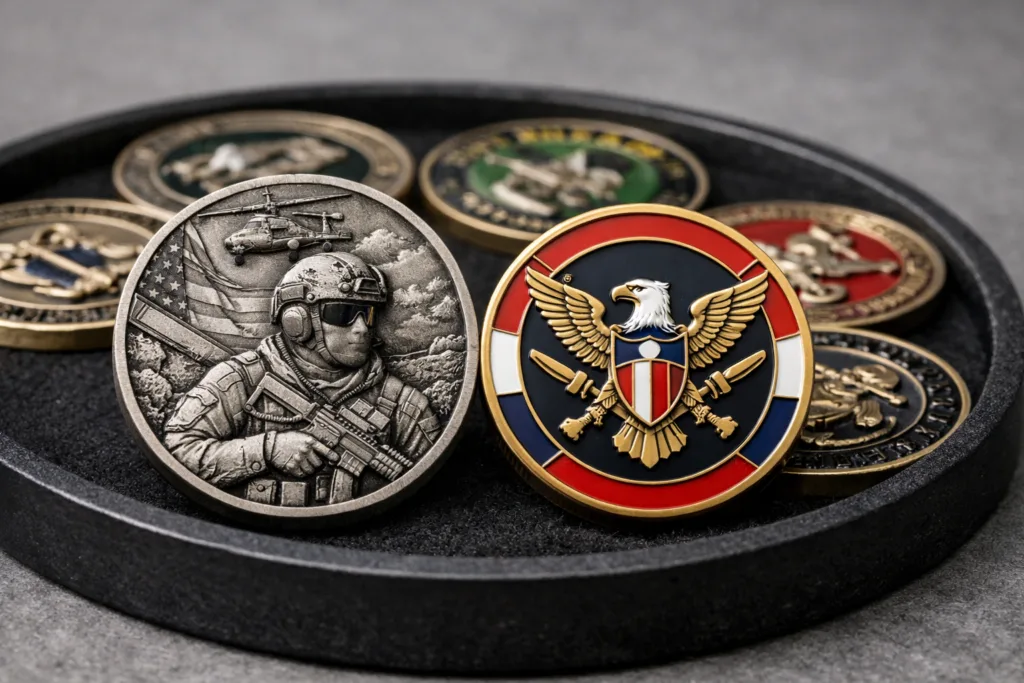
2D designs have extensive options in soft or hard enamel plating, since flat fields take color smoothly. 3D coins generally avoid large enamel fields—instead, finishes like antique bronze or selective gold bring out contour. Companies like Gairun use rack plating for these projects to protect intricate levels and ensure an even metallic sheen.
Customizing for Purpose: Ceremony, Collection, and Trade
If a coin is destined for formal recognition or as an organizational keepsake, the choice of 2D or 3D should align with its intended presentation. Commemorative issues often favor 3D for their storytelling prowess. Routine awards, command coins, or those circulated among members might favor 2D for tradition and practicality.
Cost and Lead Times: Budgeting Design Complexity
2D coins are generally more cost-effective due to simpler die striking and quicker finishing. 3D coins carry higher mold creation costs (due to precision sculpting) and require more time to hand-finish and inspect. If timelines or budgets are tight, 2D remains a pragmatic option without sacrificing impact. Bulk medal manufacturing projects often start with a 2D approach to balance value, speed, and clarity.
Material Choice and Engineering Precision
3D relief designs place greater demands on material density and surface fluidity, making high-quality metals (like virgin Zamac or high-grade brass) essential for a crisp finish. Any porosity or inclusion in the alloy can lead to surface pitting or lost details, so top-tier factories maintain rigorous material controls.
Personalization: Adding Serial Numbers or Custom Details
2D coins easily incorporate personalized text, such as unit numbers or award dates, directly into flat planes or fields of color. 3D coins can include engraved or debossed details, but very fine letters may lose clarity if placed directly onto a rounded or sloped area.
Trend Watch: Modern Innovations in Challenge Coin Design
As manufacturing technology advances, hybrid approaches—merging 2D and 3D—are becoming more accessible. Some premium coins feature 2D logo fields paired with a sculpted 3D centerpiece. The result? A “best of both worlds” for tactile interest and instant recognition. For more on the evolution of medal and coin customization, see this guide to emerging design trends.
Common Pitfalls: Mistakes to Avoid When Choosing Designs
Poorly balanced 3D coins can lose detail at the edge, become hard to polish, or complicate packaging. Likewise, over-crowded 2D layouts may leave text unreadable or eliminate tactile interest. Consulting experienced coin or medal designers is often the best safeguard. Reviewing tips from bulk medal lead time guides can also help avoid common mistakes in the production cycle.
Packaging and Display: Presenting 2D and 3D Coins for Maximum Appeal
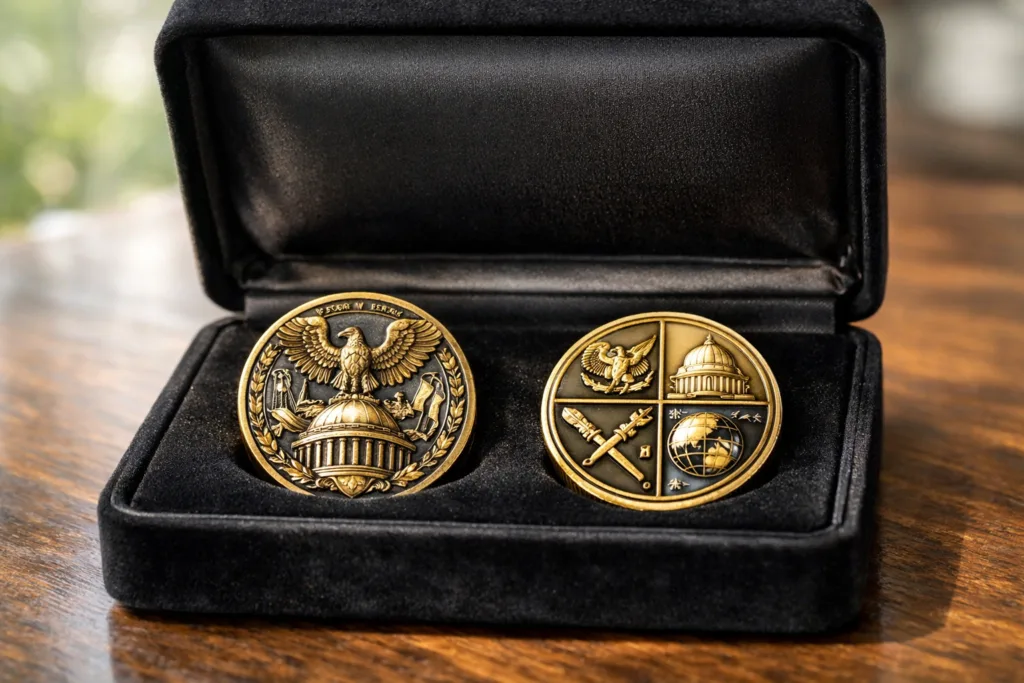
High-relief coins benefit from velvet boxes or acrylic stands that emphasize depth and craftsmanship, while 2D coins display elegantly in albums, unboxing sleeves, or trays designed for quick side-by-side comparison. The art of medal and coin display deserves as much thought as the design itself—especially for collector’s editions.
Special Contexts: Military, Corporate, and Event Challenge Coins
Military challenge coins often balance tradition (2D crests, serial numbers, mottos) with a touch of modern flair (limited 3D side-portraits or raised command emblems). Corporate or event coins might lean toward 3D for promotional “wow” factors or to celebrate major milestones with monument-style reliefs. The choice signals intent, heritage, and function to recipients.
Design Feasibility: How to Evaluate If Your Artwork Translates
Not every concept works equally in 3D or 2D. Highly intricate illustrations may simplify beautifully in 2D, but a portrait or statue nearly demands 3D. Before you invest, request a digital proof and, if possible, a resin master or 3D print sample. This minimizes surprises and streamlines production.
3D Relief vs. 2D Design on Challenge Coins
The decision between 3D relief and 2D design remains deeply personal and project-driven. If storytelling through texture and sculpture matters most, 3D relief is unbeatable. If clarity, tradition, or strong branding leads, 2D triumphs. Leading manufacturers like Gairun help clients fine-tune their art, ensuring high detail and finish quality regardless of approach. The ultimate coin respects the intent, occasion, and values behind it—so choose with vision and confidence.
Conclusion: Choosing the Right Design for Your Challenge Coin Story
Both 3D relief and 2D design on challenge coins offer unique strengths and expressive options for any project. By understanding their distinctions, strengths, and applications—from visual clarity to tactile artistry—you can better match your coin to your mission. Remember to consider the environment, visibility, personal story, and collector expectations when selecting the route. Whichever direction you take, skilled manufacturing and thoughtful design will carry your legacy for generations to come.
Frequently Asked Questions
How do I decide between 3D relief and 2D design for my challenge coin?
Consider the coin’s purpose, level of detail needed, tradition, and display environment. 3D excels at realism and storytelling, while 2D offers instant clarity and classic impact.
Is a 3D challenge coin always more expensive?
Not always, but 3D coins generally involve higher mold and finishing costs due to complexity. 2D designs offer savings in both time and material use for simpler production runs.
Can I add color to a 3D relief coin?
Color is best added to 2D coins with large, flat fields. 3D coins typically use antique or two-tone metal finishes; limited color highlights are possible, but enamel can pool unevenly on complex surfaces.
Are 2D coins more durable than 3D coins?
Both are highly durable if properly made, but 2D coins’ even surfaces can hide wear and scratches better over time compared to 3D coins’ raised details.
Can I combine both 2D and 3D elements in one coin?
Yes. Many modern designs strategically mesh 2D text or logos with a standout 3D element for the best of both worlds, but this requires careful mold planning.
What is the most important factor for coin collectability?
Distinctive design, narrative depth, production quality, and rarity all boost collectability—whether 2D or 3D, the coin should have a clear story and expert craftsmanship.