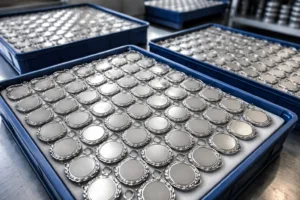
Introduction: Why Color Matters in Medal and Pin Design
Adding vibrant color to your medals and pins elevates their visual impact and storytelling power. The decision between soft enamel, printed color, and epoxy dome finishes directly shapes durability, design sharpness, and that all-important tactile feel. Whether you’re customizing race medals, corporate awards, or collectible pins, understanding these coloring methods is essential for achieving the perfect finish.
What is Soft Enamel? Key Features & Appeal
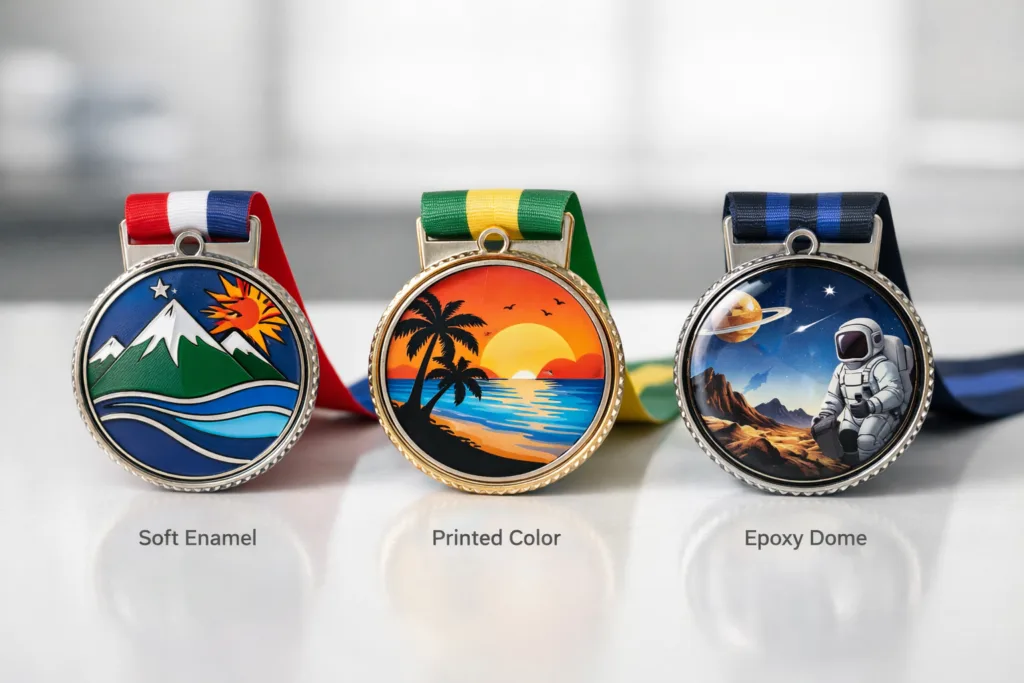
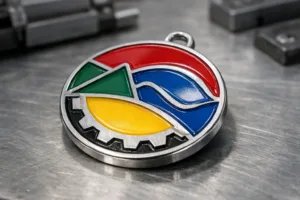
Soft enamel is the go-to choice for designs that crave a textured, jewelry-like look. After stamping or molding the metal base, colored enamel is deposited into recessed areas and baked to harden. This method leaves raised metal lines you can feel—ideal for logos, bold graphics, or anything requiring a classic feel. The color appears rich and slightly recessed compared to the surface, catching light for added brilliance.
How Printed Colors Achieve Photographic Detail
Printed colors are created by applying inks—often with offset or screen printing—directly onto a smooth metal surface. This technique shines for extremely detailed or gradient-rich artwork, such as photographic images, complex illustrations, or when wide color ranges (including subtle fades and shading) are vital. The print sits flush with the metal, resulting in a wholly smooth feel.
Epoxy Dome: The Protective, Glossy Shield
An epoxy dome is a clear resin layer that encases the top of your medal or pin. Besides making designs pop with a brilliant, glossy shine, it adds a layer of physical protection. This is especially useful on printed designs where ink durability matters. It keeps details crisp and prevents scratching, while amplifying visual depth.
Adding Color: Soft Enamel vs Printed Color vs Epoxy Dome
The choice between soft enamel, printing, and epoxy dome isn’t simply about aesthetics—each has scenarios where it excels. Let’s compare them side by side:
| Method | Best For | Surface | Durability | Finish |
|---|---|---|---|---|
| Soft Enamel | Bold logos, simple art | Textured (raised metal lines) | Excellent (especially w/ plating) | Matte or slight gloss |
| Printed Color | Photos, gradients, complex detail | Smooth | Good (epoxy recommended for maximum protection) | Can be glossy if domed |
| Epoxy Dome | Protecting prints, shiny effect | Smooth, glassy | Top tier (protects under layer) | High gloss, domed |
When to Choose Soft Enamel for Your Design
Soft enamel delivers tactile, classic appeal. Choose it for designs with crisp, separated colors, strong outlines, or when you want the charm of metal ridges framing colored areas. Medals for sports achievement, custom logo commemorative medals, and challenge coins often use soft enamel for prestige and durability. Learn the subtle advantages of soft vs. hard enamel finishes in competitive designs.
When Printing is the Superior Choice (Gradients, Photos, Intricate Art)
If your artwork features photographic imagery, fine gradients, or complex illustrations, offset/screen printing is the only method to capture every nuance. Events with photo-realistic marathon medals, school excellence medals, or intricate logo awards favor printing for accuracy. Printing is also ideal when boundaries between colors are soft or non-existent.
Why and When to Add an Epoxy Dome
The main purpose of an epoxy dome is protection and shine. Any printed surface benefits from an epoxy top coat to prevent wear, smudging, and scratches. Custom medals for frequent handling, vibrant event medals, or company pins designed for corporate recognition often use epoxy domes for both durability and their attractive, glass-like finish.
Durability and Wear: What Lasts Longer?
Durability depends on base method and finish. Soft enamel is inherently strong due to its embedded color and metal ridges. Printed designs last long under display but require an epoxy dome for heavy use or outdoor exposure. The epoxy dome, being harder than ink, is most resistant to impact and chemical contact in daily wear scenarios. Explore manufacturing quality controls that influence medal longevity in depth.
Visual & Tactile Differences: What You See and Feel
With soft enamel, your fingertip catches on every edge—this surface texture is highly prized for collectibility and aura. Printed color (without epoxy) feels perfectly flat, making it excellent for contemporary, understated medals. Add epoxy and you get a satisfyingly smooth, domed, and reflective touch reminiscent of premium lapel pins and badge awards.
Color Brilliance: How Each Method Reflects Light
Soft enamel colors appear vibrant but slightly matte, unless special finishes like translucent or glitter enamel are used. Printing replicates whatever color is in the digital file, meaning gradients and blends display beautifully, albeit sometimes less bright due to ink limitations. An epoxy dome amplifies all underlying colors, creating a pseudo-3D, “wet look” effect that is impossible with bare enamel or ink alone. For inspiration, check out popular plating color combinations that further enhance colored surfaces.
Production Complexity and Lead Time Comparison
Soft enamel involves multiple hand or machine steps: stamping, filling, baking. This can mean longer manufacturing times, but yields top quality and longevity. Printed medals are typically faster for large batches, especially for art-heavy designs, as there’s less manual color filling. Adding an epoxy dome introduces additional drying and inspection time, but is often worth the extra days for high-end results. See this detailed guide to bulk medal ordering for production insights.
Practical Examples: Which Customers Choose What
- Soft Enamel: Military unit coins, commemorative sports medals, premium club pins.
- Printed + Epoxy: Marathon finishers, school event sets, promotional badges with gradient logos.
- Printed Only: Art pins, limited edition collector medals, contemporary branding badges.
Design Flexibility and Limitations
Soft enamel imposes minimum line thickness—delicate details can become indistinct. Printing allows for wild artistic freedom, but is constrained by the base metal’s flatness. Epoxy resolves some surface uniformity issues, but the underlying print or plating must be flawless before application. When ultra-precise reproduction is needed (tiny text, photo faces), opt for printing and a domed finish.
Cost Considerations: Is One Method More Expensive?
Soft enamel is usually mid-range in cost, depending on the complexity and mold fees. Printing comes in lower for high-volume, high-detail jobs, especially if no doming is needed. Adding an epoxy dome raises the price per piece due to material and labor, but greatly enhances perceived value and longevity.
Special Effects: Glitter, Glow, and Translucence
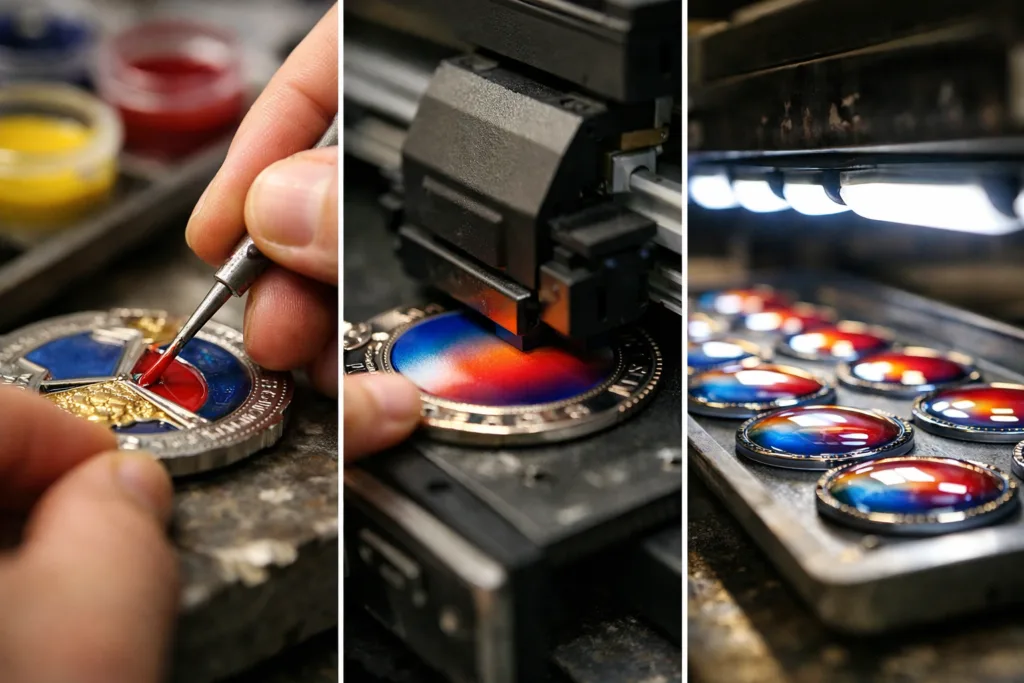
Soft enamel can be formulated with glitter or glow-in-the-dark pigments for award or event medals with “wow” factor. With printing, specialty metallic or fluorescent inks are also possible but less common. Epoxy domes catch the light and magnify underlying effects further. For unique concepts, browse guides on adding glitter effects to your enamel pins and medals.
Feeling the Difference: Real-World Tactile Insights
Traditional collectors appreciate soft enamel’s raised and lowered surfaces—it’s part of the medal’s intrinsic story. Modern brands marketing to youth, or mass event organizers, may prefer the slick, protective epoxy feel. It’s a matter of audience taste and product lifecycle—even seasonality can shape the right choice.
Long-Term Color Stability and UV Resistance
High-quality soft enamel, baked correctly, resists fading—but bright direct sunlight over years can still take a toll. Printing inks vary in UV resistance; always request UV-stable inks for outdoor or heavily handled medals. Epoxy protects both ink and soft enamel against dust and fingerprints, but be sure the epoxy itself is high-clarity and non-yellowing to maintain years of brilliance.
Which Designs Should NOT Use Each Method?
- Avoid soft enamel for photo-like, intricate color blends.
- Avoid printing alone for medals subject to rough handling.
- Avoid epoxy domes if extreme temperature swings or certain chemical exposures are expected (some conditions can cause yellowing/cracks after many years).
Combining Techniques for Unforgettable Results
Many luxury brands—such as Gairun’s custom projects—blend methods: for example, using raised soft enamel logos with printed backgrounds under clear domes. This layering unlocks both tactile and graphic appeal, and stuns under spotlights or in collector displays.
Compliance and Material Safety in Professional Medal Production
Always verify that enamels, inks, and epoxies are certified lead-free, nickel-safe, and RoHS compliant, particularly for products made for children or wearable items. Established manufacturers like Gairun enforce tight controls from raw materials through final inspection to uphold reputation and brand safety worldwide.
Repair and Maintenance: Keeping Medals Looking New
A soft cloth and mild soap keep all finishes bright. Soft enamel may accumulate dust in recessed areas; printed/epoxy domed medals just need gentle wiping. Avoid alcohol or harsh chemicals, which can degrade epoxies or rare ink formulations over time.
Sustainable and Eco-Friendly Color Application Options
Recently, more medal manufacturers have adopted eco-friendly colorants, and even biodegradable epoxies. Look for suppliers who design for recyclability or use sustainable metal bases for the best environmental stewardship. You can find a list of who’s pioneering green medals and awards here.
Summary Table: Quick Reference for Designers and Organizers
| Feature | Soft Enamel | Printing | Epoxy Dome |
|---|---|---|---|
| Main Advantage | Tactile, classic | Photo/Gradient Art | Ultimate Protection |
| Look | Textured, deep color | Flat, smooth | Glossy, magnified |
| Best Use | Bold icons, event logos | Photo/Art medals, badges | High-wear items, collector medals |
| Care | Dust crevices gently | Wipe surface | Wipe surface |
Gairun’s Approach: Precision and Quality in Every Color Step
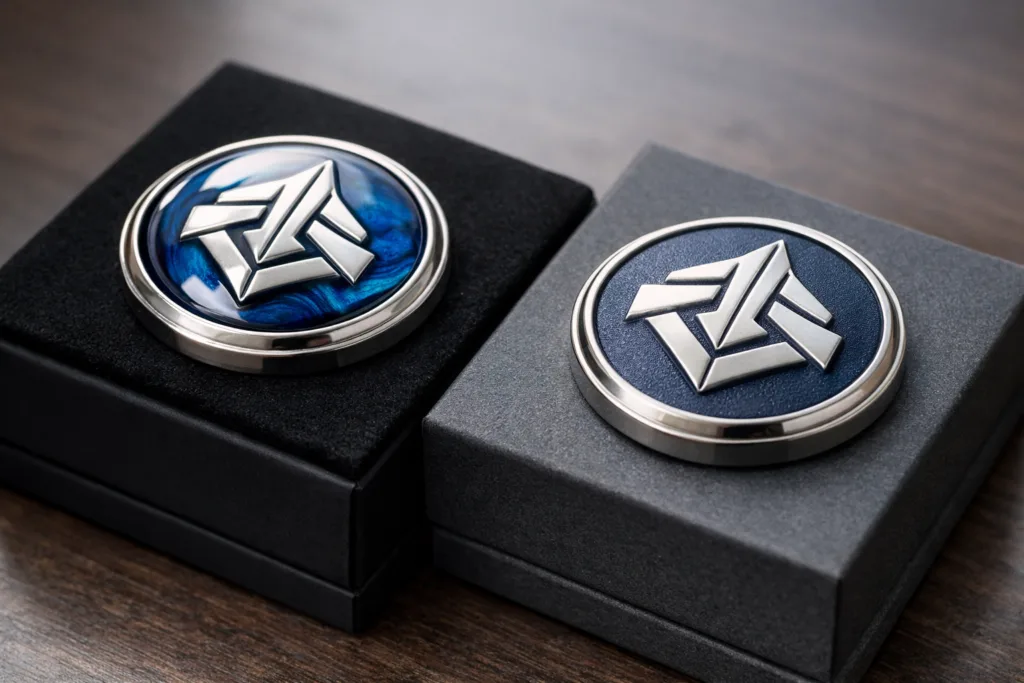
At Gairun, we leverage decades of manufacturing expertise to advise brands on the best coloring method for their design goals. Our commitment to only the finest alloys, laser-engraved molds, and safety-certified materials ensures that every medal—whether soft enamel, printed, or epoxy domed—meets superior expectations for touch, vibrancy, and lasting value.
Conclusion: Making the Smart Choice for Colorful Awards
Choosing between soft enamel, printing, and epoxy domes depends on design needs, handling expectations, and aesthetic goals. Use soft enamel for tactile, bold looks; printing for high-detail or gradients; epoxy dome for shine and protection. When in doubt, consult your manufacturer early—they can advise which method brings out the best in your artwork, while ensuring medals stand the test of time and handling.
Frequently Asked Questions
Can soft enamel medals include fine gradients or photographic images?
Soft enamel works best for solid color separations and bold outlines. For fine gradients or photo images, full-color printing methods are necessary.
Is an epoxy dome always required for printed medals?
While not strictly required, an epoxy dome is highly recommended to protect printed ink from scratches and wear, especially for medals that will be frequently handled.
Which is best for high-wear event medals: soft enamel or epoxy dome?
Both are durable, but an epoxy dome provides an extra layer of scratch resistance, making it the premium choice for medals subject to rough use.
How does the cost of soft enamel compare to printing or domed finishes?
Soft enamel is generally mid-priced. Printed medals are cost-effective for large, detail-rich batches. Epoxy domes add small extra costs but increase durability and visual value.
Will an epoxy dome yellow over time?
High-quality, UV-resistant epoxies are engineered not to yellow; however, very cheap or substandard epoxies may discolor with extended UV exposure. Reputable manufacturers use non-yellowing formulations.
How do I clean soft enamel versus domed medals?
Soft enamel medals should be dusted with a soft brush or cloth. For epoxy-domed and printed medals, a gentle wipe with a microfiber cloth is sufficient.
Related Reading
- The Ultimate Guide to Choosing Hard vs. Soft Enamel for Your Pins and Medals
- 10 Brilliant Plating Color Ideas for Custom Medals and Pins
- 8 Creative Ways to Add Sparkle: Glitter Effects for Everlasting Medal Appeal
- Master Bulk Medal Ordering: Lead Time and Quality Tips for Organizers
- Behind the Scenes: How High-Quality Medals Are Manufactured
- Sustainability in Medals: Why Eco-Friendly Materials Are Transforming Events