Perfume packaging is evolving beyond simple aesthetics into a world of captivating textures and meaningful design. Customizing caps with leather, wood, or stone invites brands and creators to explore fresh ways of expressing personality and luxury.
The Rise of Material-Driven Custom Caps
Today’s consumers expect more from consumer goods—they crave authenticity, story, and tactile experience. This trend is especially visible in custom caps, material design, where the choice of material signals not just visual style but deeper meaning: eco-consciousness, craftsmanship, or cultural roots.
Understanding the Allure of Leather, Wood, and Stone
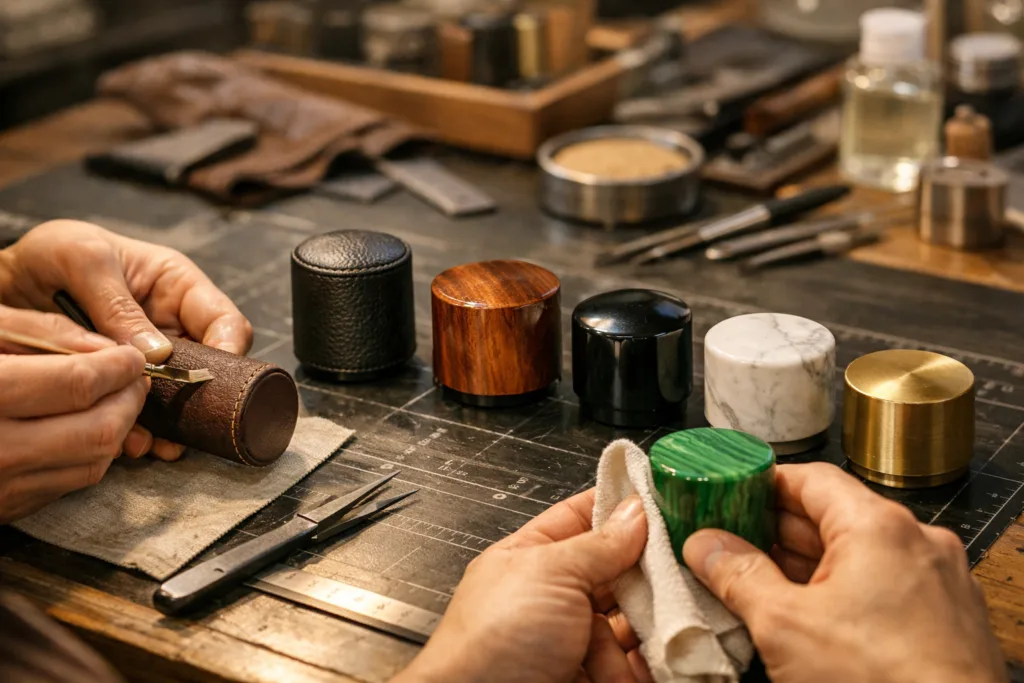
Leather, wood, and stone each offer unique qualities, blending heritage with modern production. These materials aren’t just decorative; they tell stories through touch, look, and the aura they create.
Leather: Warmth, Flexibility, and Tradition
Leather-wrapped caps evoke luxury and familiarity. Natural grains add warmth. Embossing and logo stamping allow for endless personalization. In the hands of a skilled manufacturer, top-grain European leather or sustainably-tanned hides create a tactile surface that distinguishes premium bottles at a glance.
Wood: Versatility and Eco-Friendly Appeal
Wood brings a sense of nature and balance. Oiled walnut, stained birch, and bamboo speak to diverse aesthetics. Lasered engravings—including logos, names, or patterns—celebrate the material’s organic lines. Many brands choose wood for its biodegradable profile and uniquely renewable sourcing options.
Stone: Enduring Beauty and Artistry
Natural stone caps offer surprising color palettes and patterns—marble, onyx, and travertine each tell their own geological story. Stone is heavy and cool to the touch, instantly suggesting permanence. With modern CNC milling and hand finishing, intricate inlays or polished logos become possible, making every piece one-of-a-kind.
Benefits of Custom Caps with Leather, Wood, or Stone
Why choose these unconventional materials? Consider these main advantages:
- Unique Tactile Experience: Textures set brands apart in a touch-dominant market.
- Durability: High-grade leathers and dense woods or stone withstand years of handling without notable wear.
- Storytelling: Each material carries a narrative—tradition, sustainability, or artisan mastery.
- Design Flexibility: From minimalist inlays to intricate patterns.
Design Techniques for Distinctive Custom Caps
Pairing artisan techniques with advanced engineering, designers can push the boundaries of custom caps, material design:
- Engraving and Laser Etching: Ideal for wood and stone, capturing sharp, permanent designs.
- Embossing and Debossing: Classic for leather, adding subtle 3D logo effects.
- Inlays and Overlays: Combining metal with wood or leather for contrast and strength.
- Resin Filling: Locking color or metallic details into natural flaws for one-of-a-kind results.
- Polishing and Oil Finishing: Custom textures, from matte to mirror-bright surfaces.
Material Sourcing and Environmental Considerations
Beyond visual impact, eco-conscious production choices matter. Responsibly sourced woods (FSC-certified), vegetable-tanned leather, and locally quarried stone reduce a cap’s environmental footprint and resonate with sustainably-minded buyers.
Craftsmanship and Production Insights
Creating perfume caps from these materials goes beyond basic manufacturing. It demands attention to intricate joinery, moisture barriers, and material purity. For example, using virgin zinc alloys for cap interiors ensures stability under the varied humidity conditions of a global luxury market. Brands like Gairun insist on jewelry-grade metalwork beneath surface materials, elevating both longevity and perceived value.
Integration: Blending Materials for Modern Aesthetics
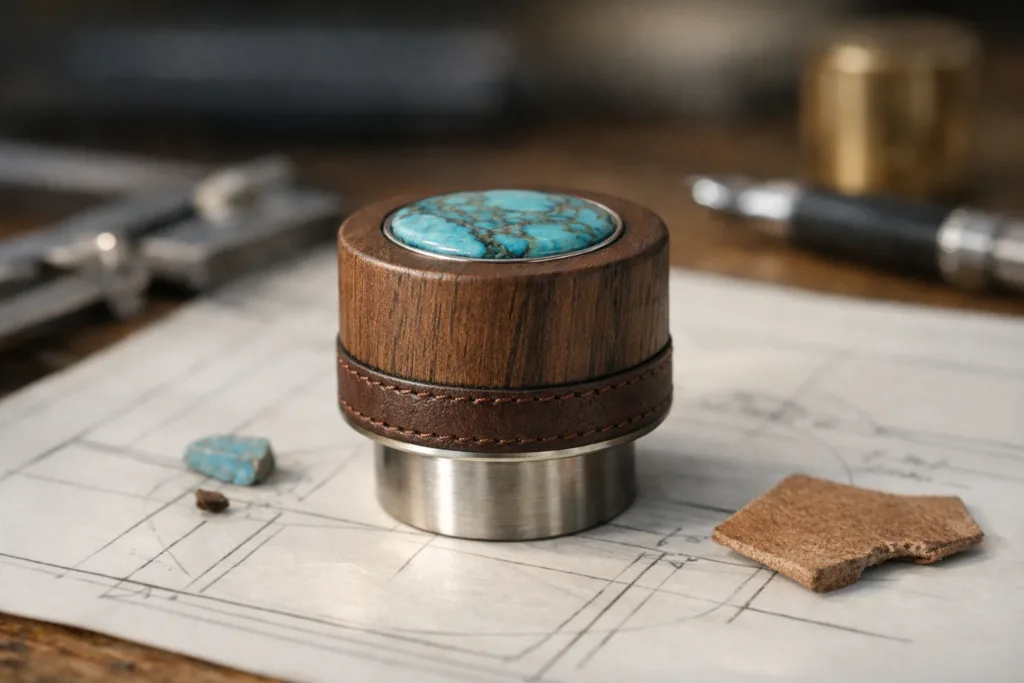
Some of the most stunning designs blend materials—think a walnut cap with a soft leather insert, or a metal core wrapped with polished stone. These combinations allow for:
- Color Harmony: Complementing bottle hues or branding themes.
- Functionality: Improving grip, weight balance, or usability.
- Layered Branding: Multiple surfaces for logos or messages.
Customizing Caps with Leather, Wood, or Stone
Decorating perfume caps with natural materials transforms a functional piece into a symbol. Customization options include:
- Hand-selecting grains or veining in wood and stone
- Embossed monograms on leather wraps
- Contrasting metal art details, using metal closures overlaid with walnut or onyx
- Cultural motifs reflecting regional heritage
Storytelling through Material: Personal and Cultural Meaning
Leather, wood, and stone selections often hold deeper stories—leather that recalls a family-owned tannery; walnut harvested from a historic region; marble sourced for its spiritual symbolism. Sharing these origins through thoughtful documentation or subtle design references adds real emotional value.
Case Studies: Brands Using Natural Materials
Many high-end labels have embraced these trends. For instance, a French perfumery adopted hand-polished oak caps, highlighting local forests. Another niche brand uses recycled Italian marble offcuts for a sustainable twist. Such choices influence purchasing decisions—consumers sense authenticity and rare luxury in every detail.
Techniques and Tools for Artisan-Level Quality
Modern manufacturing blends CNC routers for intricate stonework, laser cutters for crisp wooden shapes, and hand tools for final finish. Consistency from batch to batch requires rigorous jigs, measurement tools, and skilled artisans, ensuring fit, finish, and durability are never sacrificed.
Combining Metals: Contrast and Utility
Pairing metal—such as Zamac interiors or brass accents—with natural materials enhances strength and visual interest. The interplay of cool stone against warm metal or the blend of glossy leather with brushed aluminum creates tactile excitement and luxury for users.
Quality Testing—Ensuring Beauty Lasts
Strict protocols such as salt spray testing for metal parts or humidity control for woods safeguard the long-term look and function of custom caps. Surface finishes are tested for colorfastness, abrasion resistance, and chemical durability to ensure no detail becomes a future flaw.
Surface Treatments and Finishing Options
Natural oils, waxes, or PVD coatings alter both the feel and resilience of leather, wood, or stone. The right finish prevents staining or UV fading, and some luxury manufacturers even hand-polish wooden or stone caps for a jewelry-like luster.
Design Feasibility and Engineering Constraints
Every customized cap faces practical limits—wall thickness, stress points, or moisture interaction. Fine-tuning the 3D model, selecting compatible adhesives, and engineering assembly steps ensure the design is beautiful but also manufacturable. Subtle design changes often prevent casting defects or plating flaws, preserving material integrity.
Best Practices for Designers and Product Teams
- Define functional needs (weight, feel, closure force)
- Select eco-responsible suppliers for leather, wood, or stone
- Test color and surface finish in real lighting
- Partner with trusted metal, wood, or leather manufacturers for sampling
- Document every step from sketch to prototype to production
Practical Observations: Manufacturing Challenges and Solutions
Issues like wood swelling, leather shrinkage, or stone chipping can occur without precise control. Leading manufacturers tightly monitor humidity and use stabilization processes (e.g., kiln drying for woods, sealants for stones). Practiced hand-assembly ensures fit remains consistent, even for complex, hybrid caps.
Environmental Profile and Recycling Potential
Choosing FSC-certified woods, vegetable-tanned leathers, and regionally sourced stones reduces environmental impact. Designs that allow for easy separation of materials at end-of-life enhance recycling and meet modern sustainability expectations.
Integrating Caps with the Overall Perfume Packaging
The cap is often the finishing touch for a fragrance bottle. Aligning textures, color, and finishes with the body ensures a unified look. Smart use of custom bottle caps manufacturing techniques makes sure the cap fits securely and looks intentional, not an afterthought.
Summary: Elevating Product Identity through Natural Materials
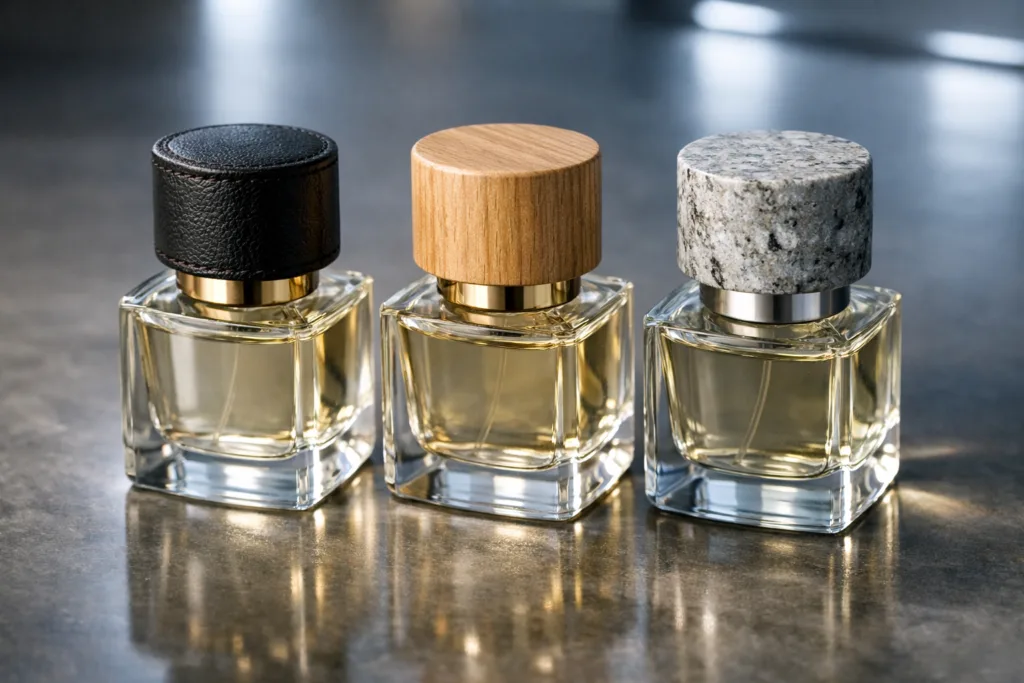
Cap design is an opportunity for genuine storytelling through material. Prioritizing tactile allure, sustainable sourcing, and authentic craftsmanship ensures each cap not only protects but elevates the entire product. As technology meets artisan skills, the blending of leather, wood, and stone signals both innovation and tradition for packaging that feels as good as it looks.
Frequently Asked Questions
What makes leather, wood, or stone caps more valuable than standard materials?
These materials offer a unique tactile experience, greater durability, and a story-rich identity, making each cap feel exclusive and luxurious.
Are customized natural material caps suitable for mass production?
Yes, with modern techniques and careful process optimization, wood, leather, and stone caps can be efficiently produced in large quantities while retaining their artisanal appeal.
Which customization methods last longest on perfume caps?
Laser engraving on wood/stone and deep embossing on leather offer the most durable results, resisting wear and maintaining detail over years of use.
How do environmental conditions affect natural caps?
Moisture or heat can impact some woods and leathers; top-quality manufacturing uses treated materials and stabilization to ensure reliability in various climates.
Can leather, wood, or stone caps be recycled?
Many are recyclable or biodegradable depending on material and design; look for certifications and easy-to-disassemble constructions to maximize environmental benefits.
How should brands choose between leather, wood, and stone?
Consider brand story, desired tactile effect, and sustainability aims—each material has unique strengths, so align choice with target market values.