Introduction: Understanding Die Struck vs. Die Cast
Within the world of metal fabrication, choosing between die struck and die cast manufacturing processes isn’t just a technicality—it’s a pivotal decision that shapes product quality, cost, and design flexibility. Whether you’re a designer, project manager, or product engineer, the difference between these techniques can influence everything from how sharp your logos appear to how robust your parts feel. This guide explores Die Struck vs. Die Cast: Manufacturing Explained—unpacking their individual characteristics, advantages, challenges, and ideal applications to help you make the best production decision for your metal products.
Die Struck: The Fundamentals
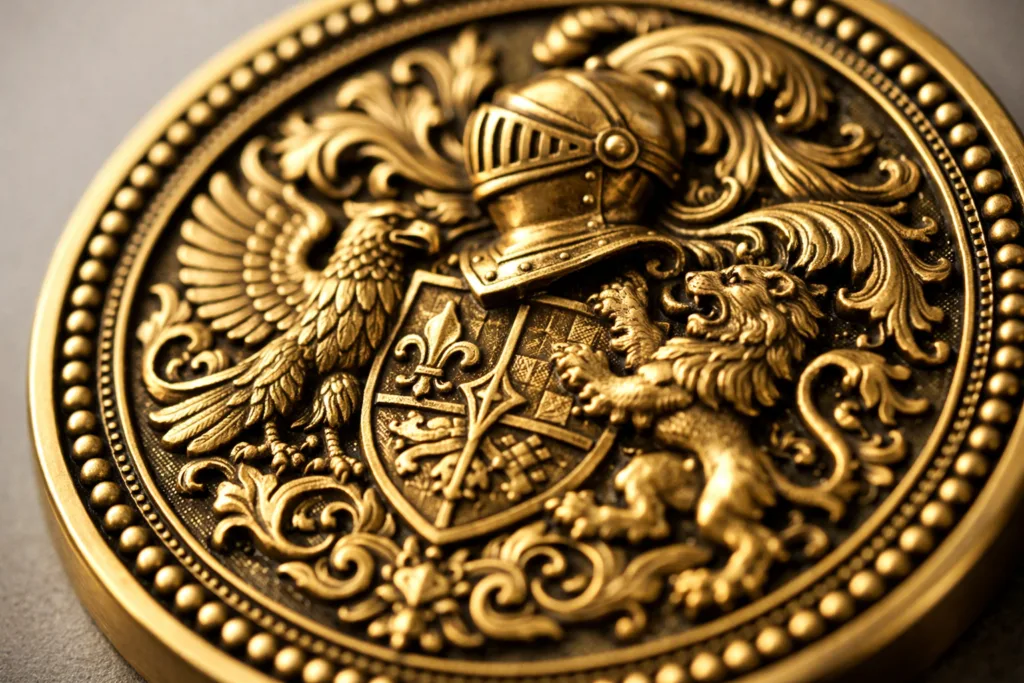
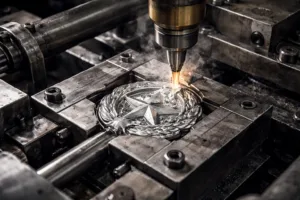
Die struck manufacturing is a traditional metalworking technique where a metal blank is pressed between two hardened steel dies to imprint a design. Think of it like using a powerful stamp—except with tons of force and precision that transforms basic metal into detailed medallions, badges, and emblems. The process starts with a sheet or strip of metal, typically brass, copper, or nickel silver. The die is custom-engraved with your chosen design, and as the metal blank is forced between these dies, it adopts every line and texture of the mold. Because no metal is melted, the final item retains both the density and tactile quality of the original alloy.
The Die Cast Process: How It Works
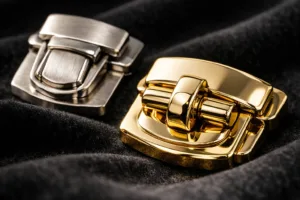
Die casting takes a different path. Here, molten metal—often zinc, aluminum, or magnesium—is injected under high pressure into a precision-crafted steel mold. The hot metal fills the smallest details before solidifying, and once the mold opens, out comes an intricately shaped part. This method is the go-to for three-dimensional, complex geometries, offering strengths in minimum wall thickness and consistency across high production volumes. Die casting is especially valuable in applications needing fine detail and repeated accuracy, like premium packaging hardware or custom keychains, as produced by established metal crafts manufacturers.
Key Differences in Manufacturing Techniques
At their core, die struck stamping and die casting differ in how they treat metal. Die struck techniques rely on force alone to displace and shape metal, keeping grain structure intact and resulting in pieces that feel substantial and luxurious. Die casting, on the other hand, begins with a metal alloy heated to a liquid state, which means items can include undercuts, intricate textures, and internal cavities. Each process brings its own set of strengths and limitations based on practical observations and industry best practices.
Material Options: Common Metals Used
Die struck production favors ductile, work-hardened alloys—mainly brass, copper, and nickel silver. These metals allow for crisper stamped details and are relatively easy to plate or color. In contrast, die casting excels with lower-melting-point alloys such as Zamac (zinc-aluminum-magnesium-copper) and aluminum. The choice of base metal impacts everything from surface smoothness to corrosion resistance. High-end manufacturers like Gairun may choose virgin Zamac 3 for casting, ensuring premium quality, flawless surfaces, and superior plating adhesion—something recycled alloys frequently compromise.
Precision, Detail, and Surface Quality Compared
When the sharpest logo or text is critical, die struck is unbeatable for two-dimensional surface details. Edges appear razor clean, micro-texturing is precise, and the result is a dense item with a fine jewelry finish. Die casting enables complex 3D forms, rounded edges, and deep relief but can be prone to tiny pores on the surface after cooling, which may require extra finishing. Advances in CNC mold engraving, such as those used by top-tier suppliers, help mitigate some die cast limitations, ensuring nearly invisible parting lines and ultra-smooth surfaces.
Production Volume: Small Runs vs. Mass Production
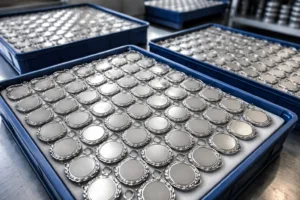
Choosing between die struck and die cast often comes down to economics. Die struck manufacturing suits short and medium production runs—think commemorative coins, branded emblems, and small-batch souvenirs. Although mold costs can be moderate, changeovers are quicker, and setup fees make sense for limited runs. On the other hand, die casting shines in medium-to-large run projects. While initial mold expenses are significant, the per-unit cost decreases dramatically with higher volumes, making it ideal for fashion hardware or luxury packaging parts produced in bulk.
Design Limitations and Opportunities
Die struck is perfect for designs with raised and recessed areas on flat or shallow domed profiles. Intricate edge patterns are also possible, but deep undercuts or complex internal cavities are not. Die casting opens up far more freedom—think multi-level 3D forms, internal threads, or built-in mounting points. These expanded options come with design precautions, such as managing shrinkage or avoiding overly thin walls, but advances in mold flow simulation help reduce casting flaws.
Surface Finishing: Plating, Polishing, and Coloring
After forming, both die struck and die cast parts can be plated in gold, nickel, or chrome, or tinted with enamel, paint, or epoxy. However, die struck items—thanks to their smooth, compact grain and fewer surface defects—excel in mirror finishing and are loved for their tactile, jewelry-like quality. With die castings, certain finishes like high-polish or ultra-thin plating require extra attention to porosity and micro-pits. Brands focused on luxury, such as Gairun, employ multi-stage hand-polishing and premium plating (like PVD or rack electroplating) to achieve consistent brilliance on both die struck and die cast surfaces.
Durability, Longevity, and Wear Resistance
Die struck pieces often outlast die cast parts because the cold-formed metal retains its strength and density. The lack of porosity means fewer weak points for wear or corrosion to begin. Die castings, while strong and dimensionally stable, may suffer from internal voids or softer alloy structures if process controls are lax. Rigorous manufacturers conduct 48-hour salt spray tests or mechanical pull testing to ensure die cast components meet luxury packaging standards and endure daily handling.
Cost Comparison: Tooling and Unit Pricing
Tooling for die struck production tends to be less expensive and faster to create, although complicated designs can still inflate the budget. For small to moderate runs, this makes die struck appealing. Die casting, by contrast, demands high-precision steel molds—sometimes with sliding cores or inserts—that contribute to a significant upfront investment. Still, when amortized over mass production, die casting offers highly competitive unit costs and exceptional repeat consistency, especially for standardized parts like closures and hardware.
Lead Times and Project Timeline Realities
Die struck projects can move from concept to finished sample quickly if the design stays within stamping parameters. Adjustments for die wear are straightforward, and replacement costs are manageable. With die casting, mold creation and debugging take longer, but once production ramps up, speeds are impressive. Well-organized projects with robust supply chains can see first-shot castings within a few weeks, but expect extra time for intricate designs or premium finishing cycles.
Environmental Impact: Energy and Material Efficiency
Die struck manufacturing tends to generate less scrap and lower energy use since it works with metal in its solid state. Clippings can often be recycled on the spot. Die casting is more resource- and energy-intensive due to melting, pressure, and mold temperature requirements. Still, closed-loop alloy recycling in zinc die casting reduces waste, and most trimmings are reclaimable, minimizing the process’s environmental footprint.
Industries and Applications: Who Uses Which Process?
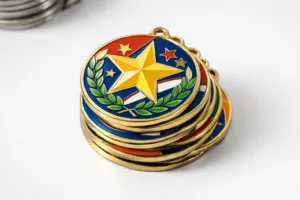
Die struck excels in medals, commemorative coins, lapel pins, and premium branding plates—applications valuing detail, weight, and artisan quality. For example, organizations recognizing achievement through custom medals or corporate souvenir manufacturing often choose die struck for prestige. By contrast, die casting dominates in hardware for fashion, packaging, and promotional products, including perfume caps, bag clasps, and bespoke buckles.
Performance in Harsh Environments
Products exposed to frequent handling or moisture—such as outdoor badges or keychains—benefit from the near-impermeable structure of die struck metal, especially when combined with advanced plating for corrosion resistance. Die cast items perform well, too, but may require special coatings and post-casting inspections to prevent corrosion or early wear, especially in demanding conditions like marine or industrial use.
Customization Potential: What’s Possible?
With die struck, nearly any flat or low-relief artwork can be precisely transferred to metal, supporting personalized logos, numbers, or intricate edge textures. While the process doesn’t allow for dramatic 3D geometry, its output feels sophisticated and ‘substantial’ in the hand. Die casting, meanwhile, can turn almost any 3D design into reality within engineering limits: spinner pins, slider medals, and functional components with moving parts are all within reach, as seen in custom awards and high-value collector’s pieces.
Quality Assurance and Testing Standards
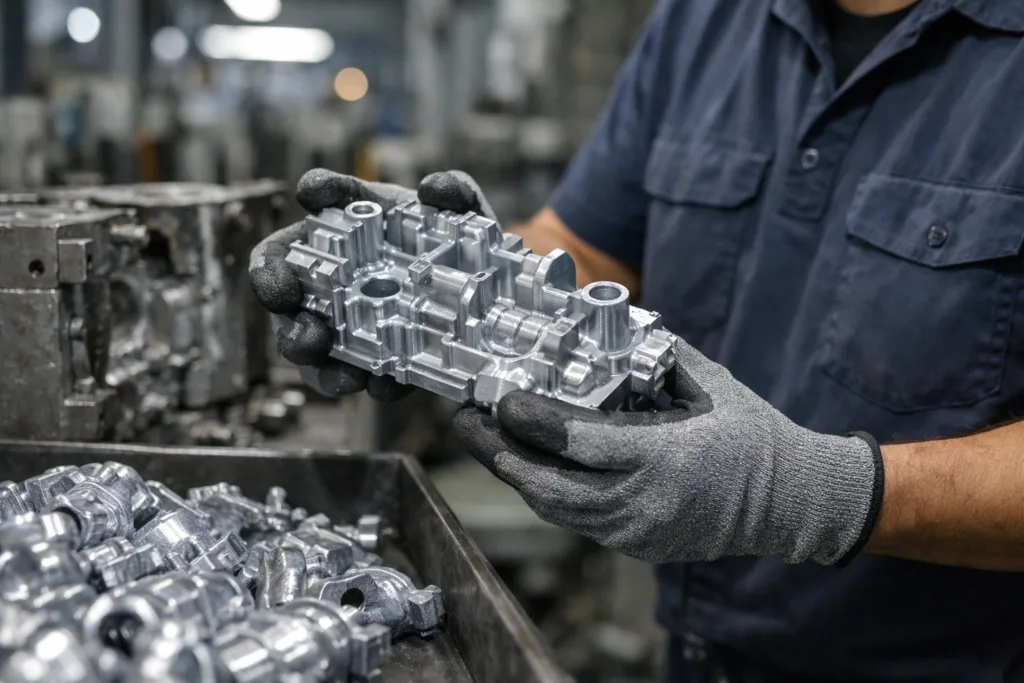
High-quality die struck and die cast products undergo strict quality checks—dimensional inspections, surface finish evaluations, adhesion testing after plating, and function testing where relevant. Advanced manufacturers like Gairun routinely employ custom jigs, pull-force rigs, and salt spray assessments to ensure every piece not only fits but will last, even rejecting parts that are functionally sound but don’t meet flawless aesthetic standards.
Common Issues, Flaws, and Remedies
Die struck work may, rarely, show die wear (e.g., blurred fine details), misalignment, or uneven strikes. These are typically caught early in quality control, with well-maintained dies preventing most errors. Die cast issues can include porosity, surface blemishes, or incomplete fills. Here, precise mold-making, careful alloy selection, and proper gate design minimize defects, while rigorous process monitoring keeps results consistent even under scale.
Case Study: Die Struck Lapel Pins vs. Die Cast Keychains
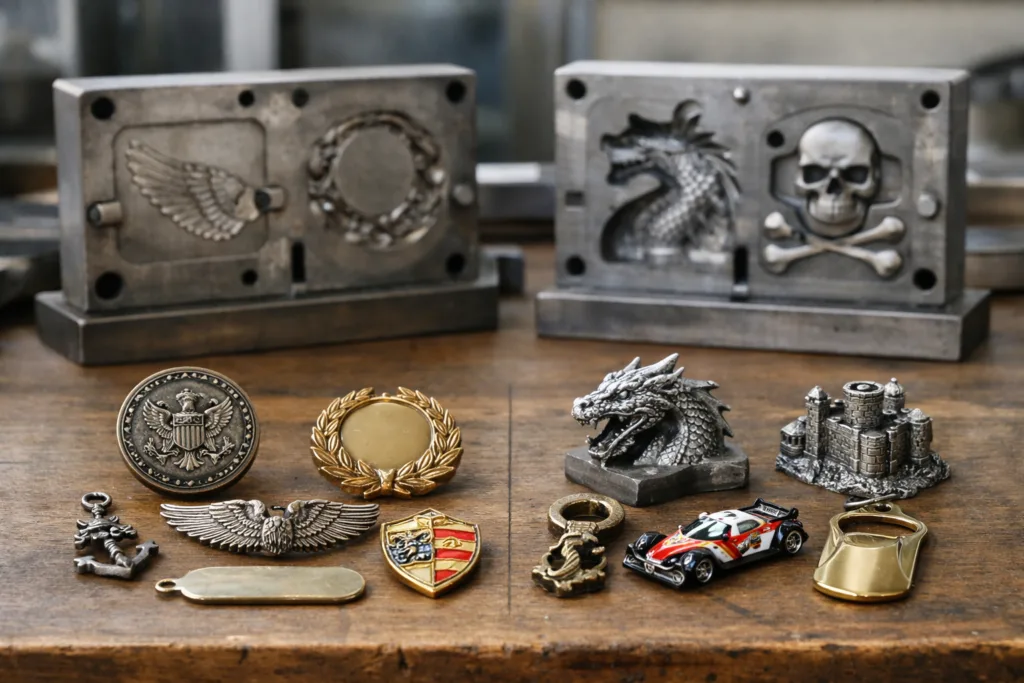
A clear application of these techniques is found in recognition pins and branded accessories. Die struck lapel pins deliver crisp detail, flat or gently domed profiles, and a weighty feel—ideal for corporate and volunteer recognition, as detailed in guides like volunteer recognition pins. Die cast keychains, by contrast, enable 3D forms, built-in moving features, and robust mass production—perfect for unique shapes and complex branding elements.
Integrating Die Struck and Die Cast in Large Projects
Some organizations leverage both techniques for the same project—for example, using a die struck branding plate on a die cast buckle, or combining die cast closures with stamped emblem tags in luxury gift box hardware. Savvy sourcing approaches, as highlighted in smart metal crafts procurement strategies, coordinate suppliers for seamless integration of mixed-technique components.
How to Choose: Key Decision Factors
Your best choice depends on design complexity, production volume, surface and tactile requirements, and budget constraints. If your project demands flat, intricate detailing in limited quantity, die struck is likely your method. For 3D geometries, high annual volume, or integrated mechanical features, die casting usually wins. Balancing these needs alongside your supplier’s technical capabilities ensures optimal outcomes.
Expert Tips for Specifying Your Metal Product
Work closely with experienced manufacturers in early design phases—present clear drawings, target applications, and required finishes. Ask about mold precision, surface treatments, and process controls. Without a doubt, samples and rapid prototypes are invaluable in confirming design feasibility, managing expectations, and preventing surprises during mass production. For applications requiring color matching or long-term luster, consult guides like how to specify color for zinc alloy plating in advance.
Emerging Trends: Technology and Sustainability
Recent innovations include CNC-engraved multi-cavity molds for sharper repeatability, eco-friendly alloy options, and AI-driven defect detection. Automated polishing lines and advanced plating technologies enable premium surfaces even on complex die castings. Sustainability efforts—such as closed-loop zinc recycling—reduce environmental impacts and appeal to eco-conscious brands.
Future Perspectives in Metal Craft Manufacturing
The boundaries separating die struck from die cast continue to evolve as tooling, materials, and finishing techniques advance. Product designers benefit from ever-greater creative freedom, more efficient sample cycles, and sustainable process improvements. Industry leaders who invest in mold tech, material innovation, and stringent quality management set the pace for the next generation of metal crafts and luxury hardware.
Die Struck vs. Die Cast: Manufacturing Explained
Understanding the nuances between die struck and die cast manufacturing allows you to select the ideal process for each unique application. Each method brings its own set of advantages, trade-offs, and costs, influencing the experience, quality, and value of the final metal product. Ultimately, success lies in aligning your design requirements with proper process selection and partnering with a manufacturer who shares your commitment to excellence.
Conclusion
The difference between die struck and die cast manufacturing is more than technical jargon—it’s the backbone of quality, cost-effectiveness, and innovation in metal products. Manufacturers and designers who master these distinctions consistently achieve standout results, whether crafting commemorative medals or high-volume fashion hardware. Whatever your application, balancing design, volume, and finish requirements with the appropriate technology is the key to standing out in metal fabrication.
Frequently Asked Questions
Which is stronger—die struck or die cast metal parts?
Die struck parts are typically stronger and denser, as the grain structure remains continuous and compact throughout stamping, delivering superior durability and wear resistance.
What metals are most commonly used in die struck and die cast processes?
Die struck typically uses brass, copper, and nickel silver for crisp design transfer, while die casting favors zinc, aluminum, and magnesium alloys for complex 3D shapes.
When should I choose die struck over die cast?
Choose die struck for items requiring flat or relief detail, a solid feel, small runs, or when precise, sharply defined edges are needed, such as medals and branding plates.
Are die cast products suitable for high-end applications like luxury packaging?
Absolutely—when made with premium molds, alloys, and advanced plating, die cast components like Zamac caps are widely used in luxury packaging for both function and aesthetic value.
How does the finishing process differ for die cast and die struck items?
Die struck items generally have smoother surfaces, making high-polish finishes easier, while die cast products may require extra polishing to address micro-porosity before plating or coloring.
Can both processes create custom-designed, branded products?
Yes, both support custom designs; die struck excels in sharply detailed 2D logos, while die casting enables intricate 3D shapes for creative branding solutions.
Related Reading
- Master Zinc Alloy Plating Color: Preventing Costly Batch Mismatches
- Unlocking Bulk Metal Crafts Pricing—Fundraising Wins for Non-Profits
- 7 Surprising Ways Recognition Pins Drive Community Spirit
- Pin Strategy Guide: Maximizing Non-Profit ROI & Awareness
- Memorial Pins: Comfort and Unity at Farewell Ceremonies
- Zinc Alloy Die Casting Costs: Decode Pricing & Mold Fees