Introduction: Why Choose the Right Fill Method for Zinc Alloy Logos?
Designing distinctive, high-value zinc alloy badges and logos demands more than creative artwork. Your choice between enamel, paint, and epoxy fill directly impacts color brilliance, sharpness of lines, scratch resistance, and even consistent quality across production runs. With increasing demand for visually striking, tactile, and durable emblems—in packaging, fashion, and collectible markets—the right fill method becomes a critical consideration. This article breaks down each fill solution, highlights their performance in real-world applications, and shares expert tips so your next zinc alloy badge stands out for all the right reasons.
The Essentials: Enamel, Paint, Epoxy Fill—What Do They Mean?
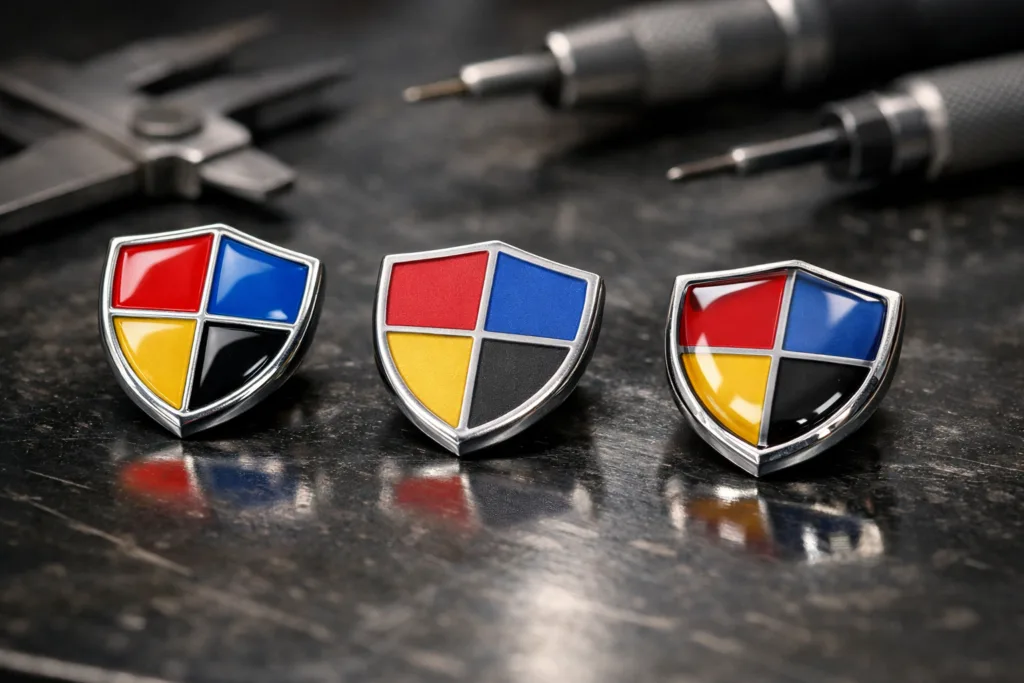
If you’re considering an enamel zinc alloy badge or an epoxy filled logo, understanding the core techniques behind these finishes is step one. Though they may appear similar at first glance, each filling solution interacts differently with the metal’s surface, and each offers unique strengths—and limitations. Let’s see what sets them apart.
Enamel Fill: The Classic Standard
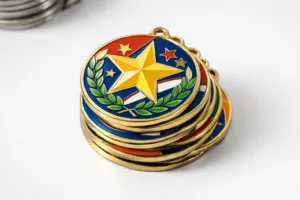
Enamel, often either soft or hard, is a colored resin or glass paste baked onto the metal. Soft enamel leaves a tactile, sunken surface, while hard enamel is polished flush for a sleek, extra-durable finish. The color shines with saturated vibrance, and crisp separation between filled areas and metal boundaries is its trademark. Enamel fills are renowned for their high consistency and wear resistance, making them a staple in fine lapel badges, collectible pins, and branded emblems.
Paint Fill: Versatile and Precise
Paint fill covers recessed or defined areas with colored inks. The process allows for precise placement, including small details and multi-tone designs. Paint can be formulated for various textures—matte or glossy—and supports a broad color palette. However, its long-term resistance to scratching isn’t as high as enamel or epoxy, depending on the coating.
Epoxy Fill: The Protective Lens
Epoxy fill, sometimes called an epoxy dome, is a transparent or tinted resin layer poured over colored artwork. It creates a smooth, glass-like surface that magnifies and protects the underlying design. Epoxy is flexible in use and very effective for badges needing extra resistance to moisture, impact, or chemicals. However, boundary separation isn’t as crisp as in true enamel fills.
Key Decision Criteria: How to Choose the Fill for Your Zinc Alloy Logo
Not sure which fill method to select? Focus on these practical decision points:
- Color Saturation: For vibrant, deeply saturated colors, enamel comes out on top due to its high pigment load and thickness. Epoxy fills can add a magnifying effect, making colors pop, while painted fills can be subtle or bold depending on ink type and thickness.
- Scratch Resistance: Hard enamel is exceptionally durable, thanks to its flush, solid finish. Epoxy endpoints are also robust, but can yellow slightly with age or excessive sun. Paint fills depend on the coating used; multi-layer varnishes can increase protection but generally do not match enamel or thick epoxy for sheer scratch resistance.
- Edge Clarity & Line Detail: For logos with minute lettering or intricate borders, soft and hard enamel excels at keeping lines precise and color strictly within boundaries. Epoxy’s fluid coating can blur edges slightly, while paint’s outcome depends on application control and the metal’s edge quality.
- Consistency in Mass Production: Enamel, especially with CNC-controlled dosing, is the champion for uniformity in shape and color batch after batch, as long as design files meet manufacturability requirements. Paint, being more manual and ink-dependent, may show slight variations. Epoxy’s self-leveling nature helps, but dome height may shift if surface prep varies.
Table: Comparing Enamel, Paint, and Epoxy Fill on Zinc Alloy Logos
| Attribute | Enamel | Paint | Epoxy Fill |
|---|---|---|---|
| Color Saturation | Very high | Moderate–high | Bright, magnified |
| Scratch Resistance | Excellent (hard), Good (soft) | Medium (varnish improves) | Very good, minor UV yellowing risk |
| Edge Clarity | Sharp, clean | Accurate, may bleed on poor prep | Less crisp, minor dome overflow |
| Mass Production Consistency | High | Medium | Good with process control |
| Best Use Cases | Pins, emblems, jewelry | Small details, custom finishes | Promo, outdoor, tactile feel |
Color Saturation: Beyond Bright Looks
The fill method you select directly affects how your logo’s colors appear in both natural light and under spotlights. Enamel’s thicker, pigmented media imparts a level of saturation and depth unrivaled by most paints or base coats. Soft enamel provides visual depth (sunken look), while hard enamel, after polishing, is impressively shiny and gem-like. Epoxy amplifies the colors underneath thanks to its lens effect, but pigment amount is determined by the art layer beneath.
Scratch Resistance: Protecting Your Investment
Collectible badges, keychains, and luxury box emblems face daily wear. Here’s how each fill method stands up:
- Hard Enamel: Polished flush; almost as durable as jewelry-grade glass. Outlasts most environmental hazards.
- Soft Enamel: Sunken; edges provide some protection but can catch on surfaces.
- Paint: Varies widely—matte may show scuffs; gloss with heavy varnish performs better but not for extreme use.
- Epoxy Fill: Strong against moisture, chemicals, and small impacts. Thick domes are resilient, but over time UV can cause minimal yellowing on clear resins.
Edge Sharpness and Boundary Definition
Luxury logos demand precise color boundaries—nothing undermines premium perception faster than blurred lines. Soft/hard enamel, thanks to CNC-finished molds and careful dosing, provides razor-sharp color edges. Paint can rival this if your metal lines are high enough and ink control is meticulous. Epoxy domes, nice as they are for smoothness, can soften crisp line work. For ultra-fine text, favor enamel or expertly applied paint fill.
Mass Production Consistency: Keeping Your Brand Uniform
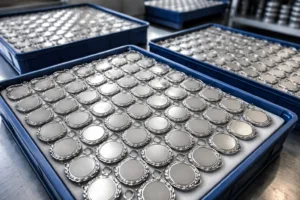
Consistency is about more than aesthetics; it directly affects perceived brand value. The more precise and repeatable your fill process, the fewer defective units and brand-damaging inconsistencies. Enamel is highly controllable, especially in advanced shops using digital dispensing. Paint often introduces slight shade shifts batch-to-batch, as ink lots or operator variables shift. Epoxy is forgiving but sensitive to environmental conditions (humidity, mixing accuracy). A top-tier manufacturer, like Gairun, invests in climate-controlled spaces, fresh pigment lots, and microdosing systems to ensure that each logo receives the same treatment, every run.
Design File Preparation: What to Watch Out For
Your artwork is only as manufacturable as its boundaries allow. When preparing design files for a zinc alloy badge or epoxy filled logo, these steps matter:
- All Color Areas Must Be Fully Enclosed: Breaches or open paths will allow fill material to leak, resulting in imprecise and ugly outcomes.
- Minimum Gap Between Filled Areas: Industry standard is at least 0.25mm between color zones for soft/hard enamel and paint, and at least 0.35mm for epoxy as doming can overflow. Gairun’s high-res inspection often spots artwork sub-0.2mm; these details simply cannot be cast, and designers should allow for mold shrinkage and surface tension effects.
- Smooth Transitions and Riser Heights: The higher the metal borders, the more secure your fill and the more pronounced the tactile contrast.
- Vector Formats Work Best: Provide AI, EPS, or high-scaling SVG files. Flattened PNG or JPG files introduce error.
Common Applications and Industry Examples
Zinc alloy badges with enamel, paint, or epoxy fill are used in:
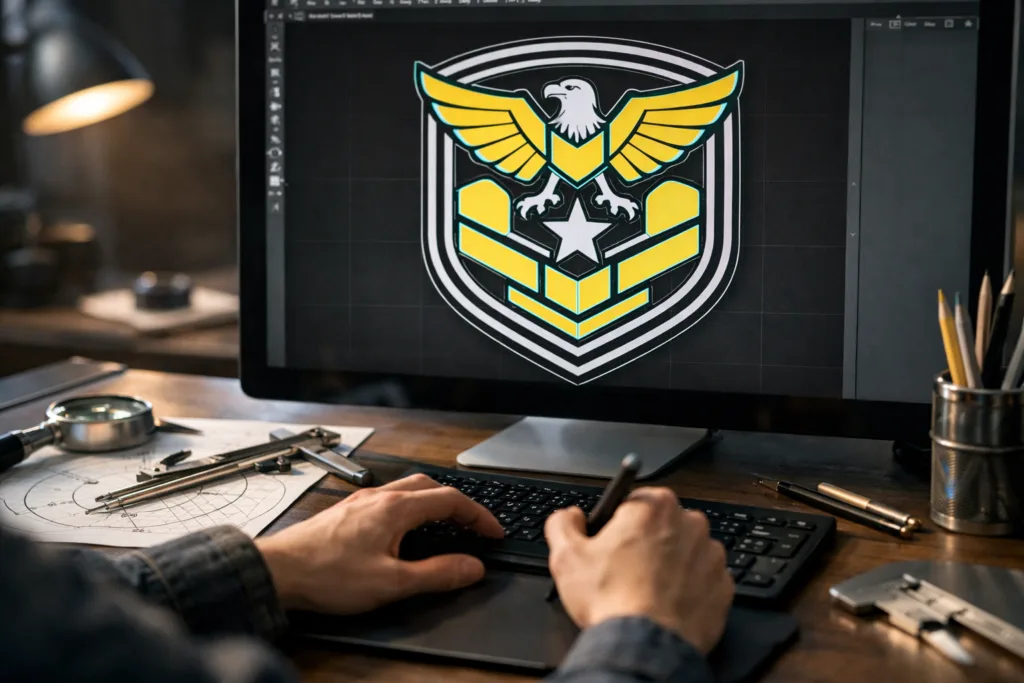
- Luxury Packaging Logos: Perfume bottles, spirits, premium box corners (see zinc alloy box corners for packaging)
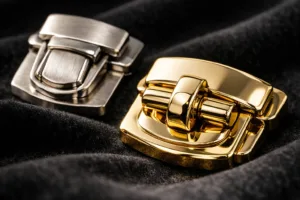
- Fashion Hardware: Custom buttons, zipper pulls, handbag tags
- Commemorative Items and Medals: Tournament badges, challenge coins (etched metal plaques for employee recognition)
- Brand Markers: Electronic appliance nameplates, automotive badge emblems
Addressing Common Fill Challenges
Even with careful planning, challenges sometimes arise in zinc alloy logo production:
- Porosity: Caused by inadequate mold venting or impure melted alloy. This affects fill adherence and crispness.
- Color Variability: Multiple batches may not match if pigment lots are inconsistent or curing parameters shift.
- Blurred Boundaries: Design file errors or insufficiently high metal risers.
- Epoxy Yellowing: UV-resistant epoxies and careful additive use can minimize long-term haze.
Industry Perspective: How Premium Makers Set the Standard
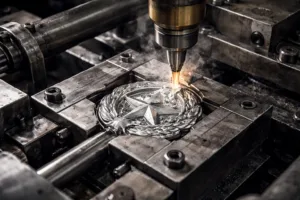
Experienced manufacturers, such as Gairun, go beyond minimum specification in every detail. They select only high-purity Zamac 3 for casting—unlike low-purity blends that risk pitting or undulating surface textures which undermine fine fill work. CNC-cut molds preserve design sharpness, while multiple-stage polishing removes micro-burrs so that each edge holds color with absolute precision. Gairun’s use of rack plating for delicate badges (not mixing in barrel plating) ensures that fills and metallic edges remain untouched and flawless, not dulled by bulk handling. Such attention to detail ensures color fill logos hold up to even the most demanding brand audits.
Best Practices: Order Management and Buyer Tips
To reduce surprises and lead to a successful zinc alloy logo rollout:
- Request pre-production samples (PP samples) to confirm color, finish, and sharpness under real lighting.
- Align with engineering on minimum riser/gap details before artwork sign-off.
- Specify environmental exposures: UV, chemicals, or temperature extremes may affect finish longevity.
- Define acceptance criteria on mass production, especially for colors, doming consistency, and tolerance to minor flaws.
Future Trends in Zinc Alloy Logo Filling
With advances in filling robots, UV-curable resins, and laser-engraved molds, expectations for color consistency and micro-details are rising. Brands seek finishes that remain flawless from flagship boutiques to rugged retail settings. The balance between artisan finishing and automation is narrowing—expect even sharper, deeper, and more resilient badges in the years ahead.
Enamel, Paint, Epoxy Fill on Zinc Alloy Logos: How to Choose
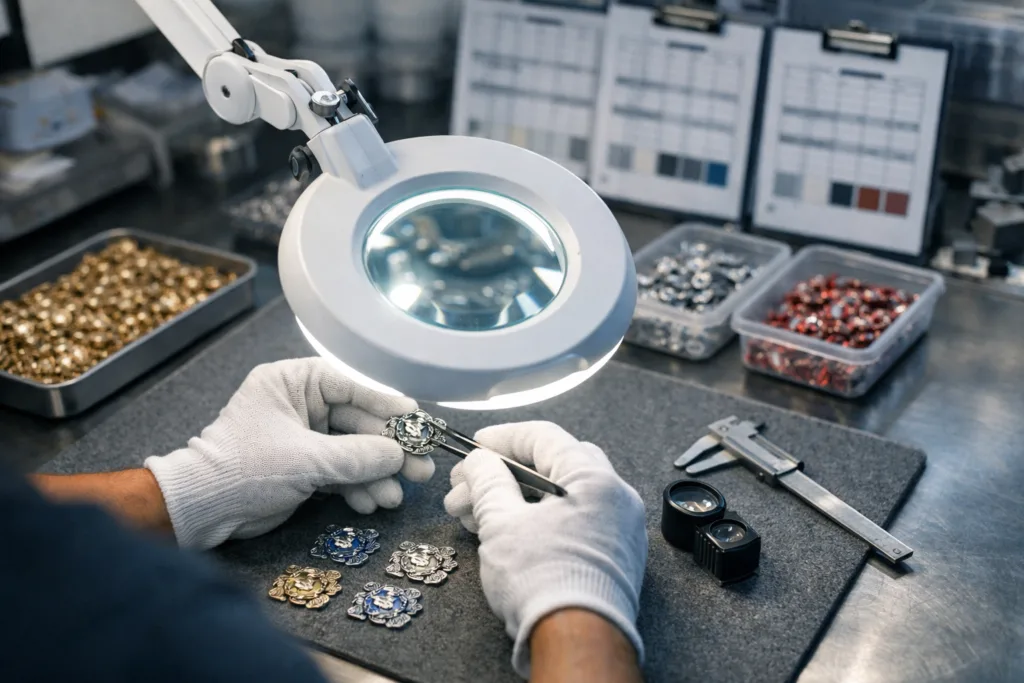
To summarize: if you need jewelry-grade edge sharpness, vibrant color saturation, and enduring scratch resistance, enamel fill (hard/soft) is the top contender, especially from a quality-focused supplier. For cost-effective one-off runs and more flexible textures, paint fill can shine—just keep your artwork and expectations realistic. Epoxy is the ‘protective glass’ for outdoor, large-format, or tactile badges—choose UV-resistant domes where longevity is vital. Most importantly, your logo design should always match the limits and strengths of your chosen fill process by ensuring closed boundaries and generous spacing between color fields.
Conclusion: Making the Most of Your Zinc Alloy Logo Investment
Picking between enamel, paint, and epoxy fill for zinc alloy logos isn’t just an aesthetic decision—it’s about durability, clarity, and repeatability at any scale of production. By understanding how these fills perform on real hardware, meticulously preparing your design files, and partnering with manufacturers committed to best-in-class standards, your brand is poised for a flawless, lasting first impression.
Frequently Asked Questions
Which fill is best for long-lasting color on zinc alloy badges?
Hard enamel offers the richest color and most durable finish, resisting fade and wear better than paint or basic epoxy.
How do I avoid color bleeding between logo zones?
Maintain at least 0.25mm (enamel/paint) or 0.35mm (epoxy) gaps between color areas and use high-precision mold engraving.
Are epoxy filled logos suitable for outdoor use?
Yes, especially with UV-resistant epoxy. They withstand moisture and impact but monitor for yellowing over long exposure.
Can soft enamel badges achieve a completely flat finish?
Soft enamel fills remain slightly recessed; only hard enamel is polished fully flush with the metal rim for a completely flat surface.
Why is file format important for badge production?
Vector formats ensure sharp boundaries and accurate gap sizes, preventing manufacturing issues and blurred color lines.
Is it possible to combine fill methods on a single zinc alloy logo?
Yes, experienced manufacturers can combine enamel, paint, or epoxy within one design for tailored effects, though process controls must be tight.
Related Reading
- Choosing the Right Color Fill: Soft Enamel, Printed, or Epoxy?
- Achieving Flawless Zinc Alloy Brand Emblems on Luxe Packaging
- 7 Reasons to Pick Soft Enamel for Cost-Effective Trading Pins
- Unlock Design Freedom: Zinc Alloy Corners & Their Packaging Impact
- How Etched Metal Plaques Motivate and Retain Top Employees
- PVD vs. Electroplating: Which Finish Brings Your Zinc Alloy Packaging to Life?