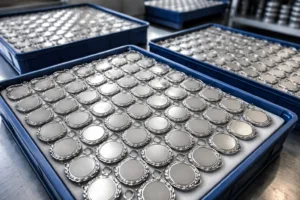
How Custom Metal Product Design Works
Custom metal product design links creative vision with technical skill. Whether commissioning medals, badges, coins, or branded hardware, smart design considers both aesthetics and industrial practicality. This article walks through the entire process—from first sketch to finished part—using clear steps and expert detail. Whether you’re a business or designer, you’ll see how each stage shapes quality, cost, and lead time.
What Is Custom Metal Product Design?
Custom metal product design combines client needs, application requirements, and manufacturing methods. A successful project balances branding, function, durability, and budget. Teamwork between clients and fabrication specialists—like Gairun—ensures each decision supports the final product’s strength and appearance. From event medals to luxury nameplates, designers tailor every step.
Common Applications
- Sports medals and marathon awards
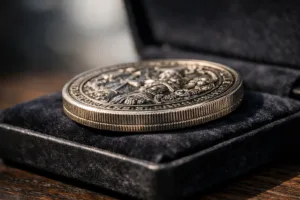
- Military, club, and corporate challenge coins
- Custom brand badges and labels
- Furniture hardware and decorative plaques
- Luggage tags, keychains, and gifts
Balancing Key Factors
Every project defines trade-offs among:
- Durability vs. cost
- Visual impact vs. function
- Lead time vs. complexity
Step-By-Step Custom Metal Product Design Process

Turning an idea into a reliable metal component means clear workflow. Below, we break down the essential stages from concept to shipment.
1. Needs Assessment & Intake
The project begins with a detailed brief. Clients outline:
- Product type and usage context
- Target materials and finishes
- Logo/artwork or branding requirements
- Target lead time and quantity (MOQ)
- Certain certifications (e.g., RoHS, EN 1811 nickel release if wearable)
2. Initial Concept & Industrial Design
Designers transform requirements into sketches and digital mockups. Modern CAD (computer-aided design) software enables quick adjustments. Feedback loops with clients ensure accuracy and branding alignment.
3. Engineering & Detailed Drawing
Technical staff create precise engineering drawings—showing dimensions, tolerances, relief depths, and reference finishes. 2D and 3D files ensure manufacturability and mold/tooling accuracy.
Why Are Drawings Crucial?
They specify:
- Total part thickness and relief height
- Engraving/embossing detail
- Color fill location and type (e.g., hard enamel)
- Critical mounting or cutout zones
4. Material Selection
Material choice shapes production method, feel, cost, and quality. Popular metals include:
- Zinc alloy—excellent for die casting with fine detail
- Brass—luxurious look, easy for etching/engraving
- Stainless steel (304/316)—durable, corrosion-resistant, suitable for nameplates and wearables
- Aluminum (6061/5052)—lightweight, anodizable, used in luggage tags and tech gifts
- Iron/steel—rugged and cost-effective for pins or badges
Material Comparison Table
| Material | Best Uses | Tolerance (mm) | Durability | Common Finish |
|---|---|---|---|---|
| Zinc Alloy | Medals, 3D coins | ±0.1 | High | Antique gold, nickel |
| Brass | Badges, nameplates | ±0.08 | Medium | Gold, nickel |
| Stainless Steel | Nameplates, hardware | ±0.05 | Very High | Brushed, mirror |
| Aluminum | Luggage tags, giveaways | ±0.1 | Medium | Anodized |
| Iron/Steel | Badges, low-cost | ±0.12 | Medium-High | Black nickel |
How Custom Metal Product Design Works
The design process involves a series of key manufacturing steps to ensure custom metal product design results in products that match vision and function.
5. Prototyping & Tooling
Once drawings are approved, tooling begins. Tooling means creating hardened steel or wire EDM-cut molds—built to sub-millimeter accuracy for sharp details. Prototype samples might be produced by:
- CNC milling/turning—ideal for flat or geometric samples
- 3D printing for quick shape checks
- Spin casting or soft tooling for medal or coin proofs
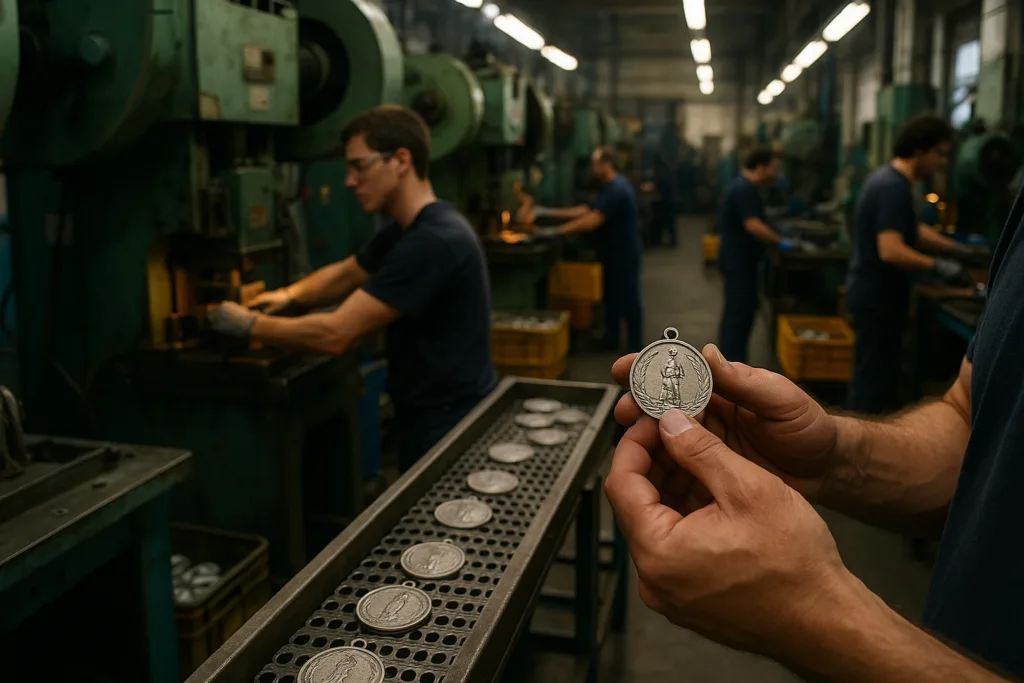
6. Core Manufacturing Method
Batch volume, relief style, and metal choice dictate the main forming process:
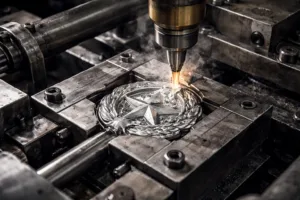
- Die casting for zinc alloy or pewter parts—produces complex 3D relief and mass volume
- Stamping (press-forming) for flat brass, steel, or aluminum—yielding tight tolerance and crisp perimeter cuts
- Photo-etching for ultra-fine detail in thin badges or plaques
- Laser cutting/engraving for custom shapes or serial numbers
7. Deburring, Polishing & Surface Prep
After forming, all edges are deburred by tumbler, shot blasting, or hand. Surfaces are polished according to the specified finish—brushed, mirror, sandblasted, or satin. This step sets the tone for final plating color and consistency.
8. Relief & Coloring
Designs may include:
- 2D or 3D raised graphics
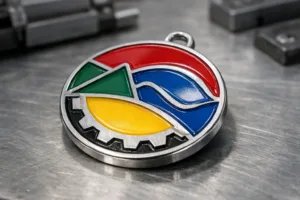
- Color fill (soft/hard enamel) with Pantone matching
- Fill depth control for tactile feel
- Epoxy domes for wear protection or gloss
Separation of colors ensures sharpness and brand fidelity. Each zone is filled then fired or UV-cured for strength.
9. Plating & Finishing
Electroplating locks in surface strength, color, and texture. Options include:
- Antique or bright gold/nickel
- Black nickel, gunmetal, matte black, chrome
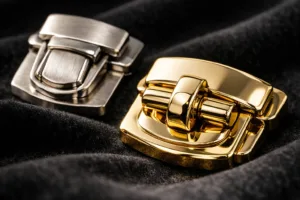
- Rose gold, copper, satin, or brushed finishes
- PVD or powder coating for extra scratch resistance
- Anodizing for aluminum
Plating & Finish Comparison
| Finish | Properties | Best For |
|---|---|---|
| Antique Gold | Classic, hides scratches | Coins, medals, badges |
| Mirror Chrome | High shine | Luxury hardware |
| PVD Black | Premium, ultra-hard | Nameplates, wearables |
| Anodized (Al) | Lightweight, colored oxide | Luggage tags, tech gifts |
Assembly & Mounting Options
The right attachment method impacts usage and perceived quality:
- Split rings or lobster clasps for keychains
- Butterfly clutch, magnetic, or screw posts for badges
- 3M VHB adhesive for nameplates
- Velvet boxes, OPP bags, blister cards for packaging and presentation
Quality Control Measures in Custom Metal Product Design
Strict standards build durable reputation. In the custom metal product design process, quality assurance includes:
- Tolerance checks: Calipers, CMM (coordinate measuring machine) for shape accuracy
- Plating thickness: XRF testing, minimum 8–15 μm for most decorative products
- Adhesion tests: Using standards such as ASTM D3359 for coated surfaces
- Salt-spray resistance: ASTM B117 testing, with hours logged for corrosion assessment
- Color fidelity: ΔE measurement versus Pantone target
- Sampling: Final AQL inspection per ANSI/ASQ Z1.4 (critical for large OEM runs)
Expert takeaway: A reliable partner like Gairun consistently applies process controls, ensuring every batch meets agreed specs and compliance for global shipping.
Compliance: Safety & Environment
For retail and branded products, safety and sustainability matter. Most custom metal items must meet:
- RoHS (Restriction of Hazardous Substances) limits on heavy metals
- REACH for chemical safety in the EU
- EN 1811 nickel release for items in skin contact
- CPSIA and California Prop 65 for US promotional products (if applicable)
Qualified manufacturers document conforming test results with every shipment and manage traceability back to raw materials and plating batches.
Sample Approval & Mass Production
A pre-production sample confirms final look and feel. If approved, mass production begins—scaling up with closely monitored process checks and periodic sample pulls. Turnaround depends on order size, custom finish complexity, and transit route. Typical timeframes:
- Tooling: 10–15 days
- Sampling: 7–10 days after tooling
- Mass production: 14–21 days, plus shipment (air/sea freight)
Cost Drivers in Custom Metal Product Design
Final cost reflects design, material, volume, finish, and packaging layers. Upfront tooling adds to the first order but brings long-term savings on repeat runs.
| Factor | Impact on Cost | Notes |
|---|---|---|
| Material | High | Brass and stainless cost more than zinc alloy |
| Relief/Detail | Medium-High | Sharp 3D relief needs more intricate molds |
| Plating/Finish | Medium | PVD, two-tone or antique finishes add cost |
| Quantity | High | Higher volume drives down per-piece price |
| Packaging | Low-Medium | Custom boxes or cards increase cost modestly |
Supplier Selection Tips
Choosing the right factory or OEM partner is vital. Prioritize:
- Experience with your product type
- Track record for on-time delivery and consistent quality
- Transparency in quoting, process steps, and QA reporting
- Willingness to co-develop new designs or tweaks (strong OEM/ODM support)
Gairun, for instance, provides technical guidance and documentation at every step—backed by deep experience in global markets.
Delivery, Inspection & After-Sales Service
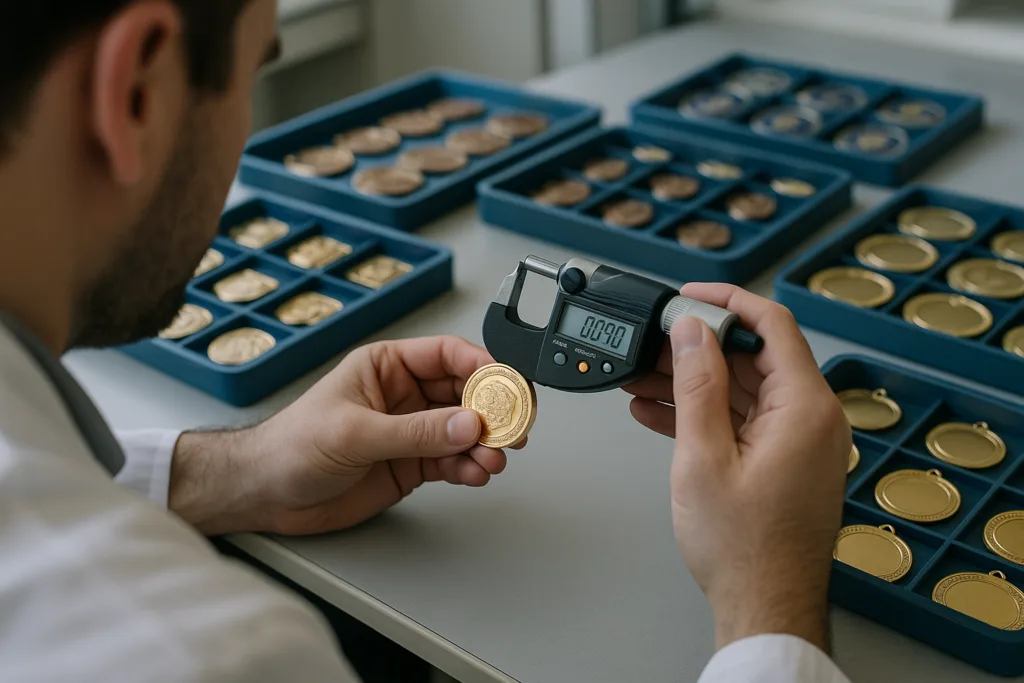
Before shipment, finished items undergo final QA. For large orders, third-party inspections can verify compliance with brief and sampling plans. After delivery, responsive service helps resolve any fit, finish, or logistics issues—critical for repeat business and long-term partnerships.
Frequently Asked Questions
What’s the difference between die casting and stamping for custom metal products?
Die casting is suited for parts needing complex 3D shapes, while stamping excels at flat designs with crisp edges; material and relief dictate the choice.
How do I choose the right material for custom metal product design?
Consider the product’s use, required durability, cost, weight, and finish—zinc for detail, brass for luxury, and stainless steel for corrosion resistance.
What is MOQ and how does it affect price?
MOQ means “minimum order quantity”; producing larger batches reduces the per-piece price by spreading tooling costs over more items.
Are custom metal products safe for skin contact?
Yes, reputable manufacturers comply with standards such as EN 1811 for nickel release and provide documentation for wearable goods upon request.
Which finishes last longest for outdoor or wearable items?
PVD, anodizing, and thick electroplating ensure best corrosion and scratch resistance for outdoor or wearable metal products, extending their lifespan.
How long does custom metal product design and production take?
Typical timelines are 10–15 days for tooling, 7–10 for sampling, and 14–21 days for full production, with additional transit time depending on shipment method.