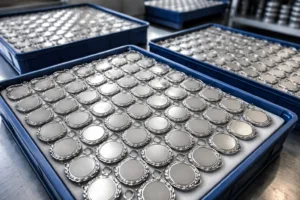
Understanding the Custom Metal Manufacturing Process
Every custom metal product begins with a clear understanding of what the customer needs. Whether it’s medals for a marathon, nameplates for machinery, or decorative hardware for furniture, each project follows a step-by-step process. The journey starts with design, moves through mold making, continues to production, quality control (QC), and ends with careful delivery. Leading manufacturers like Gairun bring precision, durability, and craftsmanship to every stage.
Design: Turning Ideas into Blueprints
The design stage lays the foundation for every custom metal manufacturing process. Here, ideas transform into technical drawings. Designers work closely with clients to create digital renderings, ensuring the vision matches the requirements. Factors such as product dimensions, relief patterns, mounting options, color separation, and branding placement are clarified.
- Material selection: Choosing zinc alloy, brass, stainless steel, aluminum, or iron depending on application, durability, and cost.
- Shape & tolerances: Specifying whether the product needs simple contours or intricate 3D relief (raised and recessed areas).
- Color & finish planning: Deciding on hard or soft enamel fills, electroplating type, or powder coat finishes.
Top companies, like Gairun, provide 2D/3D visuals and suggest adjustments to boost feasibility and manufacturability. This upfront investment in design prevents errors during later stages and helps keep lead times short.
Mold Making: Building Precision Tools
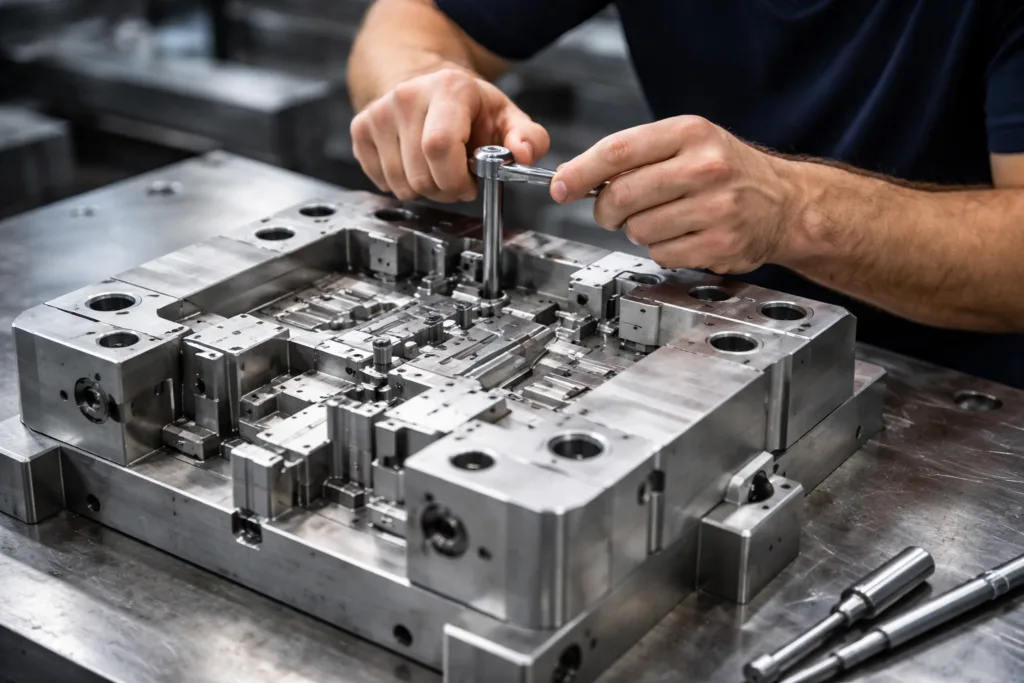
Once the design is approved, engineers craft custom molds—precision tools that shape raw metal into its final form. The choice of mold-making method depends on the manufacturing process:
- Die casting molds: Made from hardened steel using wire EDM (electric discharge machining) for sharp detail and durability.
- Stamping dies: Machined for 2D parts, supporting quick blanking and pressing of thin metals.
- Photo-etching masks: Used for fine, shallow engraving in nameplates and tactile badges.
Mold steel selection (regularly SKD11, S136) considers expected usage volume. Careful maintenance ensures dimensional stability over thousands—or even millions—of cycles. Tooling is measured to micron tolerances, and test imprints are validated before production begins.
Custom Metal Manufacturing Process
The core of custom metal product creation is the manufacturing process itself. Manufacturers choose different methods depending on the size, shape, and function of the piece.
Die Casting
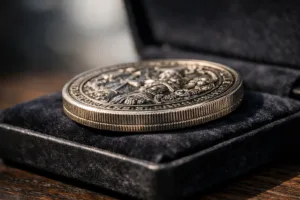
- Application: Medals, belt buckles, ornate hardware.
- Steps:
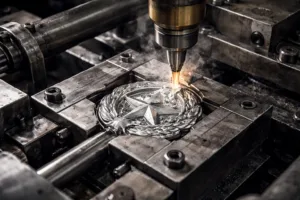
- Molten metal—often zinc or aluminum—is injected into molds at high pressure.
- Once cooled, parts are ejected, showing intricate detail and smooth surfaces.
- Excess material (sprues, gates) is trimmed away.
Stamping & Pressing
- Application: Simple badges, thin coins, labels.
- Metal strips are cut, then pressed or embossed in high-tonnage presses, forming the design in 2D or adding light relief.
CNC Machining & Laser Cutting
- Application: High-precision nameplates, functional hardware, custom shapes.
- Computer-controlled tools mill, drill, or laser-cut metal for sharp tolerances and logo accuracy.
Photo-Etching
- Application: Decorative surfaces, fine text, QR codes.
- A chemical process removes thin layers of metal, delivering exact detail with minimal depth (0.02-0.1mm typical).
Spin Casting
- Application: Small, high-detail objects using pewter, zinc, or lead-free alloys.
- Molten metal is poured into flexible rubber molds spinning at high speed, yielding complex, undercut forms.
After forming, parts are deburred, tumbled, or shot blasted to remove sharp edges and smooth the surface for finishing.
Comparing Manufacturing Methods
| Process | Cost | Detail | Tolerance | Best for |
|---|---|---|---|---|
| Die Casting | Medium-High (tooling cost) | High (3D relief) | ±0.1mm | Medals, coins, decorative |
| Stamping | Low-Medium | Moderate (2D/2.5D) | ±0.05mm | Nameplates, badges |
| CNC/Laser | High | Very High | ±0.01mm | Complex, low-volume |
| Photo-Etch | Low-Medium | Very Fine | ±0.02mm | Detailed labels |
| Spin Casting | Medium | High (3D, undercuts) | ±0.2mm | Small crafts |
Surface Finishing and Decoration
The product’s function and style guide the choice of finish. This step transforms plain cast or cut metal into a visually striking—and durable—object. Typical surface treatments include:
- Electroplating: Applying thin layers of metals (nickel, gold, antique brass, gunmetal, chrome, rose gold) for corrosion resistance and color. Plating thickness often ranges 3-15μm, checked by XRF testing.
- Anodizing: Especially for aluminum, it creates tough oxide films in colors like silver, black, or blue.
- Powder Coating: Adds a thick, colored, impact-resistant surface—popular for outdoor or branded items.
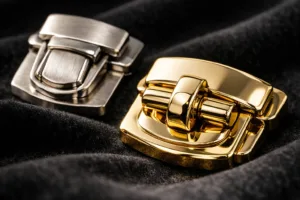
- Satin, brushed, or mirror polish: Controls reflectivity for modern, classic, or decorative looks.
- Sandblasting: Leaves a textured, non-slip feel, often for background contrast.
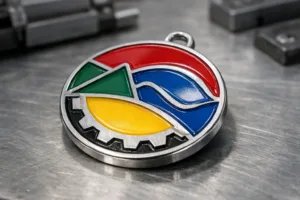
Enamel color fills—either soft or hard types—offer branding pop and durable detail. Colors are Pantone-matched for accuracy. Some products receive an epoxy dome for extra scratch resistance.
Assembly, Fitting, and Packaging
Many custom metal products need assembly before shipping. Mounting options are chosen for each finish, usage environment, and customer requirement. Common choices include:
- Split key rings and lobster clasps (keychains, bag tags)
- Butterfly clutches or magnetic backs (badges and pins)
- 3M VHB adhesive, rivets, or screw posts (nameplates, hardware attachments)
After fitting, items are packed in OPP bags, velvet boxes, transparent blisters, or custom cards. Packaging plays a role in presentation and helps prevent damage during transport and storage.
Quality Control (QC) in Custom Metal Manufacturing
Consistent quality is essential. Manufacturers use a series of strict tests—often referenced to international standards—to validate every batch before shipment:
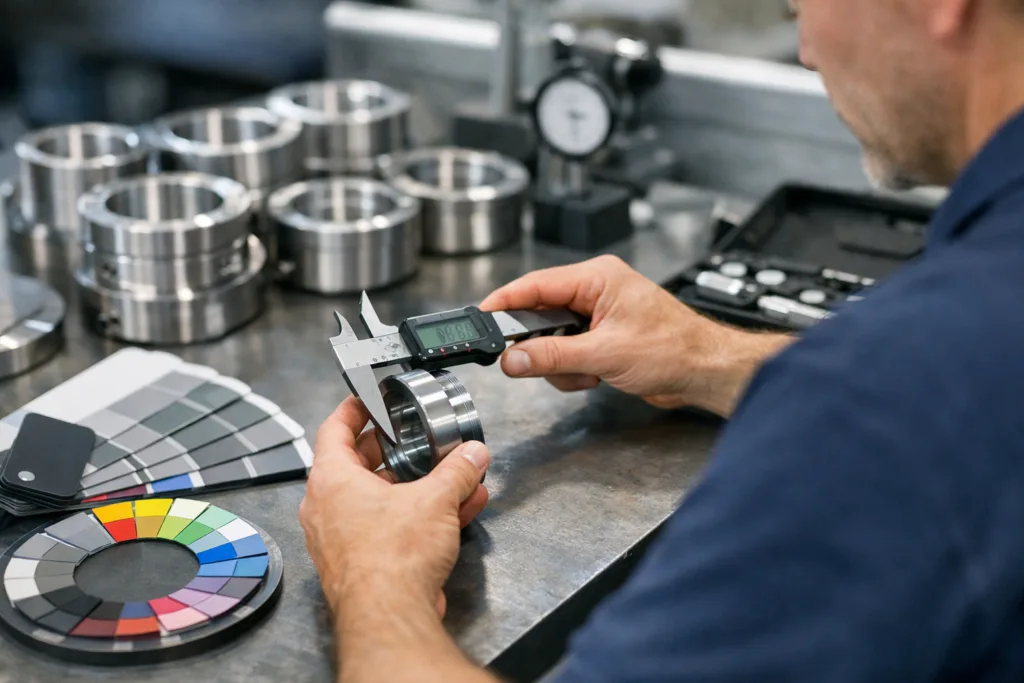
- Dimensional checks: Caliper or micrometer measurements confirm size to ±0.1mm or better.
- Plating thickness: XRF analysis confirms a minimum layer for lasting wear.
- Salt spray (ASTM B117): Simulates years of corrosion in days; top platings should last 24–96 hours or more.
- Adhesion (ASTM D3359): Tape-pull tests ensure paint/enamel won’t flake.
- Hardness (HV): Checks material strength—important for belt buckles, tools, or safety hardware.
- Visual & color checks: D65 daylight (standard light) is used for color difference assessments (target ΔE < 2).
- Compliance: Raw materials and coatings meet RoHS/REACH for heavy metals; EN 1811 nickel release for wearables; CPSIA for children’s items as needed.
Quality is confirmed by AQL spot checks (typically ANSI/ASQ Z1.4). Only after passing all tests does the product earn final approval for shipment.
Delivery and Logistics
Timely delivery is crucial in the custom metal manufacturing process. After QC, finished products are securely packed with labeled cartons that detail SKU, lot, and quantity. Experienced logistics teams book shipments by air, sea, or courier, selecting the best method for lead time and cost. Customers receive tracking details and certificates for material, compliance, or special testing with each consignment.
How Custom Metal Products Are Made
The journey from idea to finished product—design → mold making → production → QC → delivery—defines modern custom metal manufacturing. Each step requires attention to detail, rigorous testing, and reliable service. Partners like Gairun support architects, brand owners, event organizers, and industrial clients by bringing vision to life, batch after batch, with consistency and pride.
- Open communication ensures designs reflect true needs.
- Advanced tools and skilled workers shape each mold for efficiency and repeatability.
- Manufacturing teams choose the right process—die casting, stamping, CNC, or etching—for quality and price.
- Constant inspection and test routines boost product confidence throughout every stage.
- Secure packaging and precise delivery support customer deadlines and minimize risk.
Expert Insight: “Investing in the right process upfront, and choosing a reliable metal manufacturer, can cut costs and prevent production delays altogether.”
Selecting the Right Partner for Your Custom Metal Product
Choosing a proven manufacturer, such as Gairun, makes all the difference. Look for experience in your niche (e.g., branded medals, hardware, nameplates), clear communication about technical options, and validated material control. Reliable partners will offer:
- OEM (Original Equipment Manufacturer) and ODM (Original Design Manufacturer) services for custom branding.
- Short, predictable lead times and transparent cost structures
- Compliance with key standards for safety and durability
- Proven ability to scale—from small test orders to mass production
Well-made custom metal products deliver value in branding, product life, and end-user experience. Working with trusted suppliers streamlines the process from design through delivery.
Innovations in Custom Metal Manufacturing
The industry constantly evolves to meet new needs. Recent trends include:
- Hybrid materials: Adding leather, acrylic, or woven elements to metal for unique looks and functional advantages.
- Laser marking with variable QR/barcode info for unique tracking or anti-counterfeiting.
- Eco-friendly coatings that minimize hazardous substances and boost recyclability.
- Smaller batch runs enabled by digital tooling and multi-process integration.
These advancements give businesses more choices for unique, functional, and visually stunning products.
Applications of Custom Metal Products
The custom metal manufacturing process serves a wide range of industries and events. Some common applications include:
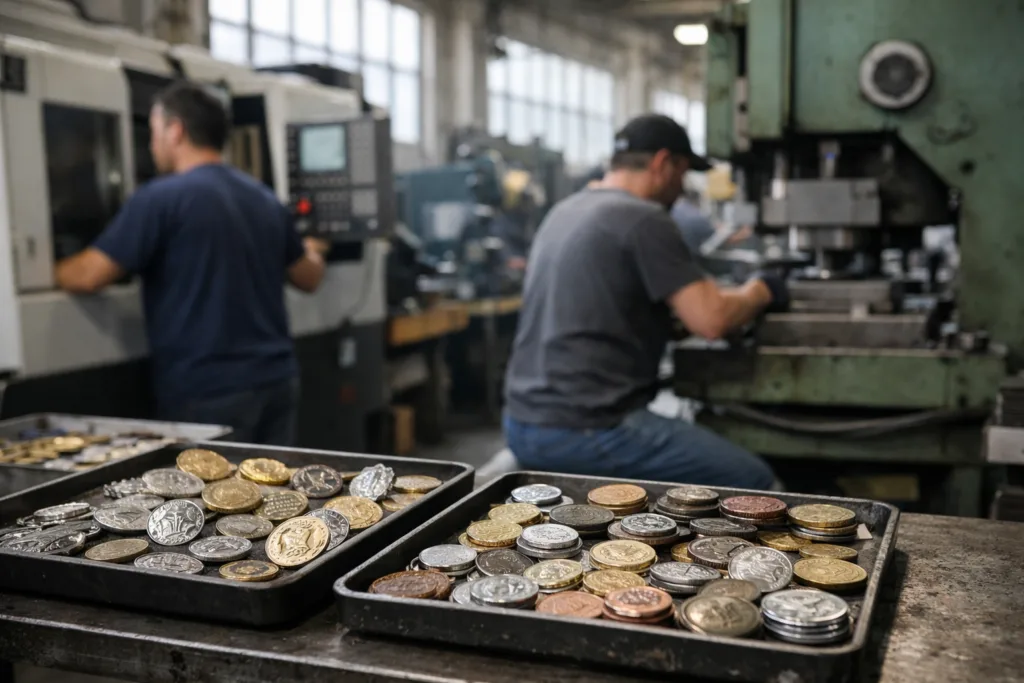
- Sports and marathons: Custom medals and coins symbolize achievement and event branding.
- Brands and fashion: High-impact badges, tags, and labels for garments, bags, and luggage.
- Industrial: Nameplates and functional hardware for machinery and equipment.
- Military and memorabilia: Challenge coins and regimental pins as collectibles and honors.
- Promotional and gift: Keychains, decorative crafts, and luxury packaging accents.
Whatever the application, well-designed and fabricated metal products leave a memorable impression.
Frequently Asked Questions
What is the minimum order quantity for custom metal products?
Most manufacturers set a minimum order quantity (MOQ) between 100 and 500 pieces, depending on the process and complexity.
How long does it take to produce a custom metal product?
Typical lead time ranges from 2 to 6 weeks, including design, mold making, production, and quality control steps.
What is the difference between die casting and stamping?
Die casting creates 3D shapes from molten metal, while stamping presses flat metal sheets into 2D or shallow relief forms.
What quality standards apply to custom metal products?
Key standards include ASTM B117 for corrosion, ASTM D3359 for adhesion, and RoHS/REACH for material safety.
How is color accuracy maintained in custom metal products?
Manufacturers use Pantone-matched enamels and inspect under standard lighting, targeting color differences (ΔE) below 2.
Can I add my branding or logo during the manufacturing process?
Yes, logos and text are integrated using relief, laser engraving, or colored enamel for clear, permanent branding.