Introduction: Why Pin Sizes Matter
When delving into pin sizes and enamel pin dimensions, designers, collectors, and brand managers quickly realize this isn’t just a numbers game. The dimension of a pin affects not just aesthetics, but UX—how it feels, how it’s worn, and whether your logo or message shines through. In custom pin manufacturing, understanding sizes can dramatically improve design appeal and functional wearability. This article covers standard sizes, visual impacts, practical comparisons, and insider tips to help you make smarter choices for retail, branding, or personal collections.
Understanding Pin Sizes: A Visual Guide
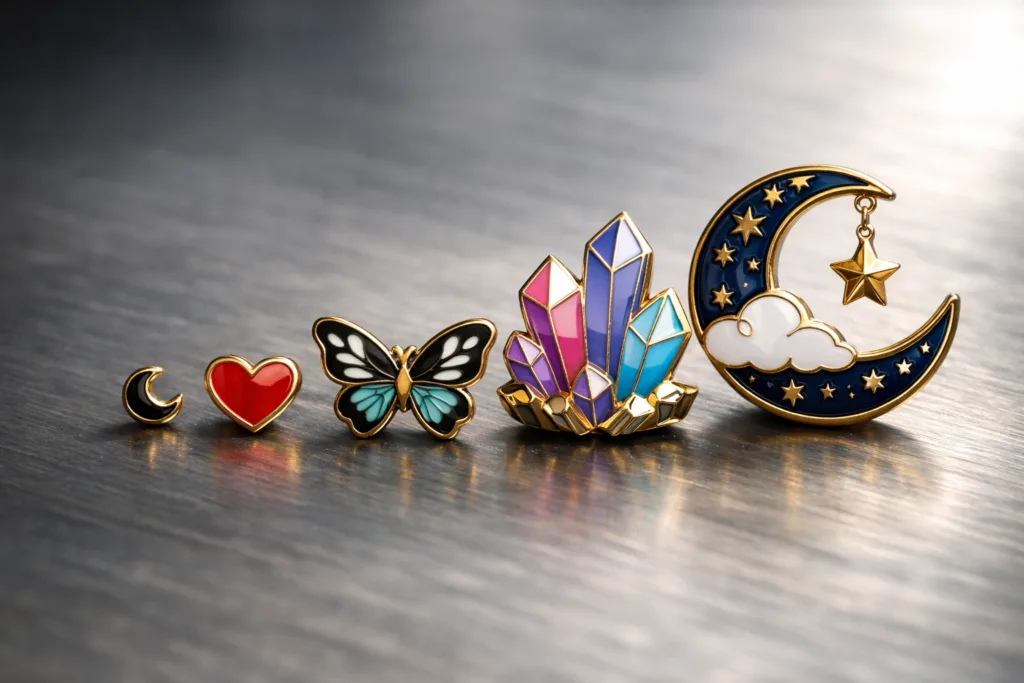
Pin sizes often range from as small as 0.5 inches to large statement pieces up to 2 inches or more. The most common enamel pins fall between 0.75″ and 1.5″—the sweet spot for clarity, comfort, and design detail. The right dimension ensures your pin stands out without dominating a jacket or hat. Visual guides, like comparison charts, provide clarity on proportions and use cases, helping you visualize how different sizes look when worn or displayed.
Standard Pin Sizes and Typical Uses
| Pin Size (Inches) | Type | Common Use |
|---|---|---|
| 0.5 – 0.75 | Mini | Subtle accents, lapels |
| 0.75 – 1.0 | Classic | Brand logos, fashion sets |
| 1.0 – 1.25 | Detailed | Collectibles, retail merchandise |
| 1.25 – 1.5 | Statement | Art designs, marketing gifts |
| 1.5 – 2.0+ | Oversized | Exclusives, high-impact flair |
How Dimensions Affect Design and Wearability
Pin size dictates what level of detail you can achieve and where the pin sits comfortably. Tiny pins highlight minimalism, while medium sizes allow for legible text and crisp lines. Oversized pins make bold fashion statements but feel heavy on delicate fabrics. Designers must balance between detail (ease of engraving or coloring) and practical utility (weight, comfort, and pin back strength).
Visual Comparison: How Different Pin Sizes Look
To help readers visualize the impact of dimension, here’s a clear comparison of how pins show on a denim jacket, hat, and bag:
| Pin Size | Jacket | Cap | Bag |
|---|---|---|---|
| Mini | Discreet accent | Fits side band | Cluster option |
| Classic | Balanced focal | Front or side | Single feature |
| Detailed | Noticeable centerpiece | Bold placement | Design focus |
| Statement | Dominates lapel | Covering section | Makes impression |
Common Enamel Pin Dimensions in Fashion & Collectibles
Fashion Pins: Balancing Style and Size
In fashion, pins between 0.75″ and 1.2″ are preferred for versatility. They comfortably decorate lapels, hats, and bags, complementing other clothing accessories like metal buttons, zipper pulls, and labels. Larger pins risk pulling on finer fabrics, while smaller pins can get lost amid outfit details.
Collectible Pins: When Bigger Means Bolder
The collectibles world embraces larger pins, sometimes up to 2″ with detailed 3D sculpting and color layering. These sizes showcase artistry and double as mini works of art. In this context, premium manufacturing practices, such as those used by Gairun, become essential for maintaining precise detail at the edge and surface—especially for intricate 3D die-casting and crisp color separation.
Pin Sizes and Logo Visibility: Maximizing Brand Impact
Logo Legibility by Size
The choice of pin size directly affects logo clarity. Too small? The logo blurs. Too big? The pin becomes cumbersome. A minimum of 0.9″ is recommended for most logos. For finer details and multi-color logos, opt for 1.25″ to 1.5″ pins. Curious about optimal plating color for visibility? Explore the most popular plating colors for custom pins for best contrast.
Pin Size Impacts on Manufacturing: Die, Mold, and Detail
Die Size and Mold Complexity
Pin size over 1.5″ generally requires more advanced tooling, sharper dies, and complex mold setups. Large pins must be engineered for structural strength. Premium factories use virgin alloys and high-tolerance molds to prevent warping, empower crisp stamping, and achieve mirror-polished finishes prior to plating.
Material Thickness and Weight
Thickness varies with pin diameter. For 1″ pins, 1.5–2mm thickness offers good heft. Bigger pins (over 1.5″) may need reinforced backs or dual clutches for stability, paralleling medal and coin manufacturing trends where safe handling and feel matter. Read more on how thickness and weight influence feel in custom metal design.
Common Backings and Fasteners by Pin Size
Single vs Double Pin Backs
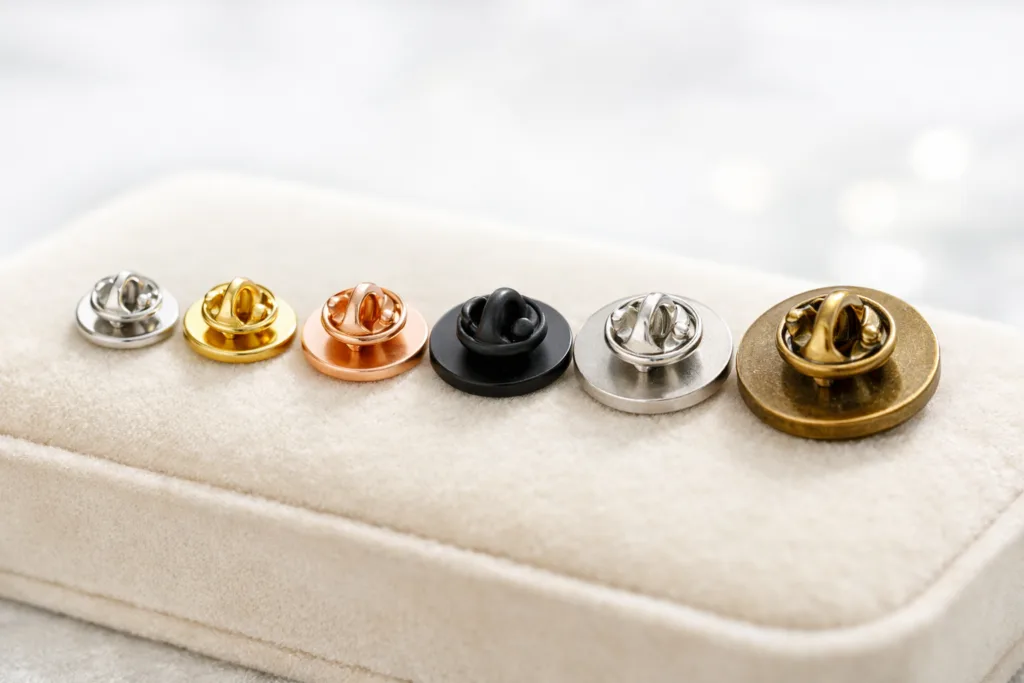
Small-to-medium pins (under 1.25″) use single clutches. Larger or heavier pins benefit from double backs for safety and stability. Specialized backings—such as magnetic or locking—are reserved for oversized pins or premium wearables.
Choosing the Right Enamel Pin Size for Your Project
Purpose Influences Size Selection
- Fashion: 0.75″ – 1.2″ for versatility
- Corporate branding: 1″ – 1.25″ for logo clarity
- Collectibles: 1.25″ – 2″ for display value
- Event giveaways: 0.75″ – 1″ for cost balance
Design Complexity and Pin Dimensions
Highly detailed art, gradations, or multiple color zones need larger pins. If your design is simple—like a brand color block or icon—a smaller pin works well and cuts costs.
Popular Pin Shapes and Their Dimensional Impact
While circular and square pins are standard, custom shapes are increasingly sought after. Dimensional impact is key: irregular shapes might require more surface area for balance, especially on patterned backgrounds or thicker fabrics. Extra edge length makes pins more prone to snagging, a consideration for wearable fashion hardware.
Visualization: Pin Size Chart for Reference
Pin Size Reference Chart
| Size | Shape | Best Uses |
|---|---|---|
| 0.75″ | Round | Corporate, minimal art |
| 1.0″ | Square | Logos, retail |
| 1.25″ | Custom outline | Event, branding |
| 1.5″+ | Statement | Collectibles, art |
Case Study: Real-Life Pin Dimension Choices
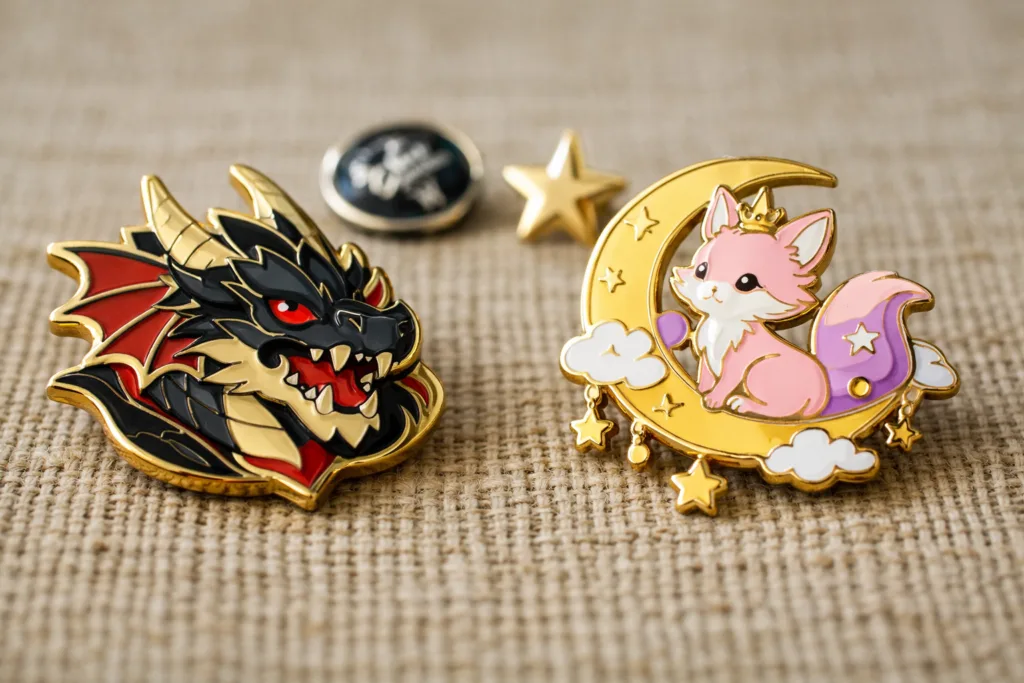
Retail brands often choose 1″ pins for product launches—balancing cost, visibility, and brand clarity. Exclusive art pins go up to 1.5″ for wow-factor displays. For instance, designers working with Gairun have found that pins with tight surface tolerances and mirror-quality plating look markedly more premium even at smaller sizes.
Expert Insights: Manufacturing for Quality and Detail
Leading manufacturers like Gairun emphasize the value of virgin alloys (e.g., Zamac 3) for surface integrity, especially critical on small pins where every flaw is magnified. High-precision CNC engraving is employed for crisp logo details, while meticulous hand-polishing and rack plating assure mirror finishes on both front and back—regardless of size. These standards mean your pins, whether 0.75″ or 2″, convey luxury and reliability. Rigorous testing—such as pull-force and salt spray—is used to guarantee performance in daily wear.
Design Tips: Optimizing for Size and Function
- Simplify artwork for sub-1″ pins—bold lines, high contrast
- Increase line weight and color zones for larger pins
- Choose appropriate plating colors to enhance legibility
- Use dual clutches for pins over 1.5″
- Cross-check artwork pixel density with manufacturer guidance
Custom Enamel Pin Sizing: Steps for Designers
Start with a scaled template. Place your artwork, test for visibility at real size, and ask the factory for a free sample or reference. For retail brands, consult this step-by-step pin design for retail guide to avoid common pitfalls.
Pin Sizes and Material Selection: Fabric Compatibility
Pins under 1″ suit thinner fabrics. For thicker or heavy textures, consider pins from 1.25″ upwards. For experimental projects integrating pins, buttons, and metal hardware, dimensioning matters not just for aesthetics—it’s about comfortable wear and lasting performance.
International Standards: Sizing Norms Across Markets
Global trends differ: Asian fashion favors delicate 0.75–1″ pins, U.S. markets prefer 1–1.25″, and Europe ranges widely by application. Sporadic variant sizes for festivals and conventions may go as large as 2.5″.
Pin Sizing and Production Costs: What to Expect
Larger pins require more metal, more complex molds, and additional finishing. Oversized pins drive up costs due to multi-part assembly and hand-polishing. For cost-effective options, keep designs simple, under 1.25″, and select common shapes (round, square) to streamline mold costs and reduce the chance of defects.
Environmental Factors: Lead-Free and Nickel-Free Pin Sizing Choices
Regulations in jewelry and wearables require lead-free and nickel-free production, especially for pins over 1″ which may rest on skin longer. Learn why nickel-free plating is preferred for badges and how eco-friendly materials support safe pin wear.
Final Recommendations: Selecting Your Ideal Pin Size
Assess purpose, comfort, visual impact, and material compatibility. Designers should test pins at real scale—in hand and on fabric. Discuss size with your manufacturer, checking plating, thickness, and finishing methods. For heritage branding, slightly larger pins with intricate finishing add perceived value, while mass giveaways benefit from smaller, simpler formats.
Frequently Asked Questions
What is the most popular enamel pin size?
The most popular enamel pin size is typically around 1 inch—large enough for clear branding, but subtle enough for wearability across jackets, hats, and bags.
Can I use high details in a small pin design?
Highly detailed designs may look blurry in pins under 1 inch. Simplify art for smaller pins or increase your size for intricate logos and multi-color artwork.
How do I choose the best pin size for my brand?
Match your pin size to its purpose—choose smaller pins for daily fashion, medium for branding, and larger for art collectibles or special editions.
Are oversized pins more expensive to produce?
Yes. Larger pins incur higher costs due to more material, advanced mold work, additional polishing, and double-back support for safe attachment.
Should my pin size match the backing type?
Backings should suit weight and size. Single clutch backs work for smaller pins, while larger pins (over 1.25″) usually need double or locking backs.
Which pin sizes are best for sensitive skin?
Pins with nickel-free plating, often 1 inch or smaller, are optimal for skin contact. Always confirm eco-friendly material and plating specifications with your manufacturer.
Related Reading
- A Guide to Choosing the Brightest Plating Colors for Custom Pins
- 12 Expert Steps to Designing Enamel Pins That Actually Sell for Retail Brands
- Hard vs. Soft Enamel Pins Explained: Make the Smart Choice
- Nickel-Free Plating: The Safe Option for Badge Buyers with Sensitive Skin
- How Pin Thickness and Weight Affect Appearance and Tactile Feel