Introduction: Translucent Enamel’s Dazzling Stained Glass Effect
The world of enamel pin design has undergone remarkable transformation, with translucent enamel leading the way in redefining what’s possible. When artists and manufacturers employ the stained glass effect using translucent enamel, they craft not just pins— but radiant works of wearable art that harness light and color like miniature masterpieces. In this guide, we’ll explore how translucent enamel brings unmatched vibrancy and depth to designs, the techniques behind its stunning gradients and layers, and the emotional power that the interplay of light adds to every piece.
What Is Translucent Enamel?
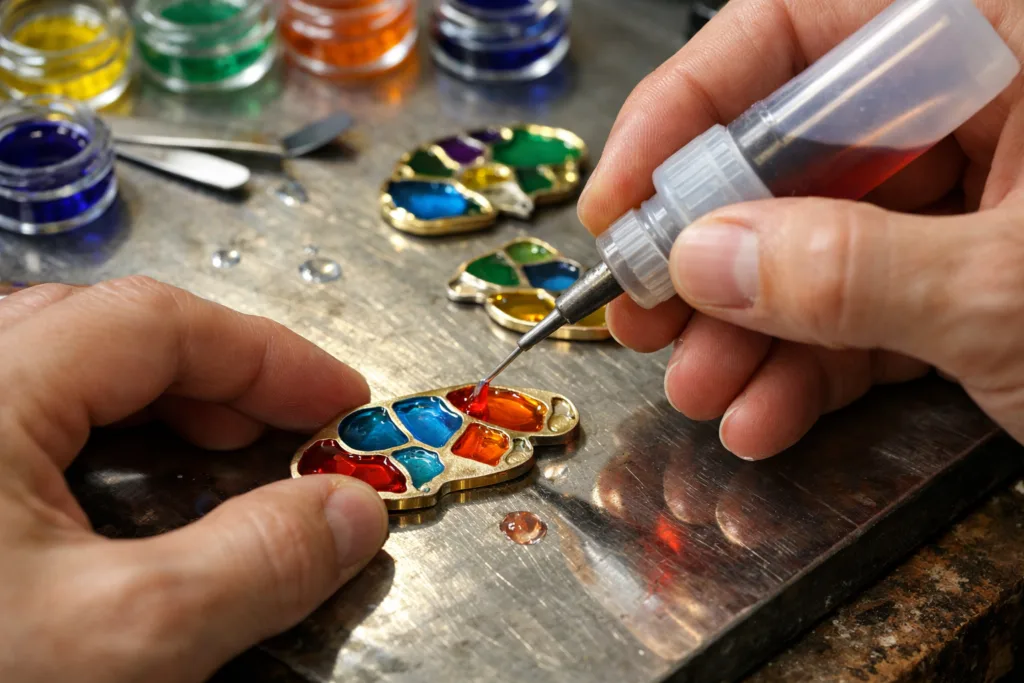
Translucent enamel is a specialized type of enamel used in metal crafts. Unlike opaque enamel, it allows light to pass through, giving colors a glowing, glass-like finish. This technique echoes the look of traditional stained glass—each pin becomes a canvas where light brings the colors to life. The result is a rich play of transparency and tone, creating visual effects not achievable with standard enamels.
The Stained Glass Effect: Origins and Inspiration
Inspired by centuries-old cathedral windows, enamel artists began replicating stained glass effects in modern pin design. These designs are characterized by rich colors and luminous transparency, with metal borders mimicking lead cames in classic glass art. The timeless beauty of this style is now accessible on a wearable scale, captivating collectors and designers alike.
Why Designers Love Translucent Enamel
- Light Interaction: Pops and glows in sunlight or artificial light.
- Depth and Dimension: Multiple color layers create 3D visual effects.
- Greater Emotional Impact: Mimics the evocative interplay of color and light found in stained glass.
Translucent enamel often elevates a pin from accessory to collectible. It isn’t just added color—it’s an experience of shifting brilliance, unique to every angle and lighting environment.
How Is the Stained Glass Effect Achieved?
The process begins with a precise metal framework, often created through die stamping or casting. These borders hold thin layers of colored translucent enamel, carefully filled so light flows through with consistency. Unlike opaque enamel pins, the metal lines are the ‘leading’ of stained glass, separating and accentuating each color region.
| Step | Description | Why It Matters |
|---|---|---|
| 1. Metal Mold Creation | Define design lines and borders | Controls color separation for clarity |
| 2. Enamel Filling | Each cell filled with specific translucent color | Enables controlled light diffusion |
| 3. Firing & Baking | Heat-cure to harden enamel | Ensures durability and brilliance |
| 4. Polishing | Hand-finishing for glassy smoothness | Maximizes shine and depth |
Choosing Materials to Enhance Translucency
The clarity and glow of translucent enamel are directly influenced by the quality of both the enamel and the underlying base metal. High-purity brass or copper is often preferred, as it delivers a clean, mirror-like surface beneath the enamel. This amplifies the glass-like finish and prevents unsightly shadows or stains.
Material Integrity and Surface Prep
Premium manufacturers like Gairun stress that using virgin metals (such as Zamac 3 for luxury items) ensures minimal impurities, resulting in flawless transparency and better color rendering. Proper surface polishing before enamel application is critical—any scratches or pits beneath the surface will show through once light passes through the enamel layer.
Techniques for Creating Color Gradients and Layering Effects
Achieving true stained glass richness often involves blending multiple shades of translucent enamel. Techniques include:
- Hand Mixing: Gently swirling two enamel colors together before setting, creating seamless fades.
- Layering: Applying thin coats of different colored enamels, each baked separately, to create depth as light pierces through several layers.
- Tint Adjustment: Adding colorants to increase or decrease translucency and achieve pastel or saturated effects.
Table: Common Gradients and Their Effects
| Gradient Type | Effect |
|---|---|
| Sunburst | Radiates from center, vibrant & energetic |
| Ombre | Soft fade from dark to light, calming |
| Dappled | Spotty mixing, playful and organic |
| Layered | Stacked transparencies, deep dimension |
The Emotional Impact of the Stained Glass Effect
Collectors and designers alike are drawn to the way translucent enamel interacts with light. Sunlight shining through a pin can evoke nostalgia, warmth, or even awe—just like seeing stained glass windows in a historic church. These effects make pins conversation starters and cherished gifts, bridging personal sentiment with artisan craft.
Pin Design Tips: Maximizing the Stained Glass Effect
- Use bold metal lines to frame translucent regions—like real lead cames in glasswork.
- Choose high-reflective base metals (copper, brass) for more glow.
- Test how your design looks on both light and dark backgrounds.
- Consider window or negative space cutouts for full light passage.
- Experiment with small batch color mixes to see how gradient effects translate before full production.
Avoiding Common Mistakes
Thick enamel application, dull underlying metals, or skipping the polishing stage can muddy the stained glass effect. For a deeper dive on design pitfalls, see our post on Common Design Mistakes in Metal Products.
Comparing Translucent, Opaque, and Glitter Enamels
| Enamel Type | Light Interaction | Visual Result |
|---|---|---|
| Translucent | Light passes through, color glows | Stained glass, radiant |
| Opaque | Blocks light, solid colors | Bolder, mattified look |
| Glitter | Sparkles, reflects points of light | Festive, sparkling |
If you’re comparing alternative effects, discover how glitter pins elevate designs with sparkling enamel blends.
Gallery: Mesmerizing Examples of the Stained Glass Effect
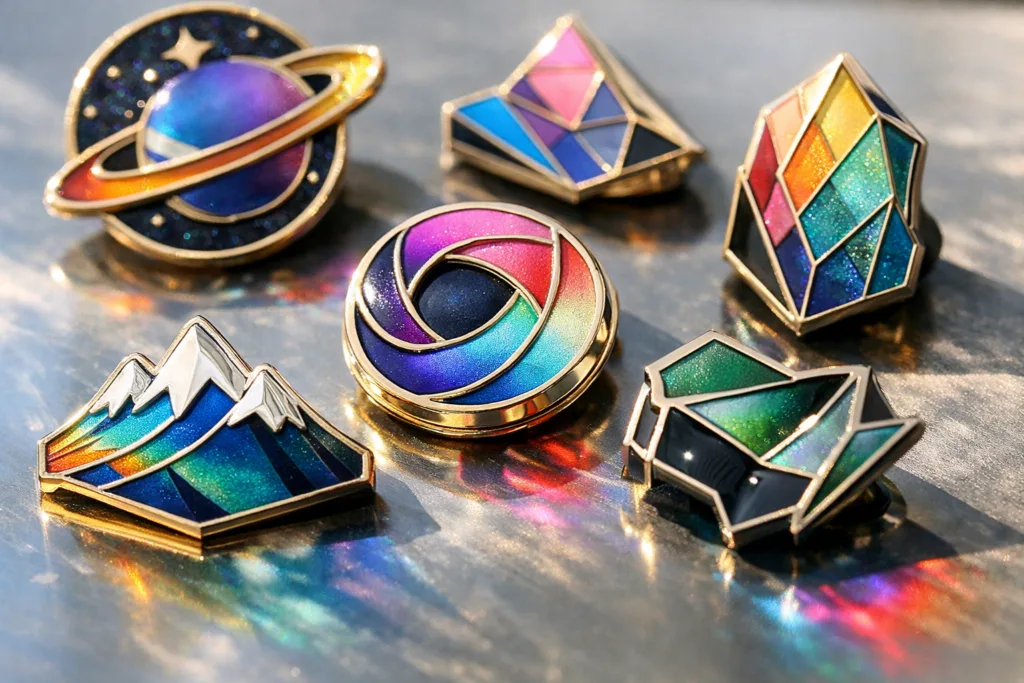
From fantasy landscapes to delicate florals, pins featuring translucent enamel showcase versatility. On pieces with cutout metalwork, the glassy areas can cast colorful shadows, enhancing the art’s presence beyond the pin’s silhouette. Incorporating glow elements, as explored in how glow-in-the-dark enamel pins wow collectors, opens further creative territory for luminous accents.
Matching the Pin Size and Shape to Your Design Vision
The stained glass look works best with designs that provide ample space for clear enamel fills. Tight, intricate details may not showcase translucency as well. For strategic sizing, check our professional breakdown: The Smart Designer’s Guide to Enamel Pin Dimensions.
How Plating Color Influences The Glass Effect
Pin plating finishes—such as gold, silver, or black nickel—can dramatically affect how translucent areas are perceived. Warm metals enhance sunset colorways, while cool metals can heighten icy or aquatic palettes. Explore the most popular plating colors for custom pins for your next project.
Layered Enamels: Combining Translucent and Opaque
Some intricate designs blend both translucent and opaque enamels in a single pin, giving the best of both worlds: blocks of solid color for definition and luminous sections for drama. This is often used for dramatic contrast or to create highlights and shadows within a single composition.
Advanced Techniques: Texturing Under the Enamel
Before applying translucent enamel, makers may etch or engrave patterns onto the base metal. When light interacts with these micro-textures beneath the glassy surface, it produces added sparkle and subtle variations, similar to what you’d see in real stained glass artistry.
Choosing Between Hard and Soft Enamel for Stained Glass Pins
Translucent enamel is typically used with soft enamel pin production, as the gentle curvature pressed into the enamel during polishing enhances light flow. However, some premium makers offer hardened versions for better durability. A full guide on deciding can be found at Hard vs. Soft Enamel Pins: The Only Guide You’ll Need.
Ensuring Durability: Baking, Sealing, and Quality Standards
Extended kiln times and finishing with a clear resin can protect the delicate translucent enamel layer from scratches and chips. Professional manufacturers conduct rigorous quality control, including visual inspection for color consistency and light tests to confirm clarity.
Quality Control: Spotting Flaws and Color Inconsistencies
Long-term quality—and your brand’s reputation—depend on catching issues like bubbles, pinholes, or cloudy spots during production. Systematic checks ensure every pin gleams like a hand-held window. Attention to detail at this stage sets great pins apart from average ones.
Sustainability: Eco-Friendly Material Choices
With concern for both product longevity and environmental impact, many brands now require lead-free, nickel-free, and eco-safe enamels. This elevates product safety and enhances translucency by preventing metal interactions that cloud the enamel over time.
Designing for Batch Manufacturing: From Artwork to Reality
The translation from digital artwork to real-world pin requires careful planning—especially for the translucent enamel effect. Design files should specify cell thickness, color codes, and plating expectations for manufacturers. The teamwork between designers and engineers, like those at Preparing Artwork for Metal Manufacturing, helps prevent surprises and ensures feasibility at scale.
Balancing Aesthetics and Practicality in Pin Manufacturing
While the goal is breathtaking visual effect, pins must also be wearable and durable. Consideration for post thickness, backing options, and packaging ensures the creation is not just beautiful but truly functional. Real artistry meets real-world use in premium pin design.
Translucent Enamel: The Stained Glass Effect
It’s no wonder that the stained glass effect stands out in today’s enamel pin landscape. Translucent enamel enables breathtaking color plays that rival traditional glasswork, and thoughtful execution results in unique, collectible art. From careful material selection to advanced manufacturer finishing, each step compounds to create show-stopping pins that tell their own luminous stories.
Conclusion: The Future Shines Bright for Translucent Enamel Pins

As consumer tastes evolve and clients seek new ways to differentiate, the stained glass effect delivered by translucent enamel is set to remain a top trend among enamel pin designers. By prioritizing quality materials, collaborating closely with precise manufacturers, and staying knowledgeable about best practices, anyone—from first-time designers to major brands—can create pins that inspire conversation and awe for years to come.
Frequently Asked Questions
What makes translucent enamel different from regular enamel?
Translucent enamel allows light to pass through, producing a glowing, glass-like effect, whereas regular enamel is opaque and does not let light through.
Which base metals are best for achieving a clean stained glass effect?
High-purity brass and copper are preferred, as they have a reflective surface and minimal impurities for the clearest color transmission.
How should I choose a plating color to match my translucent enamel design?
Warm metals like gold create a cozy glow, while silvers and nickel offer cooler color plays—select based on your intended atmosphere and palette.
Can layered translucent enamel be combined with glitter for extra sparkle?
Yes, combining translucent and glitter enamel can produce dazzling depth, provided the ratios are managed to avoid cloudiness.
How do you prevent color inconsistency in large batch production?
Strict process control, standardized color mixtures, and detailed quality inspections throughout production ensure consistency.
Are translucent enamel pins eco-friendly?
They can be—many manufacturers now use lead-free and nickel-free enamels to promote safety and environmental responsibility.