
Introduction: Understanding Zinc Alloy Magnetic Closures for Boxes
When it comes to creating impressive luxury boxes, a tiny detail can make a world of difference—the closure. Among various options, the zinc alloy magnetic closure (also known as a magnetic clasp for boxes) stands out for its smooth opening, secure grip, and premium tactile experience. Choosing the right structure and pull force is vital for both the aesthetics and usability of packaging. This guide provides an expert look into how to match magnetic strength, fit structure, and achieve the best user experience in custom boxes.
What is a Zinc Alloy Magnetic Closure?
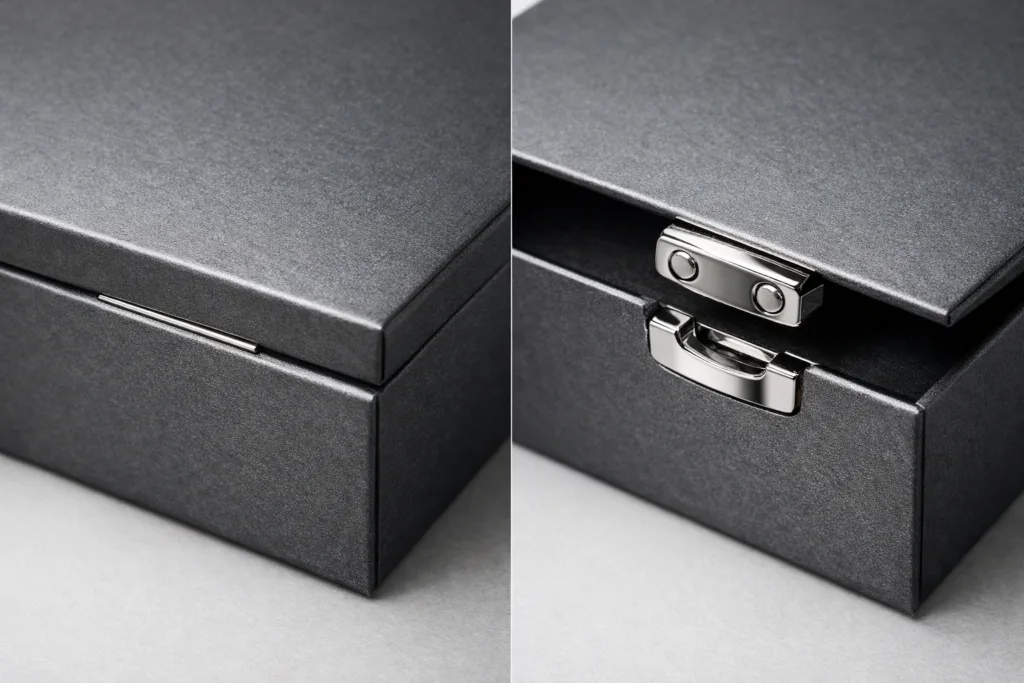
Zinc alloy magnetic closures combine a metallic clasp (usually in zamac) with a built-in magnet, creating a fuss-free and stylish opening method for boxes. These are widely used in premium packaging for cosmetics, jewelry, spirits, gift boxes, and more, thanks to their durability and design flexibility.
How Zinc Alloy Magnetic Closures Work
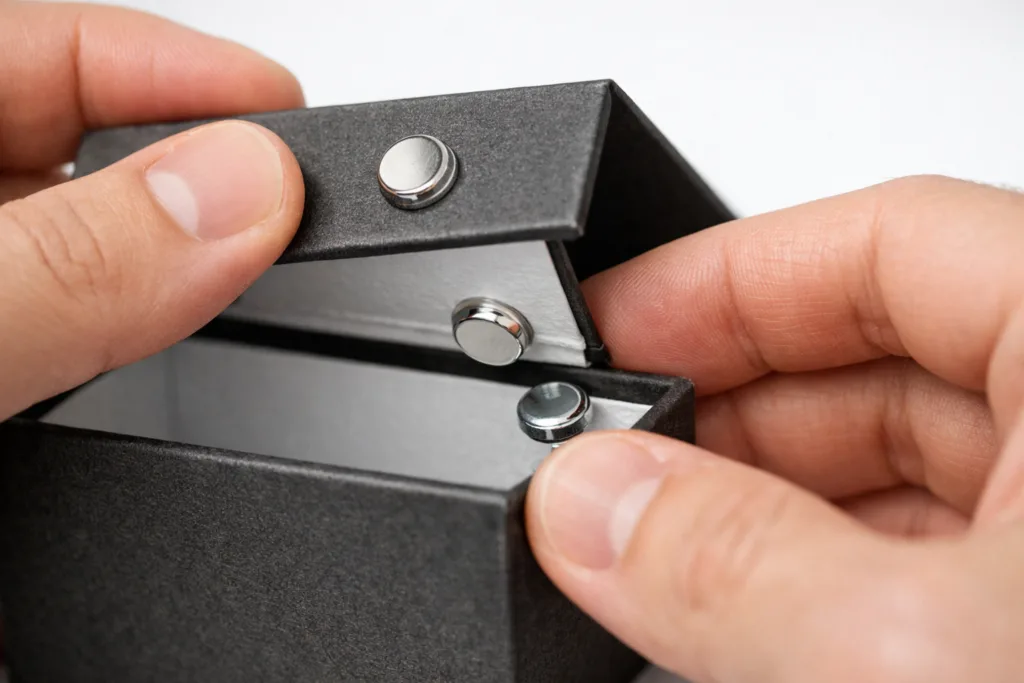
These closures rely on the attraction between a magnet encased in the zinc alloy fitting and a counter metal plate or secondary magnet fixed to the box body. As you bring the lid and base together, they “snap” closed with a satisfying click—offering both security and refined aesthetics.
Core Structure Types: Hidden vs Exposed
- Hidden style: The magnet is embedded under a layer of board or lining, showing only the sleek outer metal shell. Great for minimal or luxurious looks.
- Exposed style: The magnetic element is visible as part of the hardware, often featuring decorative embossing or plating finishes.
Pull Force—The Critical Selection Factor
Pull force, the “吸力” of your closure, determines how easily or securely the box opens. It’s usually measured in newtons (N) or kilograms of force (kgf). Selecting pull force is all about balancing security with comfortable use.
Matching Pull Force to Box Types
- Light pull (0.5–1.2 kgf): Suited for small gift boxes, lightweight paperboard, or daily-use packaging. Provides an easy open for children or older users but may not hold during rough shipping.
- Medium pull (1.3–2.0 kgf): Fits mid-size gift or storage boxes—secure, but not finger-straining. Ideal for perfume, cosmetics, jewelry, or collector’s packaging.
- Strong pull (2.1 kgf+): Best for large or heavy boxes (spirits, multipack gifts) or whenever valuable contents require tamper resistance. Users will feel a firm “pop” when opening.
Factors That Affect Magnetic Strength Selection
- Box Size and Weight: Larger/heavier boxes generally need stronger pull to prevent accidental opening.
- User Profile: For older adults or children, opt for gentler pull for comfortable access.
- Shipping Environment: If boxes are drop-tested or shipped long distances, prioritize a higher pull force.
Paperboard Thickness and Its Role
Thicker boards (like 2mm grayboard or reinforced MDF) can insulate magnetic force, making the closure weaker. Designers often compensate by increasing magnet size or choosing higher-grade magnets. For very thin covers, a strong magnet can overpower and cause warping or damage—so a balanced choice is crucial.
Positioning of the Magnet for Best Performance
- Surface Placement: Placing the magnet as close as possible to the box’s outer surface increases pull force.
- Alignment: Exact alignment at the lid/bottom contact point ensures the magnet lines up for a consistent grip.
- Offsetting: If misaligned, users may hear a weak click or feel uneven closure—affecting perceived quality.
Hidden Magnets vs Exposed Magnets: Pros & Cons
| Feature | Hidden | Exposed |
|---|---|---|
| Appearance | Clean, seamless | Visible, can be decorative |
| Touch Feeling | Smooth surface | Metal hardware tactile |
| Magnetism Loss | More (if thick covering) | Minimal |
| Design Freedom | Simple forms | Custom shapes/logos possible |
| Durability | Protected from scratches | May wear if protruding |
Sample Confirmation: What to Test and Measure
- Magnet Placement: Are magnets perfectly aligned across all box samples?
- Mechanical Sound: Does the closure create a high-quality “click,” or is the sound weak/muffled?
- Opening & Closing Feel (Hand Sensation): Is the force appropriate for intended users?
- Consistent Centering: Is there any misalignment, “off bite,” or loose fit when closed?
- Surface Quality Test: For exposed hardware, check for scratches or pinholes after assembly test cycles.
Testing Pull Force in Practice
- A spring scale or force gauge is used to measure how much force is required to pull the lid apart from the base.
- Repeat tests at different positions and angles to detect inconsistencies.
- Always measure after final assembly—but also test blank zinc alloy parts to confirm raw hardware quality.
The Impact of Board Material on Pull Force
Different box substrates (paperboard, MDF, acrylic) affect how the closure feels. A high-density board may absorb more force. When finalizing your sample, make sure to test using the real production board—swapping to a lower-grade mockup can lead to error in pull force perception during mass production.
Choosing Magnet Grade and Type
- Ferrite Magnets: Stable, affordable, but lower strength in small sizes.
- Neodymium Magnets: Very strong even in compact forms, preferred in luxury boxes for sharper “click,” but pricier.
Magnet and Hardware Shape Options
- Flat disks—sleek for minimal designs.
- Dome-shaped—accentuates tactile metal effect.
- Custom-molded shapes (e.g., with a logo)—ideal for exposed closures and brand signatures.
For a detailed breakdown of shape and plating options, see the ultimate guide to luxury gift box parts & finishes.
Tolerance Control and Importance of Consistency
Magnetic closures must “find their home” every time—tight manufacturing tolerances guarantee the closure aligns, even after thousands of cycles. Industry leaders like Gairun employ high-precision CNC mold engraving and post-casting hand polishing to refine each piece. This can help avoid everyday issues like off-center snaps or rattling hardware.
Surface Finishing Options for Zinc Alloy Magnetic Closures
- Matte, brushed, high-polish, antique, and PVD coatings are common.
- Luxury brands usually demand rack plating for uniform color and hand-inspected polish before final assembly.
For insights into the difference a high-polish finish can make, see the article on high-polish finishes for luxury awards.
Design Feasibility—Balancing Form, Function, and Longevity
While bold shapes and decorative plating may look stunning in renderings, practical tweaks can elevate real-world performance. For instance, gently radiusing the hardware edge prevents impact chipping. Gairun’s engineering team often advises subtle design changes at the mold stage—small details can dramatically reduce plating stress cracks and make the closure feel seamless.
Quality Control Standards for Magnetic Closures
- Each batch undergoes pull force measurement (±0.1 kgf variance target).
- 48-hour salt spray tests for exposed hardware ensure long-term corrosion resistance.
- 100% inspection for surface defects and functional QC on a random-sample base.
Installation Tips for Consistent Functionality
- Use precision gluing jigs for exact magnet placement, especially in hidden builds.
- Allow proper curing time for adhesives—rushed assembly can result in misalignment or poor adhesion.
- Re-test pull force and closing “sound” after board lamination—paper fibers can slightly change the dynamics.
Design Trends and Decorative Techniques
- Two-tone plating and subtle engraving are popular for modern exposed hardware.
- Minimalist flush integration dominates luxury paperboard boxes—no visible metal, only the sensation of a “magnetic grip.”
Buyer’s Guide: What to Confirm in Pre-Production Samples
- Check for even surface, zero burrs or sharp edges.
- Confirm pull force on assembled sample using actual production materials and lining thickness.
- Open/close 10–20 cycles—listen for a consistent high-quality click.
- Test with packaging contents included (e.g., perfume bottle, jewelry tray) for realistic feedback.
Cost Factors: What Drives Pricing in Magnetic Box Closures?
- Magnet type and strength (neodymium vs ferrite)
- Plating complexity and batch size (rack-plated = higher cost, but much more consistent finish)
- Mold complexity (custom logo detail, functional shape)
- Surface treatment (multi-step polishing or PVD coating raises both cost and value)
Compliance and Global Standards
Premium box closures should always be lead-free and nickel-release compliant—especially for cosmetics and children’s products. Ask your supplier for test reports according to EN71, REACH, or similar frameworks if applicable.
Maintenance and Longevity Advice
- Avoid using harsh cleaners—simply wipe with a soft damp cloth.
- For exposed hardware, periodic inspection and gentle cleaning protect the plated layer.
- Check over time for reduced magnetic grip, especially in humid environments; neodymium magnets may corrode if not well-sealed.
Case Example: Matching Pull Strength and Design for a Premium Perfume Box

A client required a secure but easy-to-open closure for a 200ml perfume box. After multiple samples, a hidden neodymium magnet (1.4 kgf) was selected, paired with 2mm grayboard. The chosen structure delivered a crisp click, effortless opening—no excessive force—achieving both a luxury feel and confident closure in shipping drop tests.
Zinc Alloy Magnetic Closures for Boxes: Pull Force & Structure Guide
To sum up, the right zinc alloy magnetic closure design balances strength, visibility, and user feel. Carefully consider box material, closure style, magnet type, and target pull force for each project. Collaborate with skilled manufacturers when samples are developed—what looks good on paper isn’t always perfect in hand, but with attention to detail, your packaging will impress again and again.
Frequently Asked Questions
How do I choose the right pull force for my box closure?
Select pull force (light, medium, strong) based on box size, contents’ weight, and intended user. Small boxes for light items suit lighter pulls; large packaging or valuable contents benefit from a stronger closure.
Does the thickness of the box board affect magnetic strength?
Yes, thicker board can reduce effective pull force. Test the closure with the actual box material to ensure the magnet’s strength remains optimal after assembly.
What’s the difference between a hidden and an exposed magnetic closure?
Hidden closures have their magnet embedded and invisible from the outside, offering a seamless look. Exposed closures show the metal hardware, adding decorative and tactile design options.
How can I confirm the closure quality during sample review?
Measure pull force, check for perfect magnet alignment, listen for a confident click, and test multiple opening/closing cycles with real box contents to assess usability and consistency.
Why does my box make a weak or inconsistent “click” sound?
This is usually due to misaligned magnets, excessive board thickness, or underpowered magnets. Adjust magnet placement or upgrade to a stronger magnet for improved function and sound quality.
Are zinc alloy magnetic closures safe for cosmetic or food packaging?
Yes, provided they are lead-free and meet nickel-release standards. Always ensure your supplier can provide relevant safety certification for sensitive applications.