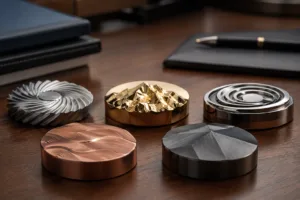
Custom metal paperweights are a practical choice for corporate gifts because they combine daily desk use, long product life, and visible branding in one object. Unlike disposable promotional items, a well-designed paperweight stays on a recipient’s desk, meeting table, or reception counter for years. From our manufacturing perspective, the value of this product category is not only appearance. It also depends on weight balance, edge quality, surface finish, logo readability, packaging, and whether the final piece matches the company’s brand tone. For B2B buyers, that means choosing more than a shape or a logo. It means planning a metal product that feels intentional, durable, and suitable for the recipient.
If your project needs strong presentation value, functional desk use, and flexible branding options, our custom metal gift manufacturing support is relevant because these products often require careful material selection, mold development, engraving or plating decisions, and packaging planning before mass production begins. We support buyers through artwork review, sampling, finish selection, OEM or private label coordination, and production quality checks so the final paperweight works as a corporate gift rather than just a decorative metal item.
What custom metal paperweights do well as corporate gifts
Paperweights work best when the gifting goal is long-term visibility rather than one-time novelty. In office settings, recipients often keep them on desks, bookshelves, or conference tables. That creates repeat brand exposure without making the product feel overly promotional. They can also carry more executive presence than lightweight giveaway items because metal naturally suggests permanence, structure, and value.
We usually see custom metal paperweights used in several business scenarios:
- Employee recognition and milestone awards
- Client thank-you gifts
- Distributor or partner appreciation programs
- Event commemoratives for speakers, sponsors, and VIP attendees
- Executive desk accessories for internal branding
- Anniversary or project-completion keepsakes
Compared with many custom logo corporate souvenir options, paperweights sit in a useful middle space: they are premium enough for presentation, but still practical enough for regular use. That balance is one reason buyers in corporate gifting often consider them when they want stronger perceived value without moving into trophy-style products.
Key benefits: durability, desk utility, and long-term brand exposure
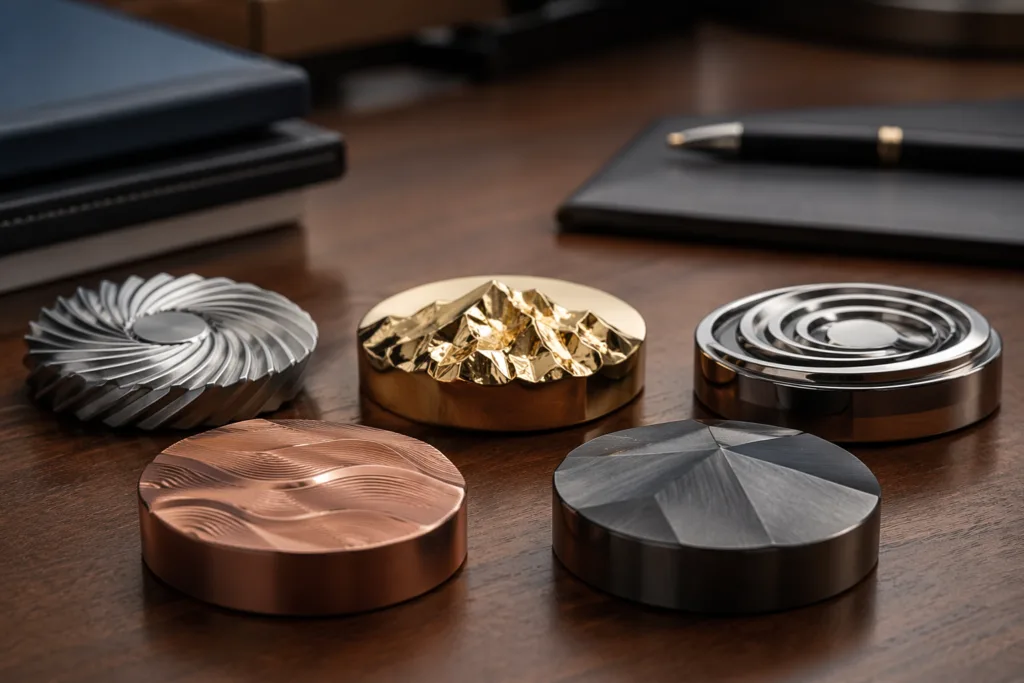
The biggest advantage of metal paperweights is durability. Plastic or wood desk gifts can scratch, chip, fade, or feel light for the intended use. A metal paperweight, when designed correctly, has stable weight, better structural integrity, and more finish options for brand expression. Even when a company chooses a minimalist shape, the product can still feel substantial in hand.
Desk utility also matters. A paperweight does not need dramatic function to be effective. It only needs to be useful enough to stay visible. On real desks, these items may hold documents, serve as a decorative accent, or simply occupy a permanent place near a monitor or notebook. That stability helps branding because recipients continue seeing the logo, message, or commemorative date over time.
For procurement teams, there is another benefit: design flexibility. A paperweight can be purely engraved, enamel-filled, die-cast, stamped, or combined with a plated decorative surface. It can also be made in flat, sculpted, geometric, or logo-shaped forms. This makes it easier to match the product to industry identity, event theme, or gift tier.
Who uses them best
Not every corporate gift program needs the same product style. Paperweights tend to perform best for recipients who work at desks or in offices where display value matters. For example, financial firms, legal offices, technology companies, manufacturing groups, universities, and associations often prefer practical gifts that feel formal rather than casual.
We advise buyers to think in recipient groups:
- Employees: milestone years, annual recognition, internal awards, leadership programs
- Clients: year-end appreciation, contract signing commemoratives, relationship-building gifts
- Partners: distribution programs, international visits, co-branded launches
- Event attendees: VIP conference gifts, board meetings, donor events
- Executives: premium desk pieces with a more restrained visual style
The better the match between recipient and environment, the stronger the product outcome. A heavy executive-style paperweight works well in boardrooms and offices. A colorful commemorative version may fit events or internal culture campaigns better.
Popular metal materials for custom metal paperweights
Material choice affects almost everything: weight, detail, cost, finish behavior, and perceived value. In our production work, paperweights are usually evaluated first by shape and target weight, then by the material that can achieve that goal efficiently.
| Material | Main strengths | Trade-offs | Best fit |
|---|---|---|---|
| Zinc alloy | Good for die casting, supports complex shapes, stable weight, finish versatility | Needs good surface preparation for premium finishing | Logo-shaped, sculpted, commemorative designs |
| Brass | Premium feel, good engraving quality, classic appearance | Higher material cost, heavier processing cost | Executive gifts, engraved styles, heritage branding |
| Stainless steel | Modern look, corrosion resistance, suitable for brushed or polished appearance | Less ideal for very deep sculptural detail than cast alloy | Minimalist corporate styles, clean industrial branding |
| Aluminum | Lighter, easy to machine, modern appearance | Lower natural weight for paperweight use unless size increases | Larger desk accessories with lighter feel |
| Iron or steel base components | Cost control and practical weight | Finish protection matters more | Budget-conscious functional designs |
Zinc alloy is often the most flexible choice for custom metal paperweights because it supports dimensional shapes, recessed logos, edge variation, and decorative surfaces without making tooling too restrictive. Brass is a strong option when the buyer wants an executive tone and cleaner engraved detail. Stainless steel works especially well for modern brands that want a minimal and architectural desk object.
Design options that fit corporate gifting
Corporate buyers often begin with logo placement, but the more important question is how the paperweight should feel and where it will be displayed. Good design starts with the use scenario. A slim circular piece with engraving suits a conference gift. A thick block or sculpted form suits executive presentation. A commemorative piece may include a date, achievement line, or short slogan.
Common design directions include:
- Minimalist: circular, square, or rectangular forms with clean engraving
- Executive: thicker profiles, brushed or polished metal, premium packaging
- Logo-shaped: cast silhouette based on brand symbol or architecture
- Themed: product launch, industry symbol, city landmark, or event graphic
- Commemorative: anniversary, service award, donor recognition, summit souvenir
For projects that need tighter alignment between desk accessory and brand identity, some buyers use concepts similar to engraved logo presentation pieces, where typography, edge precision, and finish consistency matter more than bright color. This approach usually works well for legal, finance, consulting, and executive gifting programs.
Finish options that improve perceived value
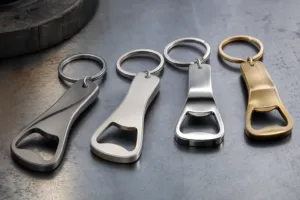
Finish selection can change a simple shape into a premium object. In corporate gifting, the finish often communicates more than the outline does. A polished surface reflects light and feels formal. A brushed texture looks modern and controlled. Antique finishes feel commemorative. Sandblasted backgrounds can improve logo contrast, especially when paired with raised polished areas.
Typical finish choices include:
- High polish for visual impact
- Brushed finish for understated professionalism
- Antique gold, antique silver, or antique bronze for commemorative tone
- Nickel, chrome, or other electroplated finishes for brightness and surface uniformity
- Sandblasted texture for contrast
- Soft enamel or color filling for selected brand elements
When buyers compare plated looks, it helps to remember that decorative appearance depends on both the top coating and the preparation underneath. Surface cleaning, pretreatment, and finish control influence consistency and durability, which is why supplier review should include questions about metal plating and finishing compliance guidance as well as real process controls. For premium programs, we also see interest in gold-plated nameplate finishes because warm metallic tones often communicate prestige effectively in boardroom or recognition settings.
Logo and message customization methods
Branding on a paperweight should match the intended lifespan of the product. If the gift is supposed to remain on a desk for years, the logo method should not feel temporary. In our experience, the strongest choices are usually engraving, etching, die-cast relief, stamping, or recessed areas with controlled color filling.
Laser engraving
Laser engraving is useful for clean logos, names, dates, serial identification, and short messages. It works well on stainless steel, brass, plated surfaces, and many polished metal faces. It gives a professional appearance and is often favored for lower-color corporate identities.
Etching
Etching suits fine lines, structured layouts, and more detailed information areas. It can produce a precise and elegant result, especially on flatter products with strong layout control.
Die casting
Die casting is a good choice when the design includes raised logos, shaped borders, curved forms, or more sculptural branding. For zinc alloy paperweights, this process gives buyers more freedom in three-dimensional design.
Stamping
Stamping can be effective for simpler shapes and crisp relief effects, particularly when the design language is clean and not overly thick.
Color filling and enamel details
Color can improve logo recognition, but it should be used selectively on corporate products. A full-color approach is not always necessary. Many executive styles benefit more from one accent color or a single enamel-filled emblem than from a highly colorful front face.
When deciding among engraving, relief, and filled color, buyers can compare durability and presentation priorities using general common decoration methods for corporate gifts and then align those basics with the product’s shape, metal, and finish plan.
How to choose the right size, weight, and shape
The most common design mistake in this category is treating the paperweight like a badge, coin, or souvenir only scaled larger. A paperweight needs proper mass and desk stability. If it is too thin, it feels decorative rather than functional. If it is too large but too light, the recipient may see it as an ornament rather than a useful object.
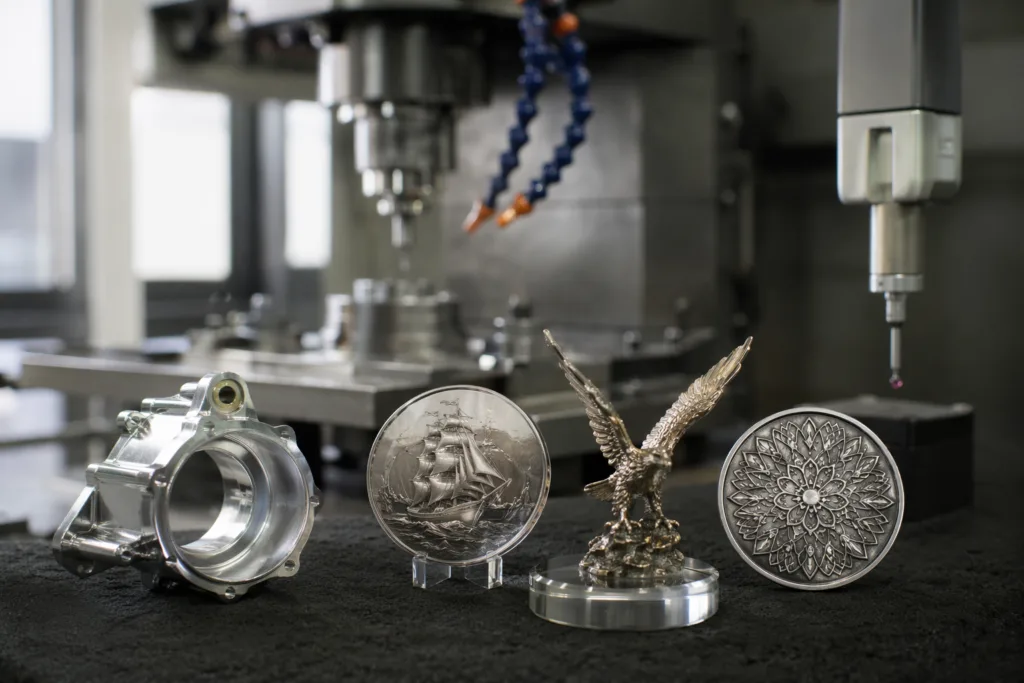
We generally recommend evaluating three factors together:
- Footprint: enough surface area to hold papers or sit securely on a desk
- Thickness: enough body to create weight and quality perception
- Edge treatment: rounded, beveled, straight, or sculpted edges affect comfort and formality
Flat circular and square shapes are usually the easiest to balance. Sculpted logo shapes can work well too, but they need attention to center of gravity and underside stability. For executive gifting, many buyers prefer medium-to-heavy weight rather than oversized dimensions. That creates presence without using too much desk space.
Matching design to corporate culture and recipient preference
A corporate gift should reflect the brand without forcing the recipient to display an oversized advertisement. This is especially important for senior recipients and long-term desk use. In many cases, subtle branding wins. That may mean a clean front surface with a discreet engraved logo, or a commemorative message on the underside or back area.
We advise buyers to align style with company culture:
- Conservative industries often prefer brushed metal, engraving, and restrained plating
- Creative brands can use sculptural forms and selective enamel accents
- Technology and industrial companies often choose geometric stainless or matte-finish designs
- Heritage organizations may prefer brass, antique finishes, and commemorative wording
For broader procurement planning across gift categories and desk accessories, our B2B custom metal products sourcing guide approach is to compare function, visibility, finish complexity, packaging, and target recipient before locking the final structure.
Production process overview
The production path for custom metal paperweights is straightforward when artwork and expectations are clear. It becomes risky when buyers approve only a visual concept but not the actual structure, thickness, finish tone, or packaging method. We always recommend moving through the project in defined checkpoints.
Artwork preparation
Vector artwork, logo line weight, text size, and dimension tolerances should be confirmed early. This is especially important for engraved and relief-based designs, where very fine details may need adjustment for readability.
Sampling and mold development
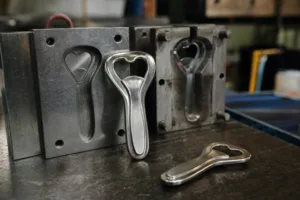
If the design uses die casting, a mold is often required. The mold decision should be based on anticipated volume, shape complexity, and consistency needs. Samples help buyers verify actual size, hand feel, color, finish contrast, and packaging fit before full production.
Bulk production
After sample approval, mass production typically includes casting or stamping, trimming, polishing, engraving or other logo processes, plating or surface treatment, inspection, and packing. At Gairun, we find that early agreement on finish standards and acceptable variation helps reduce disputes during final inspection.
Quality control
QC should check more than dimensions. For paperweights, useful checkpoints include flatness, edge smoothness, plating uniformity, engraving clarity, color fill accuracy, bottom protection, packaging cleanliness, and carton consistency. Surface preparation also matters in decorative finishing, and buyers who want more confidence should ask suppliers about pretreatment, cleaning, and finish-control steps related to quality control in metal finishing.
MOQ, lead time, and cost drivers
MOQ depends on the design type and production method. Standard-shape engraved paperweights may support lower minimums than fully custom die-cast forms. Tooling requirements, plating complexity, and packaging details also affect MOQ and production planning.
Common cost drivers include:
- Material type and weight
- Mold creation for custom shapes
- Finish complexity and plating layers
- Engraving, enamel filling, or multi-step branding
- Individual gift box or presentation packaging
- Inspection requirements and shipping protection
Lead time is usually shorter when the design is structurally simple and the finish is standard. It becomes longer when the project includes new molds, detailed polishing, custom inserts, strict color matching, or multi-stage approval. Buyers should also build in time for sample revision if the product is intended for a formal event or executive program.
Packaging ideas for corporate gift programs
Packaging has a major effect on perceived value. A strong paperweight can feel incomplete if it arrives in a weak box or unprotected wrap. For B2B gifting, packaging should protect the finish, frame the product properly, and support the intended gift level.
Practical packaging options include:
- Rigid gift boxes with foam insert
- Velvet or flocked presentation boxes
- Paper sleeve plus inner tray for modern branding
- Custom printed outer box for private label programs
- Protective pouch plus carton for budget-sensitive bulk distribution
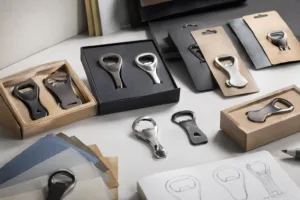
We often suggest matching the package to the finish tone. Polished or plated paperweights usually benefit from cleaner, presentation-oriented boxes. Industrial matte or brushed styles may work with simpler modern packaging. If the project includes employee recognition, adding a printed card or internal message insert can improve the gifting experience without changing the metal item itself.
Common mistakes to avoid
Several avoidable decisions can weaken the final result:
- Choosing a shape based only on logo outline without considering stability
- Making the product too thin for true paperweight use
- Using too many colors in an executive gifting context
- Skipping sample approval for finish contrast and engraving depth
- Underestimating the impact of packaging on gift perception
- Failing to define acceptable variation for plating, polish, and edge quality
- Waiting too late to confirm recipient names or custom messages
Most of these issues can be prevented by treating the paperweight as a functional metal product with presentation requirements, not just a decorative branded object.
How to evaluate a metal products manufacturer
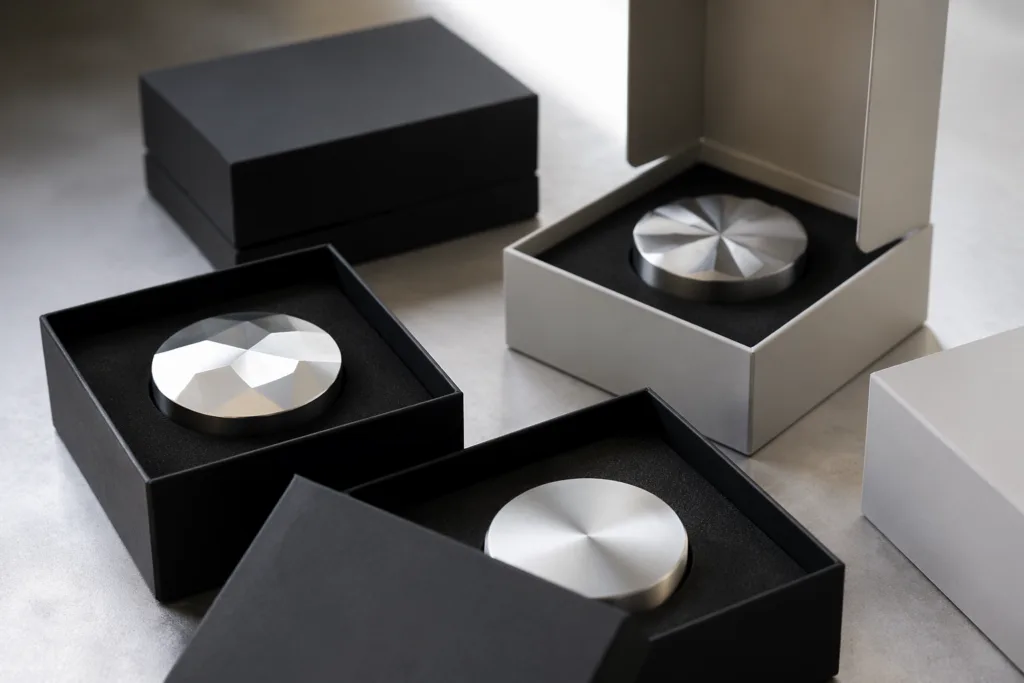
B2B buyers comparing suppliers should focus on manufacturing fit, not just quotation speed. A capable manufacturer should be able to discuss material trade-offs, process limits, artwork adjustment, finish risks, sample logic, and packaging protection in practical terms.
Useful supplier questions include:
- Which material and process do you recommend for this weight and shape?
- Will this design require die casting, stamping, machining, or a mixed process?
- How will you control engraving clarity and plating consistency?
- What is the sample approval process before bulk production?
- How are individual pieces protected during packing?
- What details typically cause delays or variation in similar projects?
A good manufacturer should also communicate when a design idea is visually attractive but structurally weak, too light, too costly for the target budget, or unsuitable for the selected finish. That kind of feedback usually leads to better outcomes for sourcing teams.
Conclusion
Custom metal paperweights can be highly effective corporate gifts when they are designed with real desk use, finish quality, and branding balance in mind. The strongest programs usually start with the recipient and use scenario, then match those needs to the right metal, weight, surface finish, logo method, and packaging level. From our manufacturing perspective, buyers get better results when they review prototypes carefully, ask practical process questions, and choose a supplier that can explain both visual and production trade-offs clearly. When those decisions are handled well, custom metal paperweights become more than branded objects. They become durable corporate gifts with long display life and consistent presentation value.
FAQs
What is the best material for custom metal paperweights?
The best material depends on the design goal. Zinc alloy is often the most versatile for custom shapes and die-cast detail, brass works well for premium engraved styles, and stainless steel suits modern minimalist designs. Buyers should compare weight needs, finish style, logo method, and budget before choosing.
Are polished or brushed finishes better for corporate gifts?
Neither finish is universally better; the right choice depends on brand tone and recipient type. Polished finishes usually feel more formal and gift-oriented, while brushed finishes look understated and modern. For executive programs, many buyers choose a restrained brushed or satin look with selective polished highlights.
Can custom metal paperweights include color logos?
Yes, they can include enamel or color-filled logo areas, but color should be used carefully. For many corporate gifts, selective color works better than a fully bright front face because it preserves a professional look while still improving brand recognition. The most durable result usually comes from combining recessed areas with controlled fill and a suitable protective finish.
Do custom metal paperweights usually require a mold?
Mold requirements depend on the structure. Standard flat forms with engraving may not need the same tooling approach as a fully custom die-cast shape. If the design includes sculptural relief, special outlines, or repeated dimensional details, mold development is often the most practical path for production consistency.
What should buyers confirm before approving a sample?
Before sample approval, buyers should confirm actual size, hand feel, weight, logo readability, engraving depth, finish tone, edge smoothness, bottom protection, packaging fit, and any custom wording. It is also smart to confirm acceptable variation standards so there are fewer surprises during bulk inspection.
Are custom metal paperweights a good choice for corporate gifts compared with other desk items?
They are a strong choice when the goal is long-term visibility, durable presentation, and a professional desk presence. They may be more effective than lighter novelty items because recipients are more likely to keep them in fixed locations, especially when the design is practical, not overly promotional, and supported by good packaging.