Money clips have become a practical modern alternative for people who want to carry less, dress cleaner, and avoid the bulk of a traditional wallet. For buyers comparing money clips with minimalist wallets, the real question is not which one looks better in a product photo, but which one fits daily cash habits, card carry needs, pocket comfort, and long-term durability. From our metal manufacturing perspective, a good money clip is a simple product on the surface, yet its usefulness depends on material choice, spring tension, edge quality, finish consistency, and the way it is used in everyday carry.
If your project involves slim everyday carry accessories, gifting programs, branded retail items, or private label accessories, custom metal accessory manufacturing support becomes important very quickly. In our production work, buyers often need help balancing stainless steel or aluminum material choice, logo engraving detail, polished or matte finishing, packaging presentation, and sample approval before moving into bulk production. The same sourcing logic used for other custom metal accessories also applies to money clips when appearance, durability, and repeat production quality all matter.
What a money clip is and how it differs from a traditional wallet
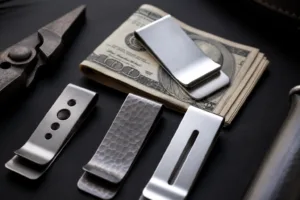
A money clip is a compact accessory designed to hold folded banknotes, and in some designs, a small number of cards. Unlike a traditional wallet, it does not try to organize everything. It removes the extra layers: no large coin pocket, no oversized card stack, no unnecessary thickness. That reduction is exactly why many users prefer it.
A traditional wallet is built for storage. A money clip is built for access and portability. Even when compared with minimalist wallets, a money clip is usually slimmer because it relies on compression rather than compartments. That difference changes not only pocket feel but also how the user interacts with cash and cards throughout the day.
For buyers developing private label accessories or branded business gifts, this distinction matters. A wallet is usually selected for capacity. A money clip is selected for minimalism, appearance, and convenience in lighter daily carry.
Why money clips have become a modern alternative for everyday carry
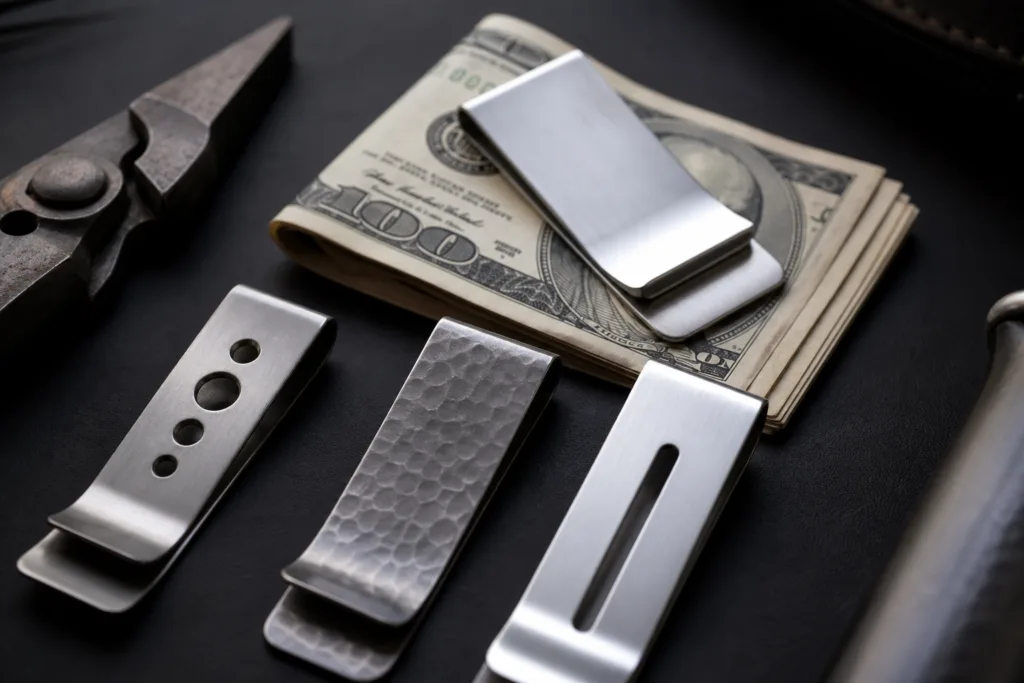
The shift toward digital payments has changed what people actually carry. Many users no longer need a thick wallet filled with receipts, spare cards, and coins. Instead, they carry a few cards, ID, and some folded cash for backup. That is one reason minimalist wallets have grown in popularity, and it also explains why money clips remain relevant. A useful overview of everyday carry choices and how much to carry supports this broader trend toward carrying fewer essentials.
In practical terms, money clips appeal to users who value three things: reduced pocket bulk, fast access to cash, and a cleaner silhouette in business or formal clothing. A thick bifold can distort trouser lines and feel heavy in a front pocket. A well-made money clip usually creates much less visual and physical bulk.
From a product development standpoint, this demand also fits broader accessory trends: compact format, simple function, premium material touch, and personalization through engraving or surface finishing rather than oversized decoration.
Money clips vs. minimalist wallets: size, capacity, convenience, and comfort
Money clips and minimalist wallets overlap in purpose, but they are not interchangeable for every user. The best choice depends on whether the user is cash-first, card-first, or trying to balance both.
| Factor | Money Clip | Minimalist Wallet |
|---|---|---|
| Size | Usually the slimmest option | Slim, but thicker than a clip |
| Cash handling | Very convenient for folded bills | Often secondary to card storage |
| Card capacity | Limited unless hybrid design | Better for multiple cards and ID |
| Pocket comfort | Excellent when carrying light | Good if card count is controlled |
| Formal use | Strong fit for suits and events | More neutral everyday option |
| Security feel | Depends on clip tension and habit | Feels more enclosed and structured |
For users who regularly carry more than six cards, transit cards, business cards, and cash, minimalist wallets are usually more forgiving. For users who carry a few notes and two to four cards, money clips often feel more natural.
In sourcing discussions, we usually tell buyers to think in use patterns rather than style language alone. A product that looks elegant in stainless steel may still fail if the target user expects wallet-like storage from a clip format.
Best use cases for money clips in daily life, travel, business, and formal settings
Money clips work best when the user’s carry profile is intentionally light. They are particularly suitable in business settings where a cleaner pocket line matters, in formal events where a full wallet feels bulky, and in travel situations where one compact secondary carry item is useful for cash-only moments.
Typical strong use cases include:
- Professionals carrying a few cards and emergency cash
- Wedding, banquet, or suit wear where bulk is undesirable
- Travelers using a slim front-pocket accessory for daily spending cash
- Gift programs where a premium engraved metal accessory has broad appeal
- Retail brands building modern EDC or lifestyle accessory collections
Where money clips are weaker is equally important. They are not ideal for people who carry coins, many receipts, multiple membership cards, or thick card stacks. In those cases, a minimalist wallet or hybrid money clip wallet is usually the better fit.
Common money clip materials and their pros and cons
Material selection affects not only appearance but also grip, spring behavior, weight, scratch visibility, edge feel, and long-term wear. In our material comparison for durable metal accessories, the same material logic often applies to compact items like clips: the surface may be small, but every detail becomes more visible because the product is handled constantly.
Stainless steel
Stainless steel is one of the most practical choices for money clips because it combines rigidity, corrosion resistance, and a premium metallic appearance. For many buyers, it offers the best balance between cost, durability, and finish flexibility. Technical guidance on stainless steel corrosion resistance and the passive layer helps explain why this material performs well over time when properly processed and maintained.
Pros: durable, strong spring potential, polished or brushed finish options, good engraving surface. Cons: heavier than aluminum, scratches can show on mirror-polish surfaces, and poor edge finishing can feel sharp in hand.
Titanium
Titanium appeals to users who want a lighter premium metal with strong durability and a technical, modern image. It is often associated with high-end everyday carry products. In practice, it offers strong corrosion resistance and low weight, but it is usually a more specialized option from a manufacturing and price perspective.
Pros: light, strong, premium feel, excellent corrosion resistance. Cons: higher material and processing cost, more limited cost-performance fit for broad gifting projects.
Aluminum
Aluminum is valued for low weight and modern styling. It works well in sleek consumer products, especially where users want the lightest carry possible. However, aluminum can show wear more quickly depending on finish and thickness, and it may not provide the same spring feel or long-term shape retention as stainless steel in every design.
Pros: very light, easy to color through anodized-style looks in some applications, modern feel. Cons: lower scratch resistance than harder steel options, can feel less substantial in hand.
Leather and leather-wrapped designs
Leather money clips or leather-wrapped hybrid clips combine softer touch with a more classic aesthetic. These usually suit users who want some warmth and texture rather than an all-metal feel. In production terms, leather introduces additional concerns such as stitch quality, wrapping accuracy, edge treatment, and wear consistency.
Pros: comfortable touch, classic style, often attractive for business gifts. Cons: more sensitive to moisture, surface wear, and long-term shape change.
How material choice affects durability, weight, appearance, grip, and wear
For a money clip, material does more than define cost. It shapes the user experience. A highly polished stainless steel clip may look formal and premium, but it can feel smoother in hand and show fingerprints more easily. A matte or brushed finish may reduce visible scratches and improve perceived grip. A thicker aluminum body may compensate for lower material stiffness, but that changes profile and pocket comfort.
We encourage buyers to compare material decisions through five practical questions:
- How many notes or cards will the clip hold most of the time?
- Should the product feel light or substantial?
- Will it be used in formal settings, daily commuting, or outdoor travel?
- Is scratch visibility acceptable or should the finish hide wear better?
- Will the item be engraved, plated, wrapped, or paired with branded packaging?
A clip intended for premium gifting may prioritize visual finish and engraving clarity. A clip intended for active daily carry may prioritize spring resilience, lighter weight, and less visible wear.
Clasp, spring tension, and holding style: what makes a money clip functional
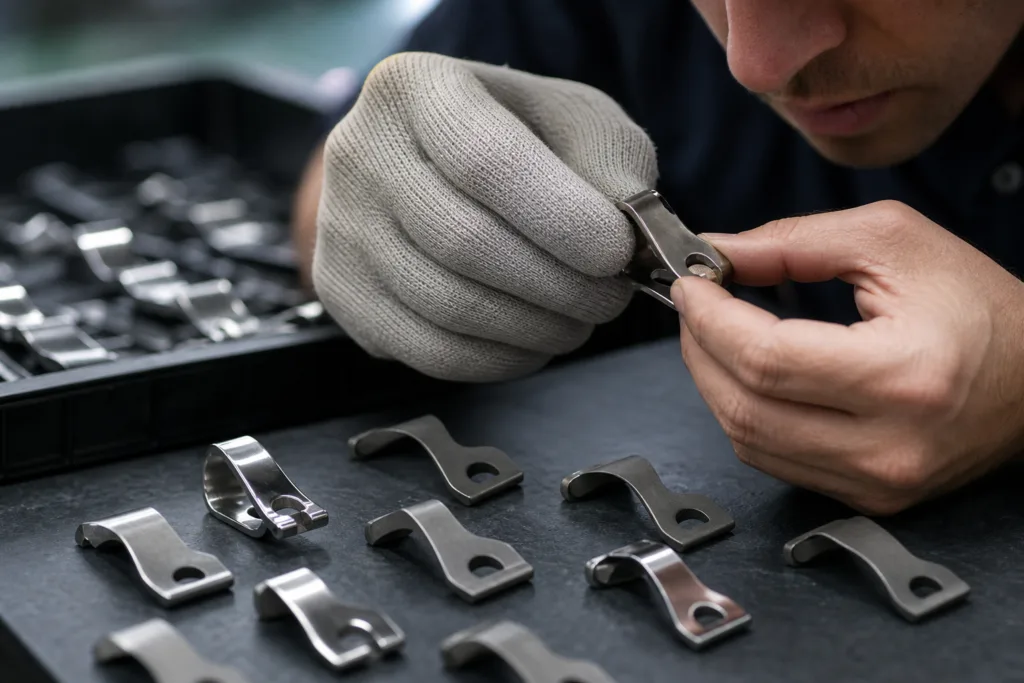
Many buyers focus on material and overlook the most important functional issue: holding performance. A beautiful clip that lacks correct spring tension or contact geometry quickly becomes frustrating. In simple terms, the clip must hold securely when carrying a few notes, but it should not be so stiff that it is awkward to load or remove cash.
Functional quality usually depends on:
- Spring force consistency
- Opening and closing recovery after repeated use
- Contact surface width
- Internal smoothness that avoids tearing bills
- Balanced pressure for both cash-only and light card carry
From a manufacturing perspective, spring behavior is influenced by material temper, thickness, forming precision, and post-processing. This is one reason prototyping matters. A design can look correct in CAD and still feel wrong in hand during sample evaluation.
For buyers planning branded accessories, our B2B metal manufacturing guide mindset is simple: test the actual use case early, because small metal accessories succeed or fail on tactile performance, not only on appearance.
Design considerations for personal style and brand presentation
Money clips are often purchased for both function and image. Some users want a formal polished metal piece. Others prefer matte black, brushed silver, engraved initials, or a hybrid metal-and-leather look. The best design choice depends on who will carry it and in what setting.
| Style Direction | Typical Look | Best Fit |
|---|---|---|
| High polish | Reflective, formal, jewelry-like | Business gifts, formal wear |
| Brushed or matte | Understated, modern | Everyday carry, minimalist users |
| Black finish | Technical, contemporary | Fashion-forward or premium retail lines |
| Engraved | Personalized, branded | Corporate gifting, commemorative use |
| Leather-wrapped hybrid | Warm, classic | Executive gifts, lifestyle products |
At this stage, the supplier’s process depth matters. Through metal crafts manufacturing capabilities, buyers can better evaluate whether the factory can handle finish consistency, engraving definition, packaging coordination, and small details such as edge refinement across a full production run.
How to choose the right money clip based on cash habit, card carry, and lifestyle
The easiest buying mistake is choosing based on image only. A better method is to start with actual carry behavior.
If you mainly carry cash
A classic metal money clip may be the cleanest solution. Prioritize spring security, bill access, and edge smoothness. Stainless steel is often the most balanced choice.
If you carry a few cards and some cash
A hybrid clip or card-integrated clip may be more practical than a pure clip. This is where minimalist wallets compete most strongly. If the user always carries ID plus three or four cards, a minimalist wallet can feel more organized.
If you rarely use cash
A minimalist wallet may simply make more sense than a money clip. The clip format works best when folded bills still play a meaningful role in the user’s routine.
If appearance matters as much as function
Focus on finish quality, profile, surface feel, and how the product ages. Mirror polish, brushed steel, engraved branding, and leather wraps all create different visual signals.
What to look for in build quality, finish quality, edge smoothness, and craftsmanship
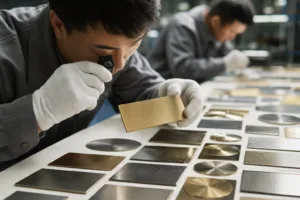
Small metal accessories reveal poor manufacturing very quickly. Because a money clip is handled directly and often viewed up close, buyers notice defects that might be less visible on larger products.
Check these points during sampling and approval:
- Edges should be smooth and consistent, not sharp or uneven
- Spring tension should feel secure but usable
- Surface finish should be uniform with no patchy polishing or plating defects
- Engraving or logo detail should remain crisp at small scale
- Opening gap and body alignment should be consistent
- Packaging should protect against transport scratches
When buyers review Gairun or any manufacturer for small custom metal accessories, we recommend asking very direct questions about sample revisions, surface treatment options, packaging protection, and production inspection methods. This is especially important when the design relies on premium appearance rather than decorative complexity.
For branded orders, it is also useful to review a custom metal product sourcing and production overview so the team aligns early on artwork files, logo placement, finish expectations, and bulk order consistency.
Care and maintenance tips for metal and leather money clips
A money clip is low-maintenance, but not no-maintenance. Good care extends appearance and helps preserve function.
For stainless steel and other metal clips
- Wipe regularly with a soft dry cloth to remove oils and fingerprints
- Avoid storing loose with keys or coins that may create scratches
- Do not over-expand the clip beyond normal loading range
- Keep away from harsh chemicals that can affect plated or coated surfaces
For leather or hybrid clips
- Keep away from prolonged moisture exposure
- Condition leather when appropriate for the material type
- Avoid overstuffing, which can distort structure
- Store in a dry environment when not in use
Care instructions should match the actual finish. A brushed clip hides wear differently from a mirror-polished one, and a black-finished clip may need more careful handling to maintain edge appearance over time.
Common mistakes buyers make when choosing a money clip or minimalist wallet
One frequent mistake is buying a money clip for someone who barely carries cash. In that case, the product may look elegant but remain underused. Another is expecting a clip to replace a full wallet without adjusting what is carried.
Other common mistakes include:
- Choosing style before function
- Ignoring spring tension and actual hold security
- Selecting a finish that shows wear more than expected
- Overlooking edge comfort in pocket carry
- Using thin or low-grade materials that lose shape over time
- Skipping sample review for custom branded projects
In custom programs, buyers also sometimes underestimate packaging. A high-polish clip can arrive with visible friction marks if individual protection is not planned properly.
When a money clip is better than a wallet, and when it is not
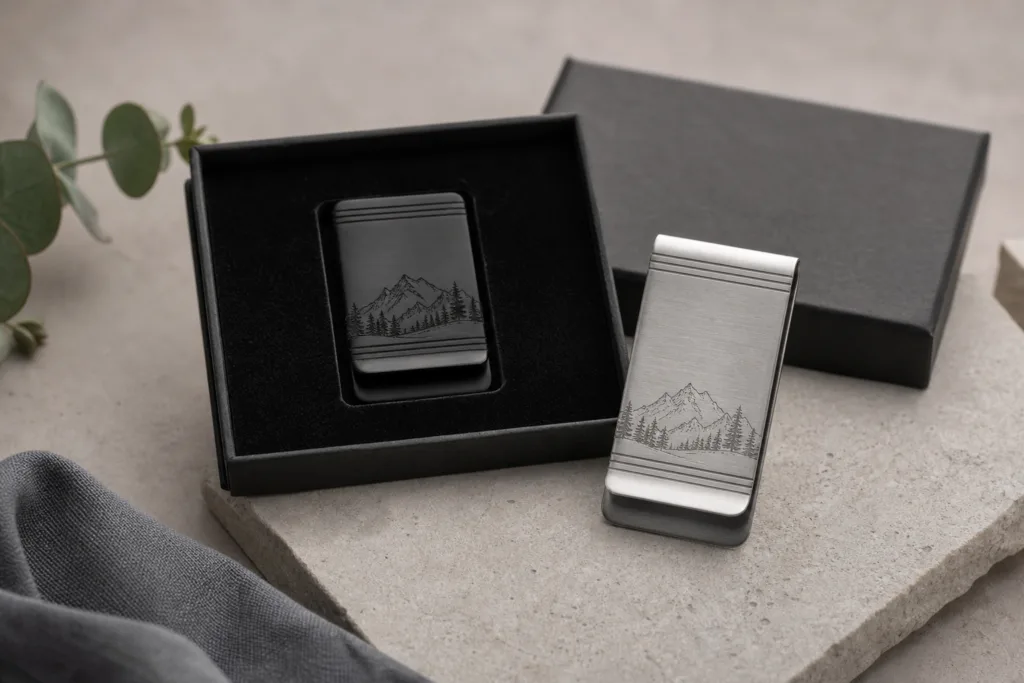
A money clip is better than a wallet when the user wants the lightest possible carry, regularly uses folded cash, prefers formal or minimal pocket presentation, and does not need high card capacity. It is also a strong option for executive gifting, commemorative accessories, and premium branded merchandise where a compact metal item offers strong perceived value.
A minimalist wallet is better when the user carries multiple cards daily, prefers more organization, uses cash only occasionally, or wants enclosed storage with less risk of items slipping during hurried use. For many people, minimalist wallets are the more forgiving all-purpose solution, while money clips are the more intentional and elegant specialized choice.
From our manufacturer perspective, the right choice depends less on trend language and more on realistic use. Buyers who define user behavior clearly usually make better product decisions, whether they are sourcing for retail, gifting, or private label accessory lines.
Conclusion
Money clips remain a relevant modern alternative to wallets because they solve a clear everyday problem: carrying less without sacrificing access or style. The best money clips succeed through a combination of appropriate material, reliable spring function, smooth edges, durable finishing, and realistic capacity expectations. If the user carries mostly cash and a few essential cards, a money clip can be a cleaner and more comfortable option than bulkier wallets. If card organization matters more, minimalist wallets may still be the better fit. For buyers developing custom accessories, the most reliable path is to evaluate material, finish, grip, spring behavior, and packaging together rather than treating the clip as a simple decorative item.
FAQs
Are money clips better than minimalist wallets?
Money clips are better for users who carry a small amount of cash and only a few essentials, while minimalist wallets are better for users who need more card organization. The better choice depends on daily carry habits, not just appearance.
What is the best material for a durable money clip?
Stainless steel is often the most balanced option because it offers good strength, corrosion resistance, and finish flexibility at a practical cost. Titanium can be lighter and premium, while aluminum is very light but may show wear differently over time.
How many bills and cards should a money clip hold?
A money clip generally works best when it holds a modest load, such as folded bills and a few cards if the design allows it. Overloading reduces convenience, increases wear, and can weaken the intended spring behavior over time.
Do money clips damage cash or cards?
A well-made money clip with smooth inner surfaces and balanced tension should not damage normal cash use. Problems usually come from rough edges, poor finishing, or excessive force in a badly designed or overloaded clip.
Are metal money clips good for gifting or private label programs?
Yes, metal money clips are often a strong fit for gifting and private label because they can be engraved, finished in different surface styles, and packed in presentation boxes. The key is to confirm finish quality, packaging protection, and sample approval before bulk production.
How do I choose between a polished and matte money clip?
Choose polished if you want a more formal, reflective, and gift-oriented look. Choose matte or brushed if you want a more understated everyday carry style that usually hides fingerprints and minor wear more easily.