Introduction: Why Custom 5K Race Medals Matter
Custom 5K race medals do much more than signify the finish line; they transform runners’ achievements into lasting memories. For event organizers, designing the right running medals means balancing theme, commemoration, material quality, and production practicality. This guide takes you through everything you need to create 5K race medals that are both meaningful and manufacturable at scale.
How to Design Custom 5K Race Medals
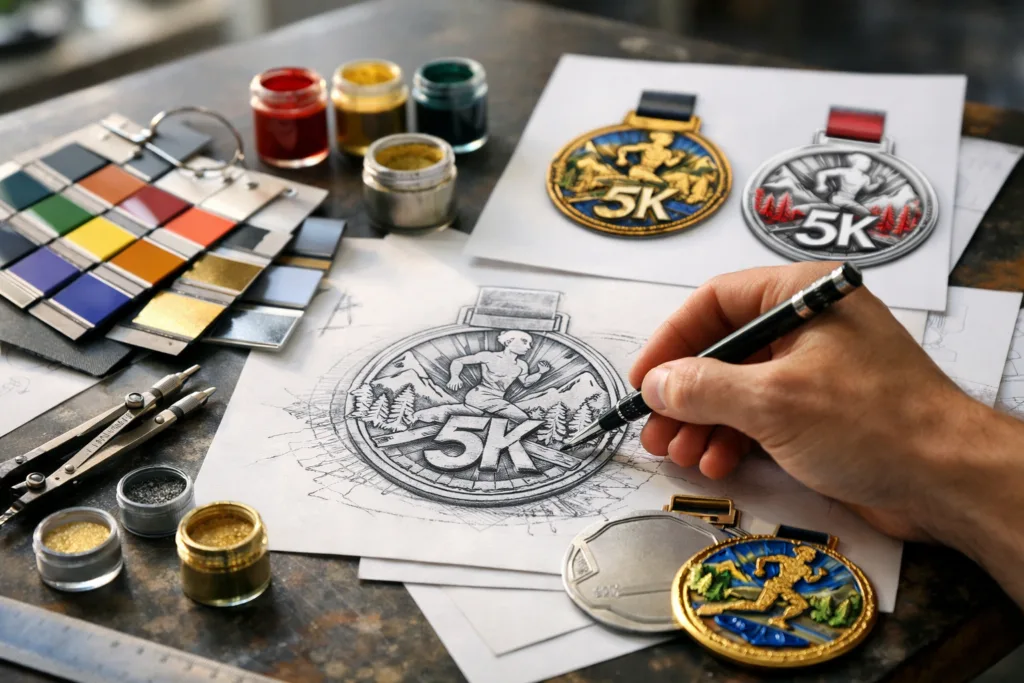
Designing a custom 5K race medal involves thoughtful choices at every stage. From exploring the race’s story and setting commemoration goals to picking the right size, material, finish, and ribbon, each step shapes participant satisfaction and event reputation. Anticipating manufacturing and budget needs ensures seamless production as well.
Understanding the Event Theme and Spirit
Begin by considering what makes your 5K unique. Is it a charity run, a city celebration, or perhaps an ultra-competitive athletic event? Reflect this theme in your medal’s artwork, shape, and color. For instance, cityscape outlines work well for metropolitan runs, while charity events may highlight logos, mascots, or cause-focused symbols. This is the stage where the emotional impact of your medal takes root.
Key Design Elements for Commemorative Value
- Date & Event Name: Engrave these clearly, as they preserve the race’s memory for years.
- Unique Motifs: Emphasize icons, mascots, or branding relevant to your 5K.
- Personalization: Where possible, integrate personalization (like a runner’s name), especially for smaller events.
Balancing Aesthetic Appeal and Manufacturability
The best 5K finisher medals blend interesting visuals with manufacturing feasibility. Avoid designs that are overly intricate in areas prone to production errors, like excessively thin lines or deep cut-outs. When in doubt, consult an experienced medals manufacturer—they’ll advise what’s realistic for your chosen production scale and timeline.
Choosing the Right Medal Size
Size affects both presence and cost. Most custom 5k race medals land between 2 inches (50mm) and 2.5 inches (64mm) in diameter, large enough for artwork yet manageable for runners to wear and display. Smaller sizes reduce cost and weight; larger sizes boost chunkiness and visual impact but can strain budgets or require sturdier materials.
Tips on Medal Thickness
- Standard thickness is 3mm; 4–5mm offers extra heft, ideal for premium events.
- Balance thickness with artwork’s relief height—excess thickness can complicate mold engineering if details are too shallow or too high-relief.
Material Selection for Durability and Visual Quality
The most popular materials for running medals are zinc alloy and iron. Zinc alloys, particularly Zamac 3, offer superior casting detail, corrosion resistance, and surface smoothness—its purity is critical to avoid pitting or plating defects. Iron is budget-friendly but less detailed and more susceptible to rust if not properly coated.
For luxury or commemorative editions, consider brass, copper, or stainless steel. Resin insert or acrylic add-ons can introduce fun effects but may impact perceived value.
Comparing Zinc Alloy and Iron for 5K Medals
| Aspect | Zinc Alloy | Iron |
|---|---|---|
| Detail Quality | Very High | Moderate |
| Weight | Medium | Heavy |
| Corrosion Resistance | Excellent | Needs Coating |
| Finish Options | Extensive | Basic |
| Cost | Medium–High | Low–Medium |
For organizations demanding consistent high quality and minimal plating defects, reputable suppliers like Gairun rely on virgin Zamac 3. This choice not only ensures sharp, mirror-like surfaces but also minimizes product variability, crucial for large events.
Surface Finish and Plating Choices
Finish brings your vision to life. Popular options include:
- Antique (Brass, Silver, Gold): Adds depth and highlights details; forgiving for textured backgrounds.
- High Polish (Gold/Silver): Striking shine, best for contemporary or celebratory designs.
- Matte or Sandblasted: Modern, understated elegance; trendier for minimalist races.
For inspiration on upscale effects, see the coverage of brushed, matte, and sandblasted texture finishes. Plating guards against corrosion and elevates perceived value. Rack plating (as opposed to barrel) is ideal for premium medals, offering a uniform, flawless effect.
Exploring Enamel Colors and Fill Techniques
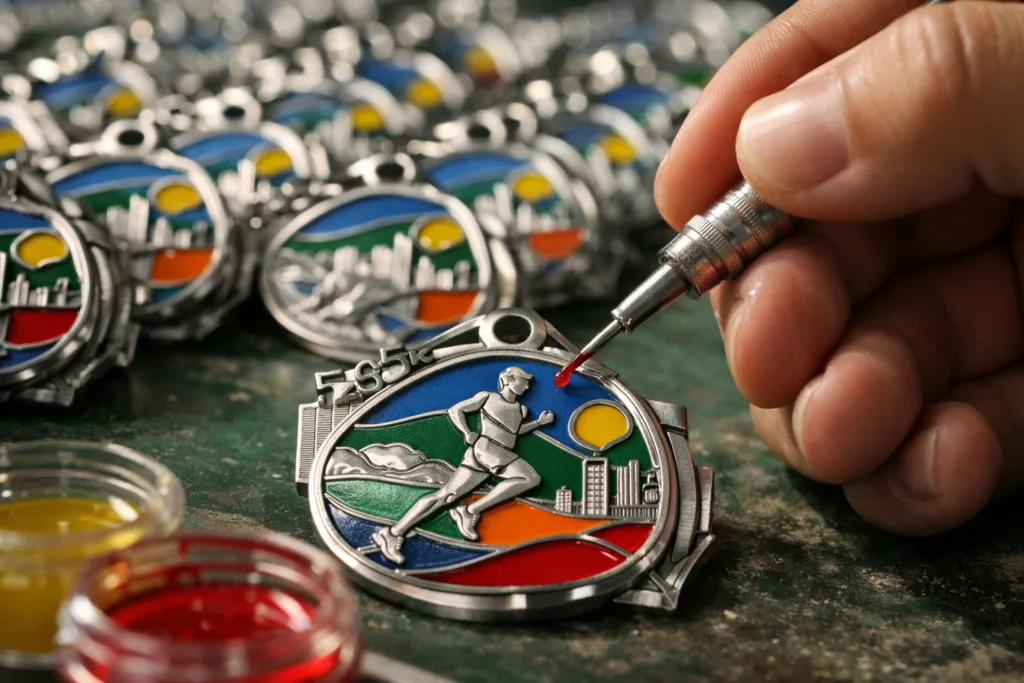
Enamel fills invigorate medals with race branding or cause-related colorways. Options include soft enamel (sunken feel, cost-effective) and hard enamel (smooth surface, jewel-like effect, pricier). Hand-filling processes enable vivid, consistent results on intricate artwork. For a deep dive into premium color application, view the guide on hand-filling enamel colors.
Coordinate Medal Colors with Event Branding
Ensure the medal’s palette mirrors your event’s logo, t-shirts, or cause. Color mismatch is common without detailed communication with manufacturers—always provide Pantone codes or precise references and request pre-production approval samples.
Ribbon and Attachment Pairings
The ribbon frames the entire presentation. Choose from classic V-neck with event branding, full-color sublimated ribbons, or custom shapes. For children’s events or playful themes, consider sparkle, glitter, or dangler additions. For quality assurance and finish harmony, coordinate ribbon hardware color with the medal’s plating, preventing visual clashes.
Tips for Selecting Ribbons
- Standard width: 25–30mm (broader for heavier medals)
- Material: Woven polyester for durability and comfort
- Printing: Sublimation for unlimited colors, screen printing for bold logos
Budget Considerations and Order Quantities
Determining your budget begins with evaluating the number of finishers and expected surplus for late entries or VIPs. Most manufacturers offer tiered pricing, so larger batches reduce unit cost. Don’t forget mold/setup costs, plating upgrades, and shipping. To prevent headaches, compare die struck vs. die cast manufacturing routes—die casting supports more complex 3D shapes and finished edges, while die struck shines for flat, high-relief medallions.
Creating Medals with Collectible Value
Designing for collectibility turns your 5K race medal into a desirable keepsake. Consider limited edition colorways, custom numbering, or interactive elements like spinners or magnets (if budget permits). Creative packaging, such as presentation pouches or commemorative boxes, further increases perceived worth.
Common Production Pitfalls and How to Avoid Them
Even the best designs can falter during production. Watch out for:
- Color mismatches: Always finalize color samples before mass production.
- Plating issues: Ensure your supplier follows rigorous inspection steps—see how to specify color for zinc alloy plating.
- Late deliverables: Factor mold setup and transit times into event planning, and ask about rush order options if timing is tight.
Ensuring Quality Control During Manufacturing
Industry-leading producers conduct multi-stage inspections: casting, polishing, plating, and final assembly. 5K finisher medals should pass tests for edge smoothness (no burrs), consistent enamel, strong ribbon attachment, and durable plating. Some, such as Gairun, also deploy salt spray or colorfastness tests on select series for events requiring top reliability.
Practical Steps for Working with a Manufacturer
Partnering closely with a medals manufacturer enhances success. Provide vector artwork (AI, CDR, or high-resolution PDF), clear Pantone references, and ribbon specs. Request digital proofs or 3D renderings before mold approval. Ask pertinent questions—does the supplier meet lead-free/nickel-free standards? Can they match your event’s sustainability priorities?
Summary Table: Essential Considerations for 5K Medal Design
| Design Factor | Why It Matters |
|---|---|
| Theme & Branding | Unifies race memory & raises collectible value |
| Material Selection | Dictates detail level, weight, tarnish resistance |
| Plating/Finish | Shapes visual effect & durability |
| Enamel Colors | Adds vibrance, aligns with event identity |
| Ribbon Design | Completes presentation, boosts wearing comfort |
| Order Size | Determines unit price, cost efficiency |
Packaging and Presentation Tips
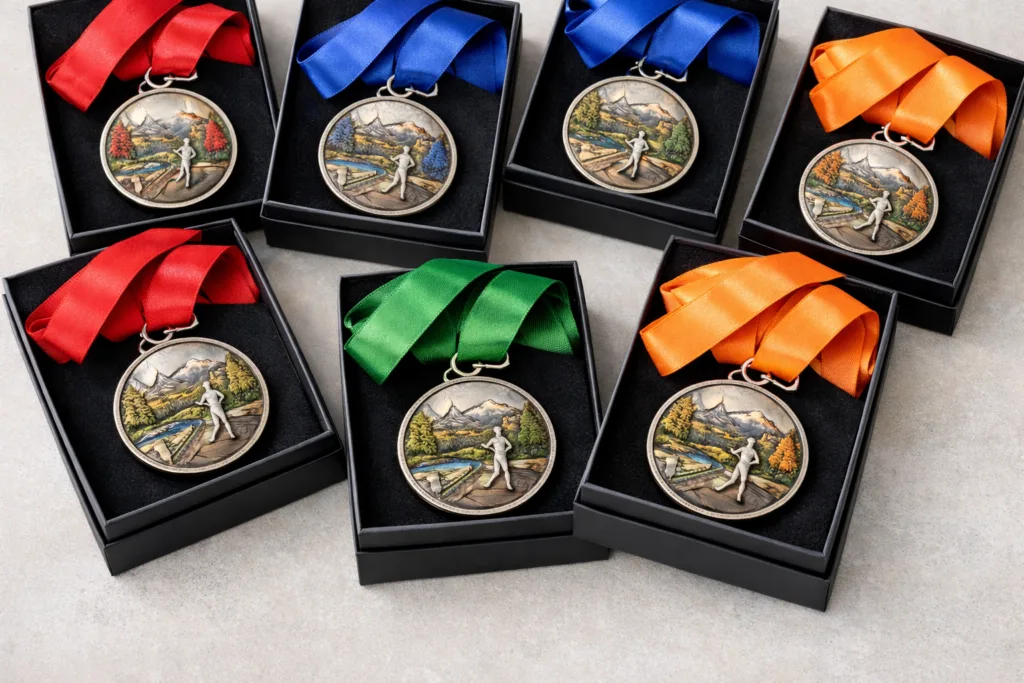
Award presentation heightens participant experience. Simple velvet pouches or clear trophy boxes elevate perceived value and protect medals in transit. For milestone events, consider laser-engraved wooden boxes or branded sleeves, adding gravitas to the moment finishers receive their 5K medals.
Best Practices for Making Medals Meaningful and Scalable
Balance visual impact with feasible production steps. Focus on a signature emblem or theme, opt for scalable color schemes, and clarify sizes suitable for mass-participant events without sacrificing collectibility. Finally, maintain open communication with your medal supplier and seek feedback from past participants for iterative improvements each year.
Conclusion: Creating Lasting Memories with Every 5K Race Medal
Designing custom 5K race medals is both an art and a science. With careful choices around theme, material, finish, and process, event organizers ensure every finisher feels seen, celebrated, and inspired to return next year. Keep these best practices at the ready, and your medals will not only mark miles made but also make memories that endure.
Frequently Asked Questions
What size should custom 5K race medals be?
Most 5K medals range from 2” to 2.5” across, balancing visibility and wearability, with 3mm thickness being standard for a quality feel.
Which material offers the best detail for a 5K race medal?
Zinc alloy (especially Zamac 3) allows detailed logos and smooth finishes, making it a favorite for high-quality, commemorative medals.
How do I ensure my medals match event colors?
Supply exact Pantone color codes to your supplier and always approve physical or digital samples before moving into mass production.
How early should I start designing and ordering medals?
Begin at least 3–4 months prior to your event to allow time for mold creation, sampling, changes, and shipping without stress.
What is the minimum order for custom 5K medals?
While some suppliers accept small batches, pricing best favors orders of 100 or more; always check the supplier’s MOQ policy first.
Can I add personalization to each 5K medal?
Yes, personalization like names or unique numbers is possible with digital printing or laser engraving, but may increase cost and lead time.
Related Reading
- Inspire Excellence: Why Custom Medals with Logos Create Unforgettable Events
- How Hand-Filled Enamels Revamp Medal Design for Lasting Impressions
- Decoding Medal Manufacturing: Which Is Best, Die Struck or Die Cast?
- Proven Ways to Prevent Color Mismatch in Medal Production
- Texture Secrets That Make Medals Look and Feel Premium