In busy bars, stadium counters, restaurants, festivals, and catering lines, speed openers are not a novelty item. They are a working tool that needs to survive repetitive use, quick wrist movement, wet hands, ice bin contact, and constant pocket carry. From our metal manufacturing perspective, a heavy-duty bartender opener should do more than remove caps fast. It should balance leverage, comfort, edge quality, corrosion resistance, branding space, and long-run consistency if you are sourcing for a team rather than buying one piece at retail.
If your project involves branded bar tools, event merchandise, or service-ready accessories, our custom bottle opener manufacturing options are relevant because buyers often need more than a simple opener shape. We regularly help customers compare metal thickness, logo methods, plating or coating choices, attachment structures, packaging formats, and sample approval steps so the final opener works in real service conditions while also fitting retail, hospitality, promotional, or private label requirements.
What Heavy Duty Bartender Openers Are and Why Speed Openers Matter
A speed opener is typically a flat, elongated bottle opener designed for quick cap removal with one-handed flow and minimal repositioning. Bartenders favor the form because it can slide into a back pocket, rest in a hand comfortably during service, and move from bottle to bottle faster than bulky novelty openers or short household types.
The term heavy duty matters because commercial service creates a different stress pattern from occasional home use. A bar opener may be used hundreds of times in a shift. That means buyers should pay attention to repeated flex load, pry edge wear, surface scratches, grip security, and whether the opener keeps its shape after months of use. For B2B buyers, “heavy duty” should not be treated as a vague marketing word. It should be translated into measurable details such as material grade, sheet or casting thickness, heat treatment if applicable, opening edge geometry, finishing quality, and bulk consistency.
Standard bottle openers can work well for light-duty retail or gift use, but bar teams usually need a flatter profile, better leverage, and a surface that still feels controlled when exposed to water, syrup, citrus, or condensation. This is where manufacturing choices begin to affect real-world performance.
How Speed Openers Are Designed for Fast, Repetitive Bar Service
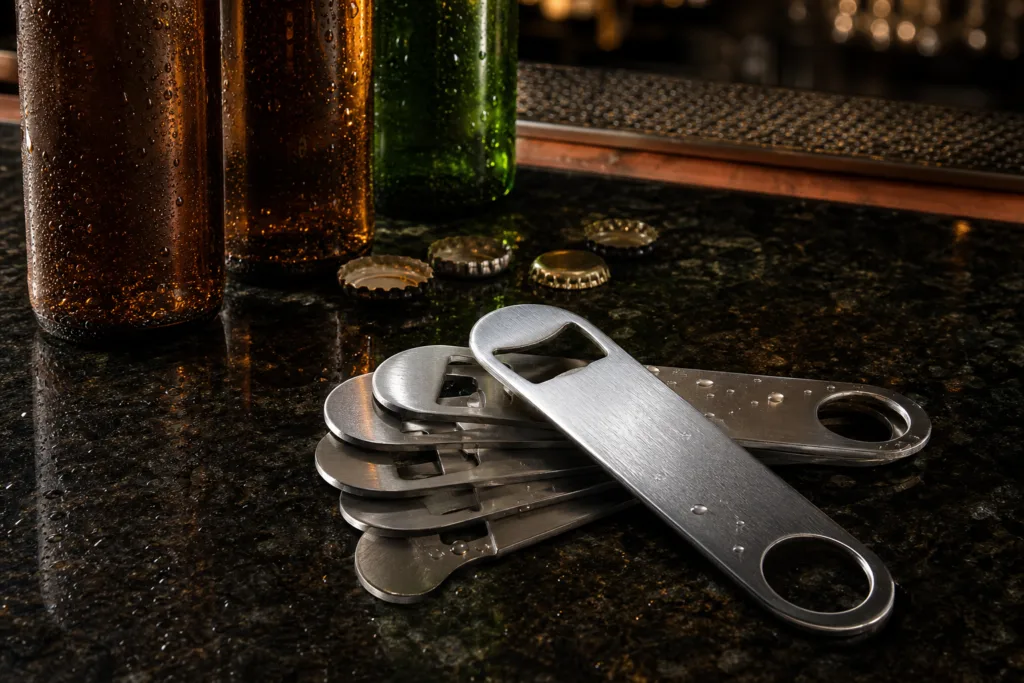
The main functional advantage of speed openers is motion efficiency. The opener usually includes a working head for lifting crown caps and a finger hole or spinner ring area that improves handling, storage, and quick repositioning. In service, a bartender often grips the opener by habit rather than visual alignment, so shape memory matters. Slight improvements in contour, opening slot geometry, and edge smoothness can make a noticeable difference over a long shift.
When buyers compare products, they should think in terms of task repetition. A speed opener used in a nightclub or sports venue sees repetitive force, short cycle times, and frequent drops. In these cases, the tool should resist bending while staying comfortable enough to reduce strain. Guidance on hand tool selection from choosing a speed opener that reduces force and repetitive strain is useful here because opener shape, required force, and wrist position affect fatigue when the same motion is repeated throughout service.
In our production work, we usually see buyers focus first on logo placement and finish color. Those matter, but working geometry should be decided earlier. The cap-lift lip, the width of the neck, the overall length, and the distribution of metal mass all influence speed and control. A heavy opener that is badly balanced can feel slower than a slightly lighter opener with better leverage.
Key Materials for Heavy Duty Bottle Openers
Stainless steel
Stainless steel is one of the most practical choices for heavy-duty bottle openers used in hospitality. It offers good corrosion resistance, a clean modern appearance, and a reliable base for brushed, polished, or engraved branding. For bars, outdoor events, and coastal hospitality settings, stainless steel reduces the risk of visible rust compared with basic carbon steel. It is also a strong option when buyers want a plain metal finish without plating layers.
For many commercial projects, stainless steel gives the best balance of service life, maintenance simplicity, and professional appearance. It is especially suitable when the opener will be washed frequently or used in environments where moisture exposure is constant.
Carbon steel
Carbon steel can provide strong mechanical performance and a solid feel, but it usually needs a protective finish. Without proper coating or plating, it is more vulnerable to rust in damp service environments. Carbon steel may still be a viable option for buyers targeting lower cost, painted finishes, powder-coated looks, or specific industrial styles, but they should verify coating adhesion and edge protection carefully.
Zinc alloy and cast structures
Some opener designs use die-cast zinc alloy, especially when the buyer wants thicker decorative forms, custom contours, integrated branding features, or combination structures such as opener plus keychain. Cast designs are useful when shape freedom matters more than ultra-thin profile. However, for classic bartender-style flat speed openers, stamped stainless steel or steel often remains the more practical commercial choice.
At Gairun, this material decision usually depends on how the opener will be used: back-pocket bar tool, promotional retail accessory, packaging insert, branded keychain, or souvenir metal item. Manufacturing method follows function, not the other way around.
Design Features That Improve Grip, Leverage, and Opening Speed
Good opener performance is not only about hardness. It is about how force travels from the user’s hand to the cap edge. Commercial buyers should review several design details before approving a sample.
Handle length and balance
A longer opener generally creates better leverage, but length should still fit the intended carry method. Bartenders often prefer a format that slips into a pocket without feeling bulky. If the opener is too short, it may require more force and reduce speed. If too long, it may become awkward in tight service spaces.
Finger hole shape
The ring opening affects both spin control and hanging storage. A cleanly finished hole with rounded edges feels more secure and reduces discomfort during fast handling. This detail is often overlooked in sourcing, yet rough punched edges can become a daily annoyance for staff.
Wrist-friendly geometry
Repeated cap opening should not force the wrist into awkward positions. Practical ergonomic guidance on ergonomic handle design for repetitive bar service supports the idea that hand tools work better when they reduce awkward posture and contact stress. For speed openers, that translates into comfortable width, controlled edge radius, and leverage geometry that lets the cap lift with a clean motion rather than excessive twisting.
Edge finish and contact points
The opener should have smooth handling edges without becoming so rounded that grip control is lost. This is especially important when hands are wet. A good edge finish prevents sharp discomfort in the palm while preserving enough shape definition for fast indexing.
Heavy Duty Speed Openers vs Standard Bottle Openers
| Factor | Heavy-Duty Speed Opener | Standard Bottle Opener |
|---|---|---|
| Primary use | High-volume bar and event service | Occasional household or casual use |
| Profile | Flat, pocket-friendly, quick to reposition | Often shorter, bulkier, or novelty-based |
| Leverage | Usually better for repetitive opening | May require more repositioning |
| Material focus | Durability, wear resistance, corrosion control | Appearance or low cost may dominate |
| Branding options | Engraving, stamping, plating, printing, custom packaging | Often simpler |
| Bulk sourcing concern | Consistency across many units is important | Less critical for one-off purchase |
For procurement teams, the key distinction is not only durability. It is whether the opener remains comfortable, visually consistent, and structurally stable across large quantities. One good sample is not enough if the next 5,000 pieces vary in thickness, finish, or opening edge quality.
Choosing the Right Opener for Different Service Scenarios
Bars and nightclubs
These buyers usually need maximum speed, pocket carry convenience, and strong resistance to wear. Stainless steel flat openers with laser engraving or debossed branding are often practical because the branding can remain legible after frequent handling.
Restaurants
Restaurant programs may prioritize a cleaner look, easier washing, and compatibility with branded tabletop or beverage presentation. In some cases, buyers also compare handheld tools with wall-mounted opener customization ideas for service stations, patio bars, or branded hospitality zones.
Events and catering teams
Portability, replacement planning, and quantity control matter more in event settings. Buyers may prefer a durable but cost-conscious format with simple logo application and practical packaging for team distribution. If the opener is tied to beverage activation, branded merchandise, or can-and-cap presentation, it can also help to think about bottle cap production and packaging fit so the overall drink-service presentation stays coordinated.
Promotional and retail use
If the opener is being sold or distributed as branded merchandise, design freedom increases. Buyers may want custom shapes, antique finishes, keychain structures, or retail-ready backing cards. In these cases, visual impact matters more, but the opener should still work well enough to support repeat use and positive brand association.
What to Look for in Thickness, Weight, Edge Finish, and Durability
These are the most important physical checks when evaluating heavy duty bottle openers in sample form.
Thickness
Too thin, and the opener may flex under repeated use. Too thick, and it may feel heavy or awkward in the pocket. Buyers should request the exact thickness specification in millimeters, not vague descriptions. For flat bartender styles, even small thickness changes can alter stiffness and perceived quality.
Weight
Weight affects both comfort and quality perception. A heavier opener can feel premium, but excessive weight may slow handling. The goal is controlled mass, not simply more metal. Ask suppliers for unit weight tolerance across bulk production, especially if consistency matters for retail packaging or coordinated team issue.
Edge finish
Check all hand-contact edges, the finger hole interior, and the opening lip. The opener should not have burrs, flaky coating, uneven polishing, or sharp points. If a painted or plated finish is used, inspect whether the edge remains fully covered after sample handling.
Opening lip durability
The cap-contact area is the most function-critical part. Weak geometry or poor finishing can lead to slipping, accelerated wear, or poor cap lift. This is one area where a visually attractive sample can still fail in real service.
Customization Options for Brands, Bars, and Promotional Programs
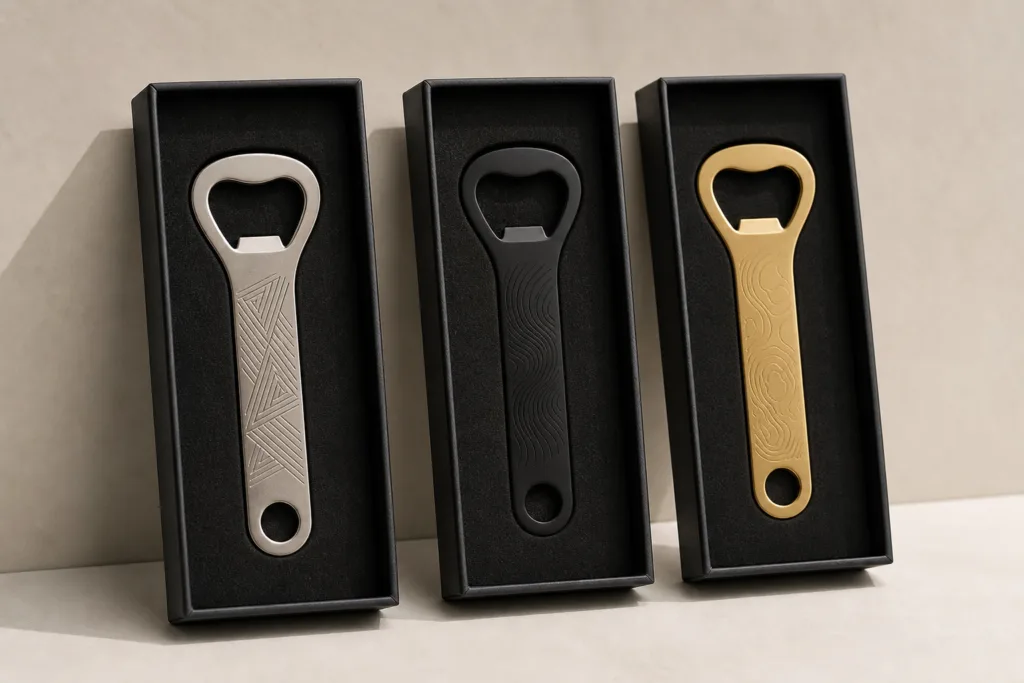
Customization for speed openers can be simple or highly developed depending on the use case. Common options include laser engraving, debossed logos, printed color, antique plating, brushed finish, mirror polish, epoxy dome branding, and retail packaging. If the opener is part of a broader hospitality accessory range, the design can also align with other bar tools, tags, or keychain products.
From a manufacturing viewpoint, the correct customization method depends on wear expectations. Printed logos may look bright initially but may not suit aggressive daily abrasion. Engraved or stamped logos usually perform better when the tool will be in a bartender’s hand every shift.
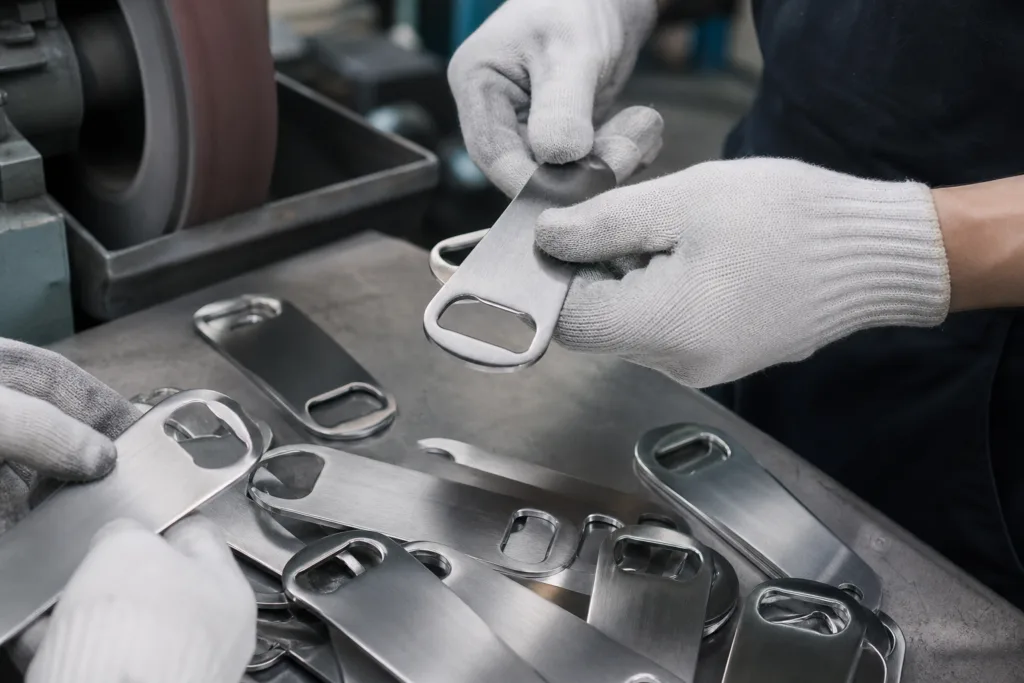
Some buyers also want attachment features such as split rings, swivel hardware, or clasp-based carry options for staff kits or event credentials. In those cases, reviewing heavy-duty hardware design considerations can help align the opener body with the attachment system so the final product remains functional rather than decorative only.
Where branding, packaging, and OEM development come together, Gairun usually advises customers to decide the core tool structure first, then choose logo and finish treatments that match the actual service environment. That sequence reduces the risk of attractive but impractical product decisions.
Maintenance and Cleaning Tips to Extend Service Life
Even durable openers last longer when cleaning and storage are handled properly. Stainless steel is easier to maintain, but all metal tools benefit from routine care.
-
Rinse and dry after exposure to sugary liquids, citrus, or salt-heavy environments.
-
Avoid storing wet openers in sealed containers where trapped moisture can affect finish quality.
-
Inspect coated carbon steel products for chips or worn areas that may expose the base metal.
-
Do not use the opener as a pry bar for non-intended tasks, which can deform the working edge.
-
Replace worn pieces before they begin slipping on caps, especially in commercial service where speed and staff safety matter.
For large teams, it is smart to build opener replacement into routine bar tool planning rather than waiting for widespread wear. This is especially true for seasonal venues and event operators that issue tools to temporary staff.
Common Wear Issues and How to Avoid Them
Bending
Bending usually comes from insufficient thickness, soft material, poor heat treatment logic where applicable, or misuse as a general pry tool. Ask for real production specs, not just photos.
Rust or staining
This risk is higher with low-grade steel or damaged coating. Moisture, acidic residue, and poor drying all accelerate the problem. Material choice and finishing quality matter more than appearance alone.
Loss of edge control
If the opener lip wears down or was poorly formed from the start, cap engagement becomes less precise. Users then compensate with more force, which increases fatigue and slows service.
Logo wear
Surface print may fade under repeated pocket abrasion. For commercial tools, buyers should compare decorative impact against service life and choose branding methods accordingly.
Popular Style Categories and Buying Considerations for Commercial Teams
Although the classic flat speed opener is the standard, there are several related categories worth comparing.
| Style | Best For | Main Trade-Off |
|---|---|---|
| Flat bartender opener | High-volume bar service | Less decorative freedom than cast novelty forms |
| Keychain opener | Promotional use, portable retail items | May be smaller and less optimized for repetitive service |
| Cast custom opener | Branded merchandise, souvenir products | Can be thicker and slower for pocket workflow |
| Wall-mounted opener | Fixed service points and hospitality spaces | Not portable for bartenders in motion |
For commercial teams, the right buying decision often depends on whether the opener is primarily a tool, a branded object, or both. That distinction influences material, finish, packaging, and budget allocation.
User Feedback and Real-World Performance in High-Paced Environments
When buyers gather feedback from bartenders, a few themes usually repeat: the opener should feel intuitive in the hand, not chew up pockets, open consistently without slipping, and survive drops. Users also notice details that purchasing teams sometimes miss, such as whether the finger hole is comfortable, whether the opener feels balanced after hours of use, and whether logos remain visible after repeated friction.
For this reason, we recommend sample testing in an actual service simulation rather than a desk review alone. Open at least several dozen capped bottles, test with wet hands, and let multiple users compare comfort and control. A product that looks similar on paper can perform differently once repetition enters the picture.
How to Evaluate Suppliers, Samples, and Bulk Order Quality Consistency
Commercial investigation should go beyond unit price. A strong supplier evaluation process protects both performance and brand reputation.
Ask for manufacturing clarity
Confirm the material, thickness, finish method, logo process, and packaging format in writing. “Stainless steel” alone may not be enough if you need a specific appearance or corrosion-performance expectation.
Review the sample carefully
Check flatness, edge smoothness, lip geometry, finish consistency, logo accuracy, and actual hand feel. If the opener includes attachments or combination structures, test those as well.
Plan for bulk consistency
Ask how the supplier controls stamping, polishing, deburring, plating, engraving, and final inspection. For branded programs, consistency across cartons matters because visible variation can affect retail presentation or hospitality standards.
Match MOQ and lead time to usage reality
Bars, chains, event operators, and distributors should estimate replacement rate, spare stock, and seasonal demand before finalizing quantity. A lower initial MOQ may help pilot a new concept, while a larger run can reduce per-unit cost if the design is already validated.
Buyers who need broader metal crafts manufacturing support often benefit from working with a supplier that can also handle sampling, mold development where required, finishing selection, private label packaging, and coordinated accessory production rather than treating the opener as an isolated item.
Conclusion
For high-volume hospitality use, speed openers should be evaluated as working metal tools, not just branded accessories. The right choice depends on material, thickness, leverage, edge finish, corrosion resistance, and how the opener feels after repetitive use. Heavy duty bottle openers for bars and events should open cleanly, resist wear, fit the user’s workflow, and remain consistent across bulk orders. From our manufacturing perspective, the most successful projects are the ones that align function, finish, branding, and sourcing requirements before mass production begins.
FAQs
What material is usually best for commercial speed openers?
For most high-volume bar environments, stainless steel is the most practical choice because it offers a strong balance of corrosion resistance, clean appearance, and easy maintenance. Carbon steel can still work for some cost-driven or coated designs, but buyers should inspect finish quality more carefully if moisture exposure is frequent.
How thick should heavy duty bottle openers be?
There is no single ideal thickness for every design, but buyers should request the exact millimeter specification and compare stiffness during sample testing. The opener should resist flex in normal use without becoming awkwardly heavy, and small thickness changes can noticeably affect leverage and durability.
Are engraved logos better than printed logos on bartender openers?
For daily service tools, engraved, debossed, or stamped logos are usually more durable than surface printing because the opener will experience pocket abrasion, moisture, and frequent handling. Printed branding may still be suitable for promotional distribution, but long-term wear should be considered before approval.
What should buyers check in a pre-production sample?
Check the material feel, thickness, balance, opener lip performance, burr-free edges, finger hole comfort, logo accuracy, finish consistency, and packaging quality. It is also worth testing the sample in a real service setting with multiple users so you can catch comfort or control issues that may not appear in a visual inspection.
Can speed openers be customized for bars, events, or private label programs?
Yes. Common options include custom shape adjustments, engraving, stamping, plating, antique finishes, printed color, keychain structures, backing cards, and retail packaging. The best customization method depends on whether the opener is mainly a service tool, a branded merchandise item, or a combination of both.
How should commercial buyers plan replacements for speed openers?
Replacement planning should account for staff count, loss rate, seasonal demand, and expected wear from repetitive use. Many commercial buyers order reserve stock with the main batch so they can keep branding consistent and avoid small, urgent repeat orders that may increase cost or create variation.