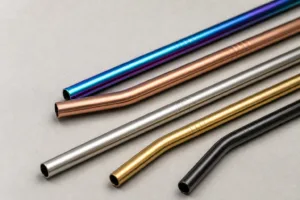
Wall-mounted bottle openers sit at an interesting intersection of utility, display value, and brand repetition. For buyers sourcing practical promotional products, they offer something many giveaways do not: they stay visible, they solve a simple daily need, and they can carry a logo for years in homes, bars, tasting rooms, restaurants, offices, club spaces, and retail environments. From our manufacturing perspective, wall-mounted bottle openers work best when buyers treat them not as novelty items, but as custom metal products that require the right choices in structure, alloy, finish, mounting method, and logo execution.
If your project needs durable logo application, repeatable metal construction, and packaging that fits either gifting or retail programs, our metal craft manufacturing support can help connect concept development with practical production decisions. We usually guide buyers through material selection, mold planning, logo relief or engraving options, plating and color decisions, sample approval, and bulk quality checkpoints so the opener performs well while still delivering long-term brand visibility.
Why wall-mounted bottle openers work as promotional products
The primary strength of wall-mounted bottle openers is permanence. A keychain opener may travel, and a coaster may wear out, but a mounted opener often stays fixed in a visible location. That gives the branded surface more repeated exposure over time. In B2B programs, that matters for breweries, beverage brands, hospitality groups, sports venues, restaurants, merch programs, and corporate gifting teams looking for functional products with a longer life cycle.
We also see buyers choose wall-mounted bottle openers because the product naturally supports both premium and practical positioning. A cast metal design with antique plating can feel like branded decor. A simpler stamped structure with clean logo engraving can feel industrial, modern, and cost-efficient. The same product category can serve bar installations, event merchandise, retail gift sets, and private label souvenir lines.
Key benefits for brand visibility across different environments
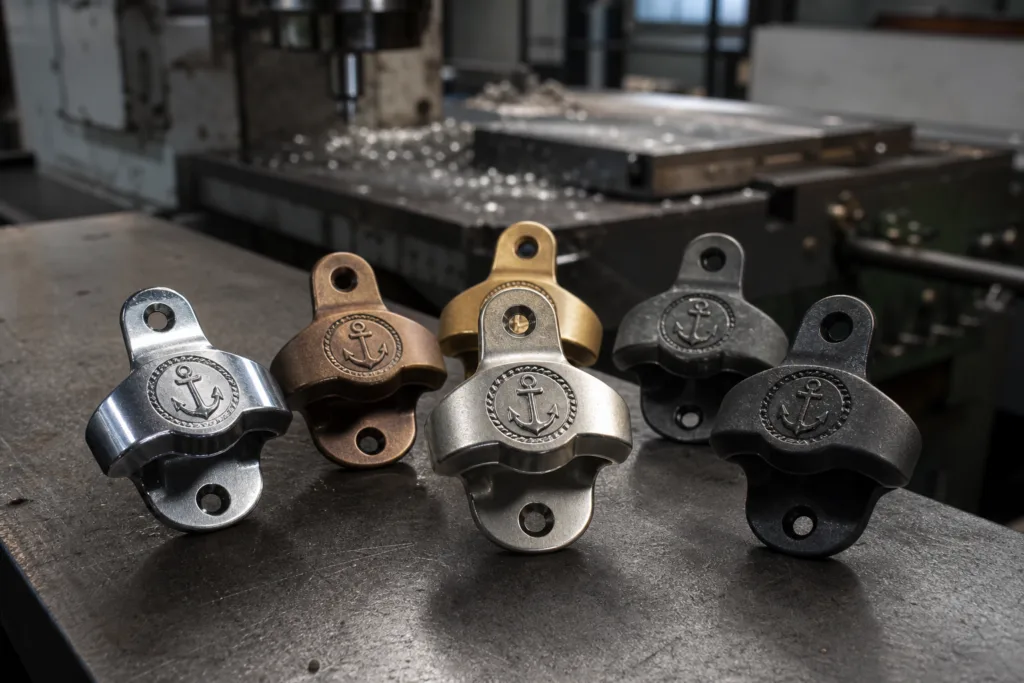
Home and personal spaces
In homes, garages, patios, and game rooms, the opener becomes part of the environment. This gives logos steady visibility without the product feeling like an advertisement. For beverage brands and event organizers, that is valuable because the brand stays associated with leisure, hospitality, and repeat use.
Bars, restaurants, and tasting rooms
For hospitality venues, wall-mounted openers can reinforce interior identity. Buyers often match metal tone, logo style, and mounting hardware to the venue aesthetic. A rustic bar may prefer antique brass or antique silver. A modern taproom may prefer matte black or brushed stainless styling. In these settings, the opener does double duty as a working tool and a branded fixture.
Retail and merchandise programs
Retail buyers often want an item that feels more substantial than a low-cost giveaway but still remains affordable in volume. That is where custom logo promotional souvenirs become useful as part of a broader merchandise strategy. A wall-mounted opener can be bundled with beverage accessories, sold with branded packaging, or positioned as a giftable add-on item.
Office, club, and association use
Corporate buyers, clubs, alumni groups, and associations may use branded openers as commemorative utility products. In these cases, perceived value often comes from clean logo detail, solid weight, and thoughtful packaging more than from size alone.
Common use scenarios for B2B buyers
Wall-mounted bottle openers are usually purchased for one of several clear use cases:
- Corporate gifts: especially for beverage, hospitality, and lifestyle brands.
- Hospitality installations: mounted in bars, brewpubs, restaurants, guest lounges, and tasting spaces.
- Event giveaways: particularly sports events, music festivals, food and beverage events, and sponsor kits.
- Retail merchandise: sold as branded accessories in souvenir shops, brewery stores, or online stores.
- Private label product lines: packaged with custom backing cards, boxes, or gift sets.
- Distributor sourcing: used by promotional product distributors who need a practical item with stable decoration options.
In our experience, the intended use scenario should be confirmed before artwork and tooling begin. The same logo may need different sizing, structure, edge treatment, and packaging depending on whether the opener is for permanent wall installation, countertop display, or consumer resale.
Design options for wall-mounted bottle openers
Shape and silhouette
Buyers can choose standard rectangular backplates, shield shapes, crest forms, circular medallion-style tops, or custom silhouettes. A custom outline can strengthen brand identity, but it also affects mold complexity, polishing time, and edge consistency. For cleaner and more economical production, many buyers combine a standard opener structure with a custom logo plate or raised emblem.
Mounting style
Common mounting options include exposed screw holes, hidden rear mounting, wood-base assembly, or magnetic/cap-catching integrated structures. Exposed screws are practical and easy to install. Hidden mounting looks cleaner but requires more precise structural planning. If a cap-catching feature is added, buyers should confirm whether the catch component is part of the metal body, a separate assembly, or an attached magnet-backed part.
Logo placement
Logos may be presented as raised die-cast relief, recessed filled color, laser engraving, stamped debossing, separate emblem plates, or printed inserts. We usually recommend buyers think about viewing distance. If the opener will be mounted on a wall several feet away, bold logo shapes and high contrast finishes usually outperform very fine lines.
Functional details
Useful structural additions include bottle cap catchers, magnetic retention points, screw kits, rounded safety edges, and heavier backplate thickness for stability. Buyers comparing custom bottle opener products should note that wall-mounted versions usually need stronger structural support than pocket or keychain styles, especially when they are intended for long-term installation in hospitality settings.
Material choices: zinc alloy, stainless steel, brass, and aluminum
Material choice affects appearance, weight, corrosion behavior, production method, and unit cost. The right answer depends on environment, finish style, target price, and desired feel in the hand.
| Material | Common Strengths | Considerations | Typical Fit |
|---|---|---|---|
| Zinc alloy | Excellent for die casting, custom shapes, relief logos, solid feel | Usually plated or finished; weight is higher than aluminum | Premium custom shapes and decorative branded openers |
| Stainless steel | Good durability, clean modern look, corrosion resistance | More limited for deep decorative casting effects; design may lean simpler | Hospitality, outdoor, or minimalist functional styles |
| Brass | Warm premium appearance, classic look, good engraving character | Material cost can be higher; finish planning matters | Boutique, commemorative, or heritage-style branding |
| Aluminum | Lighter weight, workable for certain stamped or machined forms | Lighter feel may not suit premium expectations for all buyers | Value-oriented or lightweight design programs |
When buyers need help comparing alloys, a structured metal material selection guide is useful because the same logo concept can behave differently depending on casting depth, polishing response, and finish compatibility. For harsher environments or long-term hospitality use, stainless steel is often considered because of its corrosion-resistant surface behavior, although environment and maintenance still matter; this is one reason many engineers and buyers review why stainless steel is preferred for durability and corrosion resistance before finalizing material choices.
Decoration methods and how they change the final look
Die casting
Die casting is often the strongest choice for custom-shaped wall-mounted openers with sculpted relief, thick bodies, and decorative logo areas. It supports more dimensional branding than flat methods and works well with zinc alloy. If the design includes integrated ornamental borders, recessed logo zones, or raised lettering, die casting is often the most efficient route.
Stamping
Stamping suits flatter forms and repeatable production runs, particularly where the opener body does not require deep relief. It is a recognized fabrication route for this kind of hardware category, and stamped metal bottle openers as a fabrication category fit naturally within broader metal stamping production. For buyers, the practical takeaway is that stamping often supports cleaner flat geometry, efficient volume output, and predictable unit economics when the design is not heavily sculpted.
Laser engraving and etching
Laser engraving works well for sharp logos, serial identification, simple line artwork, or premium understated branding. It is especially useful when buyers want a low-maintenance logo treatment without enamel filling. Etching can support fine detail on thinner metal surfaces, but the artwork must match the process depth and readability limits.
Color filling and enamel-style decoration
Recessed color filling can help logos stand out, especially where the brand palette is central to recognition. Buyers should check whether the product is intended for a highly decorative look or a more industrial one. In many wall-mounted bottle opener projects, one or two colors are enough. Too many small filled areas can create cleaning difficulty in production and may reduce visual clarity from a distance.
Finish options that affect appearance and durability
Surface finishing is not only about color. It affects brand tone, wear visibility, and how the product ages in use.
- Polished finish: bright, reflective, and more formal; highlights premium relief details.
- Antique finish: emphasizes recesses and texture; useful for heritage, souvenir, or rustic branding.
- Matte finish: calmer appearance, often preferred for contemporary designs.
- Sandblasted texture: helps reduce glare and can make raised logos stand out more clearly.
- Black plating: gives a modern, graphic look when paired with engraved or raised branding.
For buyers exploring darker aesthetics, modern black plating finish options are often relevant because black surfaces can increase logo contrast when the design uses polished highlights, engraved lines, or selective color accents. The key is to confirm expected wear behavior in the real environment, especially where hands, moisture, and repeated cap contact are involved.
How custom logos increase perceived value
A wall-mounted opener with no identity is hardware. A wall-mounted opener with a well-integrated logo becomes a branded object. That difference is what makes the product useful in promotional and merchandise programs. Perceived value usually comes from a combination of logo placement, finish quality, edge quality, and packaging. Even a simple opener can feel significantly more premium when the logo is sized correctly, the metal surface is clean, and the mounting structure feels stable.
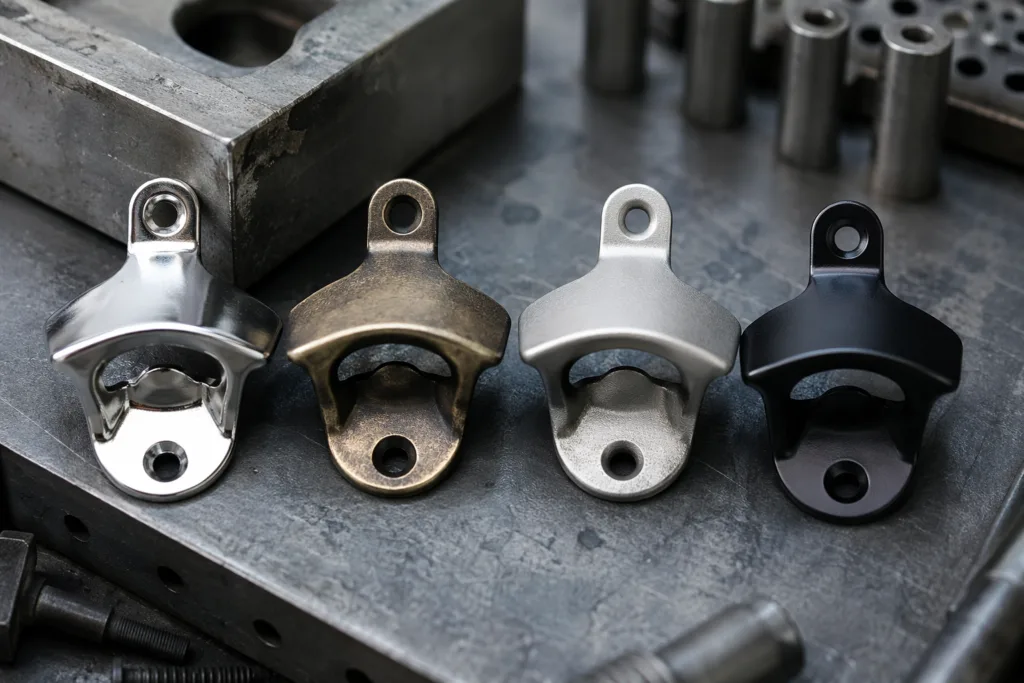
At Gairun, we usually advise buyers to think beyond the logo alone. The brand impression is influenced by thickness, weight, plating tone, screw presentation, backing card design, and whether the opener is part of a larger branded set. In B2B sourcing, those details often determine whether the product feels like a souvenir, a durable venue fixture, or a premium retail item.
Artwork and file preparation before sampling
Good production starts with realistic artwork planning. Vector files are usually preferred for logos because they preserve line definition and allow more accurate tool development. Buyers should confirm the following before sampling begins:
- Minimum readable line thickness in the chosen process
- Whether the logo is raised, recessed, engraved, or color filled
- Maximum logo area relative to opener structure
- Any trademark or fine text that may become too small after scaling
- Pantone or equivalent color targets when color filling is used
- Placement of screw holes so they do not interfere with logo balance
Relief depth is also important. If a raised logo is too shallow, it may look flat after plating and polishing. If recesses are too narrow, enamel or color filling may become inconsistent. We usually refine these points during pre-production drawing review rather than waiting until the sample arrives.
Sampling, mold development, and bulk approval checkpoints
For custom wall-mounted bottle openers, the sample stage is where most avoidable problems are caught. Buyers should ask to confirm not only the visual sample, but also the structure that affects use. In die-cast projects, mold design influences logo sharpness, draft angle, edge smoothness, and hole alignment. In stamped projects, tooling influences outline accuracy, forming consistency, and repeatability.
Useful sample approval checkpoints include:
- Overall size, thickness, and weight
- Logo clarity at normal viewing distance
- Opener lip function and cap removal performance
- Alignment of mounting holes or hidden mounting parts
- Surface finish consistency across front and side areas
- Color fill accuracy, if used
- Packaging fit and protection during transit
If the opener includes magnets or cap-catching accessories, those should be reviewed as functional components, not only as visual additions. A magnet that is too weak, a catcher that is difficult to empty, or hardware that arrives loose can reduce user satisfaction even when the logo looks excellent.
MOQ, lead time, and cost drivers
Minimum order quantity depends on structure, process, and whether a new mold is required. A standard-shape opener with engraved branding may support lower entry volume than a fully custom die-cast design with integrated catcher and private label packaging. Buyers should separate one-time setup costs from repeat-order unit costs so future pricing is easier to evaluate.
The main cost drivers usually include:
- Custom mold or tooling complexity
- Material type and product weight
- Thickness and structural assembly
- Surface finish and plating complexity
- Number of logo colors or filled areas
- Packaging type
- Inspection and assembly requirements
Lead time should be discussed in stages: artwork confirmation, tooling, sample production, sample revision if needed, bulk production, assembly, packaging, and shipment preparation. This is especially important for event programs or merchandise launches with fixed dates.
Quality control points that matter for wall-mounted bottle openers
Quality control for this category should cover both decoration and function. An opener can look attractive in a sample photo but still fail in regular use if structural details are weak. In our production work, we pay close attention to the following points:
- Mounting stability: hole position, hole diameter, back flatness, and screw compatibility.
- Opener lip performance: enough strength and correct geometry for smooth bottle cap removal.
- Cap-catching performance: if included, verify catcher alignment and practical retention.
- Surface quality: plating consistency, polishing marks, pits, burrs, and color fill cleanliness.
- Edge safety: especially on side edges, screw zones, and user contact points.
- Assembly durability: if wood, magnets, screws, or separate plates are combined.
For buyers planning wide consumer distribution through promotional or retail channels, product review should also include basic compliance thinking. Branding changes do not remove product-safety responsibilities, so it is worth reviewing Promotional product safety and compliance guidance when the opener will be sold or distributed broadly.
Packaging options for gifting, retail, and private label programs
Packaging can strongly change the commercial role of the same opener. A simple polybag may suit bulk venue installation. A printed backing card may suit distributor programs. A kraft box or rigid gift box may support retail shelves or gift sets. If the product will be sold online, packaging should also be checked for transit protection and presentation on arrival.
Common packaging options include individual polybags, backing cards, blister packs, kraft cartons, printed paper boxes, foam inserts, and branded gift boxes. Buyers should confirm whether screws or mounting accessories are packed together, separately bagged, or pre-assembled. For private label programs, barcode placement, country-of-origin marking, and outer carton labeling should also be clarified early.
Creative brand applications and cross-promotional use
One reason wall-mounted bottle openers perform well in B2B programs is that they can support more than one brand message. A brewery may combine its logo with a destination name. A sports event may pair sponsor branding with a commemorative year mark. A hospitality group may create matching versions for several venues with a shared structure but different emblems. This helps control tooling costs while still giving each program a distinct identity.
We also see buyers use wall-mounted openers in launch kits, beverage accessory bundles, restaurant merchandise walls, holiday gift packs, and reseller collections that include other custom metal items. The product works particularly well when branding is tied to a place, event, or recurring social use occasion.
Common buyer mistakes to avoid
- Choosing by price alone: low pricing can hide weak structure, rough edges, or unstable plating.
- Overcomplicating the logo area: too much fine detail often reduces readability on a functional product.
- Ignoring installation context: indoor, outdoor, humid, and high-use locations need different material and finish thinking.
- Approving visuals without function testing: the opener lip and mounting layout must be tested physically.
- Underplanning packaging: retail, gifting, and bulk installation all need different pack structures.
- Skipping revision time: event deadlines can become risky if sample changes are not built into the schedule.
How to choose the right metal products manufacturer
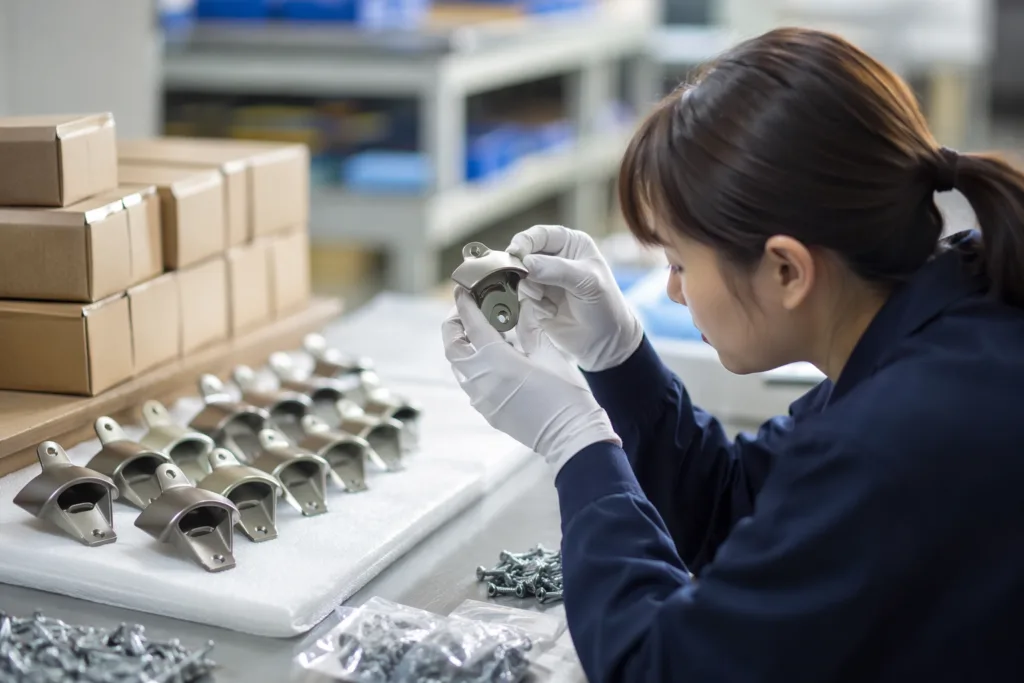
The right supplier for custom wall-mounted bottle openers should be able to discuss more than decoration. Buyers should look for a manufacturer that can explain process fit, material trade-offs, mold logic, finish durability, and packing options in practical terms. The conversation should move naturally from design intent to production feasibility.
Useful questions include whether the supplier handles die casting, stamping, plating, polishing, assembly, and inspection with consistent process control; whether sample revisions are structured clearly; how logo detail limits are communicated; and how bulk consistency is checked before packing. A manufacturer-focused discussion is usually much more helpful than a catalog-only conversation, especially when the project includes custom shape development, branded packaging, or private label planning.
Conclusion
Wall-mounted bottle openers are a strong fit for buyers who want practical branded metal products with long-term visibility. The most successful projects are not defined by logo placement alone, but by the combination of structure, material, finish, mounting method, packaging, and realistic production planning. If you approach wall-mounted bottle openers as durable custom metal products rather than simple giveaways, you will make better sourcing decisions and create a product that stays useful and visible long after distribution.
FAQs
What material is usually best for custom wall-mounted bottle openers?
The best material depends on the design and use environment. Zinc alloy is often chosen for custom die-cast shapes and decorative relief, while stainless steel is often preferred for cleaner functional styles and better corrosion resistance in demanding settings. Brass suits premium classic looks, and aluminum may work when lighter weight and simpler construction are acceptable.
Can a detailed brand logo be added to a wall-mounted bottle opener?
Yes, but the logo detail has to match the production method and the available decoration area. Raised die-cast logos, engraved marks, stamped relief, and recessed color filling can all work well, but very fine lines or small text may need simplification so they remain readable after plating, polishing, or color filling.
Do custom wall-mounted bottle openers require a mold?
Many fully custom shapes do require a mold or tooling, especially for die-cast or stamped production. If the project uses a standard opener base with only logo engraving or a separate emblem plate, setup may be simpler. Buyers should ask which costs are one-time tooling charges and which apply only to each production run.
What should buyers confirm before approving a production sample?
Before approval, buyers should check size, thickness, weight, finish consistency, logo clarity, mounting hole placement, opener function, edge smoothness, and packaging fit. If the design includes a cap catcher, magnets, screws, or assembled parts, those elements should also be tested in the sample stage rather than assumed to work in bulk production.
How do MOQ and lead time usually work for these products?
MOQ and lead time depend on whether the opener uses a new custom mold, the chosen metal, the finish complexity, and the packaging plan. A simpler standard structure may allow a lower starting volume, while a fully custom opener with private label packaging usually needs more preparation time for tooling, sampling, approval, and assembly before bulk production begins.
Are wall-mounted bottle openers suitable for retail and promotional distribution?
Yes, they can work well in both channels if the design, packaging, and compliance review match the intended market. For promotional use, the product should still be evaluated for practical safety, finish quality, and installation clarity. For retail, the perceived value often improves when the opener includes stronger packaging, cleaner branding, and a finish that suits the brand style.