Introduction: Navigating Minimum Order Quantities (MOQ) for Metal Crafts
Whether you’re a small business, passionate hobbyist, or procurement manager at a luxury brand, understanding Minimum Order Quantities (MOQ) for Metal Crafts is critical. From custom pins to packaging hardware, MOQs shape not only initial investment but also product development, supplier relationships, and final quality. Misinformation about MOQs is widespread, yet with practical insights and an expert’s understanding, you can turn this constraint into an advantage. In this guide, we’ll demystify MOQs, unpack industry benchmarks, and reveal actionable strategies for ordering smarter in the metal crafts market.
What Is Minimum Order Quantity (MOQ)?
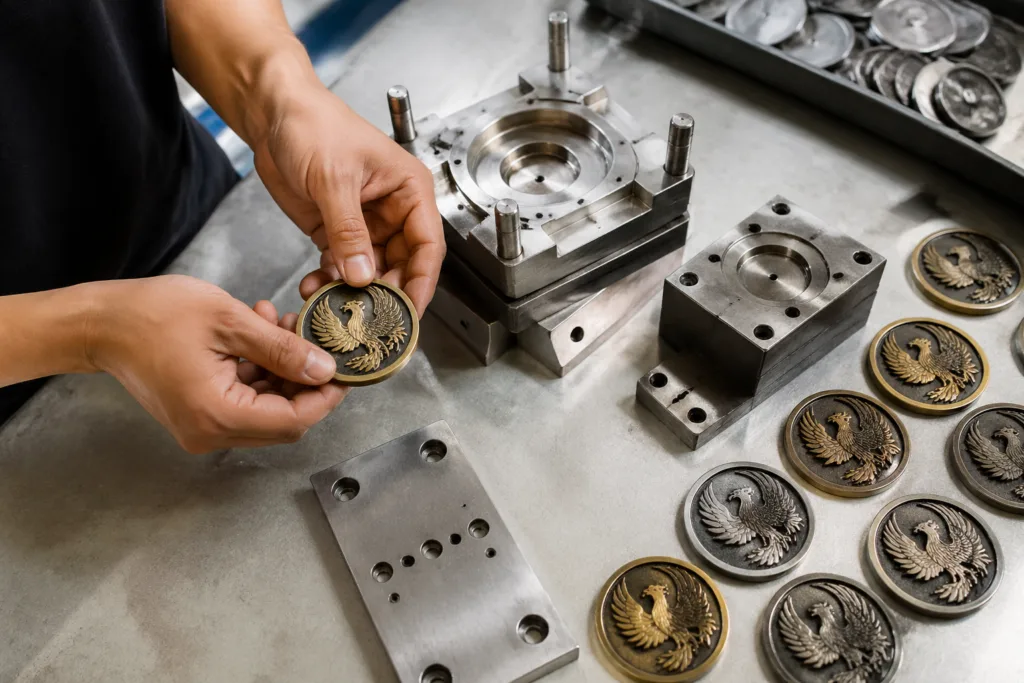
Minimum Order Quantity refers to the smallest number of units a manufacturer or supplier is willing to produce or sell in a single order. In the metal crafts sector, these figures can vary widely—from just a few dozen custom medals for a school event to thousands of specialized perfume caps for luxury packaging brands. Mastering MOQ concepts enables efficient cost planning and smooth procurement in metal crafting projects.
Why MOQs Exist in Metal Crafts Manufacturing
MOQs aren’t arbitrary; they offset the costs and risks manufacturers bear with every production run. Factors such as raw material procurement, mold making, machine setup, labor allocation, and finishing processes all demand time and resources. To balance these investments, suppliers need minimum order sizes—especially for processes like die-casting or precision CNC milling, which involve substantial upfront costs.
Key Factors That Determine MOQs for Metal Crafts
- Production Method: Processes such as CNC vs. hand carving molds or die-casting influence feasible batch sizes.
- Material Type: Brass, stainless steel, and zamac alloys vary in bulk pricing and minimum buying units at the foundry level.
- Complexity & Customization: Intricate designs often require unique molds, increasing minimums.
- Finishing Techniques: Multi-stage hand-polishing or UV printing add labor overhead to each batch.
- Tooling Investment: Custom molds/tools, especially for bespoke or branded work, dictate higher MOQs to amortize costs.
MOQ Benchmarks by Metal Craft Segment
| Product Category | Typical MOQ Range | Process Influence |
|---|---|---|
| Enamel Pins & Badges | 100–300 pcs | Mold/setup fee |
| Custom Medals & Coins | 50–200 pcs | Mold, die-striking |
| Bespoke Perfume Caps | 1,000–5,000 pcs | Casting, polishing, hand assembly |
| Zipper Pulls, Buttons | 500–1,000 pcs | Stamping, electroplating |
| Belt Buckles | 300–1,000 pcs | Die-cast molds |
| Luxury Hardware | 200–1000 pcs | Material, finishing complexities |
How MOQ Impacts Small Businesses, Designers, and Startups
For independent creators or boutique brands, high MOQs may seem daunting. But ordering below a manufacturer’s stock threshold can result in higher prices per piece, less favorable quality control, or outright refusal. Smart entrepreneurs weigh the upfront investment against overall brand vision, forecasted sales, and the non-monetary value of top-tier finishing—critical in the metal crafts industry, where tactile quality can define a product’s reputation.
The Cost Breakdown Behind MOQ Calculations
Understanding the economics: Each custom project carries three core expense zones:
- Mold/tooling creation (one-time, spread over the run)
- Material buying (metals, surface coatings, platings based on full-batch pricing)
- Labour and finishing (doesn’t radically change for a small batch)
Reducing batch size shrinks the per-batch material costs only slightly, but all setup and finishing costs remain fixed or even spike due to inefficiencies.
MOQ Scenarios: Die Casting vs. Stamping vs. CNC
Die Casting: Ideal for high-volume, moderate complexity (e.g., bottle caps, medallions). MOQs are higher due to expensive custom molds.
Stamping: Suited for thin, flat parts (tags, labels), usually a lower MOQ but less detail.
CNC Machining: Best for prototypes or intricate, low-volume needs. MOQs can be as low as 10–20 but cost per unit is much higher.
Case Example: Why Luxury Packaging Commands High MOQ
High-end perfume cap manufacturers (like Gairun) often set MOQs of 2,000–5,000 pieces. The rationale? Tight tolerances, multi-stage hand finishing, and the use of premium alloys all drive up both precision requirements and QC overhead per run.
Negotiating Minimum Order Quantities: Approaches That Work
- Communicate long-term potential (recurring orders may justify lower initial runs)
- Prioritize seasonal or event-driven products (manufacturers may lower MOQ to fill capacity gaps)
- Request stock color or finish (custom colors increase MOQ due to batch mixing, as seen in Pantone Matching System for metal crafts)
- Share tooling/molds across SKUs when possible
Supplier Perspective: Why MOQ = Efficiency & Consistency
Reliable batch sizes empower manufacturers to invest in better QC and more consistent output. Premium shops like Gairun routinely reject visually imperfect parts—even if functionally sound—to uphold branding for global luxury clients. For brands with an uncompromising eye on smooth surfaces or perfect logo debossing, predictability in order quantities keeps output at the highest echelon.
Quality vs. Quantity: How MOQs Affect Finishing Standards
Attempting to force ultra-small batches through industrial workflows can backfire. Surface finishes—especially mirror-finish polishing or multi-tone plating—may not scale down efficiently. Inconsistent batch sizes can also cause color or plating mismatches (learn more in our batch color mismatch guide).
The Link Between MOQ and Quality Control
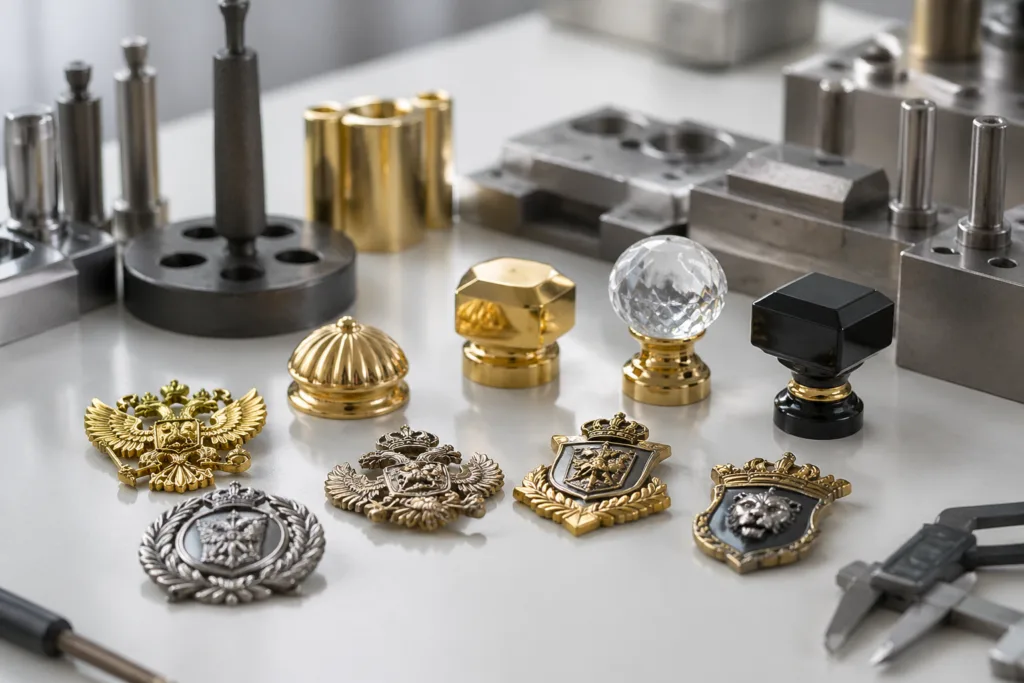
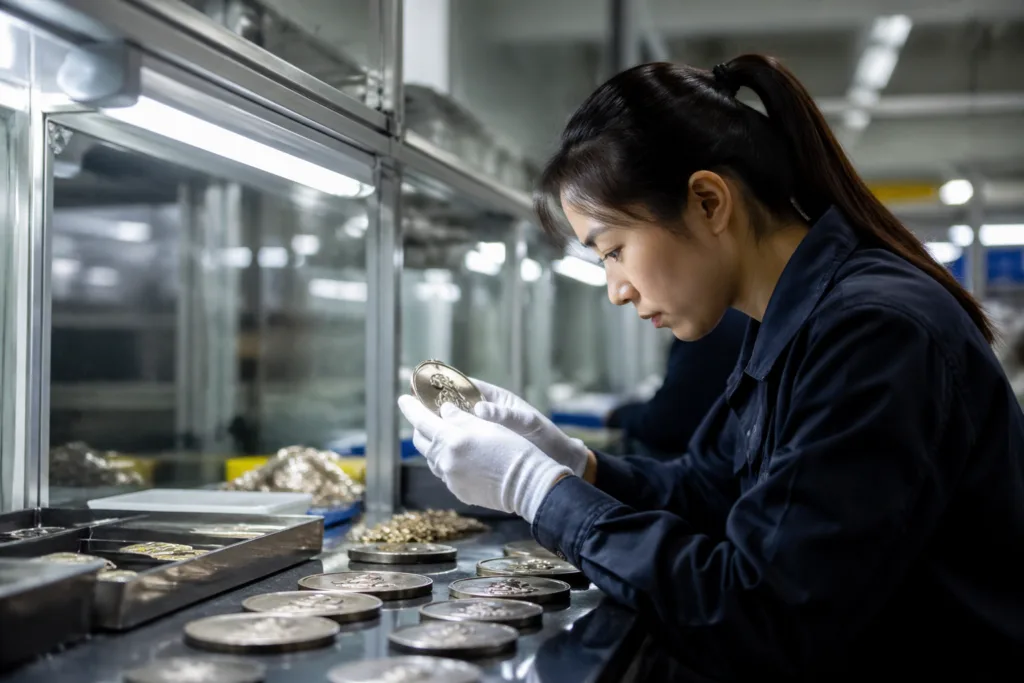
Higher MOQs typically mean better unit economics, which lets manufacturers devote extra time to quality control processes—vital for metal crafts like enamel pins, medals, or luxury hardware.
MOQ for Custom vs. Standard Designs in Metal Crafts
Custom designs with unique engravings or profiles almost always require higher MOQs. Standard catalog items, however, can often be produced at much lower volumes since tooling is shared across customers and orders. This is worth considering when evaluating between off-the-shelf and bespoke options.
How MOQs Vary by Global Region
- Asia: Typically higher MOQs, but lower per-unit costs (especially in China, due to full-capacity production lines).
- Europe: Flexible for design-intensive, smaller batch work, but at a higher price point.
- USA: Often mid-range MOQ with a strong emphasis on short lead times.
MOQ Exceptions: Prototyping and Limited Editions
Some top-tier suppliers offer low-MOQ or sample runs for prototypes or design approval. Expect to pay substantially more per unit. Mastering sample approval is essential before scaling up to bulk production.
Hidden Costs in Low-MOQ Orders
- Setup fees may not decrease even for fewer pieces.
- Per-unit pricing rises sharply below batch minimums.
- Potential for compromised quality if padding on batch processes is cut.
How to Assess a Supplier’s Stated MOQ
- Ask for batch pricing breakdowns: What, specifically, does the MOQ include?
- Review tooling amortization terms (can you use the same mold multiple times?)
- Check if the supplier maintains a stock or semi-stock program for your product line.
Alternative Sourcing Strategies for Low Quantities
- Partner with collective buyers (pooling orders with others to hit MOQ thresholds)
- Work with distributors who stock small lots
- Seek out local workshops/tool rooms for short-runs using existing tooling
MOQs and the Future of On-Demand Manufacturing
Digital platforms and advancements in CNC and additive manufacturing are gradually lowering MOQs for some product types. However, industrial-grade finishing and die-cast details (like those in jewelry or branded gifts) still favor traditional processes with established order minimums for best results.
Tips for Negotiating Fair MOQs Without Compromising Quality
- Be transparent about your project roadmap—suppliers can sometimes stagger deliveries or combine SKUs.
- Offer partial upfront payment for better terms.
- Request unbranded samples to balance initial investment and quality validation.
Choosing the Right Metal Craft Supplier Based on MOQ Flexibility
Look for a proven track record in your category, clarity around MOQ policies, and technical consultation at the quotation stage. Premium suppliers stand apart by collaborating during the feasibility phase, optimizing both MOQ and final appearance without surprises later.
Quality Assessment: Why Not All Metal at Low MOQ Is Equal
Insist on specifying materials by grade and finish—such as virgin vs. recycled alloys, lead content, and plating thickness. True quality isn’t just about looks: pure brass and top-tier zamac alloys yield sharper debossing and longer-lasting finishes, as learned from projects that prioritize precision tolerances.
Common Misconceptions About MOQs in Metal Crafts
- MOQ is always negotiable: Not if fixed costs dominate (tooling, plating tank size, etc.)
- Small factories always have lower MOQs: Sometimes true, but often at the expense of QC or refinement.
- High MOQ means lower quality risk: Only if the manufacturer invests in both quality control and brand standards.
Best Practices for MOQ Decision Making
- Align order plans with your real sales projections.
- Sample first, scale orders as reliability proves out.
- Work backwards: Calculate the maximum cost per piece you can absorb, factoring in all design and QC needs.
Minimum Order Quantities (MOQ) for Metal Crafts
In summary, Minimum Order Quantities (MOQ) for Metal Crafts represent the intersection of supplier efficiency, production economics, and your branding goals. Respecting these thresholds—while negotiating strategically and upholding quality—lays the foundation for strong supplier partnerships and standout metal products in any segment.
Frequently Asked Questions
What is a typical MOQ for custom metal medals?
MOQ for custom medals usually ranges from 50–200 pieces depending on design complexity and the manufacturing process.
Can small businesses negotiate lower MOQs for metal crafts?
Yes, by proposing repeated or multi-SKU orders, using standard finishes, or pooling orders, some suppliers will work with reduced MOQs for startups.
Does a lower MOQ impact product quality?
Lower MOQs may limit production efficiency and reduce QC time per unit, so it’s vital to confirm supplier standards and request samples when possible.
Are MOQs different for different metal types?
Yes. Pure brass or stainless steel often requires higher MOQs than zinc alloys due to raw material sourcing, while complex finishes may increase minimums as well.
How can I order less than the listed MOQ?
You can partner with collective buyers, use distributors stocking small batches, or request sample runs, acknowledging that per-unit prices will be higher.
Is it better to source from a local or international supplier for low-MOQ metal crafts?
Local suppliers may offer more flexibility for low MOQs but at higher costs, while international suppliers usually require higher MOQs but offer lower unit prices.
Related Reading
- Pin Quality: 12 Real QC Tests Every Maker Should Know
- Mold Making for Metal Crafts—CNC Precision vs. Artisan Handwork
- Pantone for Metal—Ensuring Spot-On Color Every Time
- Why Tolerance Matters: How Precision Impacts Metal Craft Quality
- Modern Metal Crafts: 7 Reasons UV Printing Is a Gamechanger
- Sample Approval Secrets: Avoiding Disastrous Mistakes in Metal Sourcing