Introduction: Perfume Bottle Cap Tolerances and Their Impact on Brand Perception
In the world of luxury fragrance packaging, the smallest details matter—often more than expected. Perfume bottle cap tolerance is not just a factory jargon; it is a direct factor shaping how your product feels, opens, and looks to the end customer. Engineering precision goes hand-in-hand with the sense of luxury a brand promises. If a cap wobbles, clicks awkwardly, or opens too easily, the perceived value drops instantly, regardless of how exquisite the bottle or scent may be. This article dives deeply into the engineering behind these tolerances and why they are crucial to both user experience and brand expression.
For buyers comparing manufacturing options, a useful next step is to explore understanding perfume bottle cap tolerances on our focused manufacturer category page. This resource provides further insights on specific production methods, materials, and finishing choices, helping you evaluate sourcing, customization, and quality standards from a manufacturer’s perspective.
Why Luxury Feels Are Often Lost to Tolerance Errors

The gap between a brand’s vision and the final product can come down to mere fractions of a millimeter. Many luxury brands invest in stunning bottle designs, only to find the premium experience compromised by inconsistent cap fit, poor alignment, or an unsatisfying opening feel. These issues are almost always caused by overlooked dimensional tolerances. A cap that’s slightly off can make the bottle feel cheap, diminish the unboxing ritual, and even result in unhappy customers.
The Critical Dimensions for Perfume Caps: What Manufacturers Measure
Inner Diameter: Where Fit Begins
The most vital measurement is the inner diameter—the point where the cap interfaces with the bottle neck or the pump. A deviation here means the cap could be too loose or too tight, affecting both security and ease of use.
Overall Height: Visual and Functional Effects
Height impacts how the bottle appears in displays and how the cap feels in the hand. Too tall can destabilize; too short can look stunted.
Wall Thickness: Engineering Integrity & Weight
The wall thickness determines the cap’s strength and perceived weight. Brands targeting a luxury feel usually prefer a heavier cap, but uniform thickness means consistent feel—and fewer manufacturing defects.
Fit Zone: Where Everything Comes Together
The specific area where the cap mates to the bottle—the fit zone—demands tighter tolerance than the rest. Even a slight offset can cause rattling or binding. This is a key point for both engineers and quality inspectors.
Fit Matters: The Problems of Caps That Are Too Tight or Too Loose
Too Tight: Risking Breakage and Discomfort
If a cap is engineered too tightly, customers may struggle to remove it, risking broken nails or chipped bottles. For brands, this translates to negative reviews and lost loyalty.
Too Loose: The Danger of Wobble and Leakage
Conversely, a loose fit means the cap may rattle, come off unexpectedly, or allow perfume to evaporate—major threats to both visual appeal and product longevity.
Alignment Perfection: Why Cap Placement Shapes Brand Reputation
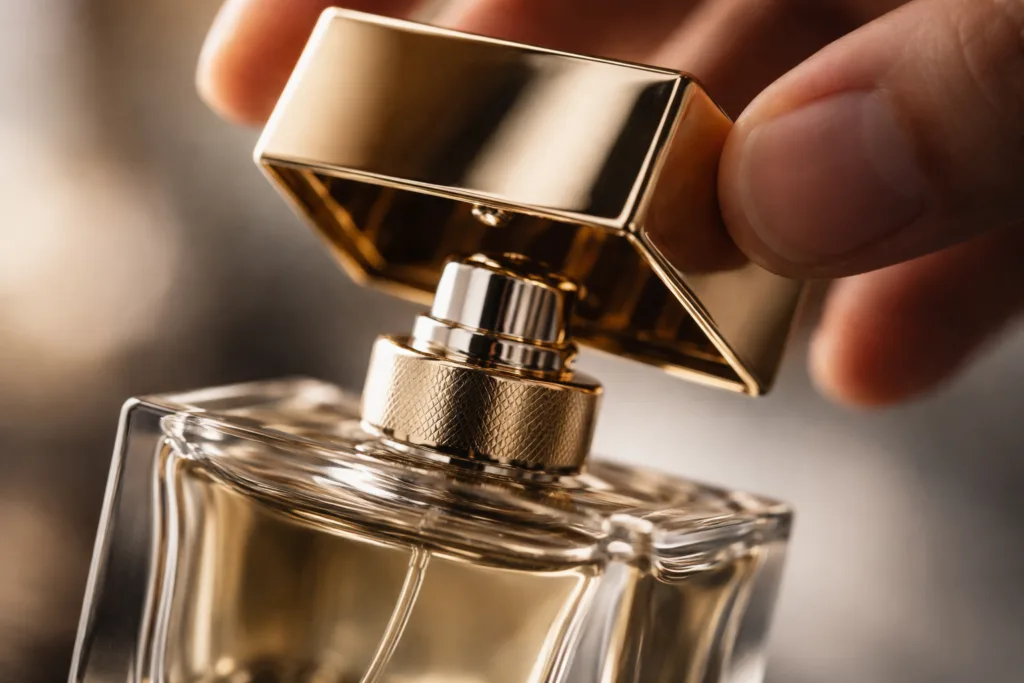
A perfume cap must align perfectly with the bottle’s design and logo orientation. Misalignment is instantly noticeable, especially on retail shelves or social media photos. Poor alignment undermines visual harmony and leads buyers to doubt overall brand quality.
Display Impact: First Impressions in Retail and Digital
Caps that sit crooked concern distributors and boutique owners because presentation is critical. Even a one-degree tilt can look unprofessional.
Opening Feel: The Secret Ingredient of Premium Packaging
The feel when twisting or pulling a perfume cap is a core part of the luxury experience. Brands want a smooth, confident motion—not a sticky, squeaky, or rough action. Achieving this requires controlled opening force and precision mating surfaces.
The “Click”: Sound and Sensation
Some brands design for an audible “click” when closing, symbolizing precision. This sound is engineered using tight tolerances in the fit zone.
Material Choices: Weight, Texture, and Surface Feel
Using virgin Zamac 3 or high-grade brass for caps creates a heavier, smoother, and more luxurious tactile impression. As an experienced manufacturer, Gairun knows how subtle differences in alloy purity and finishing techniques contribute to the cap’s opening feel and long-term durability.
From Sample to Mass Production: Why Tolerances Often Shift
Prototyping and batch production reveal how tolerances change. Samples may be machined with extra care, but mass production involves flow lines, mold wear, and human handling. These factors can cause small shifts in critical dimensions.
Managing Inconsistent Results: Tool Wear and Quality Control
Over time, dies and stamping tools degrade, leading to slight changes in size or shape. Rigorous QC—such as frequent salt spray and pull-force tests—are essential for luxury packaging runs.
Setting Acceptance Standards: What Sourcing Teams Need to Know
Buyers and sourcing teams must specify tolerance levels in advance, preferably based on end-use performance rather than abstract numbers. Clear RFQ documentation ensures every cap meets brand expectations while minimizing disputes at delivery.
For more practical guidance, see how to specify a perfume bottle cap for OEM production—a resource detailing the RFQ process, acceptance criteria, and technical communication between buyers and manufacturers.

How Engineering Tolerances Translate to Consumer Experience
Engineering isn’t just about making things fit—it defines every interaction a customer has with your product. Small errors in tolerance generate big differences in real-world use.
Case Study: Brand Reputation and Repeat Purchase
A global perfume brand reported a drop in repeat purchases after switching to a generic cap supplier. Investigation revealed inconsistent cap fit and misalignment. After tightening the tolerance specification and switching to high-precision mold production, consumer ratings improved along with sales.
Comparing Die Casting, CNC, and Stamping for Cap Production
Perfume caps are made using several methods, each affecting tolerance consistency. For deeper discussion on process selection, review comparing die casting, CNC, and stamping. In general, CNC machining offers the tightest tolerances, but die casting is more suited to high-volume production with cost-efficient results. Stamping works best for lightweight designs where slight dimensional variation is permissible.
Material Integrity and Surface Quality: Premium Standards Matter
Using high-quality raw materials, like virgin Zamac alloys, results in smoother surfaces and sharper logo details. Inferior alloys, or contaminated batches, cause surface flaws and unreliable cap fit. Gairun always selects materials to meet strict global standards—never compromising brand vision for short-term cost.
Tolerance Tables: Specifying Acceptable Ranges
| Dimension | Typical Tolerance (mm) | Impact |
|---|---|---|
| Inner Diameter | ±0.05 | Fit, leak resistance |
| Overall Height | ±0.10 | Balanced appearance |
| Wall Thickness | ±0.07 | Strength, weight feel |
| Fit Zone | ±0.02 | No wobble/correct click |
Visual Quality Control: Inspection and Measurement Methods
- Digital calipers and gauges for precise measurement
- Automated vision systems for checking alignment
- Hand checks for opening feel and tactile feedback
- Salt spray and friction tests for durability
Design Feasibility: Adjusting CAD for Manufacturing
Design teams must consider manufacturing realities. Slight tweaks in CAD can minimize casting porosity or plating defects, ensuring the perfume cap looks and functions as intended.
Finishing Processes: Enhancing Luxury through Precision
Techniques such as hand-polishing, rack plating, and PVD coating ensure a mirror-like finish and long-lasting appearance. Rack plating is preferred for luxury caps, giving uniform plating and richer color.
QC Protocols: Testing for Fit, Alignment, and Opening Force
Quality control goes beyond the factory floor. Perfume caps undergo repeated fit tests, alignment checks, and opening-force measurements to ensure each batch meets brand-approved standards.
Communicating Tolerances: Bridging Engineering and Sourcing
Sourcing teams and engineers must use clear vocabulary and illustrative tables to define expectations, minimizing misunderstandings and disputes when production begins.
Color and Plating Consistency: Parallel to Dimensional Tolerance
Brands expect not just dimensional precision but also color and finish uniformity. Tight process control is needed in plating and powder coating, as minor variations can affect the perceived quality of the cap—especially when placed alongside bottles from the same product line.
Customization Feasibility: Balancing Tolerance with Design Freedom
Many clients seek signature shapes or unique logo placements requiring extreme precision. This often means tighter tolerances, which can increase production costs and complexity. The key is to define tolerances that protect both quality and manufacturability.
Supplier Communication: Ensuring Success from RFQ to Delivery
Detailed discussions about tolerance needs, acceptance criteria, and QC processes before production prevents costly mistakes. Reliability depends on transparent, experienced supplier partnerships.
Conclusion: Tolerances—the Silent Force Behind Luxury Packaging
Perfume bottle cap tolerance is the quiet detail that elevates or undermines brand perception. By engineering for precise fit, alignment, and opening feel, manufacturers and sourcing teams can protect the luxury promise of every bottle. The most successful brands know it’s not just about how the product looks, but how it feels in hand and performs over time. When cap tolerances are treated as a core brand value—not just a production checkpoint—the result is consistently luxurious consumer experiences.
Frequently Asked Questions
Which dimensions are most crucial for perfume bottle cap tolerances?
The inner diameter, fit zone, wall thickness, and overall height are the most critical dimensions for ensuring proper fit, alignment, and opening feel.
Why do cap tolerances affect luxury brand perception?
Even minor tolerance errors cause misalignment, wobble, or awkward opening, directly reducing perceived quality and undermining a brand’s premium positioning.
How can buyers specify tolerance requirements in an RFQ?
Buyers should clearly list target values, permissible ranges, and performance expectations, ideally referencing both engineering and consumer experience needs.
What causes tolerance shifts between sampling and mass production?
Mold wear, process variation, and human handling are common causes. Frequent quality checks and tighter controls help minimize such shifts.
Which manufacturing method offers the best tolerances for perfume caps?
CNC machining provides the tightest tolerances, followed by die casting for high volumes, and stamping for lightweight parts with more flexible tolerance needs.
How is opening force tested for perfume caps?
Manufacturers measure the force needed to remove or twist the cap using specialized equipment, ensuring a comfortable user experience without excessive tightness.