When buyers compare the shelf life promotional products plastic vs metal, they are usually asking a bigger question than simple product lifespan. They want to know which material keeps a campaign visible longer, protects brand perception, survives real handling, and delivers more value after distribution. From our manufacturing perspective, shelf life in promotional products is not only about whether an item physically remains intact. It also includes whether the branding stays legible, whether the item still feels worth keeping, and whether the material aligns with the audience and campaign message over time.
If your campaign needs durable identification pieces, branded equipment tags, serialized giveaway items, or long-wear promotional components, our custom metal tag manufacturing solutions support practical decisions around material choice, engraving or etching method, custom numbering, barcode or QR data, attachment options, and sample approval before bulk production. That matters when buyers need promotional products that function as both brand carriers and long-term physical assets rather than short-life handouts.
Why shelf life matters beyond simple product lifespan
In promotional buying, shelf life is different from expiration date. A promotional item can still exist physically but be functionally dead as a brand asset. A scratched logo, faded print, broken clip, corroded finish, or flimsy feel can reduce the item’s value even if the object has not been thrown away. For B2B buyers, this distinction matters because campaign ROI depends on repeated exposure and continued usefulness.
We typically advise buyers to evaluate shelf life in four layers: physical survival, branding readability, user retention, and brand fit. A plastic keychain may survive in a drawer for years but produce little value if the logo wears off in months. A metal tag or nameplate may remain attached to a bag, tool, case, or product for much longer while continuing to show a crisp brand mark. In other words, the best promotional material is not always the cheapest unit cost. It is often the one that remains visible and relevant the longest in the intended environment.
Shelf life promotional products plastic vs metal at a glance
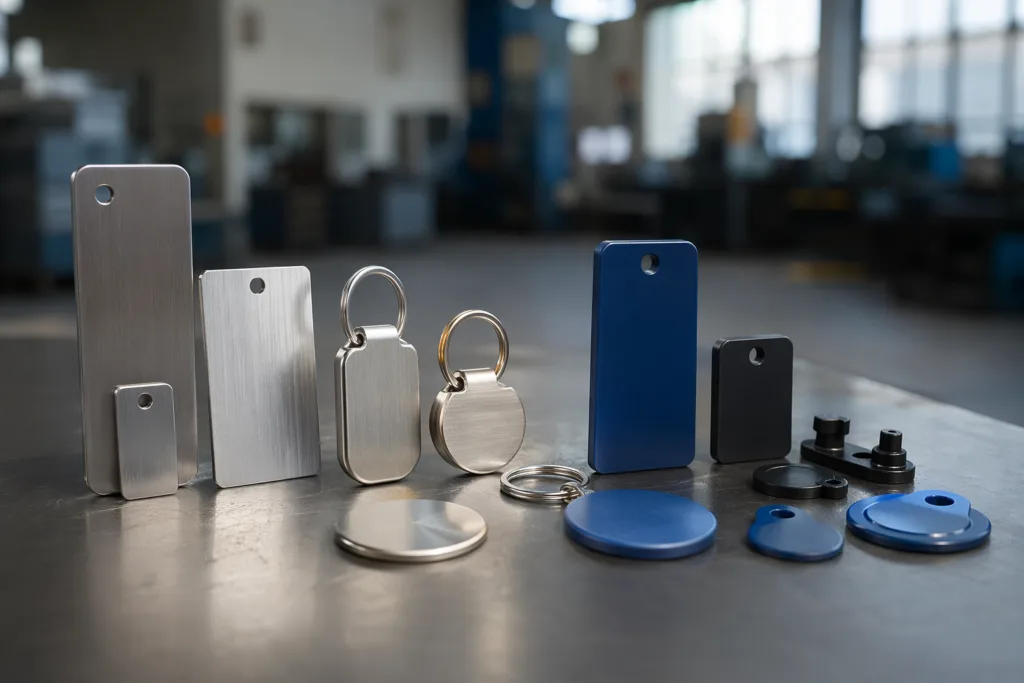
At a high level, plastic and metal serve different campaign strategies. Plastic usually supports low-cost, high-volume distribution, lighter weight, and more color flexibility. Metal usually supports better wear resistance, stronger perceived value, longer branding life, and more premium positioning. Neither material is automatically right or wrong. The correct choice depends on audience, handling frequency, campaign duration, and what the item is expected to communicate.
| Factor | Plastic Promotional Products | Metal Promotional Products |
|---|---|---|
| Typical unit cost | Lower for large runs | Higher initial cost |
| Perceived value | Functional or casual | Premium and durable |
| Scratch and wear resistance | Depends heavily on resin and print method | Generally stronger, especially with engraving or etching |
| Branding life | Can fade or abrade faster | Often longer-lasting and more legible |
| Weight | Lightweight for mailers and mass handouts | Heavier, more substantial feel |
| Outdoor suitability | Variable; UV and heat can be issues | Usually better for outdoor and industrial use |
| Reuse potential | Good for simple utility items | High when the item also has functional attachment or identification value |
| End-of-life message | Highly dependent on local recycling acceptance | Often favorable where metal recycling streams are established |
Durability and longevity in real handling conditions
The most practical difference between plastic and metal is how each material responds to repeated contact. In promotional environments, that means key rings, lanyards, luggage, tools, work bags, cases, and equipment that get dropped, rubbed, exposed to weather, or handled every day.
Wear resistance and scratch behavior
Plastic surfaces can look good at the start, especially when full-color graphics are important, but they are often more vulnerable to scratches, edge chipping, and print wear. This does not make plastic unsuitable. It simply means the expected handling level should match the material. For one-event campaigns, conference drops, or lightweight inserts, plastic may be entirely appropriate.
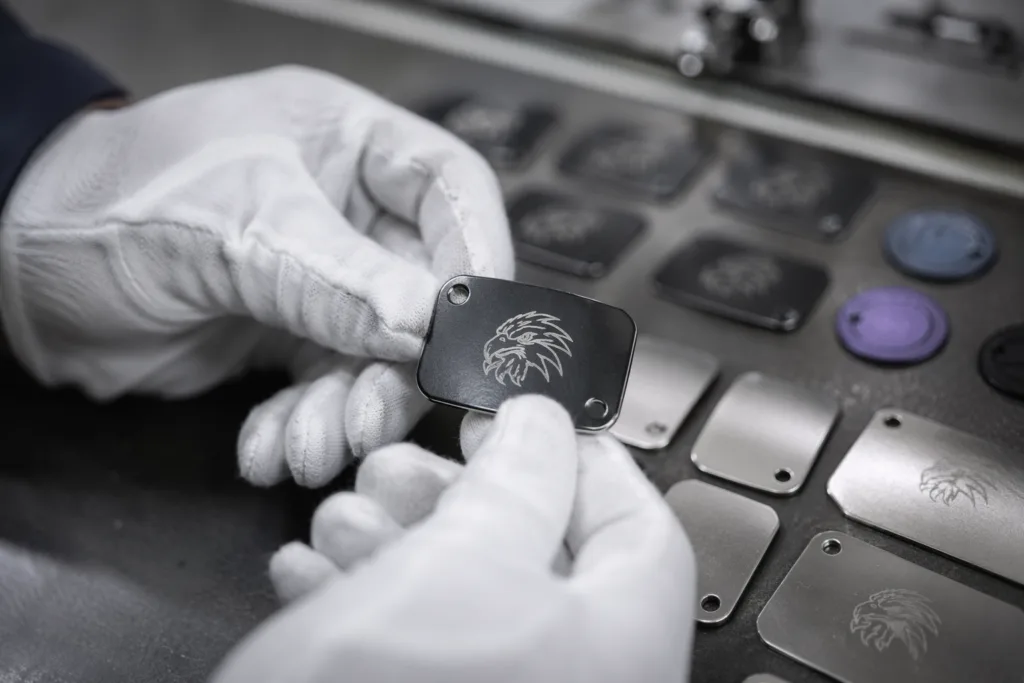
Metal performs better when repeated friction is unavoidable. Engraved, etched, stamped, or anodized markings tend to retain readability longer than surface-only decoration on many plastic items. This is one reason why buyers evaluating branded tags, key fobs, bag identifiers, loyalty accessories, and serialized giveaway items often move toward aluminum, stainless steel, or brass rather than low-cost molded parts. When buyers need a closer view of how different metals perform, this stainless steel and aluminum material comparison is useful because the same practical trade-offs apply to many promotional and identification products.
Corrosion, moisture, and outdoor exposure
Outdoor shelf life is where many low-cost choices fail. Plastic can become brittle under UV exposure, deform in heat, or lose visual quality after repeated wet-dry cycles. Metal is not automatically immune either. Material grade and finish matter. Bare low-grade metal can corrode, while properly selected stainless steel, anodized aluminum, or coated brass can remain stable for much longer.
For campaigns tied to marine gear, outdoor events, utility companies, heavy equipment, sports accessories, or travel products, the shelf life question should include weather, sweat, cleaning chemicals, and abrasion. In our production work, this is where marking method matters as much as material. A durable substrate paired with weak printing can still disappoint.
Marking method can decide the real shelf life
We often tell buyers that promotional product longevity is not just plastic versus metal. It is substrate plus marking method plus environment. A printed message on metal may still wear if the surface process is not matched to the use case, while laser engraving, chemical etching, embossing, or deep marking can preserve legibility much longer. Buyers comparing brand visibility over time should review laser marking versus printing durability insights, especially when the promotional item also carries serial numbers, barcodes, QR codes, or traceability data.
How material choice affects brand perception
Promotional products communicate brand positioning before the recipient reads any message. Weight, texture, finish, edge quality, and how the item ages all influence perception. Plastic often signals convenience, broad distribution, and cost efficiency. Metal usually signals permanence, trust, quality, and higher intentionality.
That perception difference matters in B2B campaigns. A plastic token handed out at a trade show may be fine when the objective is reach. But a metal item often performs better when the goal is account retention, premium gifting, distributor support, membership recognition, or durable branded utility. The item does not need to be luxurious to feel valuable. Even a simple aluminum or stainless steel tag can feel more substantial than a molded alternative when the finish is clean and the attachment is secure.
At UC Tag, we see this especially when buyers want a promotional item to become part of the user’s everyday kit rather than a short-term novelty. Once an item is attached to keys, bags, tool sets, luggage, or equipment, the branding opportunity becomes much longer-lived than a brochure or disposable insert.
Environmental impact, reuse, and end-of-life considerations
Sustainability discussions around promotional products are often oversimplified. Plastic is not automatically unsustainable, and metal is not automatically the greener choice in every campaign. The better question is whether the item is used long enough, reused often enough, and disposed of in a way that matches available recycling systems.
From a practical buyer standpoint, long shelf life can improve sustainability because fewer items are discarded quickly. A durable item kept for years can reduce replacement frequency and improve brand efficiency. That said, end-of-life handling still matters. As the EPA recycling guidance for metal and plastic items notes, recyclability depends on material type, item condition, and local collection rules, so buyers should avoid making broad claims that every distributed promo item will be recycled the same way everywhere.
Metal has a strong advantage when the product is designed for long reuse and clear material recovery. Plastic may still fit sustainability goals when the item is lightweight, used at scale, and selected carefully to avoid becoming immediate waste. We recommend that sustainability messaging stay specific: focus on reuse, durability, recycled content where applicable, and realistic disposal guidance rather than broad environmental slogans.
For buyers developing premium branded metal pieces, it also helps to explore eco-friendly metal finishing and recycled material options so material and finish decisions support the campaign story without compromising wear performance.
Cost versus lifetime value in promotional ROI
The biggest procurement mistake in promotional buying is comparing only unit cost. A lower-cost item may still be the more expensive campaign if it is discarded quickly, loses branding fast, or fails to generate repeat impressions. Shelf life affects ROI because it determines how long the item keeps working after distribution.
In practical terms, buyers should think about cost per retained impression rather than cost per piece alone. If a plastic item costs less but is kept for two weeks, while a metal item costs more and remains in daily use for two years, the higher initial spend may still produce stronger value. This is especially true for branded accessories that stay attached to something important: luggage, keys, access tools, work kits, utility cabinets, or safety gear.
Industry data on recall also supports the idea that promotional products work best when they remain useful and visible over time. In the ROI discussion, PPAI research on promo-product effectiveness and recall is helpful because it connects product retention with repeat brand exposure rather than treating every giveaway as equal.
| ROI Question | Plastic Often Fits When | Metal Often Fits When |
|---|---|---|
| Need very high volume | Budget is tight and broad reach matters most | Less suitable unless selective distribution is planned |
| Need premium brand signal | Secondary priority | Primary priority |
| Need long branding life | Only if handling is light | Strong fit |
| Need utility plus identification | Possible for simple items | Very strong fit |
| Need weather or abrasion resistance | Depends on resin and print method | Usually better with proper metal and finish selection |
Best use cases for plastic promotional products
Plastic remains a practical option in many campaigns. It works well when the item is intended for short to medium-term use, broad event distribution, direct-mail efficiency, or colorful visual impact at low cost. Examples include simple badges, temporary event tokens, lightweight key accessories, point-of-sale giveaway pieces, low-cost bag tags, and short-cycle seasonal campaigns.
Plastic also makes sense when freight weight and postage matter more than premium feel. For national campaigns that rely on compact packaging, a very light item can preserve budget. If the branding message is tied to brightness, playfulness, or one-time engagement, plastic can be a logical fit. The key is not to expect industrial-level shelf life from a product that was engineered for mass affordability.
Best use cases for metal promotional products
Metal is usually the stronger choice when the item needs to feel permanent, survive handling, or support utility beyond branding. This includes branded key tags, luggage tags, loyalty tags, serialized giveaway tags, commemorative tags, membership pieces, industrial-branded accessories, and promotional components that attach to tools, cases, or equipment.
Metal is also ideal when the campaign supports brand trust, quality positioning, or extended visibility. A well-finished aluminum or stainless steel item can continue representing the brand long after a plastic item has cracked, faded, or been discarded. Secure attachment also matters. For products intended to travel with the user, buyers should consider secure metal tag attachment methods because the shelf life of the tag is limited if the connection point fails first.
Two practical campaign scenarios
High-volume plastic campaign
A trade show organizer needs 25,000 low-cost branded entry tokens for a three-day event. Distribution speed, color coding, and budget control matter more than premium retention. In this case, plastic can outperform metal because the campaign objective is functional access and broad visibility during a short window. The correct success metric is not long-term wear but low unit cost, clear identification, and easy logistics.
Premium metal campaign
An equipment brand wants a customer loyalty tag that attaches to travel bags, cases, or key sets and stays in circulation long after purchase. Here, metal is usually the stronger option because the promotional item doubles as a durable personal accessory. If the mark is engraved or etched and the attachment is selected correctly, the brand remains visible through everyday wear, improving recall and perceived value over a much longer period.
How to choose the right material for your audience and campaign
We suggest that B2B buyers use five filters before deciding between plastic and metal.
- Audience expectation: Is the recipient likely to value utility, convenience, or premium feel?
- Campaign duration: Is the item meant for a one-week event or multi-year brand exposure?
- Handling intensity: Will the item live in a pocket, on keys, outdoors, or on equipment?
- Brand message: Do you want to communicate affordability, practicality, durability, or prestige?
- Distribution economics: Does freight, mailing weight, or high-volume reach outweigh long-life retention?
When these questions are answered honestly, the right material becomes much clearer. Buyers should also define whether the item is purely promotional or partly functional. Functional promotional pieces often justify metal because they remain useful after the initial campaign impression.
Common mistakes buyers should avoid
One common mistake is choosing by appearance mockup alone. A rendering cannot show how quickly a printed surface may wear in real use. Another is selecting a premium metal substrate but cutting cost on marking depth, edge finishing, hole placement, or attachment hardware. These details often determine whether the item actually survives the intended environment.
We also see buyers overlook data control when the promo item includes numbering, QR codes, or barcodes. If individualization matters, file accuracy, sample approval, scan testing, and production checks should be built into the plan early. Finally, sustainability claims should be reviewed carefully. It is safer to state what the product is made of, how it is intended to be reused, and what disposal guidance applies than to rely on vague green language.
A practical buyer checklist for promotional product planning
- Define whether the item needs short-term reach or long-term retention.
- Match material to handling conditions, not just visual concept.
- Choose a marking method based on abrasion, weather, and readability needs.
- Confirm size, thickness, edge finish, and hole placement if the item will attach to something.
- Review attachment method as part of total shelf life, not as an afterthought.
- Request a pre-production sample for finish, logo clarity, and hardware fit.
- Check if serial numbers, QR codes, or barcodes require data validation.
- Align packaging with campaign distribution method and recipient experience.
- Discuss MOQ and lead time based on process complexity, not only quantity.
- Evaluate cost per retained impression rather than piece price alone.
Conclusion
For most B2B buyers, the shelf life promotional products plastic vs metal decision comes down to campaign purpose. Plastic can be the right answer for high-volume, low-cost, lightweight distribution where short-term exposure is enough. Metal is often the better answer when branding longevity, repeated use, perceived value, and physical durability matter more. The smartest choice is not the cheapest material or the most premium-looking one. It is the one that matches audience expectations, environment, handling level, and the real lifespan of the brand message.
From our manufacturing perspective, durable promotional products work best when material, marking method, attachment, and production planning are evaluated together. That is how buyers reduce waste, protect brand perception, and improve ROI over the full life of the item.
FAQs
How should buyers define shelf life for promotional products?
Shelf life should include more than whether the item physically survives. Buyers should look at how long the product stays useful, how long the branding remains readable, whether the attachment method holds up, and whether recipients still want to keep the item. A promo product that lasts physically but loses its logo or perceived value quickly has a short effective shelf life.
Are metal promotional products always better than plastic ones?
No. Metal is often better for long-term retention, premium feel, and wear resistance, but plastic can be the better choice for high-volume campaigns, lightweight mailers, color-driven promotions, and short event cycles. The right material depends on budget, audience, handling conditions, and how long the item needs to keep representing the brand.
What makes branding last longer on a promotional item?
The longest-lasting branding usually comes from matching the marking method to the material and use environment. Engraving, etching, stamping, or other durable marking methods on metal often hold up better than surface-only decoration in high-abrasion use. Buyers should ask not only what material is used, but also how the logo or data is applied and tested.
Is metal always the more sustainable option?
Not automatically. Sustainability depends on how long the item is used, whether it replaces disposable alternatives, what the item is made from, and how realistic recycling is in the recipient’s local system. A long-lasting metal item can support sustainability goals well, but buyers should avoid blanket claims and instead focus on durability, reuse, and practical end-of-life guidance.
When does a higher-cost metal promo item produce better ROI?
A metal item often produces better ROI when it stays in daily use, carries the brand for a long period, or supports a premium relationship-building goal. If the item attaches to keys, luggage, cases, tools, or equipment and remains visible for months or years, the higher initial cost can be justified by stronger retention and more repeat impressions.
What should buyers confirm with a supplier before ordering custom promotional tags or metal items?
Buyers should confirm material type, thickness, marking method, finish, attachment hardware, size tolerance, artwork setup, variable-data handling, sample process, MOQ, lead time, packaging plan, and quality checks for logo clarity and hardware fit. These details have a direct effect on real shelf life, production consistency, and campaign ROI.