
Trade show giveaways often fail for one simple reason: they are easy to take and just as easy to forget. For brands that want better booth conversations, stronger post-show recall, and more qualified follow-up, premium tags can do much more than act as handouts. A well-made metal tag, luggage tag, branded ID tag, or serialized keepsake can become a physical reminder of your brand’s quality, a conversation starter, and a practical tool that keeps generating impressions after the event. In our manufacturing work, we have seen that the difference is rarely just the giveaway idea itself. The real difference usually comes from material choice, finish quality, data accuracy, and how well the tag fits the audience and the lead strategy.
If your event plan depends on a giveaway that feels substantial, survives travel, and supports custom branding or data capture, our custom metal tag manufacturing solutions are built around the practical needs buyers care about most. We help brands evaluate material options, marking methods, logo presentation, QR or serial data, attachment choices, sample approval, and bulk production planning so the final tag works not only as a giveaway, but as a durable branded asset tied to booth engagement and follow-up goals.
What makes premium tags different from ordinary trade show giveaways
A premium giveaway is not defined by price alone. It is defined by perceived value, practical usefulness, and how clearly it reflects the brand behind it. At a trade show, attendees make fast judgments. A giveaway that looks thin, scratches easily, or feels disposable may attract casual traffic, but it rarely supports strong brand memory. Premium tags work differently because they combine tactile value with functional branding.
In this context, premium tags may include metal luggage tags, serialized branded tags, custom logo tags, QR-enabled information tags, or event-specific keepsakes designed for long-term use. The strongest versions tend to share several features:
- Durable materials that feel substantial in the hand
- Clear logo execution with crisp edges and readable details
- Useful formats such as bag tags, key-style tags, locker tags, or collectible branded tokens
- Surface finishes that resist early wear and keep the product presentable
- Optional variable data such as serial numbers or QR codes for campaign tracking
- Packaging or presentation that supports the premium impression
That combination matters because a trade show giveaway is doing two jobs at once. It must attract attention at the booth, and it must also continue representing the brand when the attendee returns to the office, travels again, or shares the item with colleagues.
Why premium tags support stronger lead capture
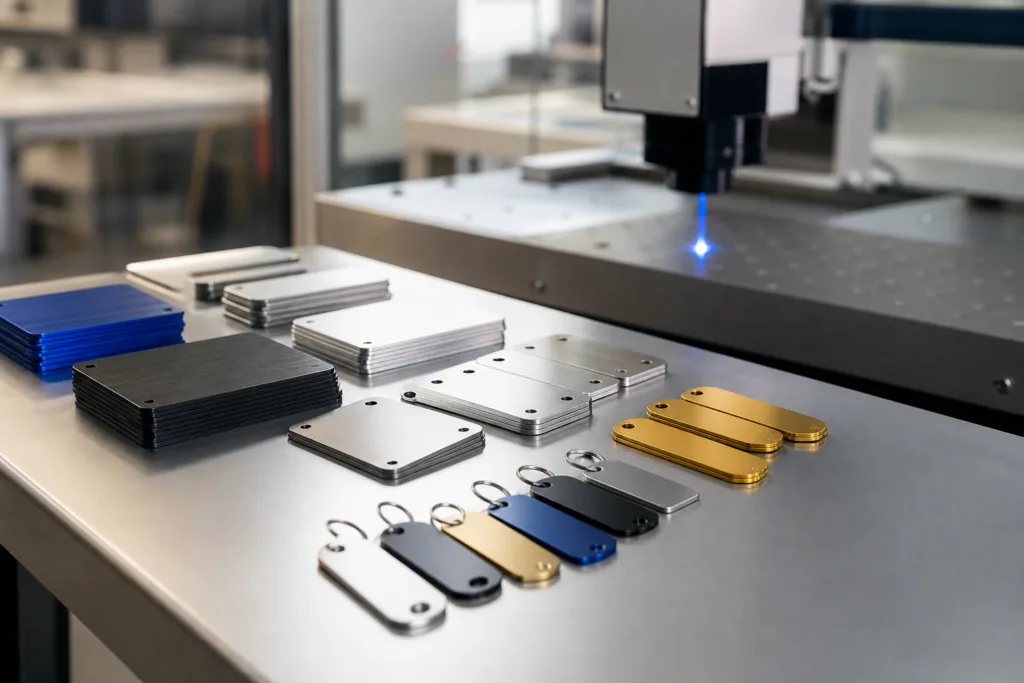
Not every attendee who takes a free item is a real prospect. Low-cost giveaways can create booth traffic, but they often bring a high volume of low-intent interactions. A premium tag gives you more flexibility to design a better exchange. Instead of simply handing items out, you can connect the giveaway to a meaningful action: a product demo, a qualified conversation, a scan, a meeting booking, or a post-show follow-up path.
From a manufacturer’s perspective, this is where premium tags become strategic rather than decorative. When the tag has enough value, the attendee is more willing to engage before receiving it. That can improve lead quality because the booth team can reserve the giveaway for visitors who match target job roles, target industries, or project needs.
There is also a branding effect after the show ends. Well-made promotional items tend to stay in circulation longer, which means more repeat brand exposure over time. Short summaries of promotional product ROI and repeat exposure data help explain why durable giveaways often create more lasting recall than disposable event items. A premium tag that remains attached to luggage, gear, or equipment continues working long after the event floor has closed.
Types of premium tags that perform well at trade shows
The right format depends on your audience, your brand position, and how you plan to use the giveaway in the lead funnel. Some tag styles are better for broad visibility, while others are better for niche targeting or premium account engagement.
Metal luggage tags
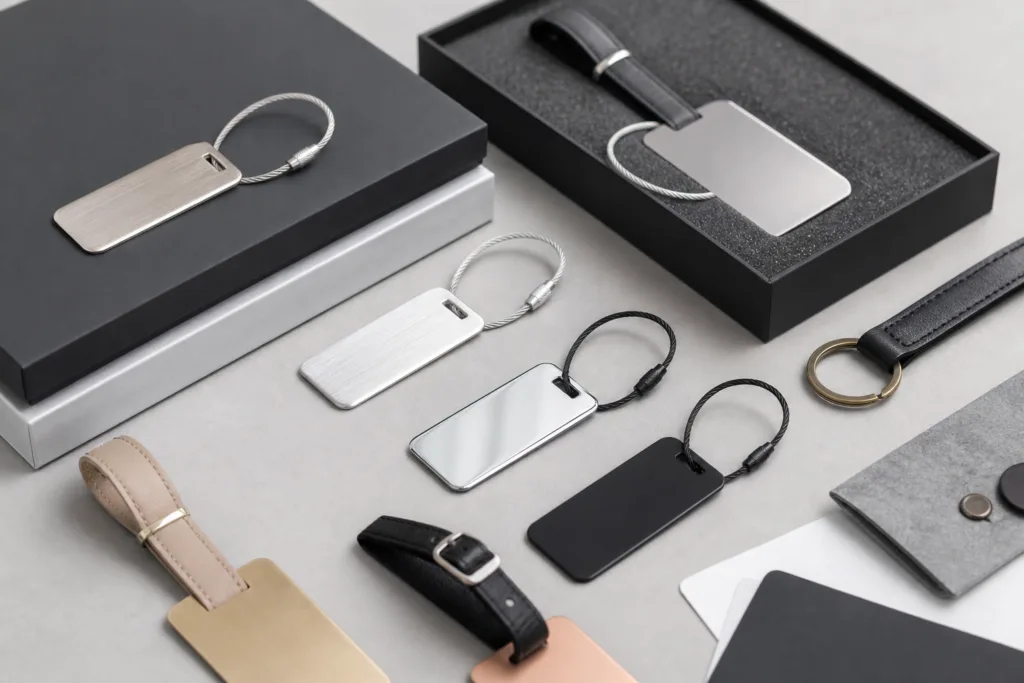
These work well for business travel audiences, distributors, executive visitors, and global B2B sectors. They are practical, easy to personalize, and naturally tied to mobility and events. Brands looking for polished presentation often review premium gift luggage tag options when they want a giveaway that feels gift-worthy rather than purely promotional.
Anodized aluminum tags
Anodized aluminum is a strong fit when color consistency, lightweight handling, and clean logo presentation matter. It can support vibrant brand colors while staying lighter than many steel options, which helps if giveaways will be packed in quantity or handed out across multi-day events.
Stainless steel tags
Stainless steel gives a more technical and durable impression. It suits industrial brands, equipment suppliers, engineering companies, and companies selling reliability, compliance, or long-life systems. It also handles engraved or etched branding well when a precise and serious look is needed.
Brass tags
Brass often communicates heritage, craft, or premium tradition. It can fit luxury packaging, hospitality-related branding, or commemorative event concepts. The finish choice is especially important here, because brass can be positioned as polished and elegant or intentionally aged and distinctive.
Serialized or QR-enabled campaign tags
These are useful when the giveaway needs to connect directly to digital tracking. Each tag can carry a unique identifier, a campaign code, or a scan path that leads to landing pages, gated content, service registration, or post-show nurture sequences.
How material choice shapes perceived value and brand image
Material is one of the first things an attendee notices, even before reading the logo. Weight, edge feel, stiffness, and finish all communicate something about the brand. If a company sells durable equipment, premium services, engineered products, or high-trust solutions, a flimsy promotional item can create the wrong impression.
| Material | Brand Impression | Advantages | Best Fit |
|---|---|---|---|
| Aluminum | Modern, clean, versatile | Lightweight, cost-efficient, good color options | Broad trade show campaigns, travel-focused giveaways |
| Anodized aluminum | Premium, colorful, refined | Better surface appearance, brand color flexibility, light weight | Tech brands, lifestyle-oriented B2B, event kits |
| Stainless steel | Industrial, durable, precise | Strong durability, high-end technical feel, good for engraving or etching | Industrial OEMs, engineering firms, utilities, machinery brands |
| Brass | Classic, warm, elevated | Distinctive appearance, premium heritage feel | Hospitality, luxury, commemorative or executive gifting |
Material selection also affects wear resistance and long-term appearance. If the tag will travel, rub against luggage hardware, or be handled often, finish performance matters. In our production planning, we encourage buyers to consider not just the look on day one, but how the piece will look after repeated handling. Guidance related to corrosion resistance and finish durability for metal tags is useful when appearance retention is important, especially for coated or decorative surfaces expected to last beyond the event itself.
For many event campaigns, the best decision is not the most expensive metal. It is the material that matches the brand promise and the expected use case without creating unnecessary cost.
Design elements that make premium tags memorable
Even a good material can underperform if the design is generic. Premium tags are remembered when the physical design and the campaign idea support each other. That usually comes down to a few practical elements.
Shape and silhouette
Rectangle tags are efficient, but custom contours often improve memorability. Rounded corners, shield forms, travel-inspired silhouettes, or category-specific shapes can make the giveaway feel considered rather than standard.
Finish and surface contrast
Matte, brushed, polished, satin, anodized, or antique finishes each send different signals. Contrast matters just as much as finish. For example, dark laser marks on anodized aluminum, recessed etched logos on stainless steel, or polished brass against a matte background can create a premium visual effect without making the design too busy.
Logo treatment
Many giveaway designs fail because the brand mark is either too small, too complex for the process, or overcrowded with other graphics. We usually advise buyers to identify the visual hierarchy first: logo, campaign message, QR code, or personalization. When everything is treated as the main element, nothing stands out.
Attachment and packaging
A high-quality tag with a poor strap or inconsistent packaging loses impact quickly. Cables, loops, chains, split rings, and straps should match the expected use. Packaging can also support segmentation, such as executive kits, VIP attendee packs, or distributor bundles.
Much of what attendees perceive as quality comes from the small details, which is why brands often study how premium metal tags elevate brand perception before finalizing event giveaway specifications.
Customization options that improve usefulness and lead tracking
One reason premium tags outperform generic items is that they can carry more meaningful information. They are not limited to a printed logo. They can support branding, personalization, campaign logic, and traceable data in a compact format.
Engraving and laser marking
These are strong choices when durability and crisp readability matter. They work well for logos, short text, names, or serial data. Laser marking can be especially useful for precise variable information when the contrast is suitable for the chosen material and finish.
Chemical etching
Etching is useful for finer details, clean linework, and a refined premium appearance. It is often selected when the design requires recessed precision or when the brand wants a more crafted look than standard printing alone can provide.
Printing for color-heavy branding
Screen printing or UV printing may be better when the campaign relies on color blocks, event themes, or graphic-heavy branding. The trade-off is that buyers need to evaluate likely wear, because not every printed surface is ideal for rough handling.
Serial numbers and variable data
Unique numbering helps brands track redemption, segment follow-up, or run tiered giveaway programs. For example, a booth team can issue different number ranges to distributors, OEM prospects, or media contacts, then compare downstream response rates after the show.
QR codes and barcodes
QR codes can connect the physical giveaway to demos, product videos, appointment pages, gated catalogs, or post-show thank-you pages. But scan reliability should never be assumed. Code size, quiet zone, contrast, curvature, and mark quality all affect performance. If a premium tag will include a scannable code, it is wise to review guidance on QR code placement, print quality, and scan reliability on metal tags and then verify the code on actual samples before launch.
At UC Tag, we usually recommend matching the marking method to both the visual goal and the expected lifetime of the giveaway. The right process depends on whether the tag is meant to look polished in a welcome kit, survive repeated travel, or support data capture over a long campaign cycle.
How to match tag style to your audience and booth strategy
The best premium tags are not chosen in isolation. They should fit the event audience and the interaction model at the booth.
- High-volume visitor flow: Choose simpler aluminum or anodized aluminum tags with clean branding and fast qualification rules.
- Executive or VIP outreach: Use more refined stainless steel or brass tags with premium packaging and personalization.
- Industrial or technical buyers: Favor durable finishes, precise engraving, and understated design over decorative graphics.
- Travel, logistics, or global business audiences: Luggage tags and travel-ready formats create immediate relevance.
- Account-based marketing: Serialized tags or invitation-only redemption tags can help the booth team prioritize target accounts.
When brands align the giveaway format with the buyer profile, the item feels purposeful rather than random. That increases the chance that the attendee keeps and uses it.
Trade show giveaway strategies that produce better leads
Premium tags work best when they are part of a planned exchange. Below are a few practical approaches we often see brands use effectively.
Qualified-conversation reward
Give the tag after a short discovery conversation, not before. This keeps the booth team focused on prospects instead of traffic volume alone.
Demo-completion gift
Attendees receive the tag after watching a product demo or completing a guided product walk-through. This improves message exposure before the giveaway leaves the booth.
Tiered gift strategy
Offer one tag version for general qualified visitors and a premium version for target accounts or booked meetings. This helps match spend to opportunity quality.
QR-driven post-show experience
The tag directs users to a landing page with a thank-you message, content bundle, or meeting scheduler. Because the user keeps the tag, the scan opportunity stays open after the event.
Collectible event series
For brands attending multiple industry events, a series of related tags can create repeat engagement and stronger collector behavior across the calendar.
Budgeting for premium tags without losing ROI discipline
Premium does not mean ignoring cost control. It means spending with purpose. In sourcing discussions, we encourage buyers to review cost drivers early so they can improve impact without creating avoidable complexity.
| Cost Driver | Why It Matters | Planning Tip |
|---|---|---|
| Material | Base metal strongly affects unit cost and feel | Choose the lowest-cost material that still matches brand expectations |
| Thickness | Heavier tags feel more premium but increase material use | Test 2 to 3 thickness options during sampling |
| Custom shape | Tooling and cutting complexity may increase cost | Use custom contours only when they add visible brand value |
| Marking method | Engraving, etching, and printing have different setup and run costs | Select the process based on durability and visual needs, not trend alone |
| Variable data | Serialization and QR programs add file handling and QC steps | Prepare clean data files and verification rules in advance |
| Packaging | Presentation can improve perceived value but adds labor and materials | Reserve premium packaging for VIP or segmented campaigns if needed |
MOQ matters as well. A small, highly customized run can carry a higher unit cost, while larger orders improve efficiency. For trade show campaigns, it is often smart to estimate realistic booth traffic, qualification rate, and post-show follow-up capacity before locking in quantity.
Production and sourcing tips before placing the order
Many trade show giveaway issues start before production begins. Artwork, timing, and approval discipline have a direct effect on outcome.
Sample before scale
If the event giveaway is tied to brand perception, do not rely only on a digital mockup. Physical sampling helps confirm finish, color, edge quality, attachment feel, and scan performance where applicable. Brands that need to compare options quickly often benefit from standard sample ordering for promotional tags before approving a custom mass-production version.
Prepare artwork for the actual process
Artwork should reflect the selected production method. Fine lines, tiny text, and dense QR designs may look acceptable on screen but fail on metal if the process tolerance is not considered.
Define data responsibility clearly
If the order includes serial numbers, names, or QR codes, define who owns the source file, formatting rules, sequence checks, and final approval. Variable data mistakes can turn a lead-generation tool into a fulfillment problem.
Plan backward from the event date
Do not estimate lead time based only on factory run time. Add time for sampling, revisions, attachment decisions, data confirmation, packaging, shipping, and contingency.
Check QC points that affect brand impression
For premium tags, common QC checkpoints include dimensions, hole placement, edge finish, logo clarity, color consistency, serial sequence accuracy, attachment matching, and packaging count accuracy.
Common mistakes to avoid when ordering premium tags for trade shows
We regularly see a few preventable errors reduce the value of otherwise strong giveaway ideas.
- Choosing a premium material but pairing it with a weak or cheap attachment
- Overcrowding the tag with logo, slogan, URL, QR code, and tiny text all at once
- Skipping sample review because the event deadline feels tight
- Using QR codes without testing scan reliability on final material and finish
- Ordering too many units before validating booth qualification strategy
- Ignoring packaging, which affects first impression and handoff quality
- Failing to segment giveaway tiers for different audience values
Many of these issues can be reduced by reviewing common custom tag design mistakes to avoid before final artwork approval, especially when the item must balance aesthetics, durability, and campaign function.
How to measure whether premium tags actually worked
A premium giveaway should be judged by business results, not just by how many units were distributed. The more useful approach is to connect the item to specific funnel metrics.
- Qualified lead volume: How many target-fit visitors completed the required action to receive the tag?
- Engagement rate: How many attendees stayed for a demo, scan, or conversation compared with standard giveaway campaigns?
- Post-show action: How many scans, meeting requests, or content downloads came from the tag after the event?
- Brand recall: Did sales teams hear the item mentioned in follow-up calls or emails?
- Conversion quality: Did opportunities from the premium-tag campaign progress faster or close at higher rates?
Even simple campaign coding can help. Different tag versions, serial ranges, QR destinations, or packaging tiers can reveal which audience segment responded best. That makes the next event easier to budget and refine.
Conclusion

Premium tags can turn trade show giveaways from passive handouts into practical brand assets when they are designed with the full lead journey in mind. The right metal, marking method, finish, shape, and data features can improve perceived value, attract more intentional conversations, and extend brand exposure well beyond the booth. From our manufacturing perspective, the strongest results come when brands treat the tag as part of a campaign system rather than an isolated product. When material choice, artwork, attachment, packaging, sample review, and tracking logic all work together, premium tags become a measurable part of trade show ROI instead of just another event expense.
FAQs
Are premium tags worth the higher cost for trade show giveaways?
They can be, especially when your goal is qualified engagement rather than maximum handout volume. A premium tag usually stays in use longer, reflects brand quality more clearly, and can support better lead filtering when it is tied to a demo, meeting, or scan action. The value comes from better recall and stronger prospect interactions, not just from the item itself.
Which metal is usually best for premium trade show tags?
The best metal depends on the brand message and use case. Anodized aluminum is a strong choice for lightweight color branding, stainless steel fits technical and industrial brands that want a durable and precise look, and brass works well when a warmer or more classic premium impression is desired. The right choice should balance appearance, expected handling, and budget.
Should premium tags use engraving, etching, or printing?
Use engraving or laser marking when durability and crisp variable data matter, use etching when you want refined detail and a more crafted appearance, and use printing when campaign color is central to the design. The decision should be based on how the giveaway will be used, how long it should last, and how much wear the surface is likely to face.
Can QR codes on metal tags really help with lead generation?
Yes, if they are planned properly. A QR code can connect the attendee to a landing page, meeting scheduler, product video, or gated content, which helps extend engagement after the show. The code must be sized and marked correctly for the chosen material and finish, and it should always be tested on production-like samples before final approval.
What should buyers prepare before ordering premium tags for an event?
Buyers should prepare approved artwork, target quantity, event deadline, preferred material, attachment style, packaging requirements, and any variable data files such as serial numbers or QR destinations. It is also helpful to define the booth strategy in advance so the tag format and quantity support the intended lead qualification process.
How far in advance should premium tags be ordered for a trade show?
It is safest to work backward from the event and leave room for sampling, revisions, production, packaging, shipping, and contingency time. Orders with custom shapes, special finishes, or variable data usually need more planning than simple stock-like formats. Early approval reduces the risk of rushed decisions that can affect quality or campaign performance.