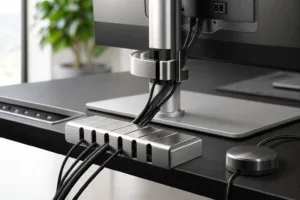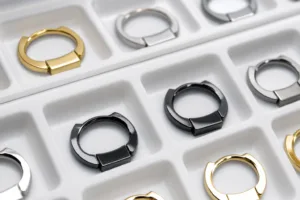
Choosing between metal and silicone for cable organizers sounds simple until the project moves from a loose concept to a real buying decision. Material affects how a product holds cables, how long it keeps its shape, how it looks on a desk or wall, how easy it is to clean, and whether it still performs after repeated handling. For buyers sourcing cable organizers for office fit-outs, branded accessories, workstation kits, retail display systems, or fixed commercial installations, the material decision has a direct impact on durability, aesthetics, and long-term user satisfaction.
If your project involves custom hardware, finish selection, logo presentation, or coordinated accessory development, our metal craft sourcing and production overview is a practical starting point. Many buyers who compare cable organizer materials are also deciding how the part will be mounted, what finish will match other hardware, whether the design needs custom branding, and how samples should be approved before volume production. In our manufacturing work, we support that process through material review, mold and structure evaluation, finish selection, sample development, and bulk quality planning for OEM and private-label programs.
Why cable organizer material matters
Cable organizers are small products, but they solve several different problems. Some separate charging cables on a desktop. Some route power cords under a workstation. Some hold heavier lines in AV setups or commercial counters. Others are intended for repeated touch in homes, meeting rooms, hotels, or shared work areas. The same shape will not perform the same way in all of these environments if the material changes.
In practice, buyers usually compare cable organizers across five criteria: durability, flexibility, visual fit, mounting method, and maintenance. Metal generally wins when structure, edge definition, finish quality, and long-term dimensional stability matter most. Silicone usually performs well when soft grip, fast placement, and repeated cable insertion or removal are the priority.
That is why material selection should be based on use conditions rather than trend or price alone. A desk organizer for a premium office brand, a travel-friendly accessory, and a fixed under-desk routing clip may all need different materials even when they are sold under the same product family.
What cable organizers do and how material changes the result
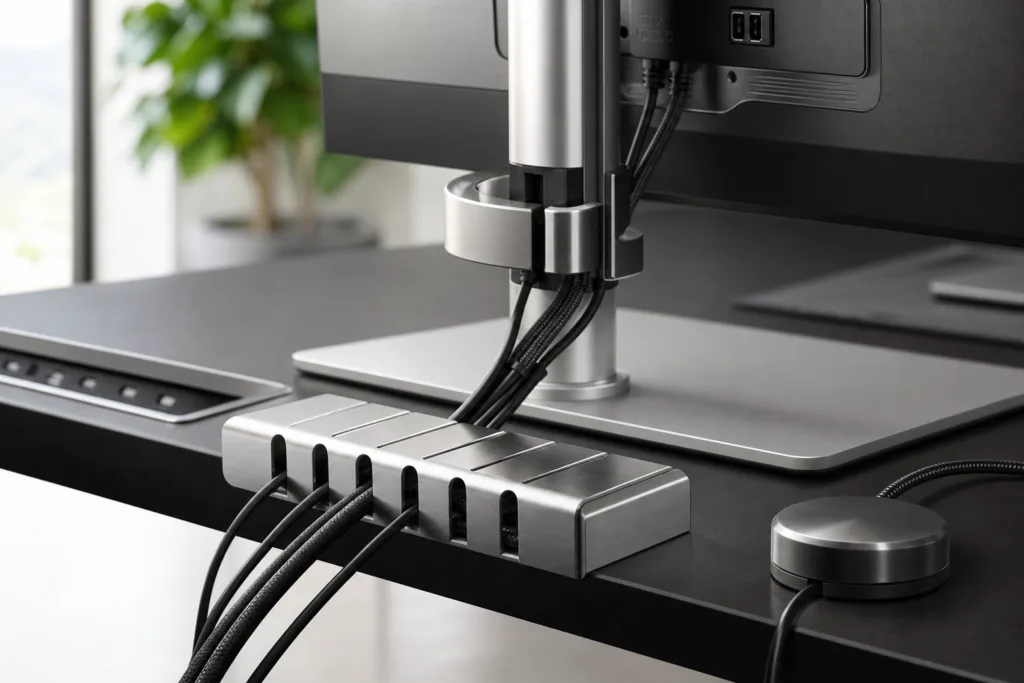
A cable organizer can guide, clamp, separate, retain, protect, or visually hide a cable path. When buyers say they need better cable management, they may actually need one of several functions:
- Light cable separation for charging cords
- Retention so cables stay within reach on a desktop
- Routing along furniture edges or wall panels
- Support for thicker or heavier cords
- A cleaner, more premium visual presentation
- Custom hardware that matches a branded workspace or product set
Material changes each of those outcomes. Metal parts hold sharper geometry and more rigid channels. Silicone parts deform to accept cable diameter variation and usually offer softer contact. For product buyers, this means the real question is not simply metal versus silicone. It is whether the project needs rigidity or flexibility, visual precision or soft adaptability, and long-term shape retention or quick everyday convenience.
Metal cable organizers explained
Metal cable management products are typically chosen for structure, strength, and appearance. Depending on the design, they may be produced by stamping, die casting, bending, CNC processing, or a hybrid approach that combines a formed metal base with adhesive, screws, magnets, or inserts. Common materials include stainless steel, aluminum, iron, and zinc alloy, each with different cost, weight, corrosion, and finishing implications.
From our manufacturing perspective, metal becomes especially attractive when the organizer is part of a wider hardware system. For example, a buyer may want cable routing pieces that match monitor stand hardware, drawer pulls, tabletop grommet trims, packaging accessories, or other visible metal parts. In those cases, consistency of finish and edge quality often matters as much as basic function. This is where custom metal closure manufacturing support becomes relevant, because buyers often need matching form language, attachment logic, and finishing standards across more than one accessory category.
Metal organizers can be finished in brushed, polished, sandblasted, plated, powder-coated, or painted surfaces depending on the design brief. They can also be engraved or laser marked for branding. A rigid body allows cleaner lines and stronger visual definition, which is useful when the cable organizer is visible on executive desks, retail counters, meeting-room tables, or integrated furniture systems.
Strengths of metal organizers
- High structural stability and shape retention
- Premium appearance for visible installations
- Better support for fixed routing or heavier cable loads
- Good suitability for custom finishes and branded detailing
- Long service life when material and finish match the environment
Limitations of metal organizers
- Lower flexibility for mixed cable diameters unless the design includes open geometry or inserts
- Potential for edge discomfort if detailing is poor
- Usually higher unit cost than simple silicone parts
- Surface finish selection is critical in humid or high-touch conditions
Finish quality matters more than many buyers expect. In humid spaces, public-use counters, or high-touch environments, metal durability depends not only on alloy selection but also on surface finish and corrosion resistance. A smoother, better-controlled finish can help preserve appearance over time, especially when fingerprints, cleaning cycles, and moisture exposure are part of daily use.
Silicone cable organizers explained
Silicone cable organizers are popular because they are soft, flexible, easy to apply, and forgiving in everyday use. They are commonly molded as clips, slots, wraps, or compact holders with pressure-sensitive adhesive backing. For home use, temporary setups, or portable desk accessories, silicone often solves the immediate problem with very little installation effort.
The material naturally accommodates repeated cable insertion and removal. If users frequently switch charging cables, replace devices, or adjust desk layouts, silicone can feel more convenient. It also provides grip, which helps keep cables from slipping out when the organizer is lightly loaded and correctly sized.
Silicone does have trade-offs. It can attract dust more easily than smooth-coated metal. It may stretch, tear, or lose neatness under abuse, depending on design thickness and formulation. Its visual effect is usually softer and more casual, which works in many home and flexible-office environments but may not match premium fixtures, architectural hardware, or visible branded installations.
Strengths of silicone organizers
- Flexible and easy to use with common charging cables
- Soft contact reduces risk of scratching cable jackets
- Quick installation, often with adhesive backing
- Comfortable in high-touch use and frequent adjustment
- Usually cost-effective for simple consumer applications
Limitations of silicone organizers
- Lower structural rigidity for heavier routing tasks
- Can look less formal in premium or commercial interiors
- May collect lint, dust, or skin oils more visibly
- Adhesive-backed versions depend heavily on surface condition and placement quality
When nonmetallic organizers are used in more sensitive installation environments, buyers should also think beyond convenience and appearance. Material behavior around heat and fire performance may matter, especially for organized cabling near power equipment or enclosed installations. That is why it is useful to review flammability testing for polymer accessories when evaluating whether a silicone-based accessory is appropriate for a given environment.
Metal vs. silicone durability in daily use
Daily durability depends on how the organizer is used, not just on the material label. A silicone organizer on a quiet desk may last well because loads are light and movement is gentle. A metal organizer in the same position may last even longer, but the difference may not justify the cost unless aesthetics or branding matter. On the other hand, in a fixed workstation, AV cabinet, public counter, or under-desk routing path, metal often delivers more reliable long-term shape retention.
| Criteria | Metal | Silicone |
|---|---|---|
| Shape retention | Very strong | Moderate to good |
| Resistance to deformation | High | Moderate |
| Comfort in repeated handling | Depends on edge design | High |
| Resistance to surface dust | Usually better | Usually lower |
| Performance with heavier cables | Better | More limited |
| Visual aging | Depends on finish quality | Depends on wear and cleanliness |
For buyers, the key durability question is this: will users treat the organizer as a fixed routing part or as a flexible touchpoint? Fixed parts generally favor metal. Frequently handled parts often favor silicone unless the product is engineered with a metal body and thoughtful geometry for easy access.
Metal vs. silicone aesthetics for home, office, and commercial spaces
Aesthetics are not only subjective. They affect whether the organizer looks intentional within a space. Metal creates cleaner reflections, sharper edges, and stronger visual consistency with furniture hardware, consumer electronics, display fixtures, and branded desktop kits. This makes it a strong fit for executive workstations, hospitality counters, showrooms, and commercial interiors where accessories are visible.
Silicone appears softer and more informal. It suits casual desks, student use, temporary setups, and family spaces where comfort and ease matter more than hardware matching. It can also work well in products where color coding is useful, such as organizing multiple charging cables by device type.
Finish choice can significantly change the perceived value of a metal organizer. Buyers sourcing visible hardware often ask for dark neutral finishes, especially when matching black monitors, keyboards, lighting, or architectural trim. In those projects, matte black finish choices are often relevant because finish tone, gloss level, and scratch visibility can influence whether the product reads as premium or utilitarian.
Functionality comparison for routing, holding force, and access
Functionally, metal and silicone solve different access patterns. A rigid metal organizer can define a stable path, hold spacing consistently, and support repeatable cable positioning. This is useful when buyers need predictable routing across multiple desks, product displays, or equipment stations. Silicone, by contrast, is usually better when one user needs quick push-in, pull-out access without attention to exact placement.
Holding force depends on geometry as much as material. A poorly sized silicone slot may lose grip on thin cables. A narrow rigid metal channel may be inconvenient if users frequently swap cords. The best design starts with the actual cable outside diameter, bend behavior, connector size, and expected insertion frequency.
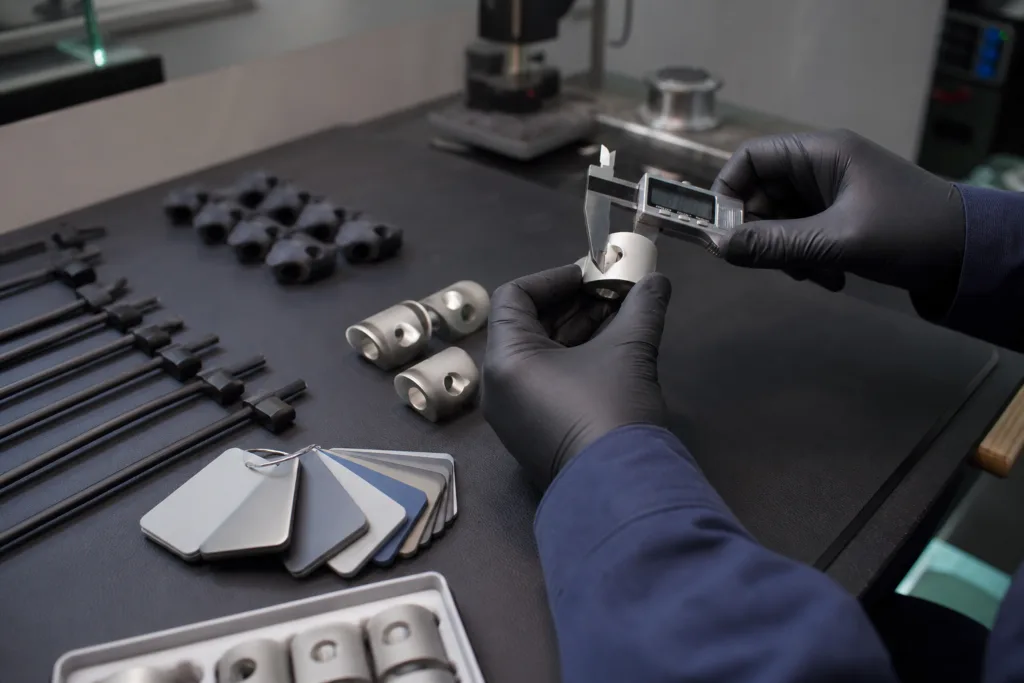
Surface feel can matter too. Where metal is used in hand-contact areas, texture can improve control and reduce the slippery feel that sometimes appears on fully smooth finishes. That is why some buyers evaluate textured metal grip options or similar detailing concepts when the organizer must be handled often rather than simply installed and left in place.
Best use cases for metal cable management
Metal cable management is usually the better choice in the following scenarios:
- Desks and workstations with visible premium hardware
- Conference tables where cable organization must look intentional
- AV and media setups with thicker cords or fixed cable paths
- Retail counters and commercial display systems
- Under-desk or wall-mounted routing where shape retention matters
- OEM accessory programs that require custom branding, packaging, or finish matching
At Gairun, we usually guide buyers toward metal when they need a controlled structure, custom finish, and repeatable bulk consistency. In these projects, sample review should include edge feel, attachment method, cable entry width, finish adhesion, and pack-out protection so the appearance survives shipment and installation.
Best use cases for silicone cable organizers
Silicone cable organizers are often the better fit for:
- Travel and portable desk kits
- Temporary setups in rentals, dorms, or pop-up workstations
- Home environments with frequent charging-cable changes
- Light-duty bedside, sofa-side, or kitchen counter cable holding
- High-touch use where soft handling matters more than hardware aesthetics
These products work well when the main goal is convenience. They are less ideal when the buyer expects a strong visual statement, coordinated metal finishes, or long-term alignment with a premium furniture or architectural package.
Environmental and usage factors buyers should not ignore
Material choice should reflect the operating environment. Heat, moisture, UV exposure, cleaning frequency, vibration, and cable load all affect real performance. A product that works on a dry desk may not behave the same way near kitchen appliances, glass facades, equipment racks, or shared commercial counters.
For any organizer used around electrical installations or more formal infrastructure, buyers should verify whether the product is suitable for that context rather than treating it as a decorative accessory. Relevant product evaluation can involve installation conditions, material testing, and recognized requirements for cable-management products. Reviewing cable-management safety standards is a sensible step when the application moves closer to professional electrical or facility use.
Here is a simple way to think about environmental fit:
| Environment | Usually Better Material | Main Reason |
|---|---|---|
| Premium office desk | Metal | Visual integration and rigid structure |
| Shared home workspace | Silicone | Frequent adjustment and soft handling |
| AV rack or media console | Metal | Support for heavier cords and fixed routing |
| Travel pouch or mobile kit | Silicone | Flexibility and portability |
| Humid public counter | Metal with suitable finish | Appearance retention depends on finish quality |
| Light everyday phone charging | Silicone | Convenience over structural performance |
What buyers commonly report after long-term use
Over time, buyers and end users tend to notice practical differences more than they expect during initial sampling. With metal organizers, the most common positive feedback is that the product still looks ordered and intentional months later, especially in visible workspaces. Complaints usually relate to poor edge treatment, an overly narrow channel, or finish wear when the wrong coating was chosen.
With silicone organizers, positive feedback usually centers on easy access and simple installation. Common complaints include dust attraction, adhesive failure on unsuitable surfaces, or a loose fit after repeated stretching. These issues are not universal, but they do show why application matching matters more than a broad statement that one material is always better.
How to choose the right material based on cable type, location, and budget
The selection process becomes easier when buyers ask a few practical questions early:
- What cable diameters must the organizer accept?
- Will users frequently remove and replace the cable?
- Is the product visible or mostly hidden?
- Does it need to match other hardware finishes?
- Will it be mounted with adhesive, screws, magnets, or integrated hardware?
- Is this a consumer accessory or part of a larger OEM program?
If the cables are light, the setup changes often, and cost sensitivity is high, silicone is often the efficient choice. If the product is visible, branded, fixed, or expected to support a higher-value presentation, metal often provides a stronger result. Buyers developing custom lines should also think beyond the organizer itself and evaluate packaging, spare parts, logo execution, and finish consistency. Our B2B custom metal manufacturing guide is useful for that broader sourcing process because it helps frame sampling, production review, and quality checkpoints before scale-up.
Buying checklist for product and sourcing teams
- Size: Confirm actual cable outside diameter and connector clearance.
- Mounting method: Check whether adhesive, screws, clips, or embedded mounting is appropriate for the surface.
- Finish: For metal, review color, gloss, texture, and scratch visibility.
- Maintenance: Consider cleaning frequency, fingerprint visibility, and dust collection.
- Replacement expectations: Decide whether the organizer should be a long-life fixture or a replaceable accessory.
- Packaging: Protect visible surfaces and keep installation parts organized.
- Sampling: Test with the real cable set, not only a drawing or nominal diameter.
Common mistakes to avoid when selecting cable organizers
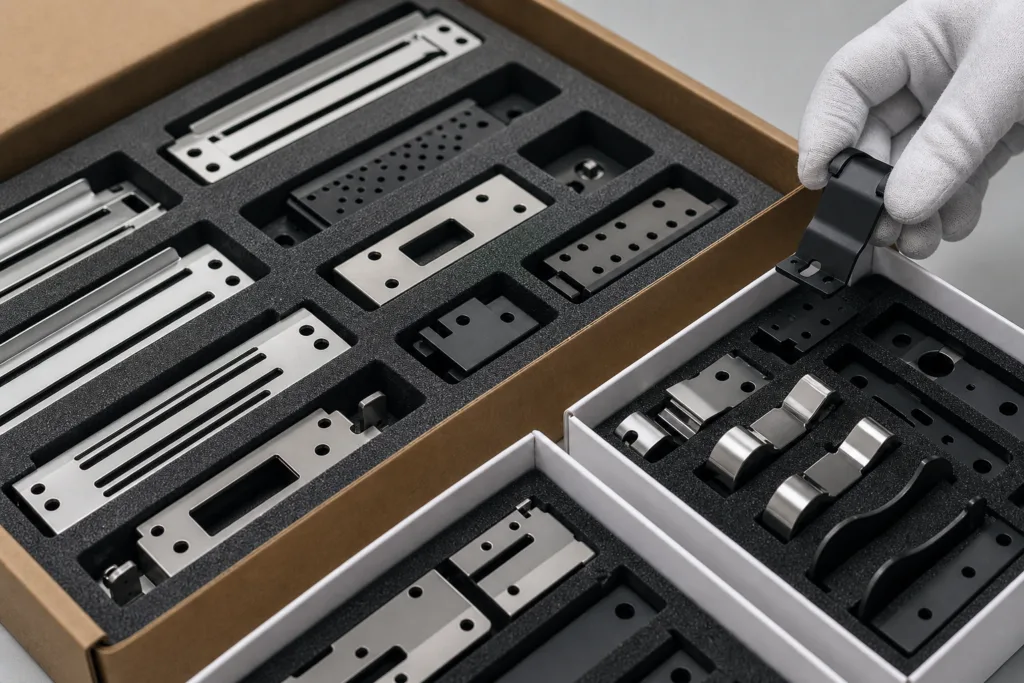
One common mistake is selecting by appearance alone. A metal product may look excellent in a catalog but feel inconvenient if users change cables several times a day. Another is assuming silicone automatically fits all cable sizes; oversize slots can reduce holding performance, while undersize slots may tear or frustrate users.
Buyers also sometimes ignore installation surfaces. Adhesive-backed organizers depend heavily on substrate condition, cleanliness, and load direction. For custom metal parts, another frequent mistake is under-specifying edge quality, finish standard, or packaging protection, which can create avoidable complaints even when the basic structure is sound.
The last major mistake is skipping realistic sample testing. We recommend that buyers review prototypes in the actual use setting, with real cables, actual mounting surfaces, and repeated handling. That is where the difference between a visually acceptable part and a genuinely suitable part becomes obvious.
Conclusion
There is no single winner in the comparison between metal and silicone cable organizers. The right choice depends on what the organizer must do, how visible it is, how often it will be touched, and what kind of long-term impression the product should create. Silicone is strong for convenience, flexibility, and light everyday use. Metal is strong for structure, finish control, and premium visual integration. For buyers comparing cable organizers in B2B, OEM, or branded product contexts, the best results usually come from defining the use case first and treating material, finish, mounting, and sample testing as one connected decision.
FAQs
Are metal cable organizers better than silicone for durability?
Metal cable organizers are usually better for structural durability, shape retention, and fixed routing, especially when cables are heavier or the organizer is part of a permanent setup. Silicone can still last well in light-duty applications, but it is generally more suitable for flexible everyday handling than for rigid long-term support.
Which material looks more premium in visible installations?
Metal usually looks more premium because it offers sharper geometry, controlled surface finishes, and easier matching with furniture hardware, electronics, or branded accessories. Silicone has a softer and more casual appearance, which works well for informal desks and home use but may not suit higher-end commercial spaces.
Is silicone safer for cables because it is softer?
Silicone can be gentler in hand-feel and may reduce the chance of scratching cable jackets during frequent insertion and removal, but safety still depends on the full product design, slot size, and installation environment. Buyers should evaluate fit, load, and where the organizer will be used rather than assuming soft material automatically means better performance.
When should buyers choose metal cable management for a project?
Metal cable management is a strong choice when the organizer is visible, needs to match other hardware, must hold a stable path, or will be used in commercial desks, AV setups, counters, or OEM accessory programs. It is especially useful when finish quality, branding, and long-term shape consistency are part of the buying criteria.
What is the main weakness of silicone cable organizers?
The main weakness of silicone is that it can lose neatness in demanding environments through dust pickup, stretching, adhesive-related issues, or reduced support for heavier cables. That does not make it a poor material; it simply means it performs best in lighter-duty and more flexible use cases.
How should buyers test cable organizers before bulk ordering?
Buyers should test prototypes with the real cable diameters, actual connectors, intended mounting surfaces, and realistic daily handling. The review should cover holding force, access convenience, edge feel, finish quality, cleanliness over time, and whether the organizer still performs after repeated insertion, removal, and cleaning.