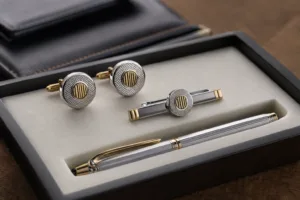
Custom phone rings are a practical metal accessory category that sits between function, branding, and product design. For B2B buyers, they are not just simple add-ons for smartphones. They can improve grip security, support one-hand use, work as a stand, and create a visible branded surface that users interact with every day. From our manufacturing perspective, the real value of metal grips comes from balancing structure, finish, rotation performance, logo clarity, adhesive compatibility, and bulk production consistency.
If your project needs branded mobile accessories with a stronger premium feel than plastic, our metal craft manufacturing solutions are relevant because custom phone rings often require several coordinated decisions at once: alloy selection, plating or brushed finish choice, logo method, moving-part tolerance, sample approval, and retail or private label packaging. We support these projects through artwork review, mold development, finish selection, pre-production samples, and quality control planning so buyers can move from concept to repeatable bulk production with fewer surprises.
What Are Custom Metal Phone Rings and Grips?
Custom metal phone rings and grips are small metal accessories attached to the back of a phone or phone case. Most include a base plate and a movable ring, loop, or flat grip element. Some rotate 360 degrees, some tilt at fixed angles, and some combine ring and stand functions in one structure.
Compared with basic decorative accessories, metal grips are more engineering-sensitive. The product must feel smooth in hand, open and close with the right resistance, hold its shape during use, and maintain a stable finish even after repeated contact. That is why buyers should evaluate them as functional metal products, not only as promotional items.
In custom development, we usually see three broad application types:
- Retail-ready mobile accessories under a private label brand
- Promotional products for campaigns, events, and corporate gifting
- Bundled branded accessories packed with electronics, lifestyle products, or merch kits
Each use case changes the right choice of material, finish, logo process, and packaging.
Why Custom Phone Rings and Metal Grips Have Become Popular
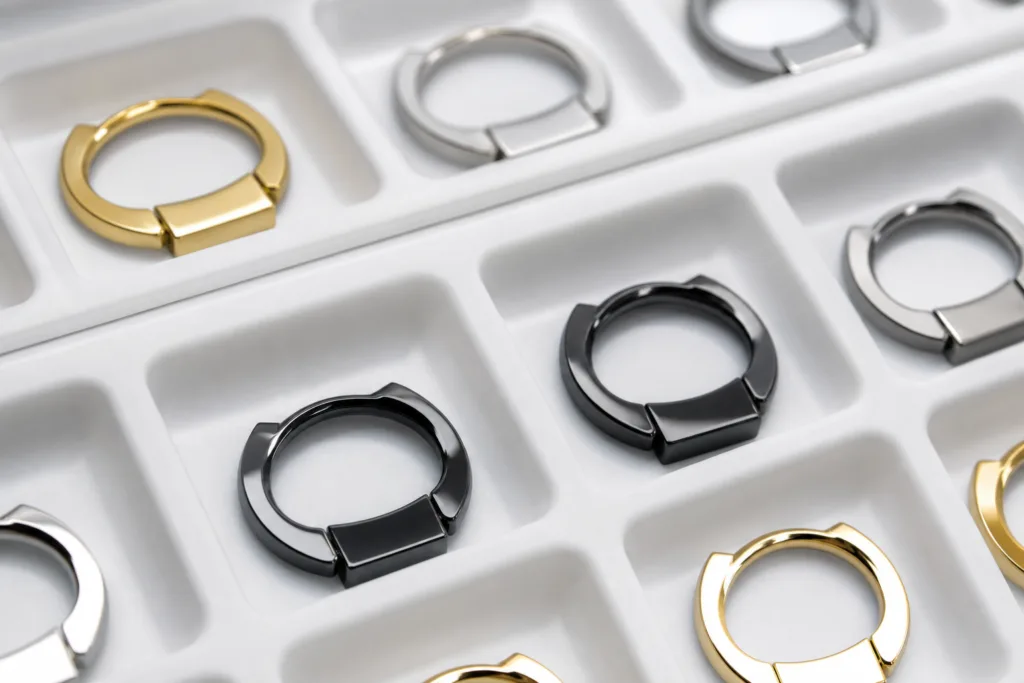
Phone sizes have increased, cases have become smoother, and users now expect accessories to do more than one job. A ring or grip that helps handling while also carrying a clean brand mark has obvious value. For retail and promotional buyers, metal grips also feel more substantial than low-cost plastic alternatives, which can help support a more premium position.
Another reason for their popularity is visual flexibility. Buyers can develop round, square, shield, bar, geometric, mascot, logo-shaped, or minimalist forms depending on market positioning. Many of the same design principles used in custom shape accessory design also apply here: silhouette clarity, edge comfort, practical thickness, and enough surface area for decoration without hurting usability.
Key Functional Benefits Buyers Should Understand
Better grip security
The most obvious benefit is reduced slipping risk during normal handling. A well-sized ring or grip gives the user an anchor point for fingers, which matters when the phone is used while commuting, walking, taking photos, or reading.
Easier one-hand use
For larger phones, one-hand reach can be uncomfortable without support. A properly positioned ring helps stabilize the device and makes daily actions feel safer. This is especially relevant for accessory buyers targeting high-frequency phone users.
Stand support
Many metal grips also work as kickstands for viewing video, video calls, or desktop use. This means the product must be designed not only for appearance but for angle stability, motion range, and hinge resistance.
Brand exposure through daily use
Unlike many one-time giveaway items, a phone accessory is visible and repeatedly handled. That makes logo execution and finish quality much more important than buyers sometimes expect.
Aesthetic and Branding Value for Retail, Promotions, and Private Label
Metal grips are useful because they can look minimalist or highly decorative. For a clean consumer electronics style, brushed metal, polished nickel-tone plating, or black finishes often work well. For souvenir, lifestyle, or campaign use, enamel-filled color areas, antique effects, or 3D relief logos can create more personality.
Buyers who already source metal accessories often find useful crossover thinking here. For example, if you have experience comparing custom keychain production options, many of the same sourcing questions apply: how the logo is formed, whether the edges are comfortable, whether the finish is durable enough for frequent contact, and whether the packaging fits retail or gift presentation.
From a branding standpoint, the most effective custom phone ring is usually not the one with the most decoration. It is the one where form, grip comfort, motion quality, and logo visibility work together. Overloaded decoration can make the product feel crowded or less comfortable in hand.
Common Materials Used for Metal Grips
Material selection affects appearance, weight, cost, finish compatibility, and structural behavior. There is no single correct metal for all projects.
| Material | Typical Advantages | Typical Trade-Offs | Suitable Project Types |
|---|---|---|---|
| Zinc alloy | Good for die casting complex shapes, flexible for 3D logos, broad finish options | Heavier than aluminum, needs good mold and plating control | Most custom decorative and branded designs |
| Stainless steel | Clean modern look, good corrosion resistance, solid feel | Less suitable for highly complex cast relief structures, harder processing in some forms | Minimalist and premium-looking products |
| Brass | Good detail potential, refined appearance, works well with engraving | Material cost may be higher, weight should be considered | High-detail branded accessories |
| Aluminum | Lightweight, modern look, useful where lower weight matters | Different surface behavior than zinc alloy or brass, structure limitations depend on design | Lightweight phone accessories and modern retail lines |
Zinc alloy is often the most practical starting point for custom metal phone rings because it supports die-cast shape flexibility and many finish styles. Stainless steel works well when buyers want a simple, cleaner, more technical aesthetic. Brass is useful when crisp engraved branding matters. Aluminum can be appealing when weight reduction is a priority.
Skin contact is another consideration. Because these accessories are frequently touched, buyers should think carefully about base metal and plating systems if they want to reduce potential irritation concerns. In projects where skin-contact sensitivity matters, we recommend reviewing nickel contact sensitivity and skin-contact safety during material and coating selection, especially when nickel-containing layers may be part of the finish system.
Design Options for Custom Metal Phone Rings
Shape and profile
Round is common because it is balanced and familiar, but there is strong demand for shield shapes, rectangles with softened corners, logo silhouettes, and integrated decorative plates. The more custom the outline becomes, the more important edge comfort and structural balance become.
Thickness and weight
Thin designs may look sleek but can feel less substantial or reduce logo depth. Thick designs may feel premium but can become bulky and affect shipping weight or daily carry comfort. In product development, we usually guide buyers toward a balanced thickness that supports both appearance and usability.
Motion range and hinge feel
A phone ring that is too loose loses stand function. One that is too tight may feel stiff or wear unevenly. Rotation resistance and opening torque need practical testing during sampling, especially for retail programs where user experience matters.
Surface texture
Glossy, matte, brushed, sandblasted, and textured surfaces each change tactile feel. Smooth polished surfaces look premium, while subtle texture may improve grip feel and reduce visible fingerprints.
Logo placement
Some designs place the logo on the base plate, some on the ring face, and some on both. Buyers should think about what remains visible when the ring is closed and when it is in use. For fine lines, recessed logos, or serialized branding, techniques related to engraved logo detailing techniques can be very useful.
Finish Options and Their Effect on Appearance and Wear
Finish selection does more than change color. It affects perceived quality, fingerprint visibility, scratch appearance, and how the product fits a brand’s style.
- Electroplated nickel-tone: bright, clean, and widely used for a premium metallic look
- Gold-tone plating: decorative and gift-oriented, often used for fashion-driven branding
- Black plating or dark metallic finishes: modern and understated
- Matte finishes: less reflective and often easier to pair with minimalist branding
- Polished finishes: shiny and premium-looking but more sensitive to visible marks
- Antique finishes: useful for vintage, heritage, or souvenir-style concepts
- Sandblasted or brushed looks: technical, modern, and tactile
- Color-filled effects: useful when logos or background areas need stronger brand identity
When buyers want a durable metallic surface, electroplating is often part of the discussion. From a process standpoint, plating is widely used because it can improve appearance and support wear performance. OSHA’s technical note on electroplating for wear-resistant and corrosion-resistant finishes is a useful reference for understanding why chrome- or nickel-style plated surfaces are often specified when a harder, cleaner-looking outer layer is desired.
For buyers building premium gift sets or fashion-oriented accessories, visual benchmarking from related metal products can also help. For example, some design teams review gold-plated finish inspiration to clarify whether they want bright luxury styling, softer satin tones, or a more restrained metallic effect before finalizing grip finishes.
Customization Methods for Logos and Decorative Effects
The right logo method depends on the artwork style, target price, and desired tactile effect.
Laser engraving
Ideal for crisp lines, minimalist logos, serial information, or a technical appearance. It is especially effective on stainless steel and flat plated surfaces.
Enamel filling
Useful when buyers need strong brand color recognition. Hard or soft enamel style filling can create clear separated color zones, but the artwork must be simplified enough for metal walls and fill boundaries.
Printing
Appropriate for complex graphics, gradients, or highly detailed visual elements that are difficult to achieve in metal relief. However, printed layers may require extra protection depending on design and handling expectations.
3D relief logos
Raised and recessed metal logos give a more sculpted look. They work well for premium branding but require thoughtful mold design so the logo stays readable at small sizes.
Attachment Types and Compatibility Considerations
The metal body is only part of the product. Attachment performance matters just as much. Most custom phone rings and metal grips use an adhesive backing applied to a flat rear base. Buyers should confirm whether the product will be attached directly to a phone, to a standard case, or to special coated or textured surfaces.
Important compatibility questions include:
- Is the target case material smooth or textured?
- Is there enough flat area for stable adhesion?
- Will the accessory be used on glass, silicone-like coatings, TPU, or hard plastic?
- Does the ring position interfere with wireless charging or magnetic accessories?
- Will the customer apply it once, or expect repositioning?
Attachment testing should be part of sample evaluation, not something left until after mass production. Even a well-made metal ring can underperform if the base geometry or adhesive system does not match the final use environment.
How Custom Metal Phone Rings and Grips Are Manufactured
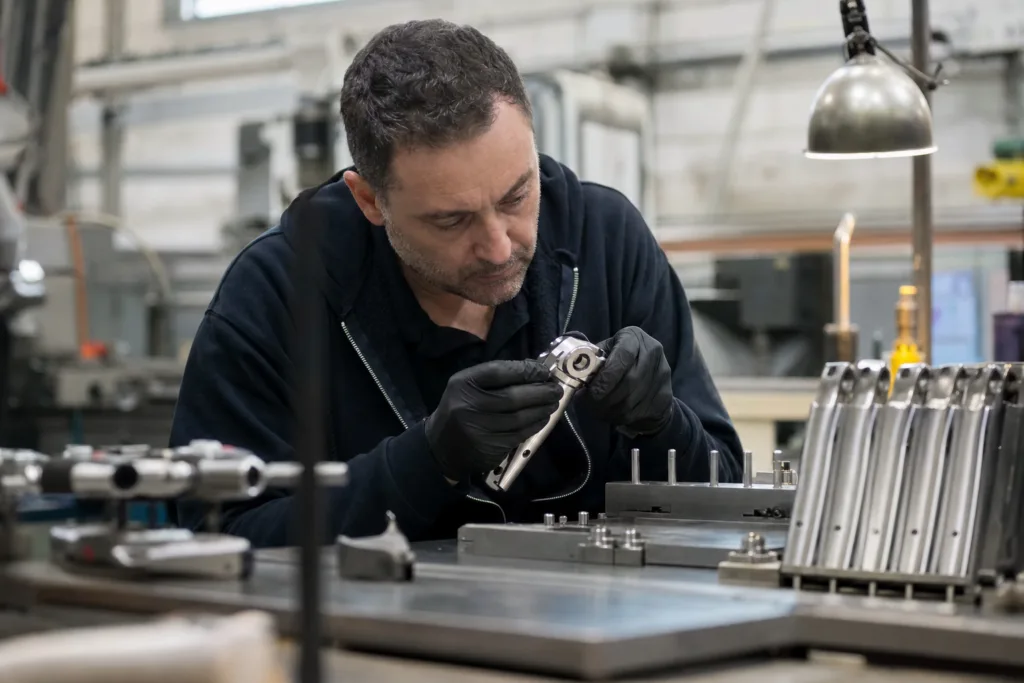
Depending on structure, phone rings may be made through die casting, stamping, CNC-related operations, engraving, polishing, plating, assembly, and adhesive application. For many branded designs with relief logos or custom silhouettes, die casting is the most practical route because it allows complex form development in one metal body.
A typical production flow may include:
- Artwork review and structural feasibility check
- Mold design and mold making
- Die casting or forming of main metal parts
- Trimming, grinding, and polishing
- Logo creation by engraving, relief forming, printing, or enamel filling
- Electroplating or surface finishing
- Assembly of hinge or rotating structure
- Adhesive application and protective film placement
- Inspection, packing, and carton preparation
At Gairun, we treat these products as small functional metal assemblies rather than simple ornaments. That means checking not only appearance, but also motion feel, part fit, edge comfort, and repeatability across the batch.
Design and Sampling Steps Buyers Should Plan For
Sampling is where many future bulk-order problems can be prevented. Good samples do more than show appearance. They help verify dimensions, hinge feel, finish tone, logo depth, and packaging fit.
Artwork preparation
Vector artwork is usually the cleanest starting point for logos, outlines, and color separations. Thin lines, tiny gaps, and overly dense details may need adjustment so they can be reproduced reliably in metal.
Mold development
If the design uses a custom silhouette or raised logo structure, mold design affects sharpness, consistency, and edge quality. Buyers should ask whether any artwork simplification is recommended before tooling begins.
Sample approval
A useful approval process should check finish color, moving-part function, adhesive area, packaging layout, and how the product looks on an actual phone case. For private label projects, this is also the right stage to confirm barcode placement, insert cards, and any warnings or instructions.
MOQ, Lead Time, and Cost Drivers
MOQ and lead time vary with structure and customization depth. Standard shapes with simple engraving and common plating are usually easier to produce than fully custom die-cast shapes with multi-color enamel and retail packaging.
| Cost Driver | Why It Matters |
|---|---|
| Custom mold | Unique shapes or relief logos require tooling investment |
| Material choice | Base metal changes cost, weight, and process route |
| Finish complexity | Polished, antique, plated, or multi-step finishes add labor and control points |
| Logo method | Enamel, engraving, printing, and 3D relief have different process demands |
| Assembly structure | Rotating and folding mechanisms increase production complexity |
| Packaging | Retail cards, gift boxes, and private label inserts add setup and handling |
For buyers planning promotions or product launches, it is wise to discuss both sample timing and mass production timing at the beginning. A simple visual mockup approval is not the same as a functional pre-production sample.
Quality Control Points That Matter in Bulk Orders
Because phone rings combine decorative and functional requirements, QC should cover more than appearance.
Adhesion and base flatness
The rear surface should be flat enough for stable adhesive bonding, and protective films should be applied cleanly.
Rotation smoothness and resistance
Units should not feel overly loose, overly tight, or inconsistent from piece to piece.
Plating durability and finish consistency
Color tone, gloss level, and visible defects should be checked across the batch. Scratches, pits, burns, and edge exposure are common issues to watch.
Logo clarity
Raised, engraved, or enamel-filled logos must remain readable at production scale, not just on one approved sample.
Edge comfort
Since the user touches the product repeatedly, burrs or overly sharp transitions are unacceptable.
Surface quality matters both visually and tactically. In small metal accessories, finish consistency affects how premium the product feels in hand. For buyers who want a more technical explanation of why smoothing and texture control matter, NIST’s overview of surface finish and polishing quality is helpful background when discussing polishing standards and cosmetic expectations.
Creative Customization Ideas for Better Market Fit
Not every project needs a standard round ring with a printed logo. Buyers can create more market value by aligning the form and finish with the sales channel.
- Use a slim brushed stainless look for electronics retail lines
- Create antique brass or antique silver styles for heritage-themed souvenir programs
- Add enamel-filled brand colors for clubs, schools, or event merchandise
- Develop mascot or icon silhouettes for lifestyle and fandom products
- Bundle the grip with matching metal accessories for coordinated brand presentation
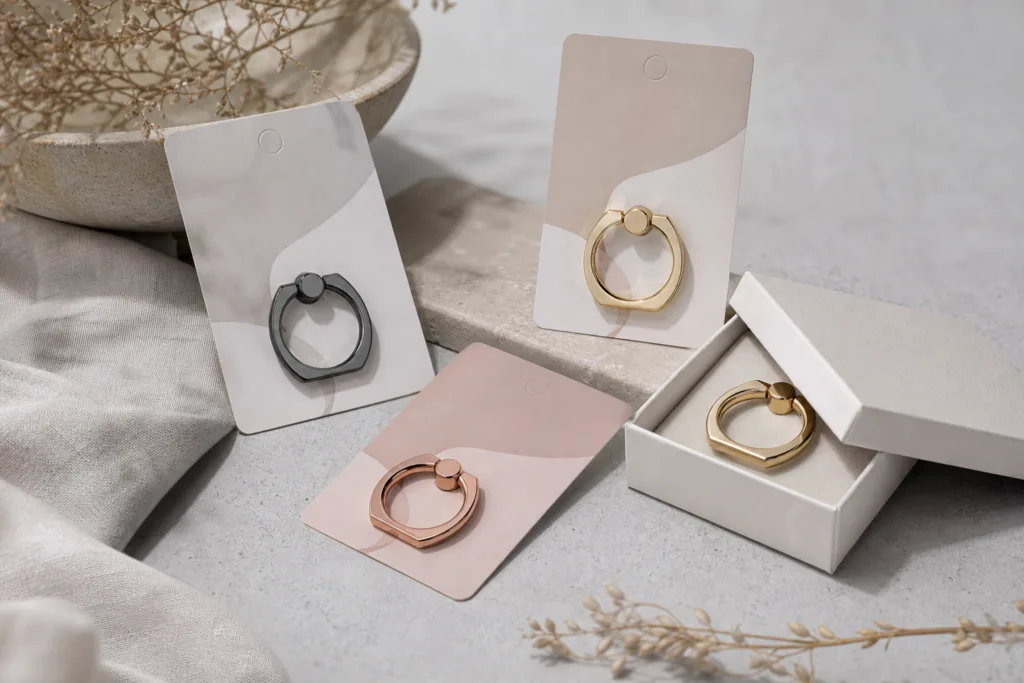
- Add custom backing cards or window boxes for stronger shelf presentation
In our product development work, the most successful concepts usually start from the user scenario first and decoration second. A shape that looks impressive but is awkward to open or uncomfortable to hold rarely performs well over time.
How to Evaluate a Manufacturer for Custom Phone Rings and Grips
Supplier evaluation should focus on process fit, not only price. A manufacturer that understands both metal finishing and small moving-part assembly is generally a better fit than a source that only handles static decorative items.
Ask practical questions such as:
- What production method is recommended for my design and why?
- Can you advise on artwork simplification for clear small-scale logos?
- How is hinge resistance checked during production?
- What finish options are realistic for repeated handling?
- Can you support private label packaging and barcode application?
- What sample stages are available before full mass production?
Good communication is also a strong indicator. Clear discussion of tolerances, finish risks, adhesive compatibility, and packaging details is usually a positive sign that the supplier understands functional metal accessories.
For private label or export programs, packaging and age-intended use should also be reviewed carefully. Depending on the market and how the item is sold, buyers may need to verify labeling and packaging compliance for consumer accessories before launch, especially if the product is part of a broader retail accessory line.
Common Mistakes to Avoid When Ordering Custom Metal Phone Accessories
- Choosing shape before checking hand comfort and ring motion
- Overloading a small surface with too much logo detail
- Ignoring case material and adhesive compatibility
- Selecting highly polished finishes without understanding scratch visibility
- Approving visual samples without functional testing
- Underestimating packaging requirements for retail sale or gifting
- Comparing quotations without checking process differences
Many order problems come from treating the product as a simple decoration. In reality, metal grips are a mix of metal craft, moving hardware, surface finishing, and consumer-use practicality.
Conclusion
Custom phone rings can be a strong B2B accessory category when buyers approach them with the right manufacturing logic. The best results usually come from matching material, finish, motion structure, logo method, and packaging to the actual market use. Whether the goal is a premium private label line, a branded promotional accessory, or a bundled retail item, metal grips perform better when function and styling are developed together from the beginning. A clear sample process, realistic finish expectations, and focused quality control will do more for long-term order success than chasing the lowest unit price alone.
FAQs
What material is most practical for custom metal phone rings?
Zinc alloy is often the most practical choice because it supports die-cast custom shapes, 3D logo effects, and a wide range of finishes at a workable cost level. Stainless steel is a good option for cleaner and more minimalist designs, while brass can be useful for refined engraved branding and aluminum can help when low weight is important.
Can custom phone rings include detailed logos and brand colors?
Yes, but the right method depends on the artwork. Fine logos may work better with laser engraving or recessed detailing, while strong brand colors are often better handled with enamel filling or printing. During artwork review, small gaps, thin lines, and tiny text may need to be adjusted so the final result stays clear in mass production.
Do metal grips work on every phone case?
Not always. Adhesive-backed metal grips usually perform best on clean, flat, and stable case surfaces. Textured materials, soft-touch coatings, curved areas, and some silicone-like surfaces can reduce bonding reliability. Buyers should test the intended case material during sampling instead of assuming all cases will behave the same way.
What should buyers confirm during sample approval?
Sample approval should cover more than appearance. Buyers should check ring rotation feel, stand function, edge comfort, adhesive area, finish tone, logo clarity, and how the product looks on a real phone or case. If the order includes private label packaging, inserts, barcodes, and application instructions should also be confirmed at the same time.
What usually affects MOQ and lead time for custom metal grips?
MOQ and lead time are typically influenced by mold complexity, material choice, finish steps, logo process, moving-part assembly, and packaging requirements. Standard structures with simple engraving are usually easier to schedule than fully custom die-cast designs with enamel colors, plated finishes, and retail-ready packaging.
How can buyers reduce quality problems in bulk production?
The most effective approach is to define approval standards early and tie them to the sample. Buyers should align with the manufacturer on finish expectations, logo readability, rotation resistance, edge quality, adhesive placement, and packaging details before mass production begins. Clear communication and practical QC checkpoints usually prevent more problems than late-stage inspection alone.