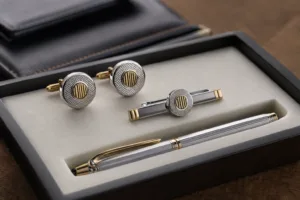
Branded letter openers occupy an interesting space in executive desk accessories: they are practical enough to be used, visible enough to carry brand identity, and refined enough to support a professional office image. For corporate buyers, that combination matters. A well-made letter opener can reinforce presentation on an executive desk, support office welcome kits or gifting programs, and express a company’s attention to detail through material, finish, and logo execution. From our manufacturing perspective, the real buying decision is not simply whether to add a logo, but how to balance weight, shape, finish, durability, and packaging so the product feels intentional rather than generic.
If your project involves executive accessories that need strong material presence, controlled logo detail, and consistent bulk production, our metal crafts manufacturing overview helps connect the concept to real production choices. Buyers often need support beyond appearance alone, including selecting stainless steel or zinc alloy structures, choosing engraving or plated finishes, approving samples before rollout, and matching the accessory with private-label packaging or desk-set presentation. That is where manufacturer-side planning becomes important, especially when the item is meant to represent a brand in a premium office setting.
Why branded letter openers matter in executive office settings
In many offices, desk accessories communicate more than function. A letter opener sits in plain view, is handled at close range, and can become part of the visual language of a workspace. Compared with purely decorative items, it offers a more credible branding surface because it has a real use. Compared with disposable promotional items, it can project stability and permanence.
That is why companies use branded letter openers in several ways:
- Executive desk accessories for senior management or boardrooms
- Corporate welcome gifts for leadership hires or partners
- Client gifts where understated branding is preferred
- Recognition sets paired with desk nameplates or paperweights
- Office branding programs that aim for a polished, coordinated look
The value comes from subtlety. A good letter opener should not feel like a giveaway with a logo attached. It should feel like a useful object that naturally carries the brand.
How letter openers combine function and brand signaling
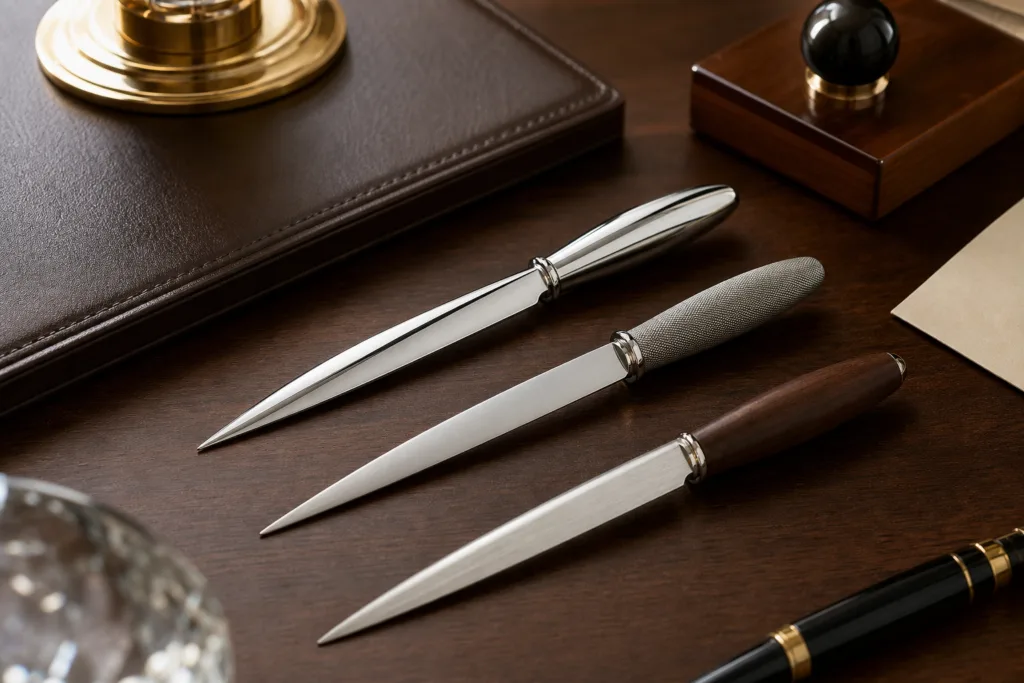
Functionally, a letter opener does one job: it opens envelopes cleanly. But for B2B buyers, that job must be delivered with the right visual and tactile experience. If the blade edge is too blunt, the tool feels ineffective. If the handle is too light, it can feel cheap. If the logo method is poorly chosen, branding may look weak or wear unevenly over time.
The stronger products balance three layers of value:
- Utility: easy handling, smooth opening action, safe edge profile
- Presentation: balanced weight, polished finish, executive appearance
- Brand expression: logo placement, engraved detail, consistent color or plating
In our production work, buyers often discover that small physical choices create a large difference in perceived quality. A slightly thicker handle, a cleaner edge transition, or a more suitable finish can move the product from ordinary merchandise to a credible executive accessory.
Why companies choose them for gifting and office identity
Branded letter openers work especially well when a company wants a corporate accessory that is professional but not overly personal. Pens are common, but also easily replaced. Keychains are practical, but not strongly associated with executive space. Letter openers, by contrast, fit the desk environment naturally and can be presented as part of a refined workspace set.
They are often selected when buyers want to:
- Build a coordinated executive desk set
- Offer branded gifts with long-term office use
- Match a company’s visual identity through metal finish and logo treatment
- Create a premium item with moderate customization complexity
Some buyers pair them with engraved logo nameplates for desks to create a more complete desk presentation. This is especially relevant for management offices, meeting rooms, and ceremonial onboarding kits where the accessory should feel integrated rather than standalone.
Common materials used for letter openers
Letter openers can be produced in metal, stainless steel, brass, zinc alloy, aluminum, wood, or plastic, but not all materials deliver the same executive effect. For B2B custom projects, the material should be evaluated not only for appearance, but also for structure, edge quality, logo compatibility, corrosion behavior, and packaging expectations.
Stainless steel
Stainless steel is a strong option when buyers want a clean modern appearance, good corrosion resistance, and a slim yet durable profile. It suits engraved logos, brushed finishes, and more contemporary corporate aesthetics. For blade-like forms, stainless steel also supports crisp edge definition without requiring the heavy look of cast products.
Brass
Brass is associated with warmth, weight, and traditional executive style. It performs well for polished, antique, or gold-tone presentations and can support engraving or etched logo treatments attractively. Its premium feel is one reason buyers use it for classic office environments or commemorative desk accessories.
Zinc alloy
Zinc alloy is widely used for custom metal products with shaped handles, decorative structure, or more dimensional branding features. It is well suited for die-cast letter opener handles or ornamental sections because it allows flexible form development. When the design emphasizes shape and presence rather than a minimal blade profile, zinc alloy can be very practical.
Aluminum
Aluminum is useful when lower weight, clean machining, and modern styling are priorities. It can be a cost-effective material for sleek executive accessories, especially where portability or lighter handling is desired. As noted in Aluminum as a lightweight material for custom executive accessories, aluminum is valued in processing because it can be formed efficiently and finished in ways that support corrosion resistance and attractive surfaces. For letter openers, that means it can work well in streamlined designs, although some buyers may still prefer heavier metals for a more premium hand feel.
Wood and plastic
Wood and plastic can be used for lower-cost or mixed-material versions, but they usually deliver a different message. Wood can look warm and traditional, especially when paired with metal trim. Plastic can reduce cost, but it rarely provides the executive weight or surface refinement expected in premium desk accessories. For branding programs aimed at management, finance, legal, hospitality, or boardroom environments, metal usually remains the safer choice.
Why metal letter openers are often preferred
Metal tends to perform better because it supports the key signals corporate buyers care about: durability, perceived value, finish variety, and better logo permanence. A metal surface can be polished, plated, engraved, etched, sandblasted, or antiqued in ways that help the product feel substantial and tailored.
From a sourcing standpoint, metal also offers better consistency for premium presentation. That matters when the order is part of a large gifting program, office installation, or private-label accessory line. At Gairun, we often see buyers choose metal because it gives them more control over finish alignment, logo clarity, and the overall executive impression of the final product.
Material comparison for B2B buyers
| Material | Main Strength | Possible Limitation | Best Use Scenario |
|---|---|---|---|
| Stainless steel | Clean look, corrosion resistance, durability | Less decorative than cast styles | Modern executive desks, corporate gifts |
| Brass | Premium weight, classic appearance | Higher material cost | Traditional executive accessories, commemorative gifts |
| Zinc alloy | Flexible shape development, dimensional handle design | Can feel heavy if oversized | Custom-shaped branded designs |
| Aluminum | Lightweight, modern, efficient to manufacture | Lower hand weight than brass or zinc alloy | Sleek office accessories, lighter mail tools |
| Wood | Warm visual appeal | Less precise for sharp branding detail | Mixed-material gifting sets |
| Plastic | Lower cost | Weak premium perception | Budget-oriented promotions |
For many corporate buyers, the practical decision comes down to this: stainless steel for modern simplicity, brass for traditional prestige, zinc alloy for sculpted design, and aluminum for lightweight contemporary styling.
Popular finishes and surface treatments
Finish selection changes both the visual language and the branding effect of a letter opener. Two products made from the same base metal can look completely different depending on the surface treatment.
Polished finishes
Polished metal creates a bright, formal appearance. It works well for logos that rely on light reflection and clean presentation. Buyers should remember that mirror-like surfaces show fingerprints more easily, so packaging and handling procedures matter.
Matte and brushed finishes
Matte or brushed treatments give a more restrained executive look and often make engraved logos easier to read. They are common when the brand image is modern, understated, or architectural. Buyers drawn to minimal aesthetics often also appreciate matte black nameplate finishes for coordinated desk presentation across accessories.
Antique finishes
Antique brass, antique nickel, or antique silver finishes can make a product feel more ceremonial or heritage-oriented. These are useful for law firms, clubs, institutions, or executive gifts where a classic tone is preferred. The same design language often overlaps with antique brass nameplates for executive style when buyers want a unified office accessory set.
Plated finishes
Gold-tone, nickel, chrome, gunmetal, and similar plated surfaces can elevate visual impact. The right plating should match the brand environment rather than simply look expensive. For formal recognition sets or high-visibility gifting, buyers sometimes align the accessory with gold-plated nameplates for premium branding so the desk accessory family shares the same visual direction.
Sandblasting and texture work
Sandblasted or fine-textured surfaces can reduce glare and provide contrast against polished or raised logo zones. They are especially useful when the design needs depth without excessive ornament.
Logo customization methods that suit executive accessories
The logo method should match the material, finish, and expected use level. On executive accessories, branding usually works best when it looks integrated into the object, not applied as an afterthought.
Laser engraving
Laser engraving is popular for stainless steel and coated metal surfaces. It offers clean detail, works well with small logos or text, and supports understated branding. It is often the first choice for modern corporate identity.
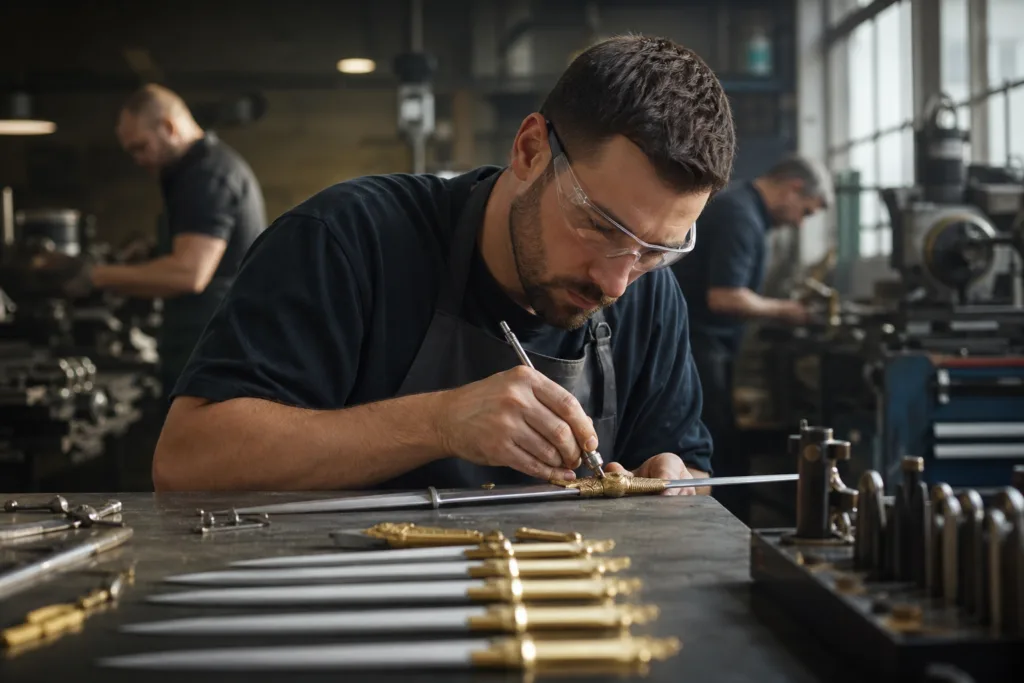
Etching
Etching can create refined recessed details and is useful for logos, text, or decorative lines. It works especially well when the design needs precision without raised structure.
Embossing and debossing
Raised or recessed logo areas can add depth and tactile appeal, especially on cast handles or thicker structural zones. These methods can be effective when branding should be felt as well as seen.
Color filling
Color filling can be used selectively, but executive products usually benefit from restraint. One-color fill in a recessed logo may work if the corporate identity requires it, but too many colors can make the piece feel more promotional than premium.
In most executive desk programs, we recommend starting with the question, “Should the logo be subtle or central?” That answer determines whether engraving, etching, raised detail, or limited color is the better path.
Design factors that affect executive appeal
Buyers sometimes focus heavily on material and logo while overlooking physical usability. A letter opener should look elegant, but it also has to feel balanced in the hand and perform smoothly.
Shape and proportion
The silhouette should suit the intended environment. Narrow and streamlined designs fit contemporary offices. Broader handles and decorative ends suit more traditional executive spaces.
Handle comfort
Grip is important. Even though the product is used briefly, a handle that is too thin or too slippery reduces the quality impression. Slight contouring or thickness can improve handling significantly.
Blade safety
The opening edge should function efficiently without appearing hazardous. Executive accessories should feel safe in normal desk use and present well in boxed packaging.
Desk presentation
Consider whether the product will be stored in a box, placed on a tray, or displayed openly on the desk. This affects finish choices, protective sleeves, and whether the design should include a stand or matched accessory set.
Matching personal style and corporate identity
A good branded letter opener should reflect both user preference and company image. A conservative financial institution may prefer brushed stainless steel or antique brass with discreet engraving. A design firm may lean toward matte black, minimal geometry, and a sharp modern profile. A luxury hospitality brand may want warm metal tones, a smooth polished surface, and custom presentation packaging.
When we review artwork and design direction with buyers, we usually look at four alignment points:
- Brand tone: formal, modern, traditional, premium, minimalist
- Desk environment: executive office, reception, boardroom, client-facing space
- Logo behavior: subtle engraving or visible display branding
- Packaging context: single gift box, onboarding set, award presentation, retail-style box
Those choices matter more than simply choosing the most expensive material.
Best use cases for branded letter openers
Not every buyer needs the same structure or finish. The right product depends on the intended use case.
| Use Case | Recommended Direction | Branding Style |
|---|---|---|
| Executive desk accessory | Stainless steel or brass, balanced weight | Laser engraving or subtle etched logo |
| Corporate welcome gift | Zinc alloy or stainless steel with gift box | Visible but restrained logo placement |
| Award or recognition item | Brass or plated metal with premium finish | Engraved name, date, or event detail |
| Client gift | Understated metal design, compact packaging | Small logo, polished or matte finish |
| Desk set pairing | Finish matched with nameplate or paperweight | Consistent logo style across accessories |
What to confirm before placing an order
Custom desk accessories may look simple, but clean production depends on good preparation. Buyers should confirm the following before the project moves to mass production:
- Artwork files: vector logo files help preserve line clarity and spacing
- Size and thickness: affects feel, weight, and packaging dimensions
- Material choice: influences finish compatibility and perceived value
- Logo method: engraving, etching, embossing, or color fill
- Sample approval: essential for checking edge feel, logo position, and finish tone
- MOQ: depends on structure, mold requirement, and packaging style
- Lead time: varies by material, finish complexity, and order volume
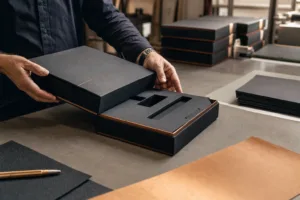
- Packaging: pouch, gift box, foam insert, sleeve, or branded presentation set
When the design includes a custom handle shape or special structural feature, mold development becomes a critical part of the timeline. Simpler flat or minimally shaped products may reduce tooling complexity, while more sculpted forms need more approval discipline.
Quality checks and sourcing risks to review
Corporate buyers should not evaluate a letter opener based only on a rendering or catalog photo. The real quality risks usually appear in edge finish, plating consistency, weight balance, logo readability, and packaging protection.
Key inspection points include:
- Surface scratches or polishing inconsistencies
- Plating tone variation between units
- Weak or blurred engraving detail
- Rough seam lines on cast handles
- Uneven assembly between handle and blade section
- Poor edge smoothness that affects user comfort
- Packaging that allows movement and surface damage during transit
From a manufacturer perspective, sample review is where many of these problems are solved. A proper pre-production sample lets buyers verify not just color and logo, but also weight feel, handling comfort, and overall executive presentation.
How branded letter openers compare with other executive accessories
Letter openers are not the only option for executive branding, so buyers often compare them with pens, paperweights, and metal key accessories.
| Accessory | Main Advantage | Potential Drawback |
|---|---|---|
| Letter opener | Functional, visible on desk, strong executive character | More niche than pens |
| Pen | Universal daily use | Highly common, less distinctive |
| Paperweight | Strong visual presence | Limited active use |
| Keychain | Portable and practical | Less connected to executive desk identity |
| Nameplate | High office visibility | Less suitable as a personal gift item by itself |
That comparison shows why branded letter openers work well in a specific middle ground: more distinctive than pens, more functional than paperweights, and more desk-relevant than many portable accessories.
Final buying checklist for selecting the right option
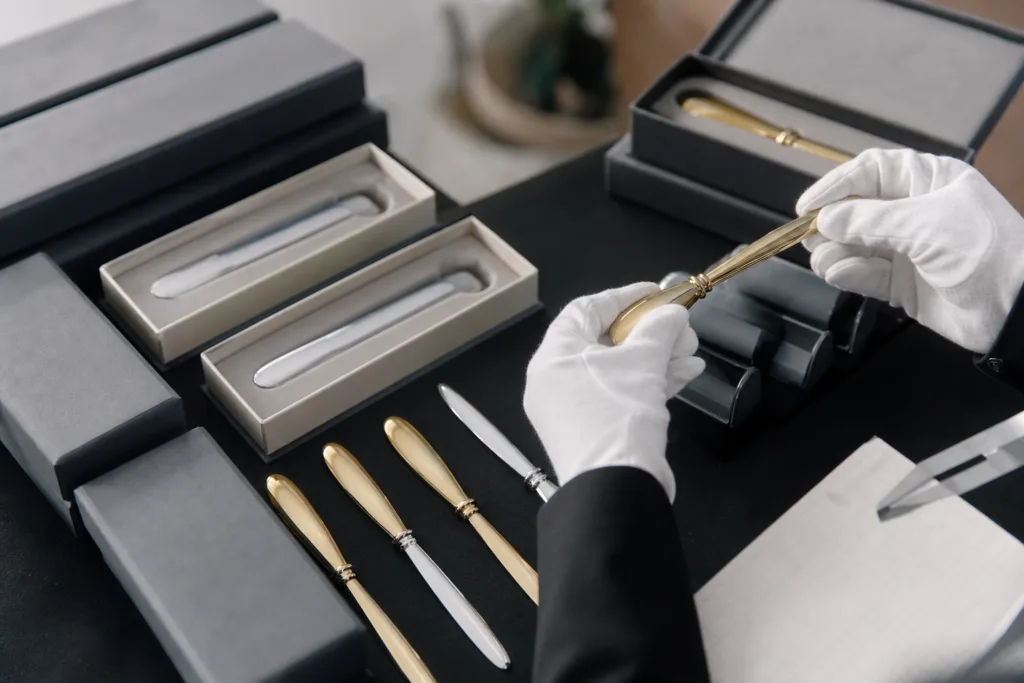
Before approving a project, we suggest buyers review this short checklist:
- Does the material match the brand image: modern, classic, premium, or minimal?
- Is the weight appropriate for executive use without feeling awkward?
- Will the chosen finish show the logo clearly?
- Does the branding method suit the desired level of subtlety?
- Has the sample been checked for edge quality, comfort, and packaging fit?
- Is the item meant to stand alone or coordinate with other desk accessories?
- Have MOQ, mold cost, and delivery timing been confirmed early?
- Is the packaging strong enough for gifting and shipping?
When these points are addressed early, branded letter openers become easier to source confidently and easier to present internally to procurement, marketing, or executive stakeholders.
Conclusion
Branded letter openers can be a smart choice for companies that want a desk accessory combining function, executive presentation, and durable brand expression. The strongest results usually come from matching the right metal to the right finish, choosing a logo method that fits the intended tone, and verifying samples carefully before bulk production. Whether the goal is a modern stainless steel office accessory, a brass executive gift, or a coordinated desk set with custom packaging, the product should feel deliberate in both use and appearance. For B2B buyers, that is what turns a simple office tool into a credible branded asset.
FAQs
Are branded letter openers suitable for premium corporate gifts?
Yes, they can be very suitable when the material, finish, and packaging are chosen correctly. Metal versions in stainless steel, brass, or zinc alloy usually create a stronger executive impression than low-cost materials, especially when paired with engraving, a refined plated finish, and a structured gift box.
Which material is usually best for custom branded letter openers?
The best material depends on the image and budget of the project. Stainless steel works well for clean modern styles, brass suits classic premium presentation, zinc alloy is useful for more sculpted custom shapes, and aluminum is a good option when buyers want a lighter and more contemporary accessory.
What logo method looks most professional on executive desk accessories?
For most executive applications, laser engraving or fine etching looks the most professional because the branding appears integrated into the product rather than overly promotional. Raised or recessed logos can also work well on thicker handles, while color filling is usually best kept minimal for a more premium result.
Do custom letter openers usually require a mold?
It depends on the structure. A simple flat design may not need the same tooling approach as a shaped die-cast handle or decorative custom form. If the project includes a unique silhouette, molded handle, or embossed structural detail, tooling is often required and should be reviewed early in the quotation stage.
What should buyers check during sample approval?
Sample approval should cover more than logo placement. Buyers should check the actual hand feel, overall weight, finish tone, engraving clarity, edge smoothness, assembly quality, and packaging protection. These factors affect whether the item feels like a true executive accessory once mass production begins.
Can branded letter openers be matched with other desk accessories?
Yes, and that is often where they deliver the most value. Many buyers pair them with desk nameplates, paperweights, or presentation boxes so the finish, logo style, and overall visual language stay consistent across the full executive set.