Understanding MOQ for Custom Zinc Alloy Packaging Parts: Key Concepts
MOQ for custom zinc alloy packaging parts—short for Minimum Order Quantity—is a crucial concept for brands hoping to order custom-made Zamac closures, box hardware, or decorative accents. Whether you’re new to packaging hardware or sourcing for a growing beauty brand, understanding what determines MOQ helps you balance investment, quality, and supply chain flexibility. Let’s dive in.
What MOQ Means in Zinc Alloy Die Casting
MOQ, or Minimum Order Quantity, is the smallest batch a manufacturer is willing to produce per order. In custom zinc alloy parts, it’s shaped by the realities of tooling, material, finishing, and quality control. Low MOQ requests are popular—but there are limits dictated by molding, plating, and even color consistency. For context, brands often research MOQ zinc alloy die casting or low MOQ zinc alloy parts to find out if small runs are really possible.
Mold Costs: The True Starting Point for MOQ
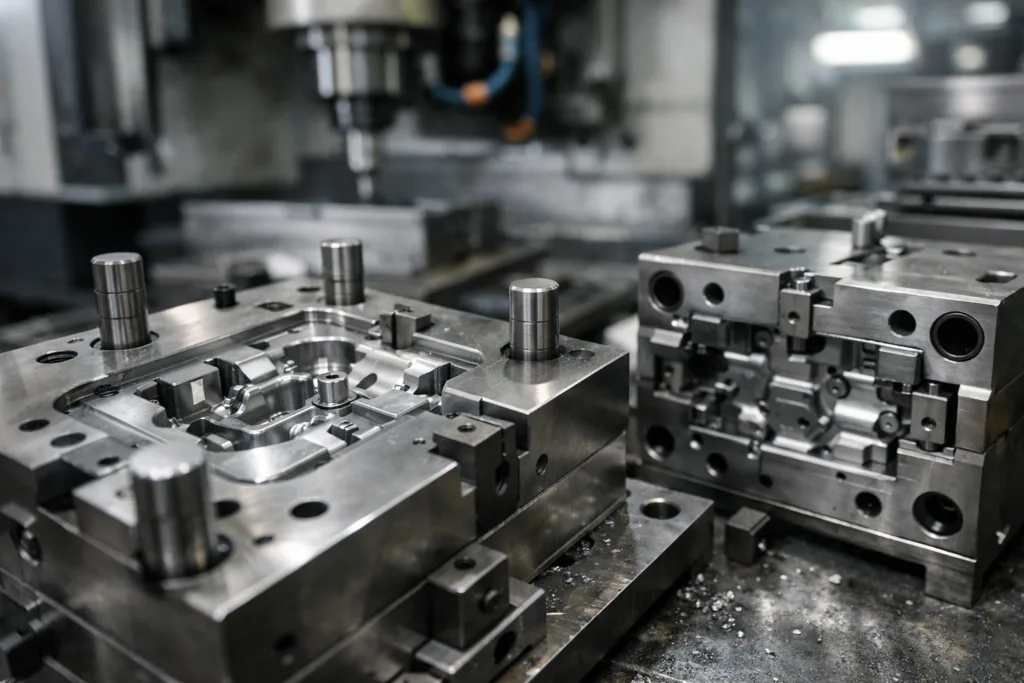
Every custom zinc alloy part requires a unique mold—usually CNC-cut, high-precision steel. Mold cost isn’t included in the part’s unit price. For new designs, mold cost can run $400 to $1200 (USD) per cavity. Because making a single sample demands almost as much setup as a 10,000-piece run, most factories set their MOQ high enough to keep per-part cost reasonable, spreading out the mold investment. For cost variables, check this guide: Unlocking Real Zinc Alloy Die Casting Costs.
Die Casting Process: Machine, Cycle, and Scrap Factors
Zinc alloy die casting uses high-pressure machines and precise molds, producing consistent results. But setting up, heating the alloy, and balancing waste means most parts come with a recommended batch size—commonly 2000 to 5000 units per run. Shorter runs (below 500 pcs) can increase cost by 25–80% and sometimes aren’t feasible for tiny, complex parts due to machine yield and process loss.
Electroplating and Finishing: Batch Minimums and Color Consistency
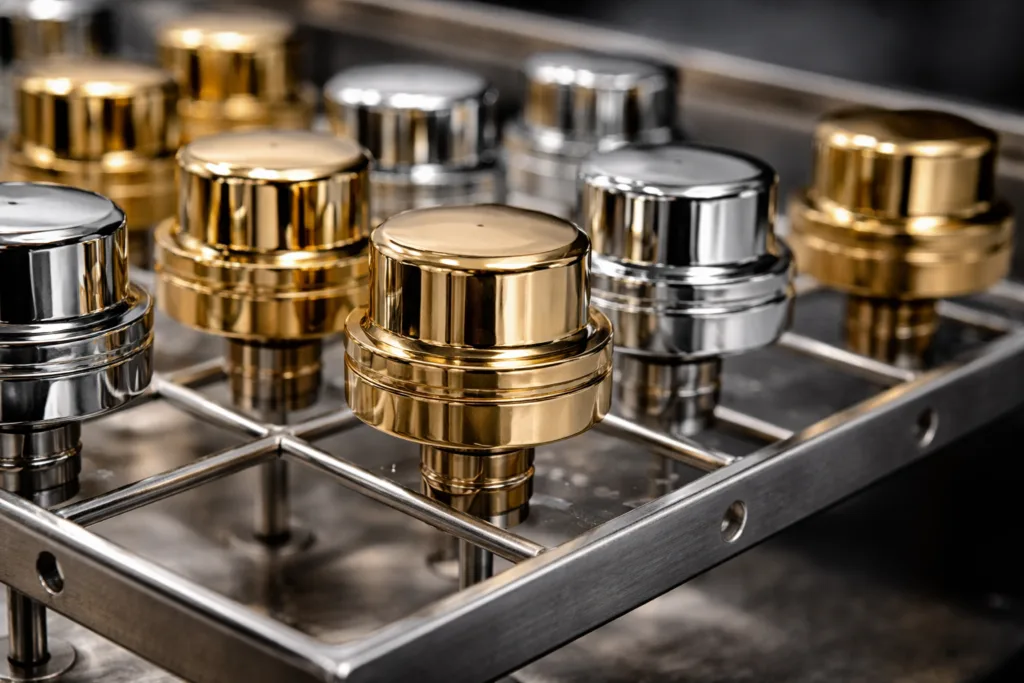
Electroplated finishes—gold, nickel, black, antique—are what give zinc alloy packaging hardware their luxurious look. However, plating tanks are batch-based, and uniformity depends on processing enough pieces at once. For consistent color or gloss, factories often require 500–1000 units of each finish and color.
Batch Plating vs. Rack Plating Explained
High-end brands sometimes specify rack plating for flawless, jewelry-quality parts. Rack plating requires even larger batches (often >1000 pcs per rack), but the results justify the MOQ. For mid-market, barrel plating may allow slightly lower MOQs, with potential minor color variations.
Common MOQ Ranges by Zinc Alloy Part Type
| Zinc Alloy Part Type | Typical MOQ (pcs) | Low MOQ Feasibility |
|---|---|---|
| Perfume bottle caps / Closures | 1000 – 5000 | Possible down to 500 with surcharge |
| Decorative box locks / clasps | 1000 – 3000 | 500–1000 with finish/color limits |
| Box hinges / accessories | 2000 – 3000 | As low as 1000, standard color only |
| Cosmetic packaging parts | 2000 – 5000 | Special negotiation for 1000 pcs |
| Metal emblems / logos | 500 – 1500 | Easier to negotiate small batches |
Why Are There MOQ Requirements?
The origins of MOQ in zinc alloy die casting come down to three main issues:
- Tooling amortization: Spreading the mold/tool cost across each part lowers unit price.
- Process batch efficiency: Die casting, plating, and finishing steps work best in large batches.
- Quality consistency: Electroplating and coloring need minimum quantities for color stability.
Typical MOQ Ranges for Key Zinc Alloy Packaging Parts
- Closures and caps (perfume, cosmetic, spirit bottles): 1,500 – 5,000 pcs per design/finish. Some luxury cap styles, especially with enamel fill or multi-tone plating, may need even higher MOQs. For advanced closure selection, see The Ultimate Guide to Zinc Alloy Clasps and Box Locks.
- Box hardware (locks, hinges, corner covers): 2,000 – 3,000 pcs per finish. Hinges needing high load tolerance may require more for stability testing. For durability, 27 Key Insights into Zinc Alloy Hinges goes further.
- Decorative medallions/logos: 500 – 1,500 pcs. Lower MOQ is possible if the part is flat, single tone, or uses a stock mold.
Exceptions: When Low MOQ Is Possible
Certain conditions allow for lower MOQs, usually with limitations:
- Using existing molds: Some factories keep “open” molds for generic parts, which means brands can order as few as 500 pcs by accepting standard shapes and finishes.
- Batching with other orders: If your part shares color/finish with a larger customer, factories may group orders to hit plating minimums—saving you cost and allowing, say, 300–500 pcs per batch.
- Common finishes only: Standard gold, nickel, or antique colors have more batching opportunity.
- Accepting color variances: For test orders or samples, accepting light color discrepancy lets you run smaller batches, though results may differ from the final run.
MOQ Challenges: Custom Color Matching and Electroplating
Consistent color—the hallmark of luxury—is difficult to guarantee below plating bath minimums. Unique finishes (rose gold, gunmetal, PVD multi-tones) demand larger batch sizes per strict process control. For a deeper look at finish selection challenges, you may consider The PVD vs Electroplating for Zinc Alloy Parts Guide.
Low MOQ Strategies That Actually Work
- Choose universal parts: If possible, share closures or clasps across multiple SKUs in your line to reach higher batch sizes.
- Order in seasonal batches: Group several orders into one run to achieve process economies and consistent color.
- Use ‘mix and match’ finishing: Select standard finishes compatible with existing batches at your supplier’s shop.
- Plan for design tweaks: Minor size or mold adjustments make it easier to use existing molds, driving down your effective MOQ.
MOQ Realities for Specialty Zinc Alloy Hardware
For highly engineered or unique items—hidden-lock closures, multi-part hinges, snap-fit components—the MOQ can be dictated by testing and assembly needs, not just casting or plating. Premium manufacturers like Gairun often insist on higher minimums for complex parts to maintain tight tolerance and reliable fit.
Why High-Quality Demands Slightly Higher MOQ
Premium finishing—like hand polishing, multi-stage PVD, or tight-plating tolerances—works best at scale. In luxury goods, trading ultra-low MOQs for quality risks, like inconsistent shine or off-tone finishes, rarely pays off. Experienced suppliers reject functionally acceptable but visually imperfect pieces, further raising the effective MOQ for brands that demand top-tier luxury appeal.
Shared Surface Finishes: A Smart MOQ Reduction Tactic
One of the most reliable ways to order below-standard MOQ is to leverage a finish already in production. For example, if a supplier routinely plates gold for another brand, you may “piggyback” onto their batch and order as few as 300–500 units. This requires flexible timelines but can significantly cut costs.
The Impact of Zinc Alloy Formula and Purity on MOQ
Not all zinc alloys are created equal. Premium makers, such as Gairun, strongly favor virgin Zamac 3 for its casting fidelity and smooth finish, and never blend excessive recycled content (which can cause surface pitting at small batch scales). For ultra-high gloss or jewelry-grade finishes, a stable alloy formula trumps tiny batch size every time.
MOQ for Custom Zinc Alloy Packaging Parts: What’s Realistic
In reality, a “true” low MOQ for custom zinc alloy packaging parts means 500 to 1500 units is sometimes possible for simple parts or standard finishes, but most custom luxury designs are closer to 2000–5000 units per spec and finish. If a supplier offers “any MOQ” with no pricing impact or quality disclaimer, it’s wise to be cautious.
Mold Fee Sharing and Modular Mold Strategy
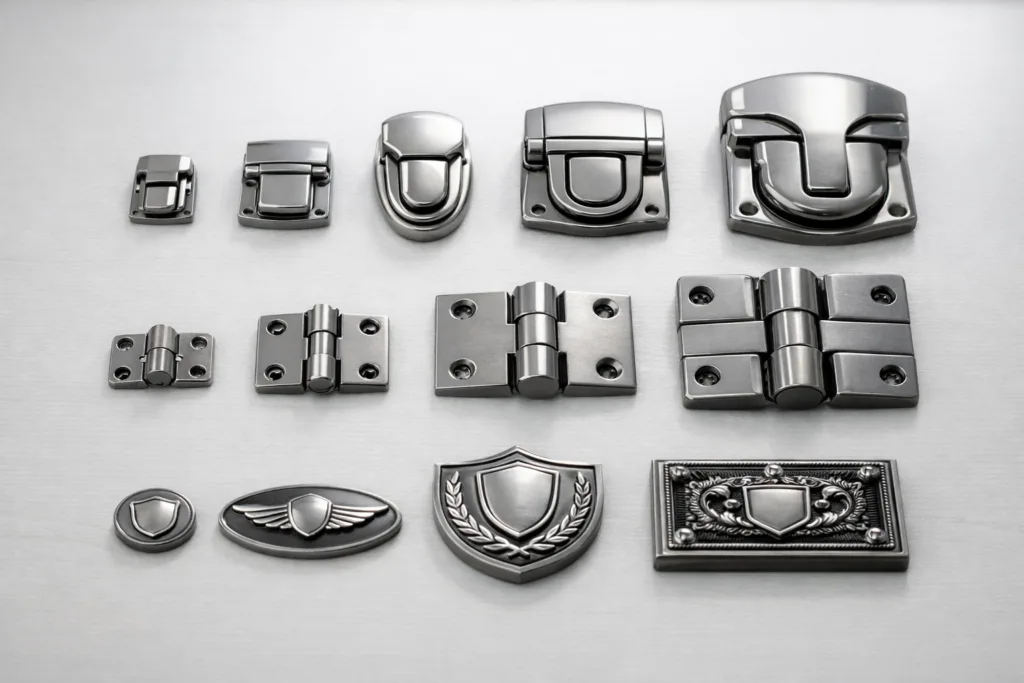
Some suppliers let brands share the cost of a generic mold, or use modular inserts to change key design elements inexpensively. This lowers the upfront investment and enables lower MOQs by leveraging mold parts shared across multiple customers or product lines.
Case Studies: MOQ Exceptions in Practice
- Generic bottle cap with common finish: Ordered at 500 units by accepting gold only, with a two-week lead time extension for batch sharing.
- Custom logo badge using modular mold: First run at 1000 pcs, using replaceable letter inserts in the mold to spread cost.
- Luxury box hinge, mirror polish: Only available at 3000 pc MOQ, due to multi-step QC and polishing needs.
Colors and MOQ: The Science Behind Finish Variation
The more unique or niche the color (like rose gold or bicolor), the higher the practical MOQ. That’s because each exclusive finish comes with setup, test, and cleaning costs to prevent color contamination, making small runs less viable unless you’re willing to pay a steep premium per part.
Batching Strategy: How Group Orders Affect MOQ
Brands with multiple SKUs, product lines, or markets can combine orders for the exact same part, grouping 500 units each across four fragrances to hit a 2000-pc MOQ. This keeps per-unit pricing competitive and finish consistent across all items.
MOQ vs. Lead Time: The Surprising Tradeoff
Ultra-low MOQs sometimes lead to longer lead times due to batching and queueing with other orders. If you need speed, you may have to commit to a higher quantity or accept a standard finish that’s always in production.
Communicating Your MOQ Needs with Suppliers
Be upfront about your ideal batch size, and ask for realistic options—not just price, but color, finish, and timeline. Use pictures, references, and be willing to discuss alternative choices if minimums can’t be met for your first pick. For quoting tips, see this effective RFQ Template for Zinc Alloy Packaging Parts.
How to Negotiate Realistically on MOQ
Suppliers appreciate honesty and long-term vision. Brands that signal repeat business or line expansions often find more flexibility on MOQ. Rather than pushing for the world’s lowest quantity, propose reasonable compromises on finish or production schedule to unlock better opportunities.
Red Flags: When Ultra-Low MOQ Means Risk
Beware of factories promising low MOQ without upfront details on quality, finishing, and tolerance. They may combine your order with unrelated batches, skip quality control steps, or use subpar alloys.
Steps to Lower Effective MOQ Without Sacrificing Quality
- Accept minor design tweaks to use an existing or modular mold
- Be flexible on color or finish scheduling
- Group multiple items for a combined batch run
- Work with your supplier to plan ahead and avoid rush orders, which usually raise MOQ
Real-World MOQ Planning for Brand Growth
As your collection grows, thinking strategically about universal parts, finishes, and scheduled production lets you hit the sweet spot between flexibility, cost-efficiency, and luxury-grade consistency. Established manufacturers like Gairun will often help you build a spec architecture to anchor future product launches around shared parts or finishes, lowering both cost and risk.
Conclusion
MOQ for custom zinc alloy packaging parts is governed by technical realities—mold setup, plating batch size, and quality requirements. While some projects may qualify for lower minimums, especially by sharing tools or finishes, most luxury-tier custom work sees MOQ ranges from 1000 to 5000 pieces for optimal cost, quality, and consistency. The smartest approach: communicate early, design flexibly, and partner with experts who put material integrity and finish perfection first.
Frequently Asked Questions
What is a typical MOQ for custom zinc alloy perfume caps?
Most suppliers require 1,500 to 3,000 pieces per design/finish due to mold and electroplating batch constraints. Lower MOQs may be possible for generic shapes or finishes, with potential surcharges.
Can I order less than the stated MOQ?
Sometimes, if you use a standard shape, commonly plated finish, or agree to share a batch with other orders. Expect a higher per-unit cost and possible color variation on tiny runs.
How does finish choice impact my MOQ?
Exotic or multi-tone finishes demand higher batch minimums for consistent results, while standard gold, nickel, or antique options have more flexibility for small runs.
Is mold cost included in the unit price?
No, mold costs are a one-time investment per design and separate from per-piece pricing. Sharing molds or using modular tools can help lower this upfront requirement.
What’s the risk of extremely low MOQs?
Consistent quality and color may not be achievable, and the factory may cut corners. Always clarify process details and inspect samples before production.
How can brands gradually reduce MOQ as they grow?
Standardizing parts, agreeing on universal finishes, and coordinating order batches with your supplier all help reduce effective MOQ over time—without sacrificing quality or consistency.
Related Reading
- Revealed: The 5 Core Factors Behind Die Casting Prices & Mold Fees
- PVD vs. Electroplating: Which Finish Wins for Zinc Alloy Packaging?
- When Zinc Alloy Clasps & Locks Outperform Magnets for Packaging Closures
- The Fast RFQ Template That Prevents Quoting Errors for Packaging Hardware
- Unlocking Durability: 27 Key Insights for Zinc Alloy Hinges on Premium Boxes