Zinc Alloy 3D bottle openers are often chosen when buyers want more than basic utility. In our manufacturing work, this type of opener stands out because it can combine a solid hand feel, sculpted 3D detail, dependable opening performance, and a presentation level that suits branded gifts, event merchandise, hospitality programs, and retail accessories. For B2B buyers, the real question is not just whether zinc alloy works, but how material choice, die-cast structure, finishing, and design decisions combine to create a product that genuinely feels premium quality in the hand.
If your project sits within a broader custom gifting, souvenir, or branded hardware program, our custom metal products manufacturing overview is a useful starting point because it connects bottle opener development with material selection, mold planning, plating choices, packaging, and bulk-order control. We support buyers who need practical guidance on 3D product structure, logo interpretation, sample approval, OEM or private label presentation, and production consistency before a custom opener moves into volume manufacturing.
What a zinc alloy 3D bottle opener is and why it feels premium
A zinc alloy 3D bottle opener is typically a die-cast metal opener with raised and recessed surfaces that create depth, contour, and a sculpted look. Unlike flat stamped openers, a 3D version can reproduce more shape variation in one body: mascot forms, shield outlines, layered logos, architectural silhouettes, textured backgrounds, or character-driven souvenir designs.
The premium feel comes from a combination of factors rather than one single feature. Weight is one part of it. Surface finish is another. Edge smoothness, thickness, contour transitions, plating uniformity, and the way the opener engages a bottle cap all contribute to the user’s impression. An opener may look expensive in a photo, but if it feels thin, rough, unbalanced, or awkward to use, buyers will notice that immediately. That is why we treat visual design and functional geometry as one development task rather than two separate steps.
Why zinc alloy is a strong choice for 3D openers
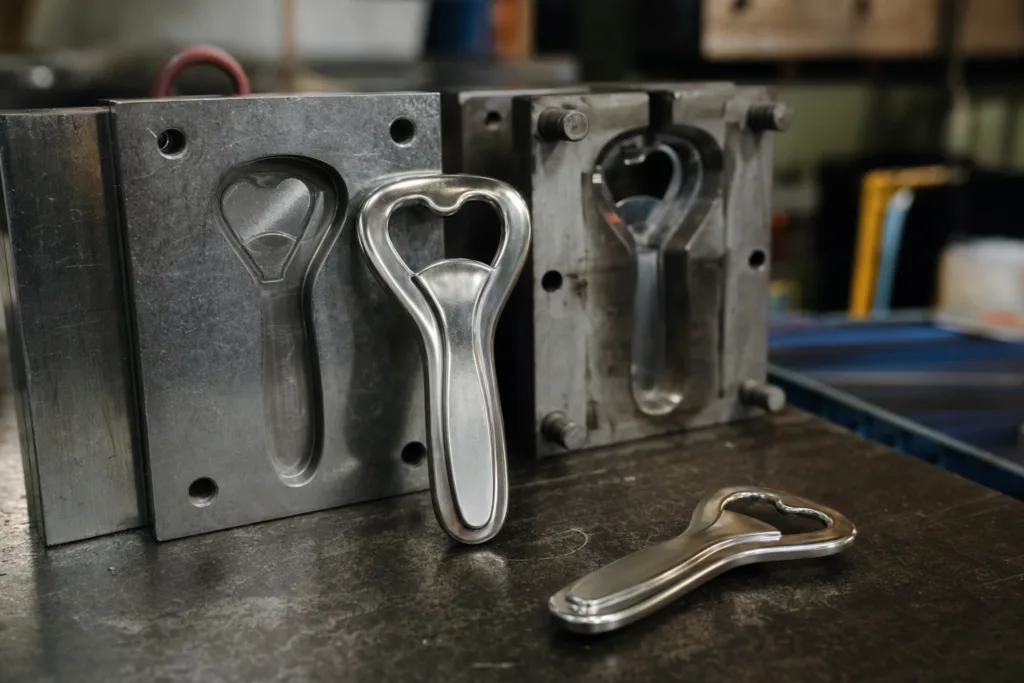
For 3D bottle opener projects, zinc alloy is often favored because it supports complex die-cast forms with good detail reproduction and a more substantial feel than many lightweight alternatives. It is especially suitable when a buyer wants deep relief, curved forms, thicker sections, or integrated decorative features without making the part look crude or overly industrial.
From our production perspective, the value of zinc alloy material benefits for metal products shows up in four practical areas:
- Weight and density: the part usually feels solid in the hand, which supports a premium gift or retail impression.
- Detail reproduction: logos, textures, and sculpted surfaces can be cast more expressively than many flat-process alternatives.
- Dimensional repeatability: once the mold is well developed, buyers can achieve stable batch-to-batch consistency.
- Durability for repeat use: when the opener geometry is engineered correctly, zinc alloy performs well for practical bottle opening and everyday handling.
Buyers comparing materials should remember that “durable” does not mean every zinc alloy opener is equally robust. Long-term performance depends on the alloy choice, lever shape, wall thickness around the opening slot, gate and flow design in casting, and the quality of post-casting finishing. For buyers who want more confidence in consistency, it helps to understand that recognized specifications for die-cast zinc alloys exist, including ASTM guidance on zinc die casting alloys and quality requirements, which is relevant when discussing repeatable alloy performance and production control.
Premium feel explained through thickness, texture, and finish
When buyers say they want a premium quality opener, they are usually describing a sensory result. The opener should look clean, feel dense, sit comfortably in the hand, and show deliberate finishing choices. In actual production, that result usually depends on five variables.
Material thickness and section balance
A thicker body often feels more valuable, but thickness alone is not enough. If one area is overly bulky while the opener neck is too thin, the piece can feel unbalanced or visually heavy. We usually review where thickness adds functional strength and where it only adds cost and weight without improving use.
Surface smoothness and edge transition
Premium products rarely have abrupt burrs, rough trimming marks, or inconsistent transitions between raised and recessed surfaces. Even designs with rugged themes still need controlled edge quality where the user grips the part.
Texture strategy
A mirror-polished finish can create a jewelry-like appearance, but it also highlights every small surface flaw. Matte, brushed, sand-textured, or antique effects can create a more refined and forgiving look for certain brand styles. The right texture can also improve tactile grip.
Finish depth and uniformity
Chrome, nickel, black nickel, antique silver, and related plating options affect both color tone and perceived quality. Premium appearance depends heavily on pre-plating preparation, because pits, polishing waves, and contamination become more visible after plating. In practice, plating quality on zinc alloy die castings depends on careful surface preparation and process discipline, which is why technical references such as Learn how zinc alloy die castings are prepared for durable plated finishes matter when evaluating finish reliability.
Functional confidence
People also read quality through use. If the opener catches a cap smoothly and lifts with good leverage, it feels better made. If it slips or twists, even a beautiful finish cannot hide that weakness.
Common design styles for zinc alloy 3D bottle openers
Zinc alloy works well for design programs that need more than a standard oval opener shape. Common directions include:
- Logo silhouette openers: the full body follows a brand mark, crest, badge, or symbolic outline.
- Relief pattern openers: a classic shape with layered branding, embossed backgrounds, or framed 3D elements.
- Character and mascot designs: useful for sports clubs, tourism, entertainment, and souvenir programs.
- Architectural or destination themes: skyline, landmark, or map-inspired forms for gift and retail channels.
- Industrial premium designs: cleaner geometry with brushed or dark finishes for bars, beverage brands, or corporate gifting.
Design style should always be checked against opening mechanics. Some highly decorative silhouettes look impressive but create weak leverage zones or narrow grip areas. In sample development, we often simplify hidden structural areas while preserving the visible design language.
Manufacturing process overview for 3D die-cast openers
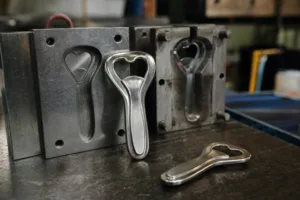
The standard production route usually begins with artwork review and 3D structure planning, followed by mold development, die casting, trimming, grinding, polishing, plating, optional color filling, and final assembly or packaging. Buyers evaluating premium quality should understand how each step affects the final result.
Artwork and structure review
We first check whether the concept can be cast cleanly, polished efficiently, and used comfortably. Relief depth, undercuts, logo readability, and opener-mouth geometry all matter at this stage.
Mold development
The mold controls the core shape, relief detail, parting line strategy, and repeatability. A strong mold design can reduce later finishing problems and improve consistency across bulk production.
Die casting
Molten zinc alloy is injected into the mold to form the 3D body. Gate position and metal flow influence detail fill, edge quality, and internal soundness.
Trimming and grinding
After casting, excess material and gate remnants are removed. This stage has a direct effect on edge cleanliness and how much polishing labor will be needed.
Polishing and surface correction
This is where a premium feel is often won or lost. Over-polishing can flatten design details, while under-polishing leaves visible defects. We adjust polishing intensity depending on whether the design needs crisp relief, antique contrast, or a bright mirror-like face.
Plating and optional color filling
Plating creates the final metallic tone and contributes to wear appearance. If enamel or color filling is used, recess depth and border cleanliness become critical.
Buyers developing related drinkware or packaging accessories sometimes compare project families across caps, covers, and openers. In those cases, our 3D die-cast bottle cap cover production experience is relevant because it uses similar thinking around relief depth, plating coordination, mold detailing, and visual consistency across a branded metal accessory line.
How manufacturing choices affect both appearance and function
One common sourcing mistake is treating appearance and function as separate decisions. In bottle opener production, they are tightly linked. A deeper relief may look richer but can shift grip pressure or reduce flat contact areas. A very glossy finish may look expensive but show scratches sooner in high-use hospitality settings. A large decorative top can make the piece memorable, but if the opener slot is too shallow or the leverage angle is off, users will struggle.
From our metal manufacturing perspective, the best results usually come from balancing three priorities: visual identity, hand feel, and opening performance. That is why we encourage buyers to review physical prototypes, not only renderings. A render can confirm style, but only a sample can reveal leverage, balance, finger comfort, and actual surface character.
Finish options that enhance premium quality
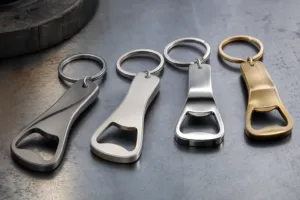
The same base zinc alloy opener can look very different depending on finish choice. Buyers should select finish direction based on brand tone, use environment, and expected wear pattern.
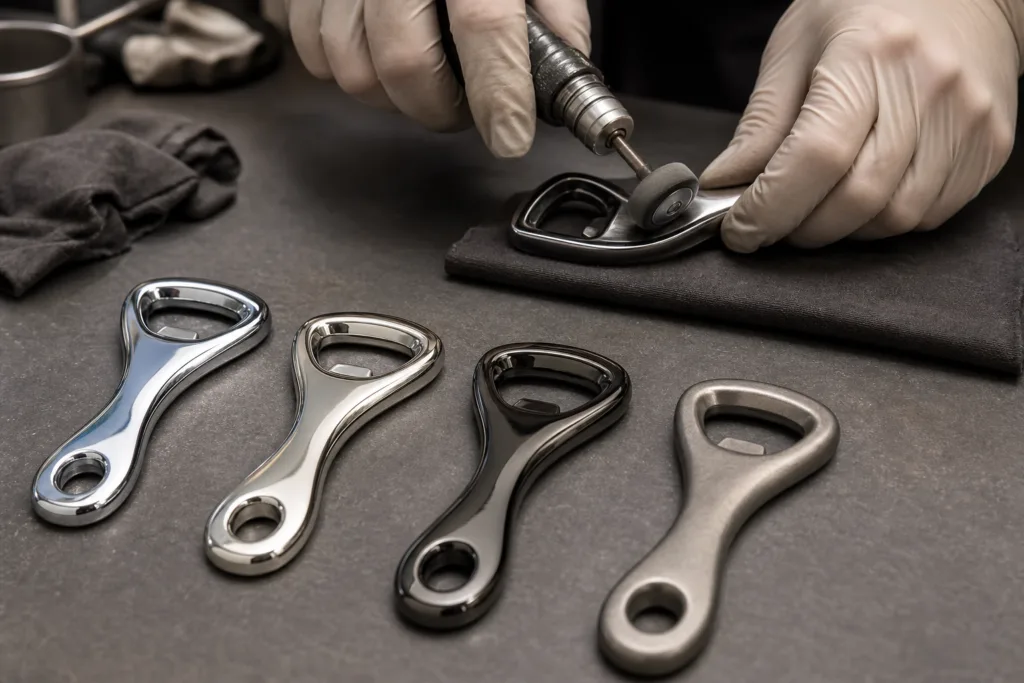
| Finish Option | Visual Effect | Best Fit | Key Consideration |
|---|---|---|---|
| Chrome | Bright, reflective, modern | Retail, beverage promotions, clean branding | Requires strong polishing because defects show easily |
| Nickel | Classic silver tone | Corporate gifts, souvenir items | Balanced choice for detail visibility and broad appeal |
| Black nickel | Darker, contemporary, premium | Bars, lifestyle brands, upscale packaging sets | Works well with selective highlights and textured surfaces |
| Antique silver | Aged depth, contrast in recesses | Heritage, collectible, destination merchandise | Helps relief details read clearly with less mirror polish |
| Matte finish | Soft, understated, tactile | Modern branding and practical use | Can reduce fingerprint visibility |
| Brushed effect | Directional texture, technical feel | Industrial or minimalist design language | Needs design alignment so brush direction looks intentional |
For some programs, combining finishes creates stronger results than choosing one finish alone. A bright front face with antique sidewalls, or a black nickel base with polished raised logos, can make 3D relief more visible without adding color fill.
Functional design considerations buyers should not ignore
A bottle opener still has to open bottles efficiently. Decorative value should never undermine function. Important checkpoints include:
- Grip comfort: avoid shapes that dig into the hand during leverage.
- Leverage length: a very short opener may look compact but demand more force.
- Hook geometry: the cap-contact area should catch securely without slipping.
- Neck strength: the zone between decorative body and opener mouth needs enough structural support.
- Wear resistance: edge finish and plating durability matter where the opener repeatedly contacts caps.
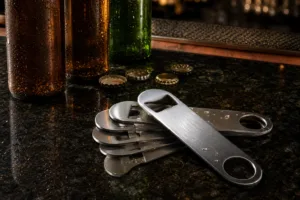
Buyers comparing styles with more utilitarian bartender tools may also benefit from reviewing heavy-duty opener buying considerations, especially when a project needs to balance gift-grade appearance with frequent commercial use.
Customization options for brand owners and gift buyers
Customization in zinc alloy 3D openers goes beyond placing a logo on a metal surface. Buyers can shape the entire product around brand identity and usage context.
Logo placement and hierarchy
The main logo may sit on the front face, but secondary branding can be integrated on the back, side edge, or within textured fields. Good hierarchy keeps the opener from looking crowded.
3D relief depth
Deeper relief increases sculptural effect, but too much depth can complicate polishing or reduce small-detail clarity. We usually recommend matching relief depth to the actual scale of the artwork.
Color filling
Soft enamel or color accents can make branding more direct, but not every premium design needs color. Some luxury-oriented projects look stronger with all-metal contrast only.
Attachment and presentation options
Some openers are sold as standalone pieces, while others are integrated with keychains, gift sets, branded packaging, or beverage accessories. Buyers planning coordinated programs sometimes align opener development with broader bottle cap manufacturing capabilities so the packaging story, finish palette, and accessory design language stay consistent across the product line.
Private label packaging
Gift boxes, backing cards, polybags, EVA trays, and retail sleeves all change perceived value. In premium programs, packaging should be planned at the sample stage so size, orientation, and protection are considered early.
MOQ, sampling, mold cost, and lead time planning
For B2B buyers, unit price is only one part of the purchasing decision. Custom 3D metal openers usually involve mold cost, sample preparation time, finish validation, and packaging setup. MOQ can vary by structure and finish complexity, but buyers should expect that highly customized die-cast products are more efficient when planned as repeatable programs rather than one-off rushed orders.
Sampling is especially important for projects where premium feel matters. A sample helps confirm actual weight, relief clarity, polish level, plating tone, and opening performance. We usually suggest that buyers review a sample against the final use case: corporate gift, event resale, hospitality use, or souvenir retail. The same design may need different finish and packaging decisions depending on channel.
Lead time depends on mold development, sample revisions, plating complexity, color filling, and packaging requirements. Buyers can reduce delay risk by locking artwork early, approving physical samples promptly, and clarifying acceptance standards before mass production begins.
Quality control checkpoints for zinc alloy 3D bottle openers
At Gairun, we view quality control for bottle openers as both a cosmetic and functional discipline. A polished plated item can still fail if the opening slot geometry is poor, while a mechanically sound part can still be rejected if the finish is inconsistent. Important QC checkpoints include:
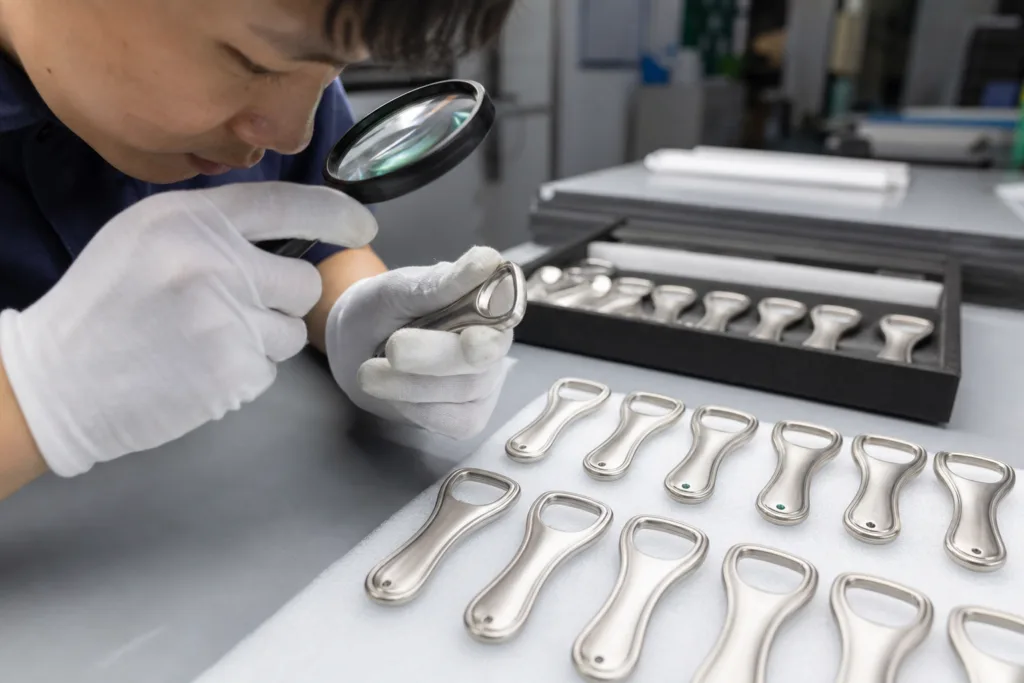
- Surface defects: pits, porosity exposure, scratches, polishing waves, and visible grinding marks.
- Plating consistency: uniform color tone, proper coverage, and acceptable visual consistency across the batch.
- Edge quality: no sharp burrs in grip zones or opener-mouth transitions.
- Dimensional accuracy: stable opening slot shape and consistent overall thickness.
- Relief definition: raised details remain crisp after polishing and finishing.
- Opening performance: the part engages and lifts a cap reliably without slipping.
- Packaging protection: premium surfaces should arrive without rubbing damage or finish transfer.
For premium gift programs, we also recommend defining acceptable standards for color shade, antique effect variance, and minor backside marks before production starts. That avoids misunderstandings later, especially for buyers who distribute products across multiple retail or event channels.
Best use cases for premium zinc alloy 3D bottle openers
This product category performs well when buyers want a useful object that also carries visual and tactile value. Common use cases include corporate gifts, brewery or beverage promotions, event giveaways, souvenir merchandise, restaurant and bar accessories, and retail add-on items. Zinc alloy is especially suitable when a brand wants the opener to feel collectible rather than disposable.
For souvenir and destination programs, 3D forms help translate landmarks, mascots, and emblematic shapes into stronger shelf presence. For corporate gifting, restrained brushed or black nickel finishes can create a more executive impression. For hospitality, designers may prioritize grip efficiency and wear appearance over highly delicate relief.
How to evaluate a zinc alloy opener supplier or manufacturer
Buyers should look beyond catalog photos. A capable manufacturer should be able to explain how design structure affects casting feasibility, how finish choice affects defect visibility, and how packaging protects plated surfaces in transit. Ask practical questions such as:
- Can the supplier explain when die casting is better than stamping for this shape?
- How do they manage polishing without losing relief detail?
- What sample approval process do they use before bulk production?
- Can they advise on finish choice based on use environment?
- How do they test or verify opener functionality during QC?
- Can they support OEM, private label packaging, or coordinated accessory programs?
Strong communication is often a better predictor of success than a low initial quote. If a factory can discuss mold design, tolerance risks, plating challenges, and packaging trade-offs clearly, the project is usually easier to control from sample to shipment.
Common mistakes buyers should avoid
The most common mistake is approving a design based only on appearance. An opener is a functional metal product, so leverage, grip, and neck strength must be validated. Another mistake is choosing a mirror-like finish for a heavily textured or highly intricate shape without understanding how much polishing work is needed to make it look clean.
We also see buyers underestimate packaging. Premium plated products can scratch or rub if packed too tightly without adequate separation. Finally, some projects fail because artwork is not adapted for die casting. Very fine lines, tiny recessed text, or extreme depth transitions may need revision before they can be produced cleanly and consistently.
Conclusion
Zinc Alloy 3D bottle openers create value when material choice, 3D structure, finish quality, and practical opening geometry are developed together. For B2B buyers, premium quality is not just a visual claim. It is the result of controlled die-cast design, balanced thickness, careful polishing, suitable plating, thoughtful packaging, and reliable functional testing. When those factors are addressed early, a custom opener can work as a durable branded tool, a collectible souvenir piece, or a gift item with strong perceived value.
FAQs
Why is zinc alloy often chosen for 3D bottle openers?
Zinc alloy is commonly chosen because it supports detailed die-cast shapes, gives the opener a solid hand feel, and works well for relief designs that need more depth than flat stamped products. It also allows buyers to combine decorative 3D form with practical opening function in one cast body.
What makes a zinc alloy bottle opener feel premium quality?
A premium feel usually comes from several factors working together: appropriate weight, balanced thickness, clean edges, smooth polishing, consistent plating, and comfortable leverage during use. A bright finish alone does not create premium quality if the opener feels rough, thin, or awkward in the hand.
Can custom 3D bottle openers include logos and special shapes?
Yes, custom 3D bottle openers can be developed with brand logos, mascot forms, shield shapes, landmark silhouettes, textured backgrounds, and layered relief details. The key is adjusting the artwork so the design remains readable, castable, and comfortable to use without weakening the opener structure.
How should buyers think about MOQ, mold cost, and sampling?
Buyers should treat a custom zinc alloy opener as a molded metal project rather than a simple printed item. That means planning for mold cost, sample review, finish confirmation, and production MOQ together. Sampling is especially important when weight, relief depth, plating tone, and opening performance all affect the final buying decision.
Which finishes work well for zinc alloy 3D bottle openers?
Common finish options include chrome, nickel, black nickel, antique silver, matte effects, and brushed looks. The right choice depends on brand style, how visible small surface marks may be in use, and whether the buyer wants a bright retail appearance, a darker upscale tone, or stronger contrast in 3D relief details.
What should buyers check before approving bulk production?
Before mass production, buyers should confirm the approved sample for shape, weight, relief detail, plating color, edge smoothness, packaging method, and actual opening performance. It is also wise to align acceptance standards for minor finish variation, because that reduces disputes and helps keep bulk quality expectations realistic and consistent.