Magnetic bottle openers are a small kitchen accessory, but they solve a very practical problem: keeping an opener exactly where people need it while adding a decorative metal detail to the refrigerator or another steel surface. For buyers, retailers, and custom product developers, the appeal is not only convenience. A well-made magnetic fridge bottle opener also depends on correct magnet strength, comfortable grip design, durable metal construction, clean surface finishing, and a structure that holds up to repeated daily use.
If your project involves branded bar tools, kitchen accessories, souvenir items, or custom retail merchandise, custom bottle opener and closure manufacturing support becomes relevant early in development. From our manufacturing perspective, buyers usually need more than a decorative shape. They need the right metal body, a magnet arrangement that stays stable on the fridge, finish options that match kitchen use, logo execution that remains clear, and packaging that suits retail, gifting, or OEM programs. This is where early sampling, mold planning, and finish selection make the final product more reliable and easier to sell.
What Is a Magnetic Fridge Bottle Opener and How Does It Work?
A magnetic fridge bottle opener is a bottle-opening tool with one or more magnets attached to the back or integrated into the structure. The magnet allows the product to attach to a refrigerator, metal cabinet, cooler, or other ferromagnetic surface, so the opener remains visible and accessible instead of getting lost in a drawer. Some versions are slim and flat, while others have a cast body, decorative face, wood-backed panel, or novelty silhouette.
The basic function is simple. The metal lip of the opener slides under the bottle cap edge, and leverage lifts the cap off. The magnetic part does not do the opening itself; it keeps the opener mounted in a useful location. In some designs, a second magnet or larger magnet area also helps catch removed caps, though that depends on structure, cap weight, and the angle of use.
For buyers evaluating product quality, it helps to understand how fridge magnets hold in place. In practical terms, the opener performs best when the magnet is paired with a compatible metal surface and a body weight that the magnet can support without slipping. A large decorative metal front may look impressive, but if the magnet area is too small or poorly positioned, the product can slide down during normal kitchen use.
Why Magnetic Bottle Openers Are Popular in Modern Kitchens
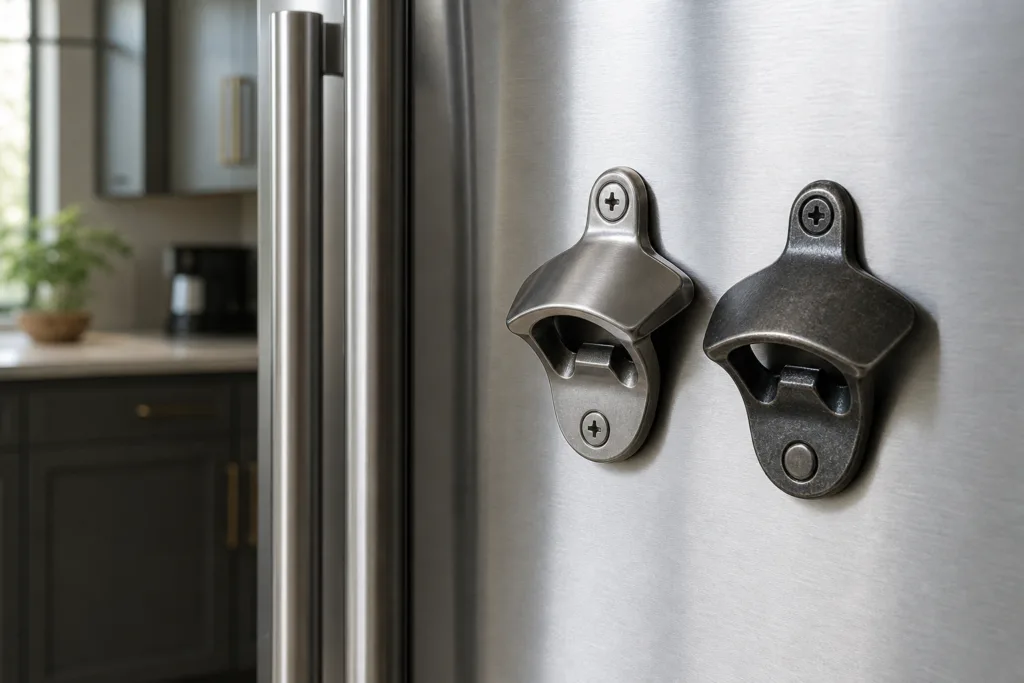
Modern kitchens value convenience, clean lines, and multi-use accessories. Magnetic bottle openers fit that pattern well because they save drawer space, remain easy to find, and can be designed to match stainless steel appliances, rustic wood accents, minimalist décor, or souvenir collections. They are especially useful in apartments, vacation rentals, home bars, dorm settings, and family kitchens where a quick-access opener is more practical than a loose handheld tool.
They also appeal to retail and promotional buyers because the product can combine utility and display value. A magnetic opener can act as a souvenir magnet, branded gift, kitchen accessory, or impulse retail item. From our experience in custom metal product production work, this category works best when the design respects both decorative appeal and mechanical use. A purely decorative magnet may look attractive, but a real bottle opener needs enough thickness, edge strength, and stable mounting to feel dependable in the hand.
Key Benefits: Convenience, Accessibility, and Space Saving
The biggest advantage of magnetic bottle openers is easy access. Users do not need to search kitchen drawers, bar carts, or utensil containers. The opener stays in a predictable location, which is especially helpful during gatherings or busy meal preparation.
Another benefit is space efficiency. A fridge-mounted opener does not require a dedicated hook, screw installation, or countertop footprint. That makes it attractive for smaller kitchens where wall space and storage are limited.
There is also a practical visual benefit. Because the opener stays visible, people tend to use it more consistently and are less likely to misplace it. In custom programs, the visible front face becomes valuable branding space for logos, travel themes, city icons, beer themes, hospitality brands, or event artwork.
For buyers comparing formats, some projects may work better with compact bottle opener keychains when portability matters more than fixed kitchen placement. A fridge-mounted style is usually the better choice when the priority is always-on accessibility in one location.
Design Options: Shapes, Materials, and Decorative Styles
This product category has broad design flexibility. Standard shapes include rectangles, rounds, shields, badges, and paddle forms. Novelty versions may use bottle silhouettes, animal outlines, city landmarks, sports motifs, or custom brand shapes. The design choice affects not only appearance but also grip comfort and leverage.
For example, a long rectangular body often gives a stable grip and enough room for a back magnet panel. A cast custom shape may look more distinctive, but it must still provide finger clearance and a strong opening point. If the outline becomes too irregular, usability can suffer.
Decorative style is another important factor. Some buyers want a clean brushed metal look for modern kitchens. Others prefer antique plating, soft enamel color fills, printed graphics, or laser-marked logos. Souvenir and gift markets often favor more visual detail, while private label kitchen brands may prefer simpler, durable finishes.
In our manufacturing planning, we usually encourage buyers to decide early whether the product is mainly a utility opener, a decorative souvenir, or a branded merchandise item. That decision influences process choice, thickness, material, finish complexity, and packaging requirements.
Magnet Strength and Mounting Considerations for Reliable Use
Magnet strength is one of the most overlooked buying factors. A magnetic opener that cannot stay firmly in place defeats its own purpose. The right holding strength depends on body weight, opener dimensions, the smoothness of the fridge surface, and whether the user removes the opener before opening or tries to use it while it remains mounted.
Most reliable products use a magnet large enough to distribute holding force across the back surface. Very small point magnets can create wobble, uneven contact, or sliding. Full-back magnetic pads can improve stability, but they need secure bonding and enough magnetic pull to support the metal front.
Buyers should also think about surface protection. A poorly finished back can scratch the refrigerator. Soft backing layers, flush-set magnets, smooth edges, and clean adhesive application all help reduce that risk. If the magnet protrudes unevenly, the opener may rock against the surface and feel cheap in use.
Another practical point is mounting context. Magnetic fridge bottle openers are best suited to steel refrigerators, metal storage cabinets, and similar surfaces. They are less suitable when the intended environment uses glass-panel appliances, non-magnetic stainless finishes, or textured surfaces that reduce contact area.
Common Material Choices: Stainless Steel, Zinc Alloy, Brass, and Wood-Backed Designs
Material selection shapes durability, appearance, weight, and price. For a buyer, the right choice depends on target market, finish style, and expected use frequency.
| Material | Typical Advantages | Things to Check | Best Fit |
|---|---|---|---|
| Stainless steel | Clean modern appearance, good corrosion resistance, solid feel | Logo decoration method, edge finishing, thickness for leverage | Modern kitchen accessories and minimalist retail lines |
| Zinc alloy | Flexible for custom shapes, suitable for die casting, good decorative range | Plating quality, weight balance, mold detail | Souvenir, branded, and shaped custom designs |
| Brass | Premium look, warm tone, good engraving effect | Material cost, finish maintenance, weight | Higher-end decorative or gift-oriented products |
| Iron or steel base with finish | Strong structure, economical for some designs | Corrosion protection, plating coverage, edge smoothness | Functional opener styles with tighter cost targets |
| Wood-backed mixed material | Warm decorative look, craft feel, rustic kitchen appeal | Moisture resistance, bond strength between wood and metal, cleanability | Gift shops, home décor, and rustic kitchen themes |
From a production standpoint, zinc alloy is often selected for custom-shaped openers because die casting supports complex outlines, recessed logo areas, and integrated decorative depth. Stainless steel works well when the buyer wants a cleaner, flatter, more contemporary look. Brass is attractive for premium appearance but may be unnecessary for value-driven retail lines.
Kitchen accessories should also be easy to clean and made with sensible material choices for the environment in which they are used. When buyers assess coatings, paints, and decorative layers, it is reasonable to consider food-contact safety for kitchen accessories, especially for products handled around drinks, countertops, and food-prep zones. Even when the opener is not a direct food-contact tool, easy-clean surfaces and appropriate material decisions help support safer everyday use.
Finish and Decoration Options: Polished, Brushed, Antique, Printed, and Laser-Engraved Looks
Finish choice affects both style and long-term wear. A polished finish creates bright reflections and a gift-ready appearance, but it can show fingerprints more easily. A brushed finish feels more understated and modern, often pairing well with stainless appliances. Antique plating can create a souvenir or heritage look, while painted or enamel-filled areas add color and branding visibility.
Laser engraving is useful when buyers want a clean, precise logo without color fill. Printed graphics are good for detailed artwork, gradients, or photo-style effects, though they may require protective coatings depending on expected wear. Embossed or debossed details work especially well on cast or stamped bodies when the artwork should remain legible even after long use.
In our workshop planning, finish selection is never only about appearance. It also affects scratch visibility, edge definition, cleanup behavior, and consistency in bulk production. A plated zinc alloy opener with deep recesses may highlight decorative depth, while a brushed stainless opener may better suit a modern kitchen line where simple durability matters more than visual complexity.
Buyers exploring mounted formats may also want to review wall-mounted opener customization ideas when deciding whether the kitchen or bar setting favors magnetic placement or a fixed installation. The right format depends on location, user habit, available mounting surface, and whether decorative permanence matters more than repositioning flexibility.
How to Choose the Right Magnetic Bottle Opener for Your Kitchen
A good selection process starts with the real use case. Is the opener meant for occasional home use, daily family use, a vacation rental, a brewery gift shop, a souvenir program, or a custom retail line? Different use cases require different priorities.
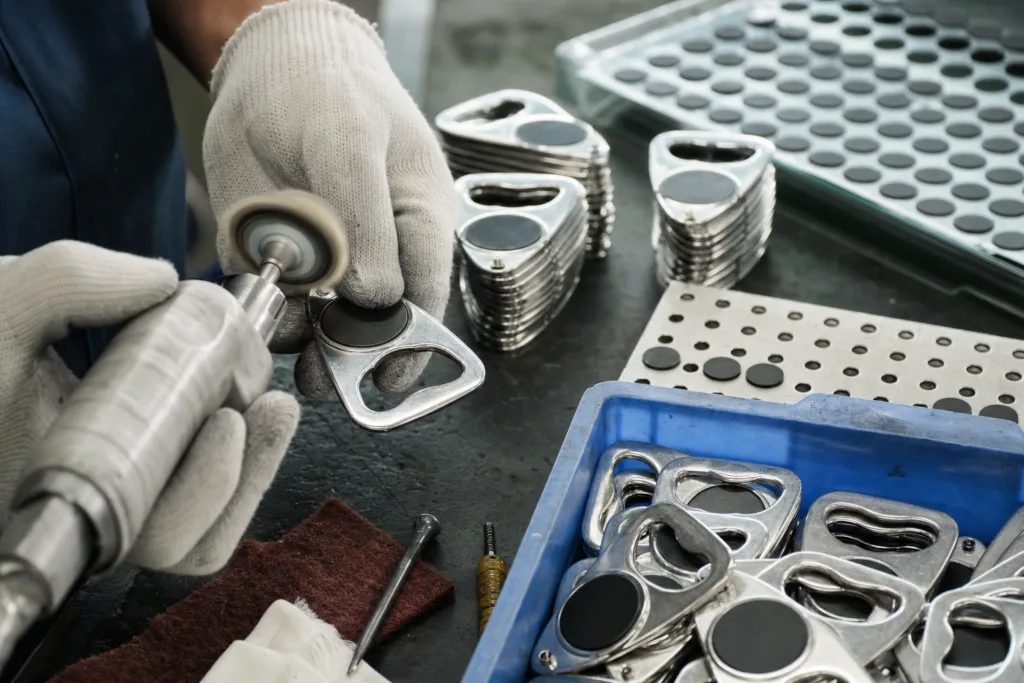
For everyday kitchen use, look for a balanced combination of dependable leverage, smooth edges, stable magnet placement, and a finish that wipes clean easily. For gift or retail use, front-face design and packaging become more important. For branded merchandise, logo clarity, shape distinctiveness, and unit-to-unit consistency matter most.
Size is another practical consideration. If the opener is too small, users may struggle to grip it comfortably. If it is too large, the magnet needs to be stronger and the product may feel more decorative than functional. Thickness also matters. A thin opener can work if the metal is strong and the opening lip is shaped correctly, but overly thin bodies may flex or feel weak.
We also recommend thinking about cap removal behavior. Some users prefer a slim opener they remove from the fridge before use. Others want a design that can stay attached while assisting with cap handling. In either case, the body should feel stable, and the opening edge should not be too sharp or too shallow.
What to Check Before Buying: Size, Grip, Durability, Magnet Quality, and Surface Protection
Before approving a magnetic bottle opener, buyers should review a few structural details closely:
- Grip comfort: The opener should have enough body area for fingers to hold securely.
- Opening lip geometry: The leverage point should catch the cap edge reliably without excessive force.
- Metal thickness: Too thin can feel weak; too thick can add unnecessary weight if the magnet is not adjusted accordingly.
- Magnet quality: The magnet should be firmly set, evenly aligned, and strong enough for the body size.
- Back surface protection: Smooth backing helps prevent fridge scratches and improves contact stability.
- Finish durability: Decorative layers should not chip or wear too quickly in normal kitchen handling.
For buyers working on custom development, sample review is essential. At Gairun, we usually suggest checking not only appearance but also how the opener feels during repeated cap removal, whether the magnet shifts under use, and whether edges remain smooth after plating or polishing. These details often separate a product that photographs well from one that performs well over time.
For high-frequency opening environments such as bars or event service, a fridge magnet style may not be ideal as the main tool. In those cases, a heavy-duty opener buying guide is a more useful comparison point because speed, leverage, and repetitive handling become more important than decorative placement.
Care and Maintenance Tips to Keep the Opener Clean and Functional
Magnetic fridge bottle openers are simple to maintain, but small care habits improve product life. Wipe the opener regularly with a soft damp cloth to remove fingerprints, drink splash, or kitchen residue. Dry it after cleaning, especially if the product uses plated iron-based components or mixed materials.
Avoid abrasive pads that can scratch polished surfaces or wear printed decoration. If the opener includes wood elements, do not soak it. For units with adhesive-mounted magnets, long exposure to moisture and heat can weaken bond performance over time, so careful drying matters.
It is also worth checking the back periodically for dust, grease, or residue buildup. Even a strong magnet can lose practical holding stability if debris creates a gap between the opener and the refrigerator surface.
Creative Ways to Integrate Magnetic Bottle Openers into Kitchen Décor
One reason this category remains popular is its decorative flexibility. A magnetic bottle opener can function as a subtle metal accent, a themed collectible, or a conversational piece near a beverage station. In minimalist kitchens, matte or brushed finishes blend into appliance surfaces. In rustic interiors, wood-backed or antique-finish versions add warmth. In travel or souvenir settings, city-name, landmark, or emblem designs become both memory items and useful tools.
Retail buyers often succeed when they treat the product as part of a broader coordinated range. For example, a kitchen or hospitality brand may pair a fridge opener with matching magnet souvenirs, keychains, or small metal accessories. This is where broader planning matters. Our B2B metal product sourcing overview helps explain how buyers can align utility items, branded accessories, and packaging details across one metal product program rather than sourcing each item separately.
Gift, Retail, and Custom Branding Ideas for Magnetic Bottle Openers
Magnetic bottle openers work well in gift shops, brewery merchandise, tourism programs, restaurant retail, private label kitchen lines, and event souvenirs. Their value comes from combining visible branding with actual use. Unlike decorative magnets that may be ignored after purchase, an opener has recurring function, which can increase logo exposure over time.
Custom branding options include raised logos, recessed enamel areas, laser-engraved marks, printed scenic faces, antique emblem styles, and packaging sleeves or gift cards for retail presentation. For OEM and private label projects, buyers should also think about barcode placement, back-side branding, export-safe packaging, and bulk carton protection.
Gairun approaches this category as a manufacturing project rather than a simple novelty item. That means we look at mold structure, logo depth, attachment method, edge finishing, magnet fit, packaging flow, and production consistency together. For custom programs, this integrated view usually reduces quality surprises later in the process.
When Magnetic Bottle Openers Are Better Than Wall-Mounted or Handheld Openers
Magnetic bottle openers are usually the best choice when the user wants flexibility, compact storage, and no installation work. They are easy to reposition, renter-friendly, and suitable for kitchens where one opener is enough for occasional or moderate use.
Wall-mounted openers are often better when caps need to be opened in one dedicated beverage area and the owner wants a fixed feature. Handheld openers are better when portability matters, such as picnics, events, travel kits, or staff use in hospitality settings.
From a buyer’s perspective, the decision comes down to behavior. If people repeatedly ask, “Where is the opener?” a magnetic fridge format solves that problem well. If the environment involves high-volume opening or no reliable magnetic surface, another format may perform better.
Common Mistakes Buyers Make with Magnetic Bottle Openers
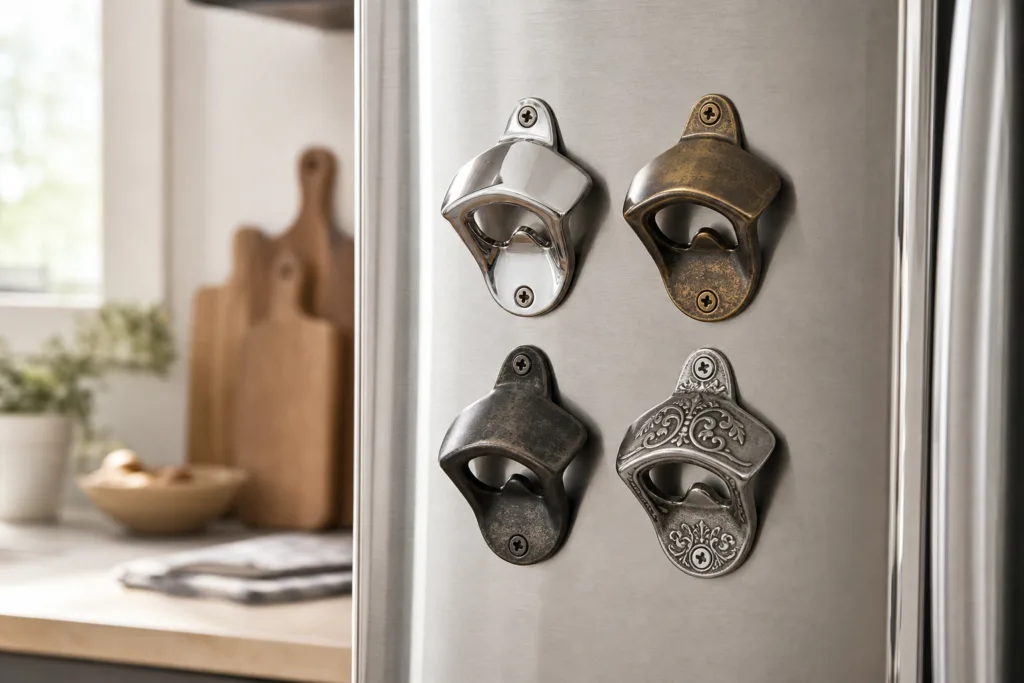
One common mistake is focusing only on front-face design and ignoring the magnet system. A beautiful cast emblem with weak magnet support quickly disappoints users. Another mistake is choosing a large heavy body without increasing magnetic area or back protection.
Some buyers also underestimate finish wear in real kitchens. Bright plated surfaces can look excellent in samples but may show scratches or fingerprints if the finish is not matched to the use environment. Printed graphics need protective planning if the opener will be handled frequently.
Another issue is poor communication about expected use. A souvenir magnet-opener sold for occasional home use does not need the same structure as a high-turnover beverage-service tool. Clarifying the use scenario early helps the factory recommend the right material, process, and packaging level.
Conclusion
Magnetic bottle openers succeed because they blend utility, visibility, and design in a small format. For everyday kitchens, they offer a simple way to keep a useful tool within reach while supporting décor and branding at the same time. The strongest products are not defined by shape alone. They depend on balanced material choice, magnet strength, surface finish, grip comfort, and thoughtful construction.
From our metal manufacturing perspective, buyers get better results when they evaluate the opener as both a functional tool and a finished kitchen accessory. Whether the goal is a retail item, custom souvenir, or branded product line, attention to structure, finish, and use environment is what turns a magnetic fridge opener into a dependable long-term product.
Frequently Asked Questions
Are magnetic bottle openers strong enough for everyday kitchen use?
Yes, they can be, but the result depends on magnet size, magnet placement, body weight, and the type of refrigerator surface. A well-balanced opener should stay attached securely during storage and be easy to remove for use without slipping down the door over time.
What material is best for a magnetic fridge bottle opener?
There is no single best material for every project. Stainless steel suits modern, clean-looking products; zinc alloy is often better for shaped custom designs; brass fits more decorative premium styles; and mixed material designs can work for rustic gift lines. The right choice depends on design, finish, budget, and expected wear.
Can magnetic bottle openers scratch a refrigerator?
They can if the back surface is rough, the magnet sits unevenly, or debris gets trapped behind the opener. Buyers should look for smooth backing, protected magnet placement, and clean edge finishing, and users should occasionally wipe both the opener and the fridge surface.
Are magnetic bottle openers suitable for custom branding?
Yes, they are a strong format for custom logos, souvenir graphics, tourism artwork, hospitality branding, and retail packaging. The front face gives enough visible area for engraving, plating contrast, enamel color, or printed decoration while still remaining a useful everyday item.
How do I know if the magnet quality is good?
A good magnet should feel stable on the intended metal surface, remain firmly attached to the opener body, and support the product weight without rocking or sliding. During sampling, buyers should test repeated attachment and removal, not just static display on a fridge door.
When should I choose a magnetic opener instead of another opener style?
Choose a magnetic opener when you want easy kitchen access, no installation, and a product that can also act as a decorative or branded fridge accessory. If you need high-volume bar use, fixed placement, or portable carry, wall-mounted or handheld opener formats may be a better fit.