For buyers developing gift-ready bar accessories, private label beverage tools, or sustainability-focused lifestyle products, stainless steel ice cubes sit in an interesting category. They are small, practical, visually premium, and easy to pair with broader eco-friendly drinkware collections. When positioned well, they are not just a novelty item. They become a reusable cooling accessory that supports cleaner presentation, reduced single-use consumption habits, and a more durable gifting story for brands that want a polished metal product with everyday use value.
If your project is aimed at retail gifting, event merchandise, bar presentation, or branded lifestyle sets, souvenir metal craft production support can help connect product design with real manufacturing decisions. In our production work, that usually means aligning stainless steel grade, cube shape, logo method, edge finishing, packaging structure, and sample approval before bulk production, so the final product feels coherent as a custom branded accessory rather than a generic imported item.
What stainless steel ice cubes are and why they matter
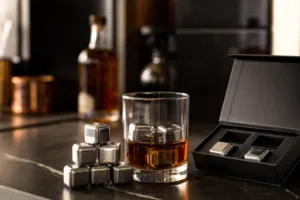
Stainless steel ice cubes are reusable metal cooling pieces, usually filled or structured for temperature retention, then chilled in a freezer before use. Unlike regular ice, they do not melt into a drink, so they appeal strongly to users who care about flavor preservation, cleaner glass presentation, and repeated use. For B2B buyers, their importance is less about replacing every ice use case and more about fitting specific consumption scenarios: whiskey tasting kits, premium cocktail sets, executive gifts, hotel minibar accessories, eco-conscious beverage bundles, and branded home entertaining products.
From a product-positioning perspective, this matters because modern buyers often respond to items that look refined and solve a small but real problem. Stainless steel ice cubes offer a simple message: cool the drink without dilution, reuse the product many times, and present it in a format that feels more premium than disposable alternatives. That combination makes them relevant in the growing conversation around eco-friendly drinkware, especially when paired with tumblers, metal straws, bar tools, or reusable packaging.
Why eco-friendly drinkware messaging resonates with modern buyers
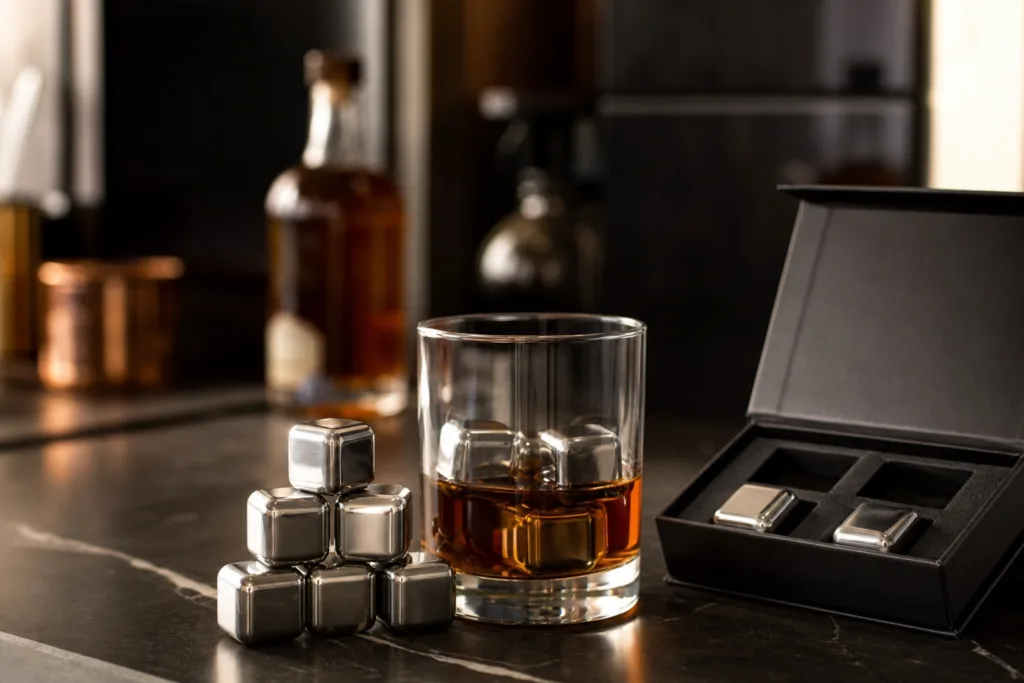
Eco positioning works when it is specific, not vague. Buyers have become more cautious about generic sustainability language, so the strongest messaging around reusable metal drink accessories focuses on what the user can actually understand: repeated use, reduced waste from single-use hosting habits, durable construction, and long service life. For stainless steel ice cubes, the sustainability story should be presented as a practical benefit rather than a moral slogan.
We usually advise buyers to connect the product to a realistic behavior change. Instead of claiming that one product solves a major environmental issue, position it as part of a reusable beverage routine. That is much more credible for distributors, corporate gift buyers, and retail brands. The same approach works across related categories, including eco-friendly branded drinkware ideas where the product line is stronger when the message is about repeat use, durable materials, and coordinated design rather than broad environmental claims.
Good eco-friendly drinkware messaging usually includes four traits: durability, reusability, easy cleaning, and packaging restraint. If the product comes in an oversized plastic gift box, the message weakens. If the logo treatment flakes after use, the message weakens. If the product edges feel rough or the finish stains easily, the product may still function, but it will not support a premium sustainability story.
Key benefits over traditional ice cubes
Reusability
The first obvious benefit is repeat use. End users can freeze, use, wash, and freeze again. For consumer-facing brands, this supports a straightforward lifecycle message. For B2B buyers, it helps justify higher perceived value than one-time consumables.
Clean presentation
Reusable cubes create a neat visual in the glass and avoid puddling as a drink sits. This matters in hospitality, gift sets, tasting events, and premium e-commerce photography. A clean, polished metal surface communicates order and design intention in ways that ordinary ice cannot.
No dilution
This is often the main purchase driver for whiskey drinkers and cocktail enthusiasts. It should not be overstated, but it is highly marketable. Users who want to preserve flavor profile, especially with spirits or cold brew concentrates, understand the benefit immediately.
Giftability
Stainless steel ice cubes are small enough to package elegantly and combine with glasses, tongs, pouches, or branded storage cases. In product development, that means a modest metal item can become part of a more premium branded set with strong margins and attractive shelf presentation.
Material overview: why stainless steel is used
Stainless steel is used because it combines corrosion resistance, structural stability, a clean appearance, and compatibility with repeated chilling and washing. In branding terms, it also visually signals quality. The cool metallic finish looks deliberate, modern, and suitable for beverage accessories.
For many custom programs, the real question is not whether to use stainless steel, but which finish and structure fit the target market. Mirror-polished cubes look more premium but show fingerprints more easily. Satin or brushed finishes can feel more understated and practical. Rounded corners improve handling and reduce the risk of a harsh feel in the glass. A larger cube can look more substantial, while a smaller cube may suit compact gift kits or multi-piece sets.
At the manufacturing level, stainless steel also gives buyers consistency across related metal accessories. If a brand already uses metal straws, stirrers, coasters, tags, or bar tools, stainless steel ice cubes extend that design language naturally. For sourcing teams comparing categories, this is where a broader metal craft manufacturing overview becomes useful, because branding decisions often work better when the full product family is considered instead of treating one accessory in isolation.
Branding opportunities: turning a simple accessory into a premium gift item
One common sourcing mistake is assuming the product sells itself. In practice, stainless steel ice cubes need branding structure around them. Without that, they can appear generic. With the right development choices, however, they can feel highly intentional.
Branding can happen at several levels:
- Product identity: cube shape, finish, corner radius, and overall set count
- Logo treatment: laser engraving, subtle etching, or branded storage components
- Accessory pairing: tongs, pouches, trays, or coordinated drinkware
- Packaging narrative: care instructions, sustainability message, gifting use case, and visual presentation
- Collection strategy: inclusion in a wider barware or eco-friendly drinkware line
For some buyers, the strongest route is to pair the cubes with other custom-shaped promotional metal products or metal accessories in a campaign bundle, especially when the target audience is event gifting, brand launch kits, or loyalty rewards. The key is not to make everything identical, but to maintain a coherent design vocabulary through metal finish, engraving style, and packaging quality.
Best logo and packaging options for stainless steel ice cubes
Logo application options
Because the surface area is small, logo application needs restraint. Overly complex artwork tends to become unclear. In our experience, logos work best when simplified to initials, a compact symbol, or a short brand mark. Fine text may be technically possible, but that does not mean it is the right branding choice.
| Branding Method | Best Use | Strength | Watch Point |
|---|---|---|---|
| Laser engraving | Small logos and discreet premium branding | Clean, durable, refined | Very fine details may appear softer at small size |
| Etching | Simple marks with a subtle industrial look | Elegant and understated | Less visual contrast on some finishes |
| Printed packaging graphics | Explaining sustainability and gifting value | More storytelling space | Packaging must match brand quality |
| Branded accessory parts | Tongs, storage tins, or sleeves | Adds more visible logo area | Requires coordination across components |
Packaging choices that support positioning
Packaging does much of the marketing work in this category. A basic polybag may be fine for bulk hospitality use, but it does not support premium gifting. For retail or corporate applications, options such as paperboard boxes, molded inserts, reusable pouches, or rigid gift boxes help communicate product care and value. The packaging should explain what the product is, how to chill it, how to clean it, and why it belongs in a premium beverage ritual.
Where buyers want traceability, gift-set organization, or product-line consistency, we sometimes recommend adding supporting metal identification elements such as custom metal branding with traceable tags to presentation boxes, collector sets, or limited-edition programs. That is not necessary for every order, but it can be effective in private label launches, numbered gifting campaigns, or hospitality programs that want a stronger asset-management approach.
Marketing angles that work
Sustainability
The sustainability angle should emphasize repeated use, durable material, and reduced reliance on disposable cooling habits in relevant settings. Keep the language grounded. Buyers trust practical claims more than abstract ones.
Convenience
Consumers like products that are easy to store, easy to clean, and ready for quick use. Product pages should mention freezer readiness, quick rinse or wash routines, and storage options. Convenience messaging is especially effective for e-commerce and corporate gift channels.
Lifestyle
Visual storytelling matters. Stainless steel ice cubes fit whiskey rituals, weekend entertaining, home bars, premium office gifts, and compact travel gifting. The product feels more desirable when it is shown in context, not isolated as a bare metal cube on a white page.

Gifting
Gift positioning is strong because the product is compact, practical, and elevated. It works for holiday sets, appreciation gifts, event welcome kits, and beverage subscription add-ons. At Gairun, we often see the most successful programs treat the cubes as part of a complete branded experience rather than a standalone SKU with no story around it.
Who buys stainless steel ice cubes
This category is broad enough to support multiple B2B segments, but each buyer group needs different messaging.
- Retail brands: want giftability, visual appeal, and shelf-ready packaging
- Corporate gift buyers: focus on logo quality, presentation, and practical usefulness
- Bars and hospitality groups: care about drink presentation, durability, and replacement planning
- Eco-conscious brands: need credible reusable positioning and packaging discipline
- Distributors: want flexible customization, manageable MOQ, and repeatable quality
The buyer type should shape the final specification. For example, a hotel program may choose simpler packaging and higher volume consistency, while a DTC lifestyle brand may invest more in unboxing, insert cards, and coordinated accessory finishes.
Practical beverage applications
Application guidance helps conversion because customers often need reassurance that the product has real-world use beyond whiskey photos. The most effective content gives specific beverage scenarios without overpromising performance.
| Beverage | Why the Product Fits | Branding Angle |
|---|---|---|
| Whiskey | Chills without dilution | Premium tasting ritual |
| Cocktails | Supports controlled flavor balance | Home bar sophistication |
| Wine | Useful for light chilling without watering | Entertaining accessory |
| Juice | Neat cooling for small servings | Reusable household convenience |
| Cold brew | Preserves concentrate flavor strength | Modern lifestyle drink tool |
The key is to be accurate. Stainless steel ice cubes are for gentle chilling and presentation-sensitive drinks, not the same cooling experience as filling a glass with conventional ice. Honest application framing usually builds more trust than exaggerated product claims.
What customers usually care about
Cooling performance
Buyers want to know whether the cubes cool effectively enough to justify purchase. Product content should explain that they are intended to chill drinks without dilution and are most valued in beverages where flavor integrity matters. The clearer that expectation is, the lower the risk of disappointment.
Safety
Food-contact confidence is essential. Buyers typically ask about material quality, sealed construction where applicable, and whether the product is easy to wash and reuse. In manufacturing communication, these questions should be addressed early, along with finish quality and any concerns about burrs, sharp corners, or inconsistent polishing.
Appearance
Visual finish matters more than many new buyers expect. Small surface scratches, cloudy polishing, inconsistent engraving depth, or mixed color tone across a set can quickly reduce perceived value. This is why sampling should include close review under practical lighting, not just a distant approval photo.
Ease of cleaning
Products that trap residue or feel awkward to clean create negative reviews quickly. A clean exterior, rounded design logic, and straightforward care instructions should be part of the development process, not an afterthought.
How user reviews shape purchase decisions
User reviews often focus on things manufacturers can address in advance: expected cooling performance, packaging feel, logo neatness, and whether the item looks premium in hand. Strong product content should mirror these concerns. Instead of listing only features, explain what the user will notice: no watered-down whiskey, tidy storage, smooth edges, balanced weight, and easy rinse-after-use care.
For B2B buyers selling online, review resistance starts with honest descriptions. Avoid promising extreme chilling power. Highlight the intended use case, the feel of the metal, the premium presentation, and the reusable nature of the item. When product claims match actual experience, reviews become more stable.
Common branding mistakes to avoid
- Overclaiming sustainability: keep claims measurable and product-specific
- Using overly detailed logos: small surfaces need simplified artwork
- Ignoring packaging: generic packaging weakens premium positioning
- Skipping sample review: finish, logo depth, and corner feel must be checked physically
- Confusing cooling claims: explain the product honestly as a reusable chilling aid
- Forgetting bundle strategy: standalone sales may be weaker than coordinated drinkware sets
Many of these mistakes are not expensive to fix early, but they become costly once molds, packaging, and production schedules are already locked.
How manufacturers support custom orders
Custom development usually starts with artwork, target market, budget range, packaging idea, and estimated order quantity. From there, we review whether the logo should go on the cube itself, the storage component, or both. We also evaluate finish, dimensions, set count, and how the item will be presented in retail, gifting, or hospitality channels.
Sampling is especially important in this category because small changes affect perceived quality a lot. A few tenths of a millimeter in edge treatment, a slightly different engraving scale, or a different insert material can change the final impression. Mold development may be straightforward for standard shapes, but custom structures or coordinated gift-box parts still need careful review.
MOQ depends on how customized the program is. Simple logo and standard packaging projects usually scale more easily. Fully custom shapes, branded tins, inserts, or matched accessory sets may require more planning. Lead time also depends on packaging complexity and approval speed. In our manufacturing practice, bulk consistency improves when buyers confirm artwork hierarchy, finish standard, and packing method before mass production instead of revising these points late.
Quality control considerations for food-contact stainless steel products
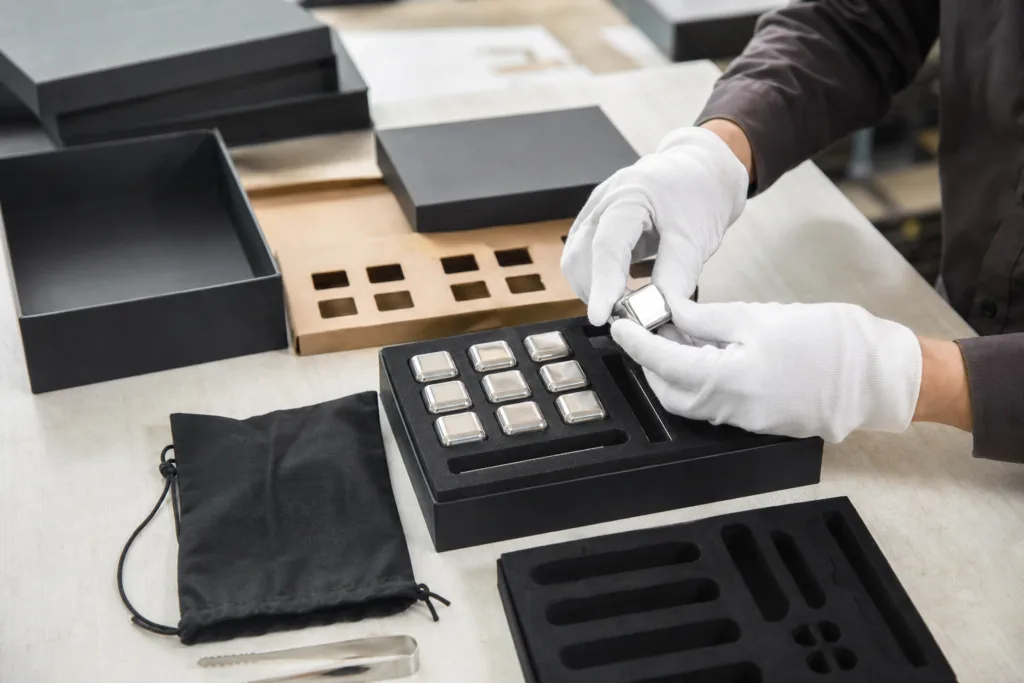
QC for this type of product should focus on both appearance and use safety. A beautiful sample is not enough if bulk units vary too much. We recommend checking the following points during production and pre-shipment review:
- Material consistency across all units in a set
- Surface finish uniformity and polish quality
- No sharp edges, burrs, dents, or obvious scratches
- Accurate logo placement and engraving clarity
- Set count accuracy and accessory completeness
- Packaging fit, insert protection, and transit readiness
- Random carton checks for bulk consistency
For programs going into premium gifting or retail, visual consistency is often the deciding factor. The product is small, so every detail becomes more noticeable. That is why pre-production samples, approved reference standards, and practical inspection photos are valuable parts of the process.
Conclusion
Stainless steel ice cubes can be positioned successfully as eco-friendly drinkware accessories when the branding stays practical, credible, and design-aware. The product works best when buyers focus on its real strengths: reuse, clean beverage presentation, no dilution, compact premium appeal, and compatibility with broader branded drinkware collections. From our metal manufacturing perspective, the strongest programs combine clear application messaging with disciplined choices in finish, logo treatment, packaging, and quality control. When those elements align, a simple reusable cooling accessory becomes a more memorable branded product with stronger B2B value.
FAQs
Are stainless steel ice cubes a good fit for eco-friendly drinkware branding?
Yes, when they are positioned as a reusable accessory with a clear use case. The strongest branding focuses on durability, repeat use, clean presentation, and pairing with other reusable beverage products rather than making broad sustainability claims that are hard to support.
What logo method works best on stainless steel ice cubes?
Laser engraving is usually the most practical option because it is clean, durable, and suitable for small branding areas. For most projects, simple logos, icons, or initials work better than detailed artwork or long text, especially when the goal is a premium look.
Should the branding go on the cube or on the packaging?
That depends on the visual goal and the size of the artwork. Many successful programs use a subtle logo on the cube and place the fuller brand story on the box, pouch, or insert card so the product stays refined while the packaging carries the marketing message.
What should buyers check during sample approval?
Sample approval should include edge smoothness, finish consistency, engraving clarity, set count, packaging fit, and the overall in-hand feel of the product. It is also smart to review how the item photographs and whether the branding still looks clear under normal use lighting.
Can stainless steel ice cubes work as a corporate gift item?
They can work well for corporate gifting because they are compact, practical, and easy to combine with drinkware or bar accessories. The result is stronger when the packaging feels considered and the logo treatment is subtle enough to look premium rather than overly promotional.
What is the most common mistake when marketing stainless steel ice cubes?
The most common mistake is overselling cooling performance without explaining the intended use. Buyers and end users respond better when the product is described honestly as a reusable chilling accessory that helps preserve flavor and presentation in selected beverages.