Metal wine charms are small products, but for event planners, wedding buyers, and gift sourcing teams, they solve several practical needs at once. They help guests identify their glasses, support event styling, create a more polished table presentation, and leave behind a keepsake that feels more durable than paper tags or disposable drink markers. From our manufacturing perspective, they are also highly flexible custom metal items: a simple ring charm can be elegant and cost-conscious, while a layered or plated version can be designed as a premium wedding favor.
If your project involves personalized event accessories, gift-ready packaging, or themed souvenir development, our metal craft sourcing and production overview can help clarify how material selection, mold development, plating, engraving, sample approval, and bulk quality control come together in one workflow. For wedding planners, event studios, and private label buyers, that matters because the final result depends not only on the artwork, but also on edge smoothness, ring structure, finish consistency, and packaging decisions that affect presentation on the table and in the gift box.
What metal wine charms are and why they work for events and weddings
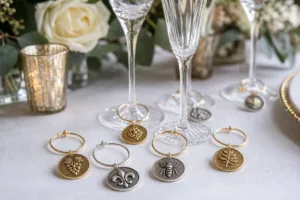
A metal wine charm is usually a decorative metal piece attached to a ring, hook, loop, or flexible holder that wraps around the stem of a wine glass. In some designs, the charm hangs freely; in others, the personalized metal piece becomes the main identifying marker. The product works well for events because it combines function and sentiment. Guests use it immediately during the event, but many also keep it afterward.
Compared with paper drink tags, acrylic markers, or one-time-use labels, metal wine charms have several advantages for B2B buyers and planners. They can carry fine engraved names, monograms, dates, icons, or logos. They also support a wider range of finishes, from bright gold and silver plating to antique tones, brushed surfaces, enamel accents, and soft satin textures. That makes them suitable for classic weddings, modern receptions, vineyard events, luxury corporate dinners, anniversary parties, and branded hospitality programs.
For buyers sourcing in volume, another benefit is design repeatability. Once the product structure and mold approach are confirmed, it is easier to maintain consistency across sets, guest-name batches, and event themes than with many hand-finished alternatives.
How metal wine charms improve guest experience
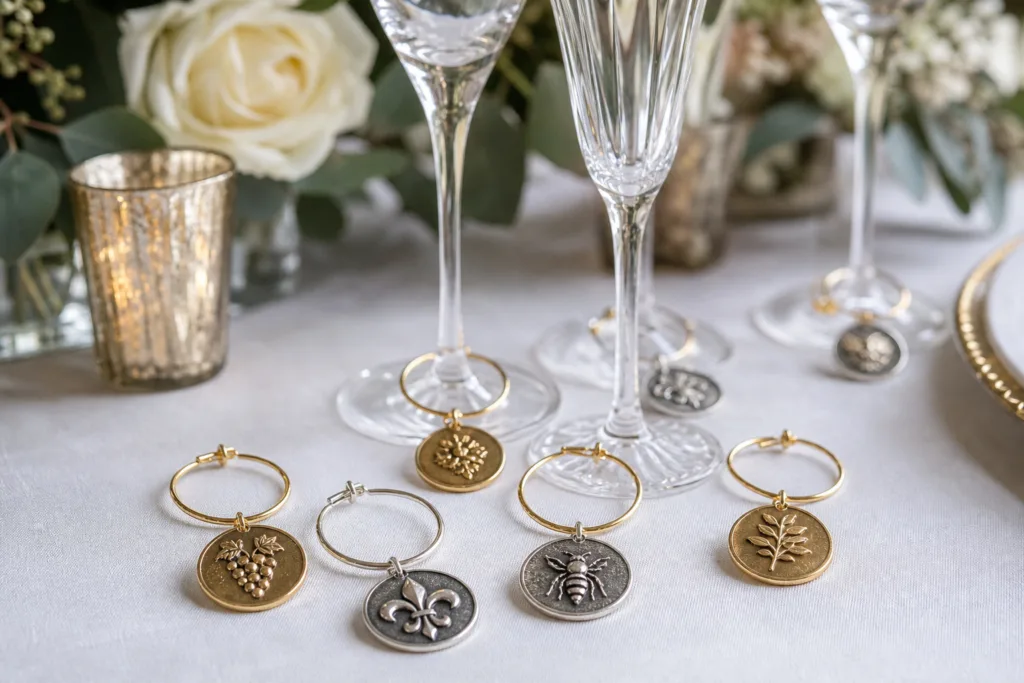
At an event, guests often set down glasses while moving between tables, speaking with other attendees, or joining the dance floor. A well-designed charm reduces confusion and keeps service more organized. But the product does more than identify a drink. It can reinforce the event theme, guide seating, recognize VIP guests, or create a personal detail that photographs well.
For weddings, the strongest use case is personalization. A first name, initials, date, or symbolic icon turns the charm into a small keepsake rather than just a utility item. For event agencies and hospitality buyers, themed sets can also support color-coded guest groups, tasting flights, or table-by-table differentiation.
We often advise buyers to think about the charm in two moments: first, how it performs during the event, and second, how it feels when taken home. That simple shift helps improve design decisions around readability, weight, finish, and packaging.
Popular use cases for weddings and events
Although weddings are the most obvious application, metal wine charms fit a wider range of event programs.
- Weddings and receptions: guest names, couple monograms, wedding dates, floral or venue-inspired shapes.
- Bridal showers: lighter, playful designs with initials, themed icons, or mixed-color enamel sets.
- Anniversaries: milestone numbers, custom messages, or matching keepsake sets for family tables.
- Corporate dinners: logos, role identifiers, VIP markers, or premium plated pieces for executive gifting.
- Wine tastings and hospitality events: numbered charms, varietal icons, or sponsor-branded markers.
Some buyers also expand the same artwork system into coordinated products. For example, a wedding or branded event may use matching tags, charms, and mini keepsakes built from the same shape language. In those cases, exploring custom shape options for event keepsakes can help teams build a more unified product family rather than designing every item separately.
Design styles for metal wine charms
The most successful metal wine charm programs are simple enough to stay legible, but distinctive enough to feel memorable. In production, overcomplicated artwork is one of the main reasons small charms lose clarity. The best results usually come from strong shapes, controlled line thickness, and a realistic understanding of how much detail can fit into a small metal area.
Names and initials
Personalized names are ideal for seating and guest identification, but they need careful lettering choices. Thin script fonts may look elegant on screen but become hard to read once reduced. We usually recommend balanced serif or clean script forms with enough stroke width to survive casting, stamping, or engraving.
Monograms
Monograms work especially well for wedding favors because they keep the design refined and reduce the need for many individual name variations. They are also easier to package as coordinated sets.
Icons and symbols
Leaves, grapes, rings, hearts, stars, bows, florals, venue motifs, and seasonal icons all translate well into metal if the silhouette is clear. For larger events, icon-based sets can identify groups while maintaining a premium appearance.
Theme-based sets
Instead of producing every charm with a different guest name, some buyers create 6-piece, 8-piece, or 12-piece themed sets. This can reduce complexity while still providing a curated experience. Examples include vineyard icons, celestial wedding symbols, botanical themes, or destination-event imagery.
Material options for metal wine charms
Material choice affects appearance, detail level, weight, perceived value, and production method. For wine charms, the right material depends on design complexity, target finish, and budget.
| Material | Typical Strengths | Best Fit | Notes |
|---|---|---|---|
| Zinc alloy | Good for complex shapes, dimensional designs, broad finish flexibility | Custom shaped charms, monograms, themed sets | Often chosen for die casting and decorative surface treatments |
| Brass | Refined appearance, solid feel, good for stamping and engraving | Premium wedding favors, classic engraved styles | Suitable when a sharper, traditional metal look is preferred |
| Stainless steel | Clean modern appearance, durability, corrosion resistance | Minimalist branded events, laser-engraved tags | Works well for flat or clean-cut designs |
| Aluminum | Lightweight, cost-conscious, good for simple forms | Large quantity events, lighter gift sets | Best when low weight matters more than heavy premium feel |
Zinc alloy is often the most flexible option for decorative event charms because it supports custom contours and raised-relief details well. Brass feels more traditional and substantial, especially for engraved or stamped pieces. Stainless steel suits buyers who want a clean, modern, low-color design. Aluminum can be useful when shipping weight or unit cost is a major concern.
Manufacturing and finishing options
The production method should match the design structure, not the other way around. In our custom metal product production work, wine charms generally fall into a few practical manufacturing routes.
Die casting
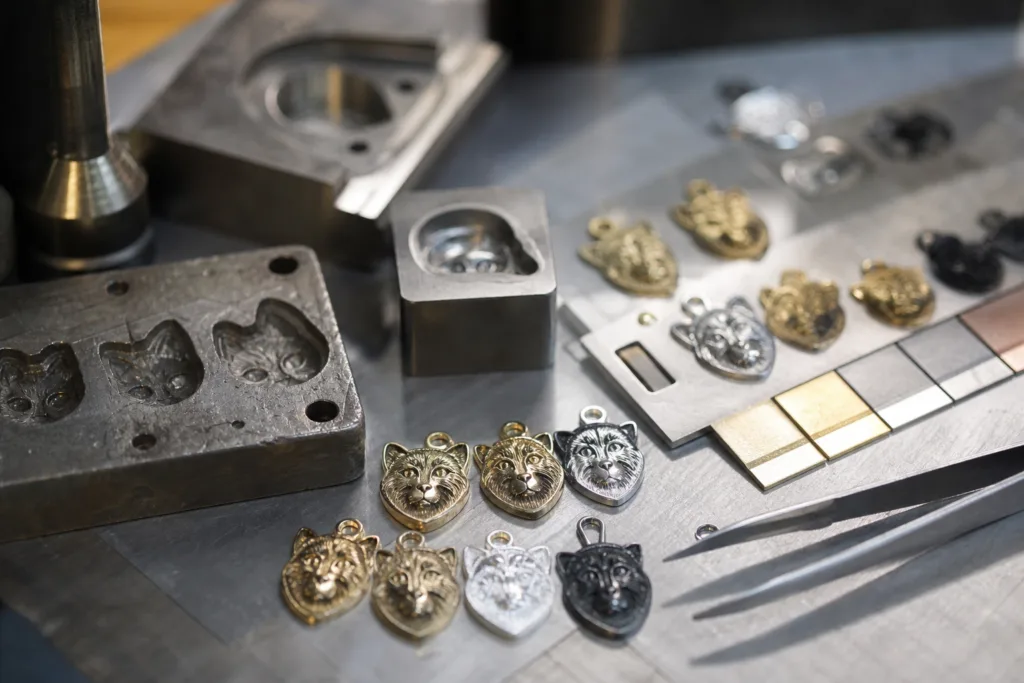
Die casting is suitable for zinc alloy charms with custom outlines, raised details, recessed logo areas, and more dimensional styling. It is useful when the charm needs a sculpted shape rather than a simple flat tag.
Stamping
Stamping often works well for brass, iron, or similar sheet-based designs where the product is flatter and the detail can be created through pressed relief and controlled edges. This is a strong option for classic monogram and emblem styles.
Laser engraving and etching
Laser engraving is valuable when buyers want personalized names, table numbers, or crisp surface marking on flatter pieces. It is especially useful for late-stage data changes because variable information can often be handled without creating a new mold for every name. Buyers planning premium personalization sometimes draw inspiration from engraved branding for personalized metal details when evaluating how line depth, stroke width, and contrast affect legibility.
Electroplating and antique finishes
Plating strongly shapes the perceived style of the final charm. Bright gold and shiny silver look formal and celebratory. Matte gold, satin nickel, and antique brass feel softer and more understated. Rose gold can suit weddings, but it requires consistent color management across batches. Buyers exploring higher-end presentation often consider premium plated finishes for gift-worthy pieces to understand how plating choice changes the visual value of small metal accessories.
Enamel filling
Soft enamel or color filling can add theme colors, wedding palette accents, or icon contrast. However, very small text should not rely on enamel for readability. We usually suggest using enamel to support shape recognition and visual identity, while names and fine lines remain engraved, recessed, or raised in metal.
Polishing and edge treatment
Because wine charms are handled directly and sit close to glassware, edge smoothness matters more than many buyers expect. A product that looks fine in a photo can still feel sharp or unfinished if edge polishing is not controlled. This is a key QC point during sampling and bulk production.
Customization ideas for wedding favors and event keepsakes
Wedding favors need more than decoration; they need emotional relevance and practical usability. The strongest customization programs usually combine one identifying element, one event element, and one finish decision that supports the theme.
- Guest first name + wedding date + polished gold finish
- Couple monogram + floral icon + velvet pouch set
- Table number + venue motif + antique silver finish
- Corporate logo + guest tier color + premium card backing
- Anniversary year + custom quote + keepsake box insert
For some event brands, the wine charm is only one part of a broader metal detail system that may include packaging accents, tags, or decorative closures. In that scenario, buyers often benefit from early discussion around custom logo metal finishing support so finishes and branding treatments remain consistent across all event components.
Artwork and logo preparation tips for clean detail
Small metal charms reward disciplined artwork. A graceful design on a digital screen can fail in production if line weights are too fine, text is too small, or shapes rely on tiny floating details. We recommend that buyers prepare artwork with production in mind from the start.
- Convert text to outlines before submission.
- Separate raised, recessed, engraved, and enamel-filled areas clearly.
- Avoid extremely thin connecting bridges in script names or openwork shapes.
- Keep small text limited and prioritize readability over decorative complexity.
- Provide size targets so artwork can be reviewed at real production scale.
When a project includes multiple guest names, it is smart to approve one structure sample first, then verify the naming list against that structure. This reduces the risk of late changes causing layout issues on the smallest names or longest spellings.
How to choose size, thickness, weight, and attachment style
For event use, the product should feel substantial without overwhelming the glass stem. That balance depends on four things: charm size, metal thickness, product weight, and attachment method.
| Element | What to Consider | Buyer Guidance |
|---|---|---|
| Size | Visibility on stem, name readability, table appearance | Choose enough area for legible text without making the charm look oversized |
| Thickness | Strength, edge feel, premium perception | Thicker is not always better; match thickness to shape and hanging method |
| Weight | Balance on glass, comfort in handling, shipping cost | Avoid overly heavy charms for delicate stemware |
| Attachment | Ease of use, stem fit, product security | Select open ring, hook, clasp, or flexible loop based on event setup speed |
Open ring structures are easy for quick placement, but they should still hold securely. Closed loop or clasp systems can feel neater for keepsake sets. If the charm is a giveaway meant to be used again later, reusable attachment quality becomes more important than one-time event convenience.
Packaging ideas for gifting and presentation
Packaging influences both perceived value and on-site efficiency. A beautiful charm can lose impact if it arrives in bulk bags with no sorting logic, while a modest charm can feel premium with thoughtful presentation.
Common packaging approaches include individual polybags, card backing, velvet pouches, small rigid boxes, clear set boxes, and table-ready grouped packaging by guest or table number. For wedding favors, pouch or card presentation often works well. For planners managing installation time, grouped sets labeled by table can save hours during setup.
At Gairun, we usually advise buyers to plan packaging at the same time as design approval, not after production starts. Packaging affects sorting, name management, scratch prevention, and fulfillment workflow, especially when the order contains many personalized variations.
MOQ, sampling, lead time, and bulk production planning
MOQ depends on product structure, process complexity, and how much customization varies from piece to piece. A standard shaped charm set with one design repeated in volume is simpler than an order with 200 different guest names, multiple enamel colors, and gift-box packing.
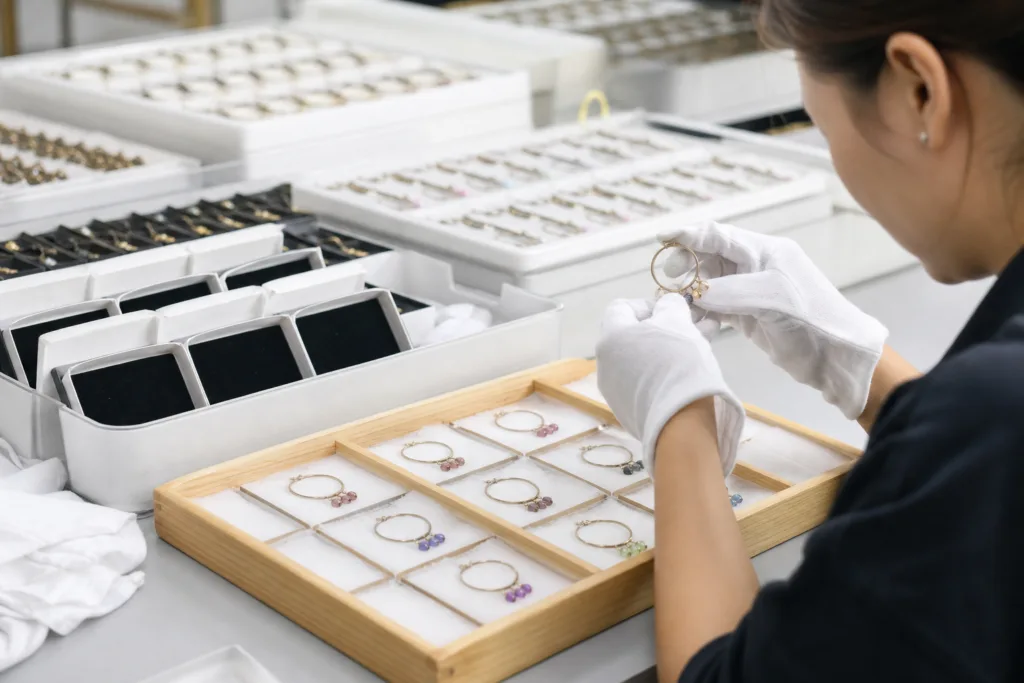
Sampling is especially important for wine charms because small size amplifies detail issues. A sample helps buyers check surface finish, letter clarity, attachment function, and actual feel in the hand. For personalized orders, there are usually two approvals: one for physical structure and finish, and one for the final name or data list.
Lead time should be evaluated in stages: artwork review, mold making if required, sample production, revision cycle, mass production, plating or finishing, inspection, and packaging. The earlier a buyer confirms guest lists and packaging format, the easier it is to protect schedule stability.
Bulk planning becomes more complex when each piece is unique. In those cases, we recommend a spreadsheet-based naming system with final spelling approval, grouped packaging instructions, and a clear revision cutoff date. That reduces avoidable production delays.
Quality control points buyers should review
For custom metal wine charms, QC is not only about whether the product exists in the correct shape. It is about whether it feels refined enough for close-up event use.
- Surface finish: plating uniformity, polishing quality, and absence of visible stains or pits.
- Edge smoothness: no rough edges that can feel sharp during handling.
- Text legibility: names, dates, or monograms remain clear at final size.
- Color consistency: enamel shades and plating tones remain aligned across batches.
- Attachment performance: loops, rings, or clasps open and close correctly.
- Sorting accuracy: personalized sets match the approved name list and packaging plan.
These are the same kinds of issues that separate a decorative concept from a reliable event product. For planners working to fixed installation windows, sorting accuracy and packaging logic are almost as important as metal finish quality.
Common mistakes to avoid when ordering custom metal wine charms
The most common ordering mistakes are preventable. Buyers usually run into trouble when the design is approved as artwork only, without thinking through production scale and event handling.
- Choosing fonts that become unreadable at small size.
- Adding too much detail to a tiny charm area.
- Selecting a heavy structure for delicate wine glasses.
- Ignoring edge smoothness during sample review.
- Approving plating without considering the wedding or event lighting style.
- Leaving guest name confirmation until too late.
- Planning packaging after bulk production instead of before it.
One more mistake is treating the charm as a generic favor instead of part of the full guest experience. A better approach is to ask how it will be used, displayed, photographed, packed, and taken home. That usually leads to better decisions and fewer revisions.
How event buyers can turn wine charms into memorable keepsakes
The difference between a useful wine marker and a memorable keepsake often comes down to emotional design choices. If the event is personal, the charm should feel personal. If the event is premium, the finish and packaging should support that tone. If the event is branded, the logo integration should be subtle and elegant rather than oversized.
From our manufacturer viewpoint, the most effective projects are those with a clear hierarchy: one main personalized feature, one supporting decorative element, and one finish strategy that ties everything together. That keeps the product elegant while preserving production clarity.
For wedding favors especially, metal wine charms work best when they are designed to survive beyond the event. A durable attachment, a timeless finish, and a readable personalization detail give the item a second life at home. That is what turns a small accessory into a keepsake people actually keep.
Conclusion
Metal wine charms are a practical and elegant choice for events that need guest identification, table styling, and lasting favor value in one product. For weddings, receptions, anniversaries, and branded dinners, the right result depends on more than artwork alone. Material, process, finish, edge quality, attachment structure, packaging, and data management all shape the final experience. When buyers plan these details early, metal wine charms can move from a simple accessory to a polished keepsake that supports both event function and memory.
FAQs
What is the best material for custom metal wine charms?
The best material depends on your design and positioning. Zinc alloy is often the most flexible for custom shapes and decorative detail, brass suits premium engraved or stamped looks, stainless steel works well for clean modern styles, and aluminum can help reduce weight and cost for larger quantity projects.
Can each wine charm have a different guest name?
Yes, but personalized name sets require more careful data management than a repeated design. Buyers should provide a finalized name list, confirm spelling early, and approve one structure sample first so the manufacturer can verify that short and long names remain readable within the selected size.
Are metal wine charms suitable as wedding favors?
Yes, they work well as wedding favors because they are useful during the event and can also be kept afterward as a small personalized souvenir. The strongest wedding favor versions usually combine a readable name or monogram, an elegant finish, and packaging that supports gifting or table presentation.
How should I choose the right finish for an event theme?
The finish should match the tone of the event and the level of formality. Bright gold and shiny silver feel celebratory, matte or satin tones look softer, antique finishes suit vintage themes, and enamel accents can help match event colors, but very small text should still rely on metal detail rather than color for readability.
What should I check during sample approval?
You should review actual size, name legibility, plating appearance, edge smoothness, attachment function, and how the charm sits on the intended glassware. If the order includes many personalized pieces, also confirm the naming format and packaging method before approving bulk production.
How far in advance should I place a bulk order for wedding favors?
It is wise to place the order as early as possible because custom metal products may require artwork review, mold development, sampling, revision, bulk production, finishing, inspection, and packaging. Personalized orders with individual names or grouped table packing need additional planning time, so early approval helps reduce avoidable schedule pressure.