Shot glasses with metal medallions combine two very different materials into one product story: a functional glass vessel and a decorative metal emblem that carries branding, symbolism, or collectible value. For buyers, that combination can look simple at first, but the result depends on many manufacturing decisions, including glass shape, wall thickness, medallion weight, finishing method, attachment structure, and packaging. From our production perspective, these items work best when the drinkware and the metal component are developed together rather than treated as separate parts added at the last minute.
Projects like souvenir barware, commemorative event drinkware, branded hospitality gifts, and collectible celebration sets often benefit from souvenir metal craft manufacturing support because the medallion itself usually carries most of the perceived value. Buyers may need help balancing emblem size, relief detail, plating tone, enamel color, and bonding method while still keeping the glass practical to pack, ship, and use. At Gairun, we approach these programs the same way we approach other custom metal craft projects: with attention to artwork preparation, sample approval, finish selection, OEM development, and bulk consistency.
What Shot Glasses with Metal Medallions Are and Why They Stand Out
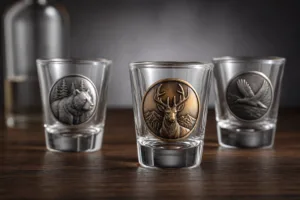
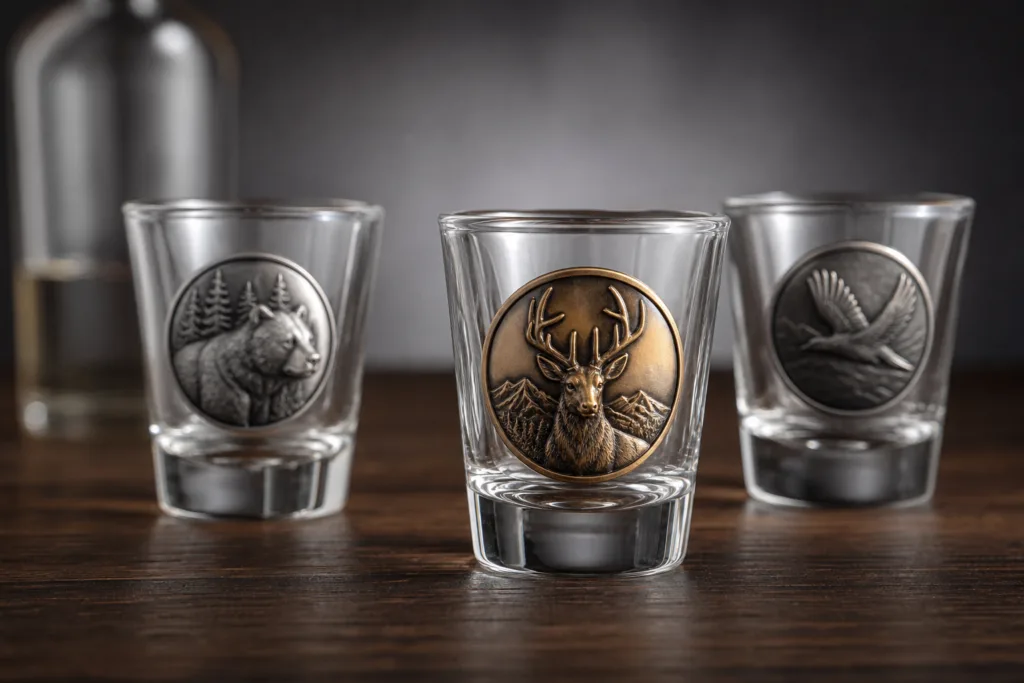
A shot glass with a metal medallion is usually a standard or semi-custom glass body enhanced with a separately produced emblem, badge, crest, or coin-like decorative piece. The medallion may be placed on the front wall, embedded into a recessed area, fixed to a sleeve-like metal frame, or mounted as part of a gift-set presentation. The visual effect is stronger than simple pad printing because metal adds depth, weight, edge definition, and finish contrast.
That matters for buyers who want a more lasting object than ordinary printed drinkware. In souvenir retail, commemorative programs, clubs, tourism projects, and corporate gifting, the medallion makes the glass feel closer to a collectible keepsake. It also allows a broader design language: raised relief, antique effects, polished highlights, textured backgrounds, recessed enamel, and premium-looking plated edges that would not be possible through printing alone.
However, not every concept should use a metal medallion. If the target budget is very tight, the order quantity is small, or the graphic is a full-wrap illustration with many gradients, another decoration method may be more practical. The strongest use case is when the product needs symbolic value, tactile detail, or a visible metal identity that fits a celebration, venue, institution, or private-label gift line.
Glass Body Options for Shot Glasses with Metal Medallions
Shape and capacity
Most projects start with familiar shot glass profiles: straight-wall, slightly tapered, heavy-base, flared rim, or tall shooter styles. For B2B buyers, the main decision is not only how the glass looks on a shelf, but also how much space it provides for the medallion and how stable it feels in the hand. A heavy-base shape often supports commemorative positioning because the extra weight makes the final product feel more substantial.
Common capacities are small tasting sizes, classic bar shot sizes, and taller format shooters used for promotional sets. The correct size depends on the market and the purpose. Souvenir pieces may prioritize display appeal, while hospitality or branded bar programs may prioritize stackability, easy handling, and washability.
Wall thickness and durability
Thin glass can reduce unit cost and shipping weight, but it may not visually support a premium medallion. If the emblem is large or heavy, the glass should look balanced rather than delicate. Thicker walls and heavier bases usually perform better for gift-oriented items because they create visual harmony with the metal detail and reduce the chance of breakage during handling.
We generally advise buyers to review three practical points together: the diameter of the medallion, the wall curvature where it will be placed, and the total packed weight. A very curved surface can limit bonding area, while an oversized medallion may make a small glass feel crowded. Good proportion matters as much as decoration quality.
Transparency and color tone
Clear glass is the most versatile base because it lets the metal finish stand out. Frosted or tinted glass can also work, especially when the medallion has antique plating or colored enamel, but the buyer should check contrast carefully. A dark bronze medallion may look sophisticated on frosted glass but can lose visibility on smoke-tinted glass if the design is too small.
Metal Medallion Materials and Finishes
Zinc alloy, brass, and stainless options
Zinc alloy is a common choice for decorative medallions because it supports die-cast relief, curved contours, and cost-effective production for medium-to-large runs. It is well suited for thicker emblems, sculpted borders, and dimensional logos. Brass is often chosen when a buyer wants a sharper stamped look, a warmer premium feel, or traditional plated finishes. Stainless steel is useful for cleaner modern styles, especially when the desired effect is more architectural, flat, and crisp rather than deeply sculpted.
The right material depends on the design language. If the emblem needs layered relief and bold borders, zinc alloy is usually practical. If it needs refined lines and classic metallic character, brass may be better. If corrosion resistance and a contemporary appearance matter more than relief depth, stainless steel can be a strong option.
Plating, antique effects, and premium appearance
Surface finish changes the tone of the whole product. Bright gold, nickel, black nickel, copper, and antique finishes all send different signals. For heritage-style pieces, antique bronze or antique silver often works well because it helps raised details remain readable even when the artwork is dense. For ceremonial or executive gift sets, polished bright plating can create a more formal appearance.
Some projects gain extra contrast through two-tone plating for premium metal details, especially when a border, emblem, or center motif needs to stand apart without adding too many colors. This approach works best when the art has clear structural separation and the medallion is large enough for the finish change to be visible.
Food-contact safety should also be part of finish planning. Because the product is used around beverages, buyers should ask how the decorative metal is positioned and whether any finish, solder, or attachment method could introduce contamination risks. The FDA discussion of Lead-free decoration and food-contact compliance is a useful reminder that decorative elements on foodware should be planned with material safety in mind, especially when metal components are close to the rim or any area that may contact liquid or the user’s mouth.
Design Styles That Add Value
Logos, crests, and commemorative themes
The medallion should carry a design that benefits from metal craftsmanship. A simple logo can work, but the strongest results often come from school crests, city emblems, event symbols, military-style insignia, anniversary marks, or destination artwork with relief and texture. If the concept already has collector appeal, the glass becomes more than drinkware; it becomes a displayable souvenir.
Buyers planning a badge-like front emblem can learn from custom commemorative medal design because many of the same visual principles apply: border hierarchy, readable lettering, balanced negative space, and enough depth between foreground and background elements.
Enamel color, raised relief, and motif selection
Enamel helps when a project needs a color story tied to a brand, festival, sports event, or destination theme. Strong enamel areas can simplify a complex graphic and improve long-distance readability on retail shelves. On the other hand, highly textured antique metal can look richer when the artwork is symbolic and does not rely on many color blocks.
For projects that need hand-crafted color segmentation, hand-filled enamel color options are useful when evaluating line width, color boundaries, recessed areas, and the overall balance between metal shine and filled color. In our experience, buyers get better samples when they reduce unnecessary micro-details and let a few larger color zones do the visual work.
Raised relief should be intentional rather than decorative for its own sake. We often recommend asking which parts of the design deserve emphasis: a year, crest, mascot, building silhouette, or central symbol. Once that priority is clear, the rest of the medallion can be simplified to keep the result elegant and manufacturable.
How the Medallion Is Attached
Adhesive bonding and recessed placement
The most common method is controlled adhesive bonding, especially when the medallion sits on a flat or slightly curved exterior wall. This approach can be clean and efficient if the bonding area is adequate, the glass surface is prepared correctly, and the emblem weight is appropriate. Buyers should not assume all adhesives perform equally; the application process, cure time, and environmental exposure all affect long-term stability.
A recessed area in the glass body or a molded presentation structure can improve security because it helps protect the medallion edge from impact. This is especially useful when the emblem is thick or when the product will travel through retail distribution.
Embedded inserts and decorative mounting structures
Some premium concepts use a metal holder, framed mount, or built-in insert concept rather than a simple glued badge. These structures create a more integrated appearance and may better suit collector editions or gift-box sets. They also require more careful coordination between glass dimensions and metal part tolerances, so sampling becomes more important.
Mechanical attachment methods such as rivets are less common for direct glass applications because the glass cannot be treated like sheet metal. If a project asks for visible mechanical structure, it is often better solved through an outer frame, separate sleeve, or stand component rather than drilling or stressing the glass body itself.
Cultural and Occasional Uses
Shot glasses with metal medallions fit many occasions because the medallion can carry symbolic meaning beyond the drinkware function. Tourism programs use them for city landmarks, national motifs, historical sites, and local identity. Clubs and associations may use them for milestones or member gifts. Sports or event organizers can create small commemorative pieces that are practical to display, easy to gift, and suitable for boxed sets.
They also work for celebration programs where the buyer wants a keepsake with ceremonial character but does not need a large trophy or full metal plaque. Weddings, anniversary gatherings, distillery launches, hotel gift shops, themed restaurants, and limited event merchandise are all realistic applications. What changes from project to project is not only the artwork but the expected use: display, occasional drinking, resale, or inclusion in a collectible series.
How to Choose the Right Shot Glass for a Specific Occasion
| Buyer Priority | Recommended Direction | Why It Works |
|---|---|---|
| Retail souvenir appeal | Heavy-base clear glass with antique medallion | Strong shelf presence and collectible feel |
| Corporate gift set | Clean profile with polished plating and gift box | Formal presentation and brand clarity |
| Event giveaway | Standard shape with medium-size emblem | Balances cost, speed, and customization |
| Collector edition | Numbered concept, thicker medallion, custom insert packaging | Supports exclusivity and display value |
| Hospitality use | Stable shape, moderate decoration, durable packing | Better practicality for repeated handling |
Theme should guide structure. A vintage destination story may call for antique relief and textured borders, while a modern beverage brand may prefer stainless tones and simpler geometry. Weight also matters. If the medallion is too large for a lightweight glass, the product can feel awkward rather than premium. A balanced hand feel is one of the easiest ways to judge a sample honestly.
Presentation should be discussed early. A single-piece souvenir in a simple box needs a different design strategy than a two-glass gift set, a collector series, or a private-label retail package. Once the packaging direction is known, it becomes easier to decide whether the budget should go into a heavier glass, a richer medallion, or upgraded inserts.
Custom Manufacturing Considerations
Artwork files and production planning
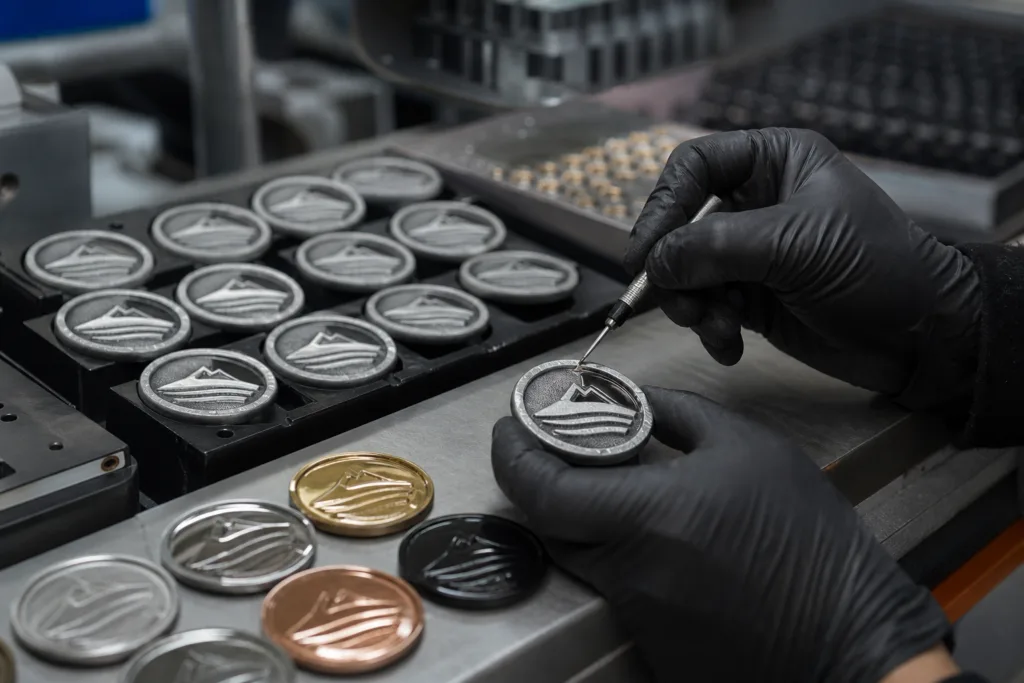
Most successful projects begin with clean vector artwork, clearly marked dimensions, and an honest discussion of what needs to be exact and what can be adjusted during engineering. The medallion is usually the hardest-working design component, so line thickness, relief levels, text size, and enamel boundaries need to be reviewed before mold making. Our general recommendation is to treat the item as a coordinated product system, not a stock glass plus a separate badge.
When buyers are new to this category, a good reference is the medal design and production workflow because the same logic of artwork cleanup, relief planning, mold interpretation, and sample review applies closely to medallion-based drinkware.
Sampling, MOQ, and lead time
Sampling is especially important because three things need confirmation at once: the visual effect of the metal, the fit with the glass body, and the final packaging protection. A digital proof is not enough to judge edge quality, color tone, or bonding position. Buyers should ask what part of the sample is handmade, what part reflects final production tooling, and what tolerances may still shift before mass production.
MOQ depends on whether the glass is standard, semi-custom, or fully custom, and whether the medallion requires a dedicated mold. Lead time is also split across stages: artwork approval, mold development, metal sample, glass sourcing or production, assembly, and packaging. If the project is event-driven, reverse planning from the delivery deadline is critical.
In our custom development work at Gairun, we find that buyers save time when they approve not only the medallion design but also the assembly position, carton packing method, and visual standard for finish consistency before bulk production begins.
Quality Control and Care
Finish consistency and adhesion testing
QC for this category should cover both appearance and assembly reliability. On the metal side, check relief sharpness, plating coverage, color fill consistency, and the cleanliness of edges and corners. On the glass side, check transparency, bubbles, rim finish, and body consistency. On the assembled item, the key questions are whether the medallion sits straight, whether the bond is stable, and whether the finished piece remains visually balanced.
For shipped gift sets, packaging validation matters as much as product inspection. Glass breakage often comes from weak inner support rather than poor product quality. Practical cushioning, dividers, and overboxing should be reviewed against recognized Fragile packaging and drop-testing methods so the project is not only attractive at the factory but also protected through transport, wholesale distribution, or e-commerce fulfillment.
Cleaning and long-term use
Care guidance should match the attachment and finish method. If the emblem includes plated decorative surfaces or enamel, buyers should not assume aggressive dishwashing conditions are ideal. Hand washing is often the safer recommendation for premium souvenir-style pieces, especially when the medallion is decorative rather than integrated into a fully food-contact-safe vessel structure. That does not make the product fragile by definition; it simply reflects the reality that decorative mixed-material products benefit from more controlled care.
Craftsmanship Spotlight: What Designers and Makers Focus On
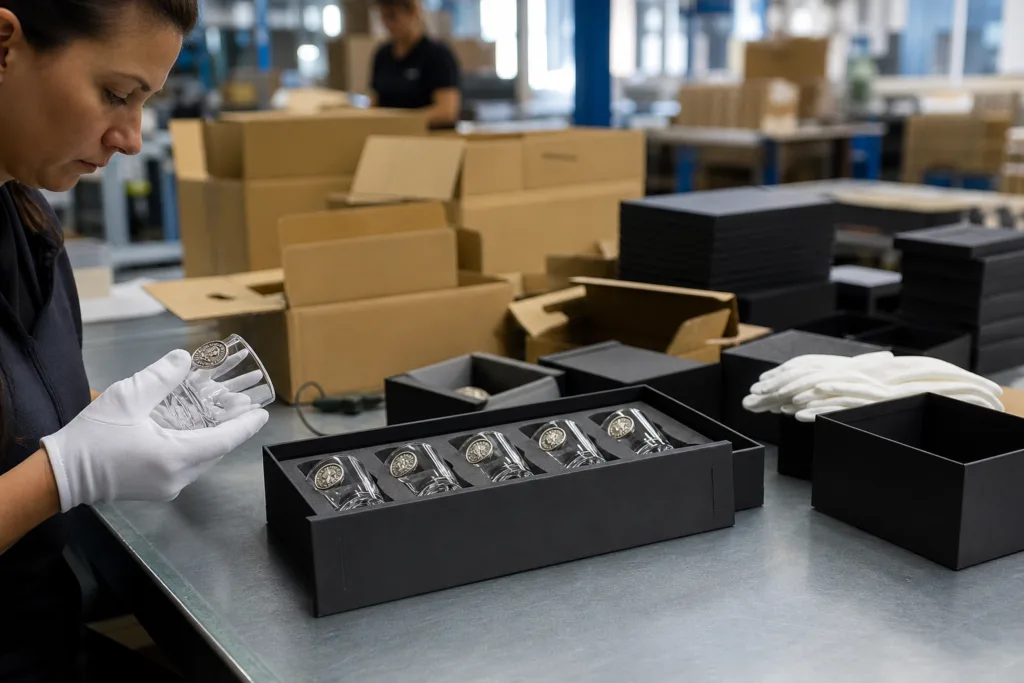
What separates a convincing product from a mediocre one is usually not a single feature. It is the way several small decisions support each other. Designers focus on emblem scale, border thickness, visual center of gravity, and how the metal color reacts to the transparency of the glass. Makers focus on mold release, polish access, plating uniformity, enamel containment, assembly repeatability, and how the packaging prevents movement after assembly.
In our experience, one of the most common mistakes is overloading the medallion with too much detail while choosing a glass body that is too small to support it. Another is treating packaging as an afterthought. Because glass and metal respond differently to shock, the insert structure must stop collision, abrasion, and loose movement during shipping. Buyers who review the full product system early usually get better results than buyers who optimize each component separately.
For gift-worthy design, the goal is not just decoration. The goal is coherence: the glass shape, the metal finish, the theme, and the presentation should feel as if they belong together. That is what makes shot glasses with metal medallions feel intentional rather than assembled from unrelated parts.
Conclusion
Shot glasses with metal medallions can be effective souvenir items, branded gifts, collector products, or event keepsakes when the design is matched carefully to the intended use. The strongest projects balance glass durability, medallion craftsmanship, safe and sensible attachment, and packaging that protects the finished product in real distribution conditions. From a manufacturer’s perspective, buyers get better outcomes when they define the occasion, target price band, finish direction, and packaging level before sampling starts. That makes it much easier to choose the right material, relief style, color treatment, and production plan for a product that looks good, ships safely, and still feels special when it reaches the end user.
FAQs
Are shot glasses with metal medallions mainly decorative or suitable for real use?
They can be both, but the answer depends on how the glass and medallion are designed. Many projects are intended for occasional real use as drinkware plus display value as a souvenir or commemorative piece. Buyers should confirm whether the decoration stays away from the rim and beverage-contact area, whether the attachment method is suitable for repeated handling, and what cleaning guidance applies to the chosen finish.
Which metal is usually best for a custom medallion on a shot glass?
Zinc alloy is often the most practical choice when the design needs dimensional relief, moderate tooling flexibility, and cost-effective bulk production. Brass can be a good option for sharper stamped detail and a more traditional premium feel, while stainless steel suits cleaner, flatter modern looks. The best choice depends on the artwork style, finish preference, target price, and how prominent the medallion should feel on the glass body.
Can enamel colors be added to the medallion without making the design look too busy?
Yes, if the artwork is planned with clear color zones and enough metal separation between them. Enamel works best when it highlights a few important visual elements such as a logo, flag color, crest, or event symbol rather than trying to reproduce every detail in the original artwork. During sampling, buyers should review whether the enamel improves readability from a normal viewing distance and whether the color areas still look balanced against the glass.
What should buyers check during sample approval?
Sample approval should cover more than the logo. Buyers should check the glass weight, the shape and transparency, medallion size, finish tone, relief depth, color accuracy, bonding position, edge cleanliness, and the way the full item looks in its packaging. It is also important to confirm whether the sample reflects final tooling and whether any manual prototype steps will change in bulk production.
Does adding a metal medallion always require a high MOQ?
Not always, but MOQ usually increases when the medallion needs a dedicated mold, special plating, custom enamel work, or custom packaging. If the glass body is standard and only the metal emblem is customized, the project may be more flexible than a fully bespoke drinkware program. The right way to judge MOQ is to review tooling, assembly, packaging, and deadline requirements together instead of looking at the medallion alone.
How should these products be packaged for shipping or retail?
Packaging should protect both the glass and the metal surface. Inner inserts should prevent movement, edge collision, and rubbing against the medallion, while the outer carton should suit the shipping method and order scale. For retail, presentation and protection need to work together, so buyers should decide early whether they need a simple individual box, a gift set, or a collector-style package with molded support.