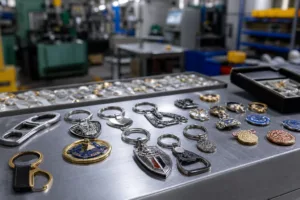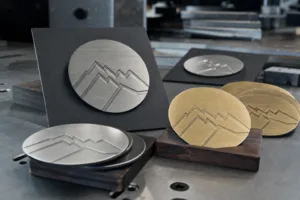
Custom belt buckles can be far more than decorative accessories when they are planned well for a corporate anniversary program. For HR teams, procurement managers, brand leaders, and event organizers, they offer a rare combination of daily usability, symbolic value, and long-term brand visibility. Unlike generic awards that are displayed once and forgotten, a well-made buckle can become a wearable reminder of service, belonging, and company culture. From our manufacturing perspective, the strongest projects are the ones that balance emotional meaning with practical production details such as material, structure, finish, packaging, and consistency across the full order.
For buyers comparing formats, custom buckle manufacturing solutions are especially useful when a recognition gift needs to combine a logo, anniversary year, message, and premium metal finish in one durable product. We support these projects through material selection, mold development, finish planning, sample approval, and bulk production control so corporate teams can build a gift program that feels intentional rather than improvised.
Why custom belt buckles work for corporate anniversaries
Anniversary gifting is not only about marking a date. It is also about reinforcing a shared story. Employees, channel partners, leadership teams, and long-service recipients respond more strongly to recognition when the item feels considered, useful, and tied to identity. Research around employee recognition, retention, and engagement supports the broader idea that meaningful recognition can improve loyalty when it is timely and personal. In practice, that means the product itself matters. Weight, finish, message, and presentation all affect whether the gift feels memorable or disposable.
Custom belt buckles are particularly effective for industrial brands, outdoor brands, western lifestyle companies, manufacturing groups, dealer networks, logistics teams, and organizations with a hands-on culture. They also work well when a company wants a recognition item that feels less formal than a trophy but more lasting than apparel alone.
What makes them different from standard corporate gifts
- Wearability: the product becomes part of everyday use instead of shelf display only.
- Strong logo presence: a buckle provides a focused metal surface for a clear emblem or anniversary mark.
- Collectible potential: limited editions, milestone years, and serialized runs can add emotional value.
- Material value: metal weight and finish create a premium impression when compared with low-cost giveaways.
- Brand culture fit: the style can be rugged, refined, modern, commemorative, or heritage-driven.
Best use cases for anniversary and recognition programs
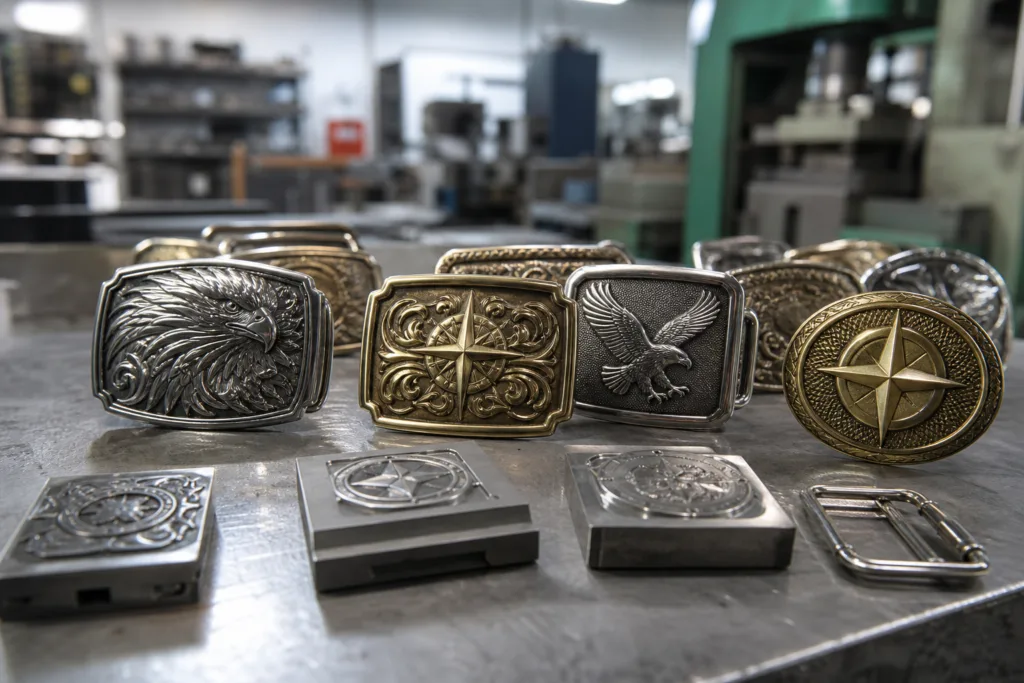
Not every corporate gift format suits every audience. Custom belt buckles are strongest when the gift needs to feel distinctive, durable, and connected to a specific company identity.
Company anniversary celebrations
A buckle designed around a 10th, 25th, 50th, or 100th anniversary can combine the company logo, founding year, anniversary year, and a small visual narrative. For example, a heritage manufacturer may include a classic emblem and antique finish, while a technology-driven industrial firm may prefer a cleaner geometric design with brushed plating.
Service awards
For 5-year, 10-year, or 20-year milestones, a common approach is to keep the main buckle structure consistent while changing the year marker or edge text by recognition tier. This keeps mold investment efficient while preserving a family look across the program.
Team milestones and internal campaigns
Sales teams, plant teams, safety teams, and project groups can receive buckles tied to a major internal achievement. These projects often use simpler structures, with an emphasis on strong logo recognition and fast repeatability.
Dealer recognition and channel partner gifts
Dealer networks and distributors often appreciate gifts that feel collectible and regionally relevant. A buckle can serve both as a recognition item and as a subtle brand extension for partner events.
Leadership and VIP gifting
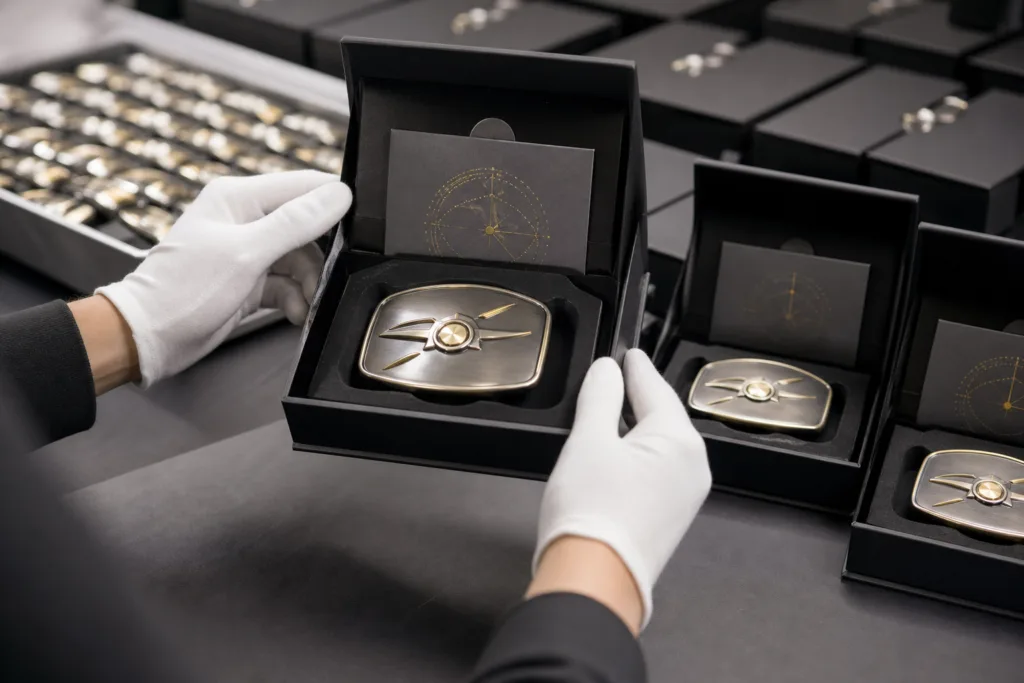
For board members, executives, founders, or top performers, buyers often choose higher-end material, deeper relief, more polished finishing, and presentation packaging with an insert card explaining the anniversary story.
Design directions that reflect company values and culture
The design stage is where many projects either gain meaning or become generic. A buckle should not simply place a logo on a blank plate. The better approach is to translate company values into form, relief, finish, and message hierarchy.
We usually advise buyers to define the primary message first. Is the gift meant to honor loyalty, celebrate a corporate milestone, reinforce a founder story, or recognize a specific group? Once that message is clear, the artwork can be built around one visual priority instead of trying to include every brand element at once.
Common design directions
- Classic logo buckle: centered emblem, anniversary year, and clean border. Good for broad employee distribution.
- Minimalist corporate buckle: restrained shape, engraved logo, and subtle texture. Works well for modern brands.
- Western-inspired buckle: larger profile, sculpted edges, and layered relief. Suitable for heritage, ranch, outdoor, and regional culture themes.
- Commemorative edition: anniversary motif, slogan, or founder quote with decorative frame elements.
- Limited collector style: numbered editions, special backing card, and premium finish for leadership or dealer tiers.
When buyers need more dimensional forms or raised logo features, die-cast belt buckle options are often the most flexible choice because they allow more sculpted shapes and layered surfaces than flat concepts.
How to turn a logo and milestone story into a workable buckle design
Good buckle artwork is not only a branding exercise. It must also translate into tooling, metal flow, relief depth, surface finishing, and legibility after plating. A design that looks clear on a screen may lose detail if lines are too thin, cavities are too shallow, or text is too small for the buckle size.
Practical artwork rules
- Keep the main logo or anniversary mark as the visual focal point.
- Limit secondary text to what can actually be read at normal viewing distance.
- Use relief depth to separate the emblem from the background.
- Reserve very fine details for engraving rather than heavy relief.
- Decide early whether the design needs color filling or should rely on metal contrast alone.
For cleaner brand marks, initials, or milestone dates, engraved logo buckle customization can be a practical direction because engraved lines stay controlled, especially when the brand style is minimalist rather than ornate.
Information hierarchy that works well
| Design Element | Priority | Best Use on Buckle |
|---|---|---|
| Company logo | Highest | Center or dominant upper area |
| Anniversary year | High | Below logo or integrated into border |
| Slogan or recognition phrase | Medium | Short text only |
| Employee name or tier | Optional | Backside engraving or limited front text |
| Serial number | Optional | Backside for collector editions |
Common buckle styles and structural choices
Corporate buyers often focus on graphics first, but structure matters just as much. The style influences not only appearance but also wear comfort, production method, and attachment compatibility.
Western style
Usually larger, more sculptural, and ideal for statement recognition pieces. Best when company culture supports a bold presentation.
Classic logo plate
A balanced option for broad gifting. It gives enough face area for branding while remaining wearable across different employee groups.
Minimal corporate form
Often rectangular, oval, or softly contoured. This style works well for executive gifts and brands that prefer understated identity.
Commemorative frame style
Uses border elements, anniversary banners, or layered edge details to create a ceremonial look without becoming too large.
Limited-run collector edition
Designed for founders, dealer events, or milestone launches. These often use special finishing, backside text, or presentation boxes.
For projects that need a more traditional premium look with formed metal structure, stamped brass buckle frames can be a strong option when the design fits a pressed and assembled format rather than deep sculpted casting.
Material options and trade-offs
The right material depends on design complexity, target price, weight expectation, finish plan, and audience. There is no universal best material. The key is fit.
Zinc alloy
Zinc alloy is one of the most practical materials for custom belt buckles because it supports complex shapes, stable die-cast production, and a wide range of plating and finishing options. As noted in information from zinc die casting, surface finish, and production tolerances, die casting is well suited to close tolerances and can accommodate smooth or textured surfaces with efficient finishing workflows. From our production experience, zinc alloy is often the best balance when buyers want dimensional relief, antique effects, and scalable bulk consistency.
Brass
Brass suits premium-looking commemorative gifts because it offers a warm appearance, strong feel, and good corrosion resistance. Industry material guidance on brass material selection and premium finish aligns with why many buyers choose it for higher-end buckles: it is durable, workable, and visually rich after polishing or plating. Brass is often selected for executive tiers, heritage brands, and projects where a refined metal character matters.
Stainless steel
Stainless steel works well for modern, minimalist buckle concepts, especially when engraving and brushed textures are preferred over heavy relief. It offers a clean look and good durability, but it is less flexible than zinc alloy for deeply sculpted shapes.
Aluminum
Aluminum is lighter in weight, which may suit large buckles when wearing comfort is critical. It can be effective for simpler shapes and some branded programs, though it usually gives a different feel from heavier commemorative metals.
| Material | Strengths | Trade-Offs | Typical Fit |
|---|---|---|---|
| Zinc alloy | Complex shapes, good finish range, efficient die casting | Not as premium-feeling as brass in every concept | Most anniversary programs |
| Brass | Premium feel, warm tone, durable | Higher material and process cost | Executive and commemorative gifts |
| Stainless steel | Modern look, strong, good for engraving | Less suited to deep relief casting style | Minimal corporate gifts |
| Aluminum | Lightweight, practical for larger sizes | Lighter perceived value for some recipients | Comfort-focused or simpler runs |
Decoration methods and finish planning
Surface treatment changes how the buckle communicates brand identity. The same shape can feel rugged, formal, heritage-driven, or modern depending on the finish plan.
Die casting
Best for dimensional logos, curved outlines, raised borders, and sculptural commemorative designs.
Stamping
Suitable for certain flatter forms, especially when crisp pressed lines and formed frames are desired.
Laser engraving
Useful for names, years, serial numbers, and controlled fine details. It is often chosen for personalization or minimalist branding.
Enamel filling
Helpful when the brand requires exact color blocks or when anniversary marks need stronger visual contrast. Buyers should keep color count realistic because each filled area adds process complexity.
Electroplating
Nickel, matte nickel, antique silver, gold tone, gunmetal, black nickel, and other finishes affect both brand personality and price. For buyers comparing visual direction, electroplated buckle finish choices can help illustrate how plating shifts the final presentation.
Antique finishing and sandblasting
Antique effects add depth by darkening recessed areas and highlighting relief. Sandblasted backgrounds create texture contrast and often improve readability by separating the main emblem from the field.
Sizing, thickness, weight, and comfort
Corporate buyers sometimes assume bigger means more impressive, but wearing comfort matters. If the buckle is too large or too heavy, recipients may appreciate the gesture but not actually use it.
Size planning guidelines
- Smaller to medium sizes: better for broad employee use and conservative brand styles.
- Larger statement sizes: better for western themes, dealer events, or collector editions.
- Executive gifting: usually benefits from moderate size with refined thickness and finish.
Thickness also affects visual depth and perceived quality. A thin buckle may reduce weight and cost, but too little thickness can make the product feel flat. A thicker build supports stronger relief and edge definition, yet must stay balanced for comfort. Attachment structure, backside bar, and hook position should also match intended belt widths and typical user habits.
Color, plating, and finish choices for different brand identities
Brand personality should guide finish selection. A heritage or industrial company may prefer antique brass or antique silver. A premium corporate anniversary may lean toward polished gold tone or dual plating. A modern technology-oriented brand may choose brushed nickel with engraved detail and no color fill.
| Brand Identity | Recommended Finish Direction | Reason |
|---|---|---|
| Heritage or founder-led | Antique brass, antique copper | Warm and commemorative feel |
| Modern corporate | Matte nickel, brushed steel look | Clean and understated |
| Premium anniversary edition | Gold tone, dual plating, polished highlights | Formal recognition effect |
| Outdoor or western culture | Antique silver, darker relief contrast | Rugged and wearable |
| Brand color-driven program | Selective enamel filling with neutral plating | Supports logo consistency |
Packaging ideas for anniversary gifting
The packaging should match the reason for the gift. A buckle placed in a simple polybag may be suitable for internal stock, but it will not create the same recognition impact as a boxed presentation. For employee anniversary gifts, buyers often choose a foam insert box, branded sleeve, or card explaining the milestone. For dealer or leadership programs, a rigid gift box can strengthen the perceived value without changing the metal product itself.
At Gairun, we usually encourage buyers to think about packaging early rather than after the buckle design is finished. Box size, insert shape, barcode labeling, gift-set assembly, and private label needs can all affect packing workflow and shipping plan.
Sample development, mold making, and approval workflow
A reliable custom project moves through clear stages. This is especially important for corporate gifts, because stakeholders may include HR, procurement, branding, and leadership approval teams.
Typical workflow
- Artwork review and design adjustment for manufacturability
- Quotation based on size, material, structure, finish, packaging, and quantity
- Mold making after artwork approval
- Sample production
- Sample review for detail, plating, color, edge quality, and attachment fit
- Final confirmation before bulk production
The sample stage is where buyers should check readability, actual weight, finish tone, and packaging fit, not just whether the logo is technically correct. A project can look excellent in vector art but feel too heavy, too glossy, or too crowded in physical form.
MOQ, lead time, and bulk order planning
Corporate anniversary programs often run on fixed event dates, so schedule planning is critical. MOQ depends on material, mold economics, personalization complexity, and packaging format. A standard bulk run is easier to control than many small personalized splits, but tiered recognition programs can still work if the quantity structure is planned early.
What affects lead time
- New mold development versus repeat order
- Complexity of relief and cutout structure
- Number of plating and color processes
- Need for individual engraving or numbering
- Custom box production and insert assembly
- Approval speed on the buyer side
For anniversary events, we usually recommend counting backward from the delivery date and leaving room for sampling, revision, packaging, and shipment. Last-minute approval delays are one of the most common risks in recognition gift projects.
Quality control points that matter in bulk production
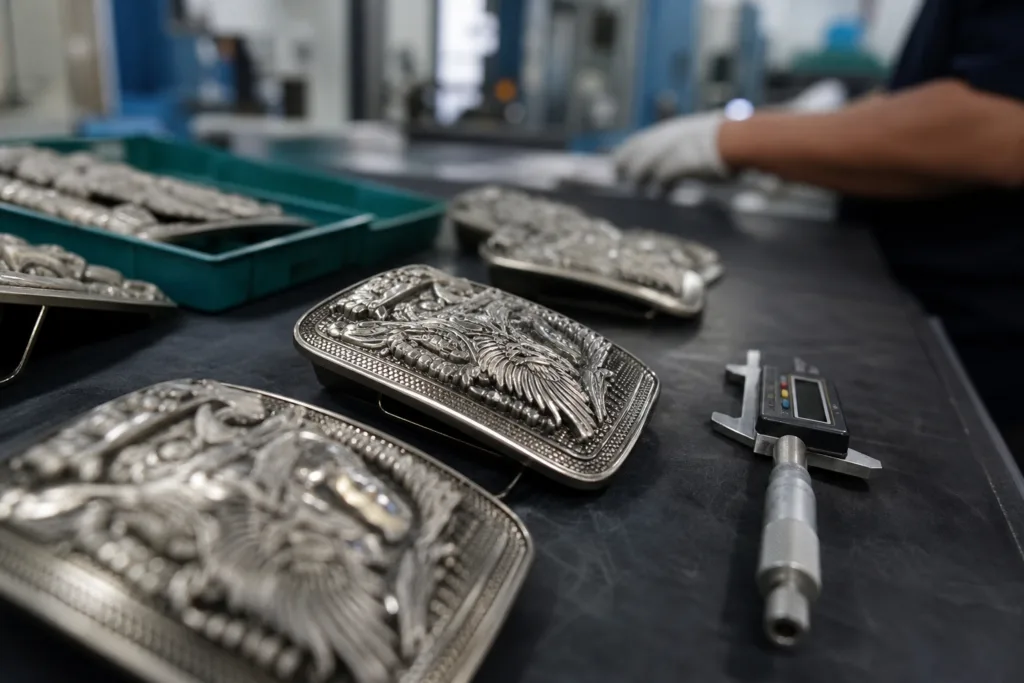
The difference between a good sample and a good shipment is process control. Buyers should ask how the manufacturer checks consistency across logo detail, plating tone, backside structure, and packing count.
Key QC checkpoints
- Logo detail: lines, relief separation, and text readability must match approved artwork.
- Plating consistency: color tone should remain stable across the full batch.
- Edge finishing: sharp burrs or rough corners should be removed for safe handling and better wear comfort.
- Attachment security: buckle bar and hook components must be aligned and stable.
- Color filling: enamel areas should be clean, filled properly, and consistent in hue.
- Packaging accuracy: correct quantities, labels, inserts, and gift pairing should be checked before shipment.
For larger B2B orders, pre-production confirmation samples and in-line inspection points are usually more helpful than relying only on final random checks.
Budget planning and main cost drivers
Corporate buyers do not need exact pricing before design work begins, but they do need to understand what drives the budget. This helps avoid design revisions that add cost without adding meaning.
| Cost Driver | Why It Matters |
|---|---|
| Material choice | Brass and premium metals usually cost more than zinc alloy |
| Size and thickness | Larger, heavier buckles use more material and may require more robust tooling |
| Mold complexity | Deep relief, cutouts, and complex structure increase tooling difficulty |
| Finish type | Multi-step plating, antique effects, or dual finishes add process time |
| Color count | More enamel areas mean more filling and inspection work |
| Personalization | Names, serial numbers, or split packaging increase labor |
| Packaging level | Presentation boxes and printed inserts affect unit cost and assembly time |
A practical budget approach is to define two or three recognition tiers rather than trying to make one buckle satisfy every audience. For example, a broad employee version may use zinc alloy and standard box packaging, while an executive edition uses brass, deeper relief, and upgraded presentation.
Common mistakes to avoid when ordering custom belt buckles for corporate gifts
- Overloading the design: too much text or too many symbolic elements reduce readability.
- Ignoring wearer comfort: oversized or overly heavy buckles may not be used.
- Choosing finish before audience fit: a premium plating style is not always right for a rugged workforce culture.
- Approving artwork without physical review priorities: sample evaluation should include weight, edges, and finish, not just graphics.
- Leaving packaging until late: gift presentation affects both budget and delivery schedule.
- Underestimating internal approval time: recognition projects often involve more stakeholders than standard merchandise orders.
How to evaluate a manufacturer for a corporate buckle project
Buyers should look beyond unit price and ask whether the supplier can actually guide the project through design translation, tooling, sampling, finish control, and shipment planning. The manufacturer should be able to explain which material fits the artwork, why a finish may or may not support the brand look, and how bulk consistency will be maintained.
Useful questions to ask
- Can you recommend material based on the buckle design and recognition goal?
- Which process is better for this project: die casting, stamping, or engraving?
- How do you handle sample revisions before bulk approval?
- What finish options are most stable for this style?
- How do you inspect edge quality, plating consistency, and attachment function?
- Can you support custom packaging or private label presentation?
From our metal manufacturing perspective, the best collaborations happen when buyers share the event purpose, audience, budget range, and delivery timing early. That allows the product structure to be designed around real use and real production conditions rather than guesswork.
Conclusion
Custom belt buckles can be highly effective corporate gifts when they are treated as a strategic recognition product rather than a novelty item. The right project brings together brand identity, milestone storytelling, material choice, finish planning, comfort, packaging, and reliable production control. For procurement, HR, and brand teams, the goal is not simply to make a buckle with a logo. It is to create a durable object that recipients want to keep and wear, while also fitting budget, lead time, and approval realities. With clear design priorities and a manufacturer-informed process, a corporate anniversary buckle program can support employee recognition and brand-building at the same time.
Frequently Asked Questions
What design files are best for custom belt buckle production?
Vector artwork such as AI, EPS, or well-prepared PDF files is usually the best starting point because it keeps logo lines, text, and shapes clear for mold development or engraving setup. If only a PNG or photo is available, we can often review it first, but buyers should expect some redrawing work before sampling, especially when the buckle includes fine logo detail, anniversary years, or precise brand geometry.
How long does a sample usually take for a corporate anniversary buckle?
Sample timing depends on whether the project needs a new mold, how complex the buckle structure is, and whether the finish includes multiple plating or color steps. In practical terms, buyers should allow time for artwork adjustment, mold making, physical sampling, and internal approvals. For anniversary programs tied to a fixed event date, it is wise to build in extra review time rather than assuming the first sample will always be final.
Can each buckle be personalized with an employee name or service year?
Yes, individual personalization is possible, usually through engraving, laser marking, or controlled text changes in specific areas. The key question is quantity structure. If every buckle has different data, buyers should plan for more labor, more sorting, and more packaging control. A common B2B solution is to keep the front design standard and add personalized names, serial numbers, or service years on the back.
What is the most practical material for large corporate gift orders?
Zinc alloy is often the most practical choice for large custom belt buckles because it supports detailed die-cast shapes, stable finishing options, and efficient scaling in bulk production. That said, brass may be better for premium tiers, while stainless steel can work well for minimalist engraved concepts. The right choice depends on design depth, target finish, weight preference, and budget expectations.
How can buyers reduce risk before bulk production starts?
The safest approach is to confirm a full production sample and review more than just the artwork. Buyers should check the actual size, weight, edge feel, plating tone, logo clarity, backside structure, and packaging fit. It also helps to align early on quantity splits, shipping labels, and recognition tiers so the bulk plan matches the real event workflow rather than only the product specification.
Are custom belt buckles suitable for all types of corporate gifts?
They are most suitable when the recipient group, company culture, or event identity supports a wearable metal gift with symbolic value. For some audiences, a buckle can be a strong anniversary or service award item; for others, a smaller accessory may fit better. The decision should be based on audience profile, dress habits, regional culture, and whether the company wants the gift to feel collectible, practical, or ceremonial.