Introduction: Why Medal Design Is More Than Just a Click
Medals are powerful symbols—of achievement, honor, or memory. But moving from an idea to an exceptional, tangible medal requires far more than using a medal generator or simple “design a medal online free” tool. In this comprehensive guide, you’ll discover how to create a medal design from idea to production, including sketching, sizing, materials, processes, color, 3D rendering, prototyping, and mass production. Whether you’re celebrating a marathon victory, marking academic success, or recognizing corporate excellence, this roadmap gives you the knowledge to turn your concept into a premium-quality medal.
How to Create a Medal Design From Idea to Production
The journey from concept to finished medal is both creative and technical. We’ll break down each essential step so you can avoid common pitfalls and make confident choices at every stage. This process reflects how top medal makers, such as Gairun, approach quality production for global brands.
Understanding the Purpose of Your Medal
Before reaching for any medal design generator or maker, ask: What moment does this medal capture? A sports race, school ceremony, or brand commemoration? The purpose will shape your creative decisions onward.
Initial Concepts and Inspiration
Look at the event, company values, or story you want to honor. Consider incorporating logos, mascots, slogans, or symbolic motifs. Many award organizers reference how Olympic medals inspire custom medal design for creative direction.
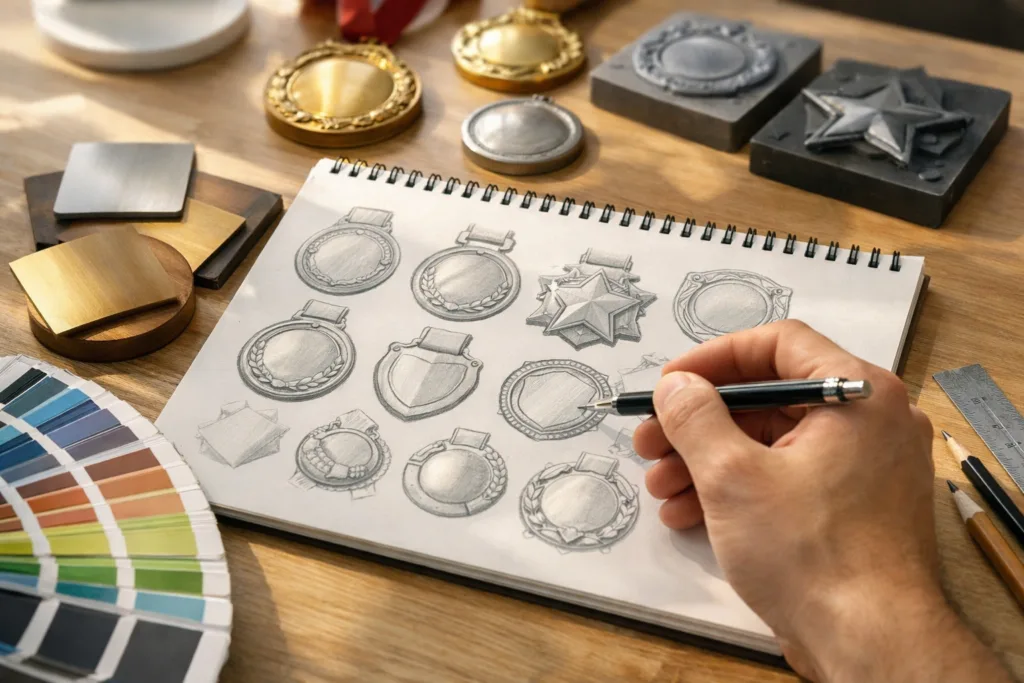
Sketching and Visual Exploration
Now, begin with sketches—either on paper or using drawing software. Don’t focus on detail yet; explore shapes, icon placements, and possible 2D/3D effects. At this stage, interactive online medal makers can help visualize simple variants but are rarely sufficient for bespoke designs.
Discussing Design with Stakeholders
Share your sketches with decision-makers for feedback. Gather thoughts on the emblem, symbolism, and event branding. Small changes now can save big issues later.
Refining Dimensions and Proportions
Dimensions impact presence, perceived value, and feel. Standard medals range from 50–80 mm in diameter; thickness can vary from 3–6 mm. Heavier medals suggest higher importance but must be wearable. Use established industry guides, such as steps to designing custom 5K medals, for practical size and proportion advice.
Shape and Cut-Out Features
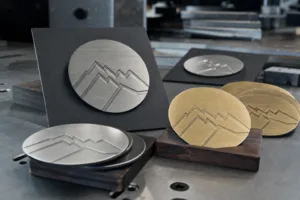
Main shapes include round, oval, shield, or custom silhouettes. CNC tools and die-cutting allow for creative contours and inner cut-outs for added drama, such as in school excellence medals.
Selecting Materials for Longevity and Prestige
Material choice influences both aesthetics and durability. Popular options:
- Zinc Alloy (Zamac): Highly versatile, perfect for 2D/3D shapes and color filling.
- Brass: Ideal for fine embossing and sharp details.
- Stainless Steel: Modern, strong, but less suited for deep relief effects.
- Aluminum: Lightweight, often for large-participant events.
Material quality matters, not just the type. For example, Gairun only accepts virgin Zamac 3 or lead-free brass to ensure the smoothest surfaces and purity—important for consistent finishing and safety.
Medal Finish Options
Popular finishes include gold, silver, bronze, antique brass, nickel, or multi-tone combinations. Choose according to event hierarchy or branding palette. Intricate finishes like sandblasting or matte-and-polish combos add a tactile, luxury feel, as explained in detail in Soft Enamel Medal vs Other Medal Finishes.
Exploring Manufacturing Processes
The process selected shapes cost, detail, and effect.
- Die Casting: Suits 3D, multi-level medals, and allows for high relief.
- Die Striking: Best for flat, crisp 2D designs—common for coins and classic awards.
- Stamping: Efficient for large batches; limited depth.
Want a deeper dive? See Die Cast Medals Explained: 7 Unbeatable Reasons to Choose Premium 3D Awards.
Designing for Color: Enamel, Paint, and Plating
Soft and hard enamel let you add vibrant, separated colors. Transparent or gradient finishes (using hand-filling techniques) offer premium effects. Careful planning in this step ensures medal makers can replicate your design—every time. For critical events, color consistency should be protected with batch QC, a practice used by makers like Gairun.
Adding the Third Dimension: 3D Modeling and Rendering
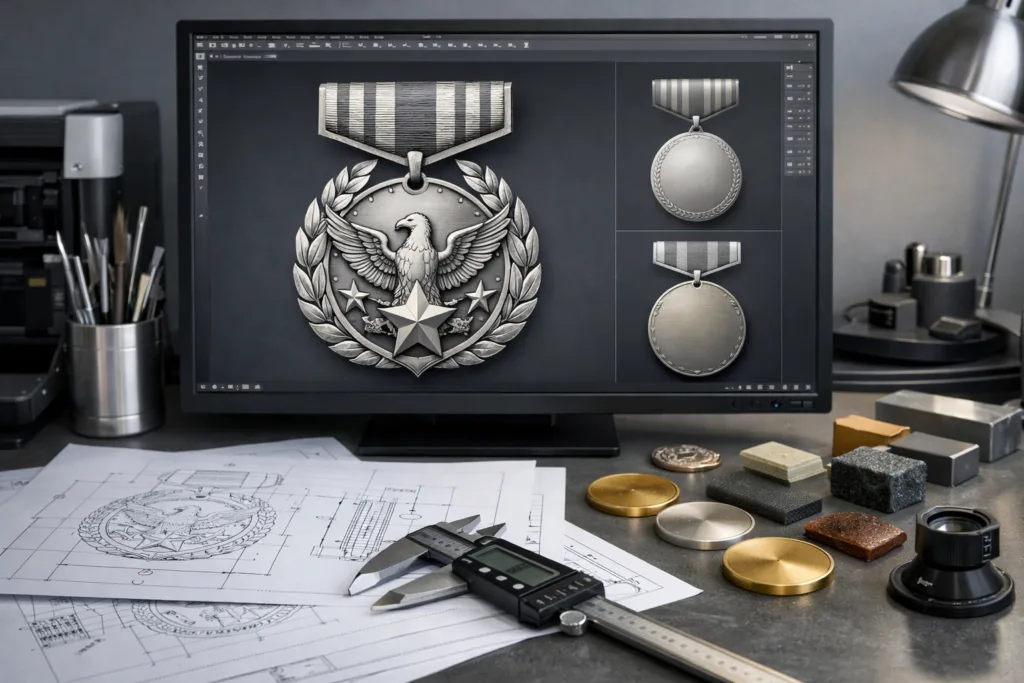
After design approval, technical artists create a 3D medal model (usually in software such as SolidWorks or Rhino). This preview simulates relief heights, cut-out regions, and assembly points. Modern rendering tools provide photo-real previews—crucial for sign-off before mold investment.
Engineering for Feasibility
Not every concept is manufacturable. Edges must be draft-angled for easy demolding. Tiny lettering may require deepening, or flat relief for clarity after plating. Experts prevent design flaws by reviewing for shrinkage, undercuts, and common casting problems before tooling begins.
Proofing and Sample Approval
Before committing to mass production, order a prototype. Usually, this is a first-off casting (raw, not yet plated or colored). You’ll check:
- Detail crispness
- Proportion and weight
- Attachment hole dimensions
With approval, the manufacturer will then supply a fully finished sample: polished, plated, and enameled for your sign-off. Learn from Mastering Zinc Alloy Sample Approval for risk-minimizing tips.
Common Pitfalls to Avoid in Proofing
- Lettering too shallow (disappears after plating)
- Attachment holes off-center
- Unacceptable surface pitting or roughness
Mass Production: From Molds to Finished Awards
Once samples are approved, mass production uses hardened steel molds. Quality medal makers, including Gairun, use precision injection and multi-stage polishing. Each medal goes through:
- High-pressure casting or stamping
- Deburring and meticulous hand-polish
- Plating (gold, silver, bronze, or custom)
- Color filling (manual or auto)
- Drying, QC, and safe packing
Quality Control You Should Request
Professional QC checks include surface inspection, plating adhesion tests, weight verification, and ensuring every detail matches the approved sample. Rigorous manufacturers may also perform pull-strength and abrasion-resistance tests, especially for medals with wear-and-tear risk (e.g. running events).
Neck Ribbon, Packaging, and Final Accents
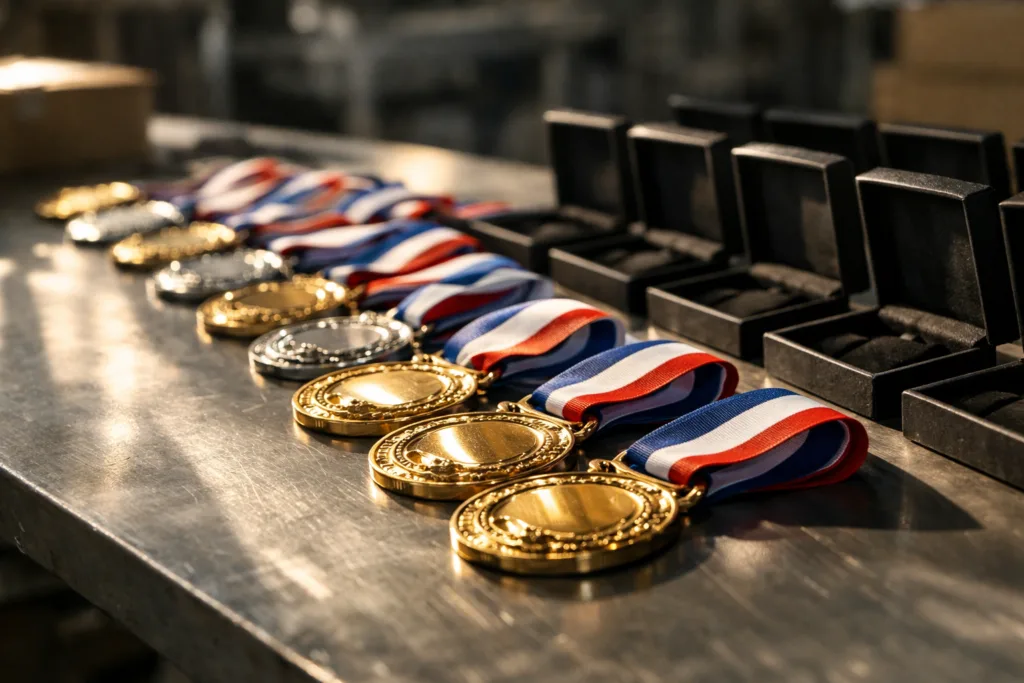
No medal is complete without a coordinated neck ribbon or presentation box. Custom ribbons can reinforce your brand or event theme, as shown in 7 Essential Insights to Custom Neck Ribbons for Medals. For premium gifting or commemoration, select padded presentation boxes, velvet bags, or custom carding.
Attachment Details
The connection point (eyelet, slot, or bar) must balance strength and elegance. Some customers opt for hidden spring bars or rotating connectors for a seamless feel.
Shipping and Delivery Considerations
Bulk medals are heavy and sensitive to scratches. Always specify anti-abrasion packing, carton stacking, and humidity controls for ocean freight. Reputable medal makers can advise on transit solutions, especially for large-scale sporting or school events. See tips in Bulk Medal Procurement for cost-optimizing logistics.
Timelines and Risk Management
Plan for 30–45 days for full custom production plus shipping. Allow extra for first-off samples, color confirmation, and final assembly checks—especially with tight event deadlines.
Cost Drivers and Value Decisions
Medal cost is shaped by design complexity, material, finish, color processes, and order quantity. The investment in a custom mold pays off when ordering 1000+. For low quantities, flexible mold-sharing or modular designs reduce expense. For organizations requiring luxury aesthetic or extreme durability, never trade down on plating thickness or hand polishing.
When to Use a Medal Generator or Design a Medal Online Free Tool
Online medal design tools excel for basic shapes and fast proofs—but cannot match professional custom manufacturing for detail, finish, or brand storytelling. They’re great for casual fun runs or participation events, while serious awards demand the guided process above. Explore the differences in Medals or Trophies? Insights for Event Organizers.
Medal Makers: Choosing the Right Production Partner
Choosing a medal maker combines technical, aesthetic, and service needs. Ask about material purity, finish choices, QC protocols, and prior work for your industry. High-standard shops like Gairun routinely reject functionally adequate but visually imperfect parts, holding each medal to the same standard as a jewelry piece. This is the difference between a keepsake for decades—and a forgettable trinket.
Conclusion: Bringing Vision to Life with Confidence
Designing and manufacturing medals is a creative and technical collaboration. By following this structured approach, you minimize surprises and maximize your event or brand’s impact. Sketch, verify, prototype, then go into production—always refining each detail. Remember, a medal lives on as a symbol of achievement; the story is as important as the shine. Now you know how to create a medal design from idea to production with professional results.
Frequently Asked Questions
How long does the entire medal production process take?
From initial sketches to bulk delivery, expect 30–60 days depending on design complexity and sample revisions. Quick-turn generic medals can be faster.
Can I use any image or logo for my medal?
Most images and logos can be adapted, but fine lines or gradients may need adjustment for metalwork. Vector artwork gives the best results.
Is it possible to get medals in less traditional shapes or colors?
Absolutely. Custom medal makers offer nearly any silhouette or color, limited only by technical feasibility and budget.
What is the minimum order quantity (MOQ) for custom medals?
Most professional manufacturers set MOQs between 100–300 units. Low-cost online generators may have smaller minimums but far less design freedom.
How do I guarantee my medal colors and finishes match my original design?
Always request pre-production samples and plate/paint swatches for approval. Reputable manufacturers maintain strict color QC across batches.
What packaging options are available for premium medals?
Popular choices include velvet-lined boxes, cushioned tins, and custom card or acrylic holders. Discuss these with your medal maker at the quoting stage.
Related Reading
- Unlocking Legacy: How Olympic Medals Inspire Modern Custom Medal Design
- 13 Proven Ways to Maximize Value When Buying Medals in Bulk
- 7 Pro Insights to Elevate Medal Neck Ribbon Design
- Cracking the Code: Soft Enamel vs Other Medal Finishes
- 7 Reasons Premium 3D Awards Win with Die Cast Medals
- Step-by-Step Guide to Designing Memorable 5K Race Medals