When buyers compare keychain materials, the real decision is not simply appearance. It is a balance of durability, logo detail, production method, finish options, budget, packaging, and how the product will be used after delivery. In our custom metal product manufacturing work, we often see buyers start with a visual idea, then realize that metal, PVC, and acrylic behave very differently in sampling, bulk production, and long-term use. A keychain for retail souvenir sales, a corporate brand campaign, a sports event giveaway, or a premium membership item may all require different material logic.
If your project needs stronger structure, logo accuracy, attachment planning, or a more premium finished feel, OEM keychain manufacturing support becomes important early in development. We help buyers compare material fit, confirm artwork feasibility, review mold or cutting requirements, choose finishes such as plating, enamel, printing, or epoxy, and prepare samples before bulk production so the final keychain matches the target market, budget, and packaging plan.
What custom keychain buyers need to compare before choosing a material
Before selecting metal, PVC, or acrylic, we recommend evaluating five practical points:
- Use environment: Will the keychain be carried daily with keys, displayed on a bag, sold in retail, or handed out once at an event?
- Brand positioning: Is the project intended to feel premium, playful, colorful, lightweight, or collectible?
- Logo complexity: Does the design rely on fine lines, cutout shapes, soft cartoon styling, transparent layers, or metallic effects?
- Production economics: Will tooling, sample revisions, MOQ, and unit cost matter more than premium feel?
- Packaging and shipping: Does the item need individual cards, retail bags, backing boards, or compact bulk packing?
These questions quickly narrow the material choice. A buyer looking for long service life and metallic branding usually moves toward metal. A buyer needing bright cartoon style and soft touch may prefer PVC. A buyer wanting printed color graphics at low thickness often considers acrylic.
Overview of the three main keychain materials
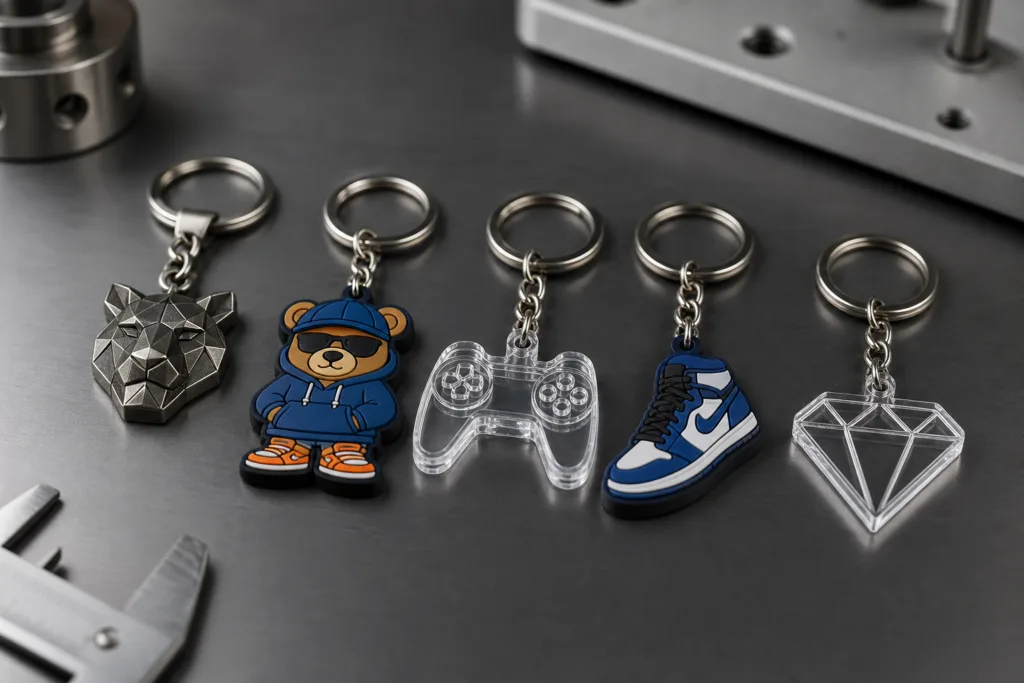
The three most common choices in custom keychain projects each solve a different business need.
| Material | General Look | Main Process | Typical Strength | Typical Buyer Use |
|---|---|---|---|---|
| Metal | Premium, solid, reflective, collectible | Die casting, stamping, engraving, plating, enamel | High structural durability | Brand gifts, souvenirs, clubs, premium promotions |
| PVC | Soft, colorful, playful, molded | Injection molding or molded PVC filling | Flexible, impact-tolerant | Events, mascot items, youth brands, casual promotions |
| Acrylic | Flat, printed, transparent or glossy | Laser cutting, CNC cutting, UV printing | Moderate, but can scratch or crack at edges | Artist merch, retail graphics, lightweight promotional items |
No material is universally better. The right choice depends on what the buyer is optimizing for: tactile quality, speed, vivid graphics, weight, cost control, or product longevity.
Metal keychains: strengths, weaknesses, and best use cases
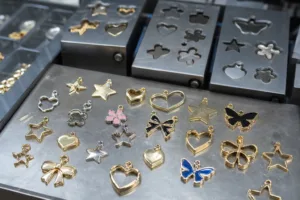
Metal keychains are usually chosen when the buyer wants perceived value, structural strength, and a more permanent branded item. Depending on design and budget, we may recommend zinc alloy die casting, iron stamping, brass, stainless steel, or aluminum for special use cases.
Where metal performs well
- Premium brand presentation
- Sharp outlines and defined edges
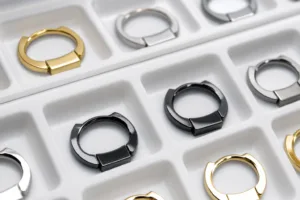
- Plating choices such as gold, nickel, black nickel, antique brass, and matte finishes
- Engraved or debossed logo details
- Longer product life in everyday carrying conditions
For dimensional logos, mascots, or irregular silhouettes, buyers often prefer die-cast metal keychain options because die casting supports sculpted relief, cleaner sidewalls, and a substantial hand feel. When the design is flatter and more line-based, stamping may be more economical.
Where metal has limitations
- Higher weight than PVC or acrylic
- Usually higher tooling and unit cost than simple printed acrylic
- Complex multicolor work may require enamel filling or multiple process steps
- Scratches can appear on polished surfaces if packed poorly
Metal works especially well for tourism souvenirs, automotive branding, member clubs, anniversary gifts, and event merchandise where the object should feel durable and collectible rather than disposable.
PVC keychains: strengths, weaknesses, and best use cases
PVC keychains are popular when the design needs a soft, playful style and bold color zones. They are often used for mascots, cartoon graphics, school events, youth campaigns, and casual promotional items.
Where PVC performs well
- Soft touch and flexible feel
- Strong color visibility
- Good suitability for cute or rounded character designs
- Less edge denting than rigid materials in some low-impact situations
- Can be comfortable for lightweight giveaway projects
Where PVC has limitations
- Less premium appearance than plated metal
- Fine line detail can be harder to separate cleanly in very small designs
- Surface can attract dust or show wear over time
- Material perception may not fit luxury or formal corporate branding
In buyer discussions, PVC usually wins when emotional style matters more than prestige. If the goal is fun and instant color recognition, PVC can be highly effective. If the goal is long-term collectibility or metallic brand expression, metal generally performs better.
Acrylic keychains: strengths, weaknesses, and best use cases
Acrylic keychains are usually chosen for printed visual impact, low thickness, and efficient production of graphic-driven designs. They are common in fan merchandise, artist product lines, café souvenirs, and lightweight retail add-ons.
Where acrylic performs well
- Supports vivid printed graphics and gradients
- Can use clear, frosted, glitter, or layered visual effects
- Lightweight and easy to card for retail display
- Suitable for double-sided printed artwork
- No need for metal-style plating when a flat graphic look is preferred
Where acrylic has limitations
- Edges can chip or crack if dropped or stressed
- Surface can scratch more visibly than textured metal
- Printed layers need proper protection planning
- Less dimensional depth than molded PVC or cast metal
Acrylic is often strong in visual merchandising but weaker in long-term rugged use. It fits graphic-heavy projects better than tactile premium projects.
Durability comparison: wear resistance, scratch resistance, and long-term use
From a manufacturing perspective, buyers often overfocus on the first visual sample and underfocus on months of real use. Keychains rub against keys, bags, tabletops, and pockets. The finish response matters.
| Factor | Metal | PVC | Acrylic |
|---|---|---|---|
| Structural rigidity | High | Low to medium | Medium |
| Scratch visibility | Depends on polish and plating | Usually moderate surface wear | Can show scratches clearly |
| Impact response | May dent or mark, but rarely breaks | Flexible, generally impact-tolerant | Can crack or chip |
| Long-term premium appearance | Strong with proper finish | Moderate | Moderate to low in rough use |
Metal usually gives the best long-term confidence when the item will be attached to keys every day. However, finish selection matters. Mirror polish looks elegant but shows abrasion faster than matte or antique finishes. PVC tolerates casual handling well but does not usually age as gracefully. Acrylic can look very clean when new, but it needs better packing and user care.
Design versatility comparison: shape detail, color effects, thickness, and branding options
Each material offers a different design language.
Metal supports outlines, relief, recessed areas, cutouts, engraved detail, and plated contrast. For buyers developing logos with emblems, shields, borders, or industrial brand language, metal gives structure that printed materials cannot easily replicate. For irregular profiles, layered logos, or silhouette products, custom shape keychain production should be reviewed early because shape complexity affects mold design, edge finishing, and attachment position.
PVC supports rounded forms, softer visual transitions, and bold segmented color areas. It is ideal when the shape itself carries personality, such as mascots, food icons, or simplified illustrations.
Acrylic supports flat graphics especially well. If the design relies on gradients, photographic art, or transparent windows, acrylic can be more visually efficient than trying to imitate those effects in enamel-filled metal.
Cost comparison: tooling, unit price, sampling, and bulk production factors
Material cost is not just material cost. It includes process choice, mold complexity, surface treatment, packing style, and rejection risk.
Typical cost logic by material
- Metal: Often higher tooling cost, especially for die casting or complex molds; unit price depends on weight, thickness, plating, enamel colors, and assembly.
- PVC: Tooling may still apply for custom molds, but the unit economics can work well for high-volume colorful items.
- Acrylic: Lower complexity for some printed shapes, especially simple cut forms, but cost can rise with special effects, double-sided print, epoxy domes, or protective film handling.
Buyers should also compare sample revision cost. Metal sample changes after mold completion can be more structured and slower than digital artwork changes for acrylic. On the other hand, metal often has better repeatability once the tooling and finish standard are locked.
If your design is a flat logo plate or ID-style form, stamped metal key tag solutions may offer a better cost-performance balance than thick cast construction. This is especially true for high-volume corporate identification or simple branded tag programs.
Eco-friendliness and material considerations
Some buyers now include sustainability in material screening, but this area should be discussed carefully and practically. Metal is often favored in longer-life products because it is durable, repairable in a limited sense through hardware replacement, and commonly compatible with recycling streams. In broader lifecycle terms, metal recyclability and circular economy benefits are one reason many buyers view metal as a stronger long-term option for premium branded goods.
Plastic materials are more variable. The recyclability of PVC and acrylic depends on polymer type, contamination, local collection systems, and actual processing infrastructure. The U.S. EPA’s discussion of recyclability and sustainability of plastic keychain materials highlights why plastic end-of-life outcomes are less straightforward than many sourcing teams assume. In practical B2B terms, that means a durable product with longer retention value may sometimes be the more responsible choice than a lower-cost item replaced more often.
We usually advise buyers to discuss sustainability in terms of service life, replacement frequency, packaging reduction, and realistic disposal pathways rather than relying on a simple “plastic versus metal” label.
How manufacturing methods affect the final result
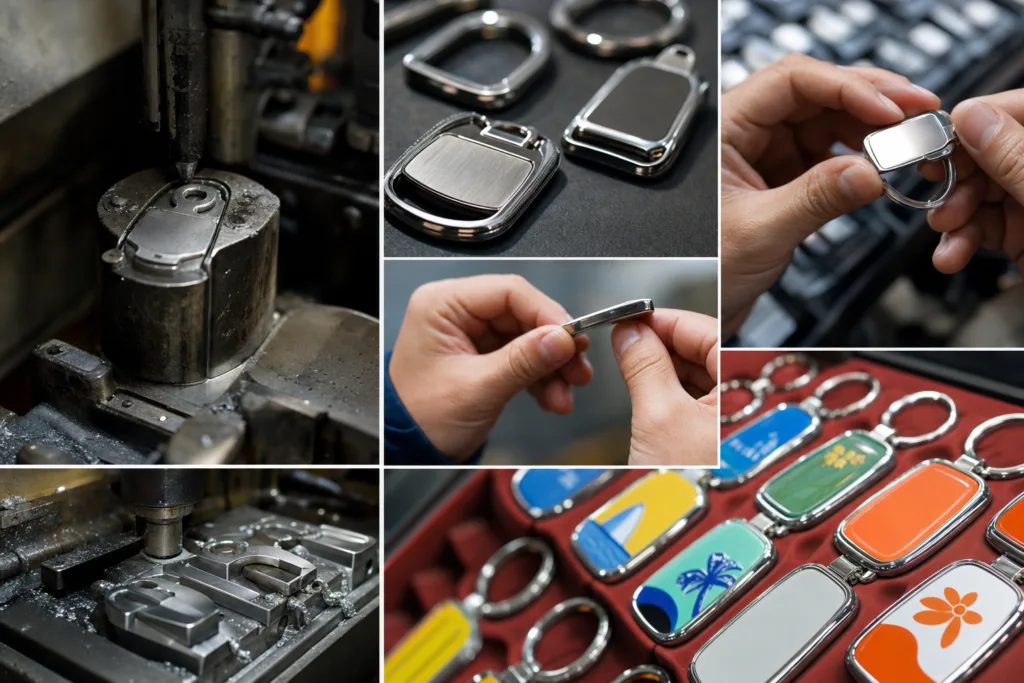
The same design can look very different depending on process choice.
Die casting
Best for dimensional metal forms, relief logos, sculpted mascots, and thicker premium products. Zinc alloy is common because it supports complex shapes and stable mold filling.
Stamping
Best for flatter metal designs with crisp lines, lower profile construction, and efficient bulk repeatability. Iron or brass stamping can work well for tags, simple logo plates, and less sculptural shapes.
Injection molding or molded PVC production
Best for flexible, colorful, soft-touch shapes. Molded cavities define the shape and color zones, so artwork must be simplified into producible areas.
Laser cutting and printing for acrylic
Best for clean outlines, transparent effects, and graphic-based artwork. Print registration and scratch protection become critical quality points.
At Gairun, one of the most useful early steps is translating a buyer’s visual concept into a process-matched product structure. That includes confirming thickness, attachment hole location, jump ring size, and whether color should be enamel-filled, printed, molded, or engraved.
Customization options by material
Customization flexibility is often where buyer expectations need adjustment.
| Customization Option | Metal | PVC | Acrylic |
|---|---|---|---|
| Plating | Excellent | No | No |
| Soft or hard enamel | Excellent | No | No |
| Embossed/debossed detail | Excellent | Moderate in molded form | Limited |
| Printed gradients | Possible but limited | Limited | Excellent |
| Transparent effects | Limited | Possible in some styles | Excellent |
| Engraving | Excellent | Limited | Possible in select styles |
| Double-sided design | Very good | Good | Very good |
Metal buyers also need to think about polish level, antique finish, edge treatment, and whether epoxy is necessary over printed or color-filled areas. PVC buyers should confirm color separation and mold depth. Acrylic buyers should confirm whether the print is surface-exposed or protected behind the panel.
Choosing the right keychain material by scenario
Brand gifts and premium promotions
Metal is usually the strongest fit. It communicates permanence and value more effectively than PVC or acrylic.
Tourist souvenirs and city merchandise
Metal works well for collectible destination items, while acrylic can work for low-weight graphic souvenir programs.
School, mascot, and youth campaigns
PVC is often effective because color and personality matter more than premium plating.
Artist merch and graphic retail
Acrylic can perform well when the artwork itself is the main selling feature.
Automotive, industrial, and membership uses
Metal usually fits better due to brand seriousness, durability, and structured hardware options.
How to match material choice with budget, order quantity, and lead time
Small details can shift the whole sourcing decision. Buyers should compare:
- MOQ tolerance: Some projects need low-risk initial runs; others can spread tooling across large volume.
- Lead time sensitivity: Molded and plated products may require longer development than simple printed items.
- Revision risk: If the artwork is still changing, a process with lower revision cost may be safer.
- Shipping cost: Metal is heavier, which matters at scale.
- Packaging plan: Retail carding, barcodes, polybags, and insert cards can change both cost and timeline.
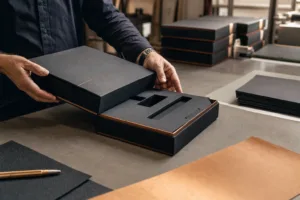
For retail programs especially, packaging should not be treated as an afterthought. Early review of retail-ready keychain packaging guidance can help buyers align hole position, hanging format, backing card size, and protection method with the chosen material before mass production starts.
Common buyer mistakes when ordering custom keychains
- Choosing material from a photo only, without considering daily wear
- Using artwork with details too fine for the selected process
- Ignoring thickness and expecting lightweight materials to feel premium
- Approving color from a screen without sample confirmation
- Not defining hardware, ring size, or chain length clearly
- Leaving packaging decisions until after production
- Comparing quotes without checking process differences
One common issue is asking three suppliers for the “same keychain” while each is quoting a different process. A cast zinc alloy keychain, a stamped iron tag, and a printed acrylic charm can all look similar in artwork stage, but their cost, feel, and durability are not equivalent.
Supplier evaluation checklist for custom keychain projects
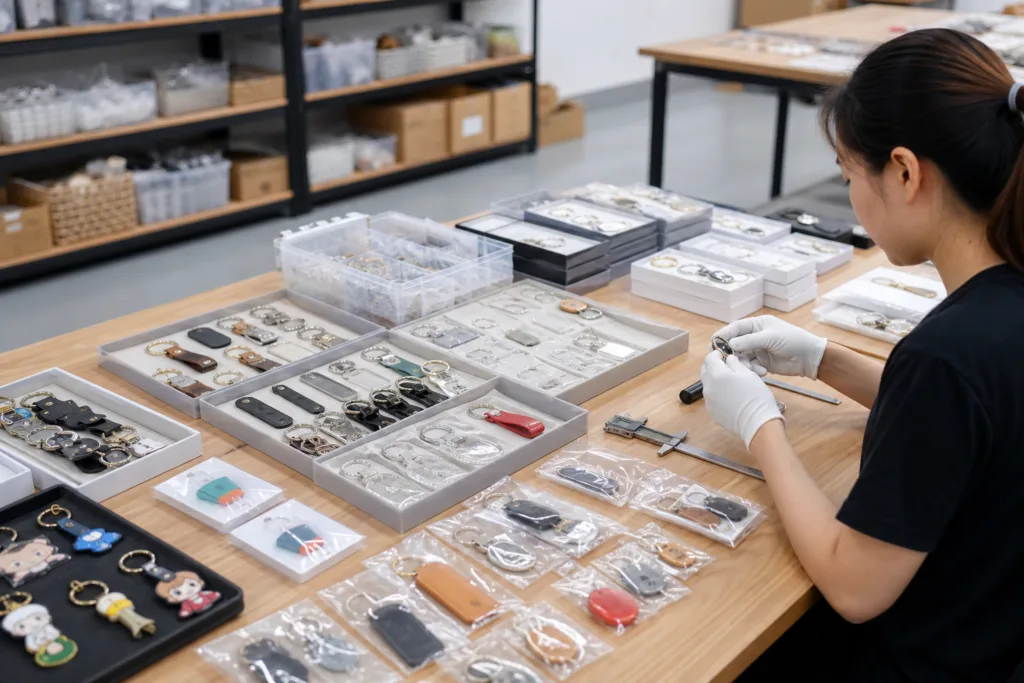
When comparing suppliers, buyers should ask practical manufacturing questions rather than only requesting the lowest price.
- Which material and process do you recommend for this artwork, and why?
- What thickness and weight range is realistic?
- Will the logo be cast, stamped, printed, engraved, or molded?
- How will edges be finished and inspected?
- What sample approval steps are included?
- How do you control plating, print registration, or color consistency?
- Can you support OEM packaging and barcode labeling?
- What are the likely wear points in daily use?
From our manufacturer perspective, strong communication during pre-production is often a better predictor of success than a small price difference. Clear artwork review, sample logic, and realistic finishing guidance reduce rework and protect bulk consistency.
Final decision guide: which material is best for your custom keychain project?
If your project needs premium feel, strong durability, plated finishes, and long-term brand value, metal is usually the most reliable choice. If your design depends on soft, playful shapes and high color visibility at casual promotional level, PVC may be the better fit. If your priority is printed graphics, transparency, lightweight retail display, or flat visual styling, acrylic can be very effective.
In other words, the right answer is not “which material is cheapest” or “which one looks best in a mockup.” The right answer is which material matches the product’s use, price point, finish expectation, and buyer risk tolerance. That is why comparing keychain materials through manufacturing logic leads to better results than choosing by appearance alone.
FAQs
Are metal keychains more durable than PVC and acrylic?
In most everyday key-carry situations, metal keychains are the most durable because they resist structural breakage better and usually maintain a more premium appearance over time. However, the finish still matters. Highly polished surfaces may show scratches, while antique or matte finishes often hide wear better.
Which keychain material is best for colorful cartoon designs?
PVC is often the best fit for colorful cartoon-style designs because it supports bold color blocking, rounded forms, and a softer visual personality. If the design needs a flat printed illustration rather than a molded look, acrylic may also work well, but it will feel more rigid and less playful.
Is acrylic or metal better for retail keychain merchandise?
The better choice depends on the retail concept. Acrylic works well for graphic-led merchandise that needs lightweight hanging display and vivid printing, while metal suits collectible, souvenir, or premium retail products where customers expect weight, plating, and a stronger perceived value.
How do tooling and sample costs differ between these materials?
Metal and PVC projects often involve custom tooling or mold development, especially for shaped designs, while acrylic can be simpler for certain cut-and-print concepts. Metal usually has higher process complexity, but once the mold and finish are approved, repeat production can be very consistent. Buyers should ask separately about mold cost, sample charge, revision policy, and mass production pricing.
What finish options are only possible with metal keychains?
Metal allows finish options that PVC and acrylic do not, including electroplating, antique effects, polished or brushed surfaces, soft enamel, hard enamel, debossed logos, and laser engraving. These options make metal especially useful when the brand requires a refined or collectible look rather than a casual promotional style.
How should buyers choose the right material for a custom keychain project?
Start with the use case, not the mockup. Define whether the keychain is for daily use, retail display, event giveaway, or premium branding. Then compare durability, finish requirements, artwork detail, budget, MOQ, and packaging. If the item must feel substantial and last longer, metal is often the safer choice. If low weight or playful color is the priority, PVC or acrylic may be more suitable.