
Race organizers often compare marathon medals with finisher tags because both serve the same moment of recognition, but they do not perform the same job in a budget, branding, and participant-experience plan. From our metal tag manufacturing perspective, the real question is not only which award costs less per piece. It is which format creates the right balance of emotional impact, durability, customization, logistics, and long-term value for the specific race. A strong Marathon Medals decision should therefore include cost analysis, value assessment, production method, and runner expectations rather than relying on assumptions about what feels more premium.
For organizers evaluating custom metal tag manufacturing solutions, the comparison becomes especially practical when an event needs durable materials, custom shapes, engraved or printed data, branded packaging, or scalable production for different race distances. We support projects where buyers need to compare medal-style presentation with compact finisher tag formats, review material and attachment options, confirm artwork and numbering files, and plan sample approval before bulk production. That makes the medal-versus-tag decision less about theory and more about what can actually be manufactured consistently within budget and timeline.
Why race organizers compare marathon medals and finisher tags
Both products celebrate completion, reinforce event identity, and become part of the runner’s memory of race day. Yet they occupy different positions in event planning. Medals are typically seen as ceremonial awards with visual and emotional presence. Finisher tags are usually smaller, simpler, and more flexible in cost structure. They may be attached to gear, keyrings, bags, or display systems, and they often work well for recurring series, charity runs, club events, training races, and budget-sensitive programs.
For procurement teams and event planners, the comparison matters because award costs can scale quickly. A difference of even a modest amount per piece becomes meaningful when the event has hundreds or thousands of participants. Beyond piece price, organizers must think about mold charges, ribbon programs, attachment hardware, packaging, variable data, replacement stock, overrun planning, and shipping weight. In other words, award selection is both a brand decision and an operations decision.
What marathon medals and finisher tags are
Marathon medals
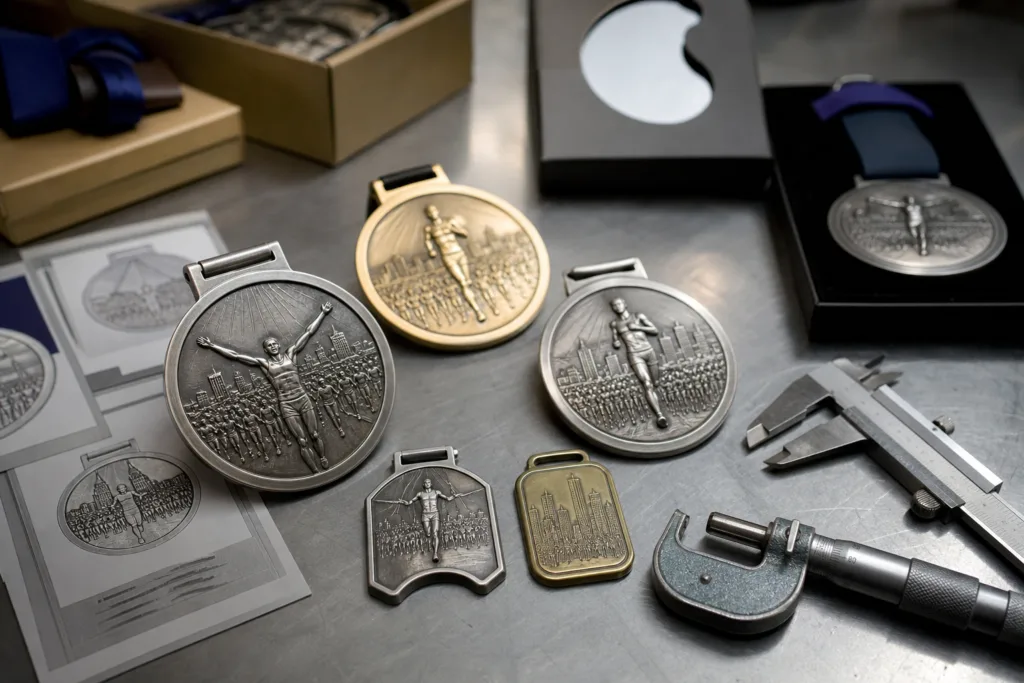
Marathon medals are usually die-cast, stamped, or cut metal awards designed to hang from a ribbon. They often use zinc alloy, iron, stainless steel, aluminum, or layered constructions with enamel color, soft enamel fills, plated finishes, cut-outs, and special edge treatments. Their shape can be highly decorative and event-specific. For many races, the medal is a centerpiece of participant expectation and social sharing.
Finisher tags
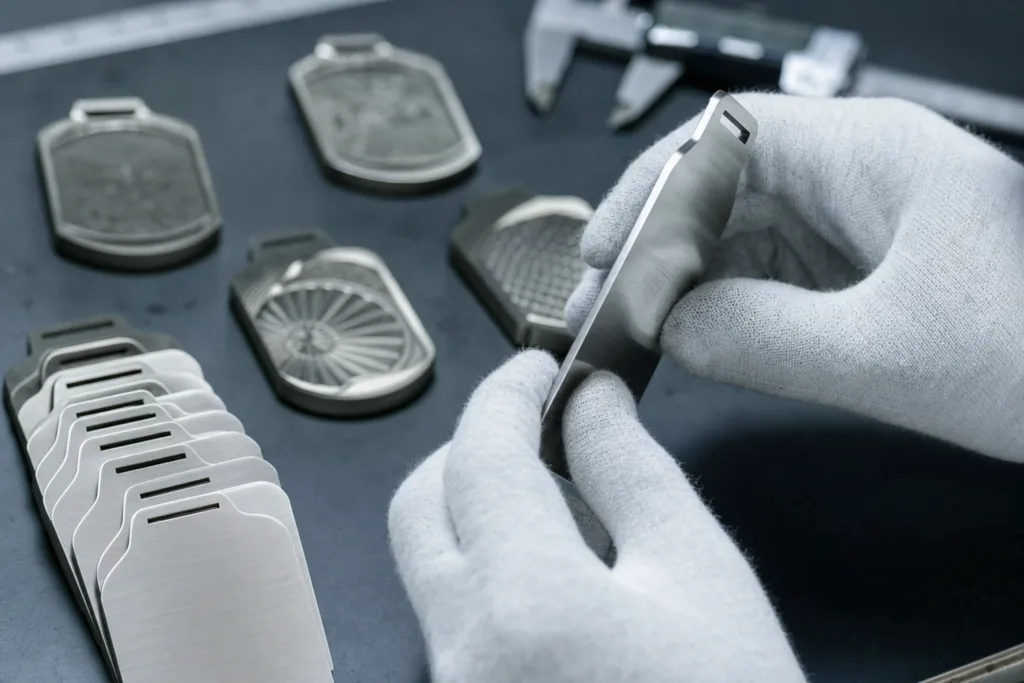
Finisher tags are generally smaller metal identifiers or commemorative tags made from stainless steel, aluminum, brass, or anodized aluminum. They can be engraved, laser marked, chemically etched, stamped, or printed. Some are worn on laces, attached to bags, clipped onto keychains, paired with race bib keepsakes, or added to yearly collection systems. Their strength is manufacturing efficiency and design flexibility without requiring the full medal format.
Typical use cases
- Large destination marathons: medals are common because the finish-line ceremony is central to the event identity.
- Club races and training events: finisher tags often fit the budget and still provide a durable keepsake.
- Multi-race series: tags can support collectible systems where runners add one tag per event.
- Corporate wellness or charity events: tags may suit simpler branding and lower spend per participant.
- Youth, community, or first-time events: either format can work depending on positioning and sponsor support.
Typical cost ranges for marathon medals vs. finisher tags
Exact pricing varies by material, thickness, shape complexity, finish, and quantity, so organizers should treat any market range as directional rather than universal. In manufacturing practice, marathon medals usually carry a higher total unit cost because they involve more material, more decoration, ribbon assembly, and often more complex tooling. Finisher tags tend to reduce cost by using simpler geometry, smaller size, lighter weight, and more efficient marking methods.
| Factor | Marathon Medals | Finisher Tags |
|---|---|---|
| Typical size | Larger visual format | Compact format |
| Material usage | Higher | Lower |
| Decoration complexity | Often high | Usually moderate |
| Ribbon or strap | Usually required | Often optional |
| Tooling exposure | Can be higher | Often lower for simple shapes |
| Shipping weight | Higher | Lower |
| Perceived ceremony value | Strong | Moderate to strong, design dependent |
| Cost efficiency at scale | Good, but still material heavy | Often very good |
For race buyers, the most useful comparison is not “cheap versus expensive,” but cost per unit relative to runner expectation. An entry-level community event may gain little from a highly elaborate medal if registration price is sensitive. A signature annual race, by contrast, may lose perceived event prestige if the award feels too minimal.
Key cost drivers that matter in real production
Material choice
Material affects both direct manufacturing cost and long-term perceived quality. Aluminum can reduce weight and support anodized color options. Stainless steel gives a cleaner, more durable look with strong corrosion resistance. Brass can create a warmer premium appearance but may not suit every cost target. Zinc alloy and other medal-friendly materials support sculpted forms and decorative plating.
Size and thickness
A few millimeters in width or a modest increase in thickness can materially change raw material use, pressing behavior, visual weight, and shipping cost. Organizers sometimes underestimate how quickly a larger medal increases the full landed cost. For compact finisher tags, thickness still matters because a tag that feels too thin may look less durable than intended.
Finish and decoration
Polished plating, antique finishes, enamel color fills, UV print layers, brushed effects, and cut-out features all influence labor and yield. Medals often invite more decorative steps. Tags can remain effective with simpler engraved or etched designs, especially if the brand style is clean and modern.
Marking method
For tags, production economics often depend on whether the artwork is engraved, stamped, etched, or printed. This affects setup logic, readability, and throughput. If you are comparing data-rich tags, serial fields, or minimalist logo layouts, an engraving and stamping method comparison is useful because method choice influences both cost and durability.
Packaging and presentation
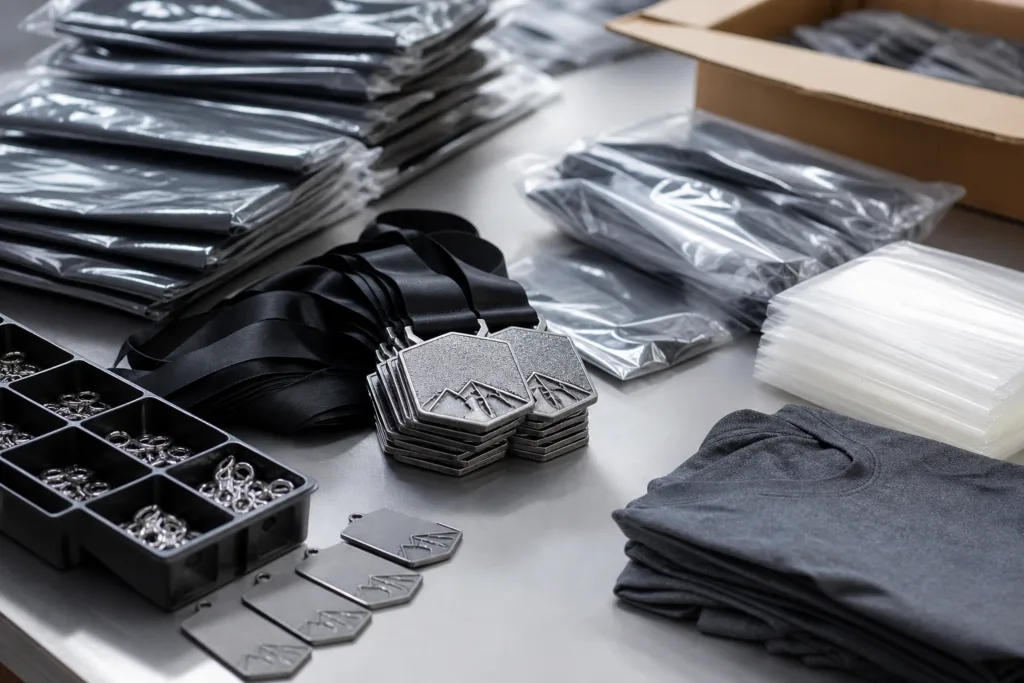
Individual polybags, tissue wraps, retail cards, sponsor inserts, or event kits can add meaningful cost. Medals usually need more space and often require ribbon management. Tags may simplify packing and reduce freight volume, especially for multi-thousand-piece orders.
Minimum order quantity and setup
Low-volume custom awards can carry proportionally higher setup exposure. Tooling, proofing, sample creation, and color matching become more visible at smaller order quantities. A race with several distance categories should compare whether multiple medal variants are financially efficient or whether a shared finisher tag system offers better control.
Organizers should also review hidden costs that affect tag pricing, especially when comparing quotes that seem similar on the surface. Duties, setup charges, assembly, attachment hardware, and packaging details can shift the final comparison more than the base piece price suggests.
How perceived value differs between medals and finisher tags
Perceived value is not identical to manufacturing cost. Many runners intuitively connect medals with accomplishment because medals are part of race tradition. The ribbon, size, and finish-line handoff create a sense of ceremony. That emotional effect can justify a higher spend when the event brand depends on prestige, milestone achievement, or social media visibility.
At the same time, finisher tags can outperform expectations when they are designed with purpose. A well-made stainless steel or anodized aluminum tag with clean edges, useful attachment, and crisp branding may feel more practical and more likely to be kept than a bulky medal that ends up in storage. One factor that repeatedly matters in physical products is how weight influences perceived value. Buyers planning either format should understand that heft affects first impressions, but design clarity, finish quality, and usability also shape whether participants see the item as meaningful.
Participant satisfaction and what runners actually keep
From a product-use standpoint, runners do not all interact with awards in the same way. Some display medals on racks and compare them across years. Others prefer compact keepsakes they can attach to a bag, keychain, or memory board. Satisfaction often depends on whether the item fits the participant’s habits after the race.
In practical terms, medals are remembered for the finish-line moment. Tags are often remembered for continued use. That difference matters. If a race is built around the emotional climax of completion, medals usually create stronger immediate impact. If a race values repeat participation, collection systems, or daily-use memorabilia, tags can deliver durable value that extends beyond race day.
We often advise organizers to segment their audience. First-time marathoners may expect a medal as proof of a major milestone. Local runners joining a seasonal series may appreciate a lighter, collectible tag program more than another large medal. Participant satisfaction rises when the format matches the runner’s identity and the event promise.
Organizer perspective: branding, budget, and operational trade-offs
From the organizer side, the award is rarely an isolated item. It touches registration pricing, sponsorship, artwork development, storage, race-day handling, and post-event replacement requests. A medal can strengthen event prestige and justify premium positioning, but it can also absorb budget that might otherwise improve shirts, hydration, course support, photography, or finish-line food.
Finisher tags can create room in the budget for other runner-facing improvements. They also offer flexible customization for series programs, tiered distances, and sponsor branding. At UC Tag, we see many buyers compare not just one product but the full event package: award, packaging, data handling, attachment style, and re-order efficiency. That broader view often leads to better decisions than evaluating a sample in isolation.
For organizers exploring differentiated collections, sponsor programs, or branded race memorabilia beyond one-off awards, reviewing OEM custom metal tag options can help clarify what is possible with material, shape, private labeling, numbering, and packaging before the artwork stage begins.
When medals make sense and when finisher tags are the smarter choice
Choose medals when
- The event is a flagship marathon or destination race with strong emotional expectations.
- Finish-line photography and social sharing are central to your brand.
- Sponsors support a premium visual award.
- The event serves milestone runners who strongly expect traditional recognition.
- Your registration price can support a higher ceremony cost per finisher.
Choose finisher tags when
- The budget must be controlled across large participation numbers.
- The event is a recurring series and collectibility matters more than spectacle.
- Participants prefer useful keepsakes over larger display items.
- Shipping, storage, and handling efficiency are priorities.
- You want easier personalization, serial numbering, or compact packaging.
Hybrid approaches
Some organizers successfully use medals for marquee distances and finisher tags for shorter categories, training events, or VIP merchandise add-ons. Others give every finisher a tag and reserve medals for podium placements or major milestones. Hybrid planning can protect the event budget while preserving prestige where it matters most.
Quality and durability considerations that influence long-term value
Long-term value depends on more than appearance on race day. Edge quality, corrosion resistance, finish stability, marking depth, and attachment reliability all affect whether the item still looks good months or years later. For outdoor events, especially humid, coastal, or sweat-heavy environments, material choice matters. Stainless steel and anodized aluminum often perform well when durability and low maintenance are important.
Marking readability is another overlooked issue. Fine artwork can look impressive in proofs but lose clarity if line widths are too small for the selected method. Engraved or etched finisher tags should be reviewed for contrast, depth, and expected wear. Medals with layered decoration should be checked for edge consistency, fill quality, and assembly strength.
In our production work, QC planning usually includes artwork review, dimensional checks, hole placement confirmation, finish comparison against approved samples, and packaging inspection before shipment. This is particularly important when events need multiple distance variants or exact sponsor colors.
Examples of race size and budget scenarios
| Race Scenario | Better Fit | Why |
|---|---|---|
| First-time community 5K with tight budget | Finisher tags | Lower unit cost and easier logistics |
| Large annual marathon with destination appeal | Medals | High ceremony value and participant expectation |
| Seasonal trail series with repeat runners | Finisher tags | Collectible format suits recurring participation |
| Corporate charity run with sponsor backing | Either, depending on brand goal | Budget flexibility allows choice based on messaging |
| Premium anniversary event | Medals or hybrid | Milestone storytelling may justify richer presentation |
A practical way to compare options is to model the total event effect. If a medal increases cost materially, ask what must be reduced elsewhere. If a tag lowers cost, ask where that budget can improve the runner experience. Value assessment becomes clearer when the award decision is tied to the full participant journey.
Interview-style insights organizers often share
In conversations around commemorative metal products, buyers often return to the same themes. Organizers want the award to feel substantial without creating budget strain. Participants want the keepsake to reflect the difficulty or meaning of the event. That gap is where many decisions become difficult.
A common organizer observation is that medals create a stronger instant reaction at the finish line. A common participant observation is that smaller tags are easier to keep, use, and carry. Neither comment makes the other format wrong. It simply shows that “value” includes both emotional peak and practical afterlife.
Another recurring insight is that runners notice details more than planners expect. Uneven finish, weak attachment points, cluttered graphics, or unclear event data can reduce satisfaction even when the award type itself is appropriate. That is why sample review matters as much as concept selection.
Do medals deliver more value than finisher tags?
Not automatically. Medals usually deliver more ceremonial value. Finisher tags often deliver stronger cost efficiency and practical retention. The better choice depends on what kind of value the event needs to create. If the race brand is built around achievement theater, medals often justify their higher cost. If the race brand emphasizes smart organization, repeat participation, collectibility, or modern minimalist design, finisher tags can produce a better return on spend.
The strongest value assessment asks three questions: what does the runner expect, what does the event promise, and what can the budget sustain without weakening other essentials? When those three answers align, either product can be the right decision.
Common mistakes in award planning
Choosing by unit price alone
Award selection based only on the lowest quoted piece price often ignores setup charges, freight, packaging, replacement needs, and branding impact.
Ignoring the event’s audience
A serious marathon audience may see a very small tag as underwhelming, while casual local participants may not need an oversized medal.
Overcomplicating artwork
Tiny details, too many colors, and overloaded copy can reduce readability and raise production complexity without improving runner satisfaction.
Skipping sample approval
Even experienced buyers should confirm real samples or clear proofs for finish, contrast, attachment, and packaging before bulk production.
Waiting too late
Compressed timelines limit method choice, increase rush risk, and reduce the opportunity to refine design, assembly, and packing details.
Decision framework for race organizers
- Start with event position: premium destination race, community event, recurring series, or charity run.
- Define participant expectation: ceremonial display piece or useful collectible keepsake.
- Set a full award budget: include product, tooling, attachment, packaging, and freight.
- Choose material and marking based on use: display-first versus use-first.
- Review sample quality: weight feel, edge finish, contrast, hole placement, and durability.
- Plan production early: especially if you need multiple variants, sponsor packaging, or private label handling.
When buyers follow this framework, the award choice becomes much more rational. The goal is not to prove that one format is universally superior. It is to match cost, value, and participant psychology to the event’s real objectives.
Conclusion
Marathon Medals remain powerful because they symbolize accomplishment in a way runners instantly recognize. Finisher tags remain compelling because they can reduce cost, support durable customization, and fit modern event formats with less logistical burden. For race organizers, the right answer is rarely ideological. It comes from disciplined cost analysis, clear value assessment, and honest alignment with the event’s audience. If the race needs ceremony, medals often win. If the race needs flexibility, efficiency, and practical keepsake value, finisher tags may be the better choice. The strongest award program is the one that participants appreciate and organizers can repeat successfully year after year.
FAQs
Are marathon medals always more expensive than finisher tags?
In most cases, yes, because medals usually use more material, more decorative processing, and added components such as ribbons or assemblies. However, the exact difference depends on size, thickness, finish, quantity, packaging, and setup charges. A very elaborate tag can cost more than a simple medal, so organizers should compare full specifications rather than product names alone.
Which option creates better participant satisfaction?
That depends on the runner profile and event positioning. Medals often create stronger finish-line excitement and milestone recognition, while finisher tags can create better practical value when runners prefer compact keepsakes they can use or collect over time. Satisfaction is highest when the award format matches what participants believe the event represents.
Can finisher tags still feel premium?
Yes. Material choice, thickness, edge quality, marking clarity, and attachment design all influence whether a tag feels substantial. Stainless steel, brass, and well-finished anodized aluminum tags can look refined and durable, especially when the design is clean and the marking method is chosen for strong contrast and long-term readability.
What is the biggest budgeting mistake race organizers make?
The most common mistake is focusing only on quoted unit price and overlooking tooling, packaging, hardware, freight, and timeline-related costs. Organizers also sometimes overspend on awards before understanding how the decision affects shirts, course support, or other participant-facing elements. A full landed-cost comparison is usually more useful than a simple product quote.
When should organizers choose a hybrid award strategy?
A hybrid strategy works well when an event has multiple distances, mixed participant expectations, or a need to balance prestige with cost control. For example, a marathon distance may receive medals while shorter categories receive finisher tags, or all runners may receive tags while medals are reserved for milestone achievements or podium recognition.
How early should custom medals or finisher tags be planned?
As early as possible, especially if the project includes custom shapes, multiple finishes, attachment hardware, sponsor packaging, or several race variants. Early planning gives more time for artwork review, sample approval, marking-method decisions, and production scheduling, which reduces risk and improves consistency across the final run.