Introduction: Why Olympic Medals Matter and Spark Curiosity
Every four years, the world turns its eyes to the Olympics—watching athletes push past their limits for the chance to step onto the podium and claim a coveted medal. But beneath the luster, what are Olympic medals made of? Far more than simple prizes, these medals stand at the intersection of tradition, artistry, and metallurgy. Understanding their materials helps unravel what makes gold, silver, and bronze medals both awe-inspiring and valuable—and lays the groundwork for evaluating custom medals in commercial or event settings.
What Are Olympic Medals Made Of: Demystifying the Materials
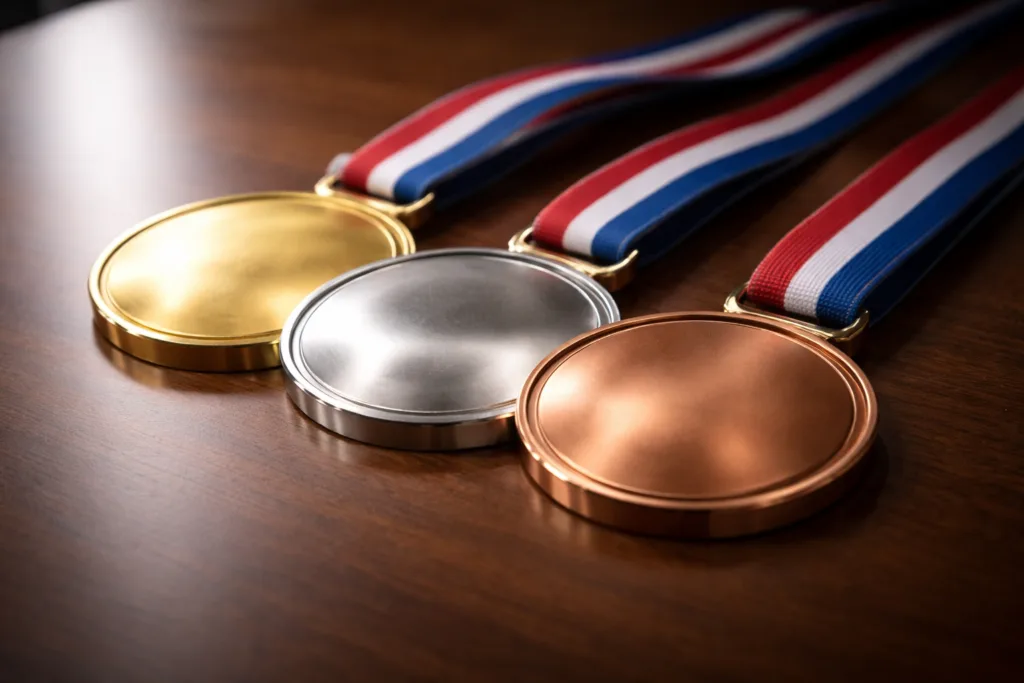
Olympic medals are not just about a shiny surface. Their core composition has evolved dramatically, blending symbolism and practicality. Historically, medals were crafted from pure precious metals, but modern manufacturing and resource policies shifted that standard.
| Medal Type | Core Material | Surface Finish | Notes |
|---|---|---|---|
| Gold | Mostly Silver | Gold Plating (6g min) | Sterling silver core, gold-plated exterior |
| Silver | Sterling Silver (≥92.5%) | Polished | No gold; all silver |
| Bronze | Cuprous Alloy (Copper & Tin) | Patina or Brushed | Not pure bronze; alloyed for durability |
The History of Olympic Medal Materials
In the early Olympics, gold medals were truly solid gold. Over time, due to costs and resource scarcity, the core material switched mostly to silver. Now, gold medals are actually sterling silver—plated with gold. Silver has remained the standard for second place, and bronze is usually a copper-tin mix.
Material Composition: What Makes Up Gold, Silver, and Bronze Olympic Medals
Gold Medals: The Truth Behind the Shine
Despite popular belief, Olympic gold medals haven’t been made entirely of gold since 1912. Today, they feature a thick layer of gold—minimum 6 grams—electroplated onto a solid silver core. This approach preserves prestige while controlling material costs. The gold plating is applied after hand-polishing to achieve a flawless mirror finish, echoing luxury jewelry techniques.
Silver Medals: Material Purity and Workmanship
Silver medals are almost always sterling silver, with a purity of at least 92.5%. Artists polish and clean the medals to a high sheen, sometimes applying clear protective coatings to preserve their shine.
Bronze Medals: Alloy Logic and Durability
Bronze medals are largely copper, alloyed with tin for strength and color. This “bronze” may also include small amounts of zinc or other elements for stability. The alloy is designed to be durable and withstand wear.
Surface Treatment vs Core Material: Why Both Matter for Olympic Medals
What you see isn’t always what you get. The surface finish (plating, patinas, or coatings) is vital for the medal’s appearance and longevity, but the underlying core material dictates weight, tactile feel, and durability. For example, gold-plated silver gives the prestigious look and heft, but if the plating is too thin or the alloy below is low quality, the medal feels less valuable.
Manufacturing Process: How Olympic Medals Are Made
Mold Creation and High-Precision Engraving
The medal design starts with high-precision CNC mold engraving. Fine details—like Olympic symbols or host city elements—require sharp, crisp lines. Premium medal makers, such as Gairun, prioritize ultra-high resolution molds to ensure logos and reliefs translate perfectly to metal, without fuzzy edges or casting flaws.
Metal Pouring, Stamping, and Shaping
Once the mold is set, molten metal (silver alloy, copper, or bronze) is poured or pressed into shape. The medal’s thickness, diameter, and relief are all controlled for a consistent quality feel.
Surface Finishing: Polishing and Plating
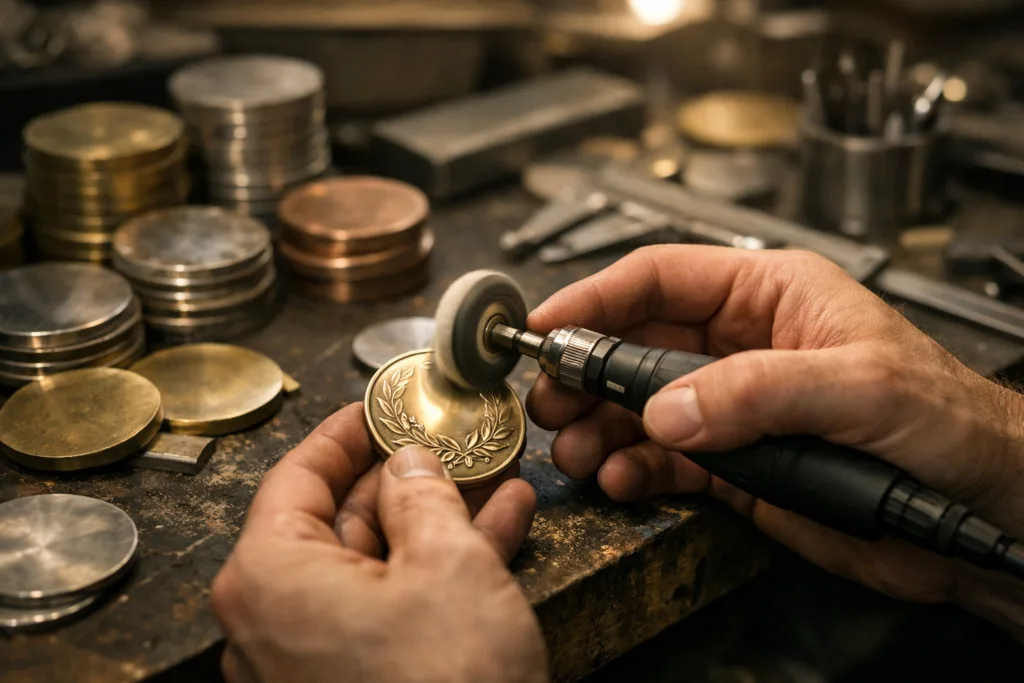
Medals are polished in multiple stages—often by hand—to remove blemishes. Rack plating is typically used for premium medals, providing superior uniformity and finish compared to barrel plating.
Comparison Table: Olympic Medal Material Breakdown
| Medal | Core | Surface | Weight (approx) | Durability |
|---|---|---|---|---|
| Gold | Sterling Silver | Gold Plating (≥6g) | 180-500g | High (core + plating) |
| Silver | Sterling Silver | Polished Silver | 180-500g | Very High |
| Bronze | Copper-Tin Alloy | Patina/Brushed | 180-500g | High (resists tarnish) |
Olympic Medal Material Standards: Regulatory Logic and Requirements
The International Olympic Committee (IOC) sets strict requirements for medal materials:
- Gold medals must contain at least 6 grams of pure gold.
- Silver medals must be made from at least 92.5% pure silver.
- Bronze medals must use quality copper alloys.
This ensures uniformity and preserves the value and prestige across all Games.
Global Trends: Sustainability and Innovative Olympic Medal Materials
Recent Olympics have integrated recycled materials to promote sustainability. For example, Tokyo 2020 sourced precious metals from discarded electronics. Surface treatments remained jewelry-grade, but the core logic favored environmental awareness and resource efficiency.
Surface Finishes: Luxury vs Standard Treatments
Premium medals benefit from advanced surface treatments. Techniques like hand-filling enamel colors, mirror polishing, and multi-stage electroplating are used to elevate medals beyond standard awards. Manufacturers with a jewelry background can achieve higher gloss, deeper color, and improved durability—critical for collector and event value. For more on finish selection, explore the designer’s guide to enamel medal finishes.
Commercial Custom Medals: Material Choices Explained
Event organizers and brands must choose between brass, zinc alloy, copper, or other metals when commissioning custom medals. Brass offers crisp stamping and rich color; zinc alloy provides flexibility for complex 3D designs; copper gives classic warmth and durability. Gairun, for instance, always recommends virgin Zamac 3—over recycled alloys—for smooth surface finishes, particularly when surface defects are unacceptable for prestige awards.
Material Integrity: Why Premium Medal Makers Prioritize Purity
Premium medal manufacturers strictly adhere to global lead-free and nickel-free standards, ensuring medals are safe and tarnish-resistant. They reject functional-but-imperfect pieces, aiming for jewelry-grade results. Rigorous quality control (like pull-force or salt spray testing) is standard, setting the bar for brand prestige and long-term durability. Learn how Olympic medals influence custom medal design in this guide to medal design and legacy.
Design and Artistic Trends: Olympic Medal Style Evolution
Olympic medals reflect the host city’s culture and creative expression. Designers experiment with visual themes, surface textures, and finish combinations. Some medals have layered surfaces or mixed plating (e.g., two-tone electroplated medal), while others feature intricate enamel fills.
How to Judge Medal Quality: Weight, Finish, and Material Logic
Weight is a quick test—solid materials feel substantial, while thin plating is noticeably lighter. Finish quality reveals the manufacturer’s standards: mirror polish and deep color signal jewelry techniques; rough edges or inconsistent plating indicate rushed production. Always ask about core material and plating thickness before ordering custom medals.
Why Commercial Medals Can Differ from Olympic Medals
Unlike Olympic medals, commercial custom medals may prioritize affordability, volume, or branding. Event medals often use zinc alloy for its shape flexibility and cost efficiency. While it suits mass events, it may lack the luxury feel of solid brass or copper. For cost impact and value, review proven ways to reduce costs when buying bulk medals.
Surface Treatment Innovations: Modern Approaches to Medal Longevity
New processes like PVD coating or clear lacquer resist fingerprints and oxidation, keeping medals looking new for years. These advances bridge the gap between Olympic standards and practical commercial demands.
Examples: Recent Olympic Medal Material Choices
- Tokyo 2020: recycled precious metals, gold-plated silver core
- London 2012: largest medals to date, mainly silver core
- Beijing 2008: included jade pieces, unique alloy blends
Event Branding and Medal Material: Creating Prestige
The medal’s feel, weight, and finish have psychological impact—a heavier, smoother medal feels more prestigious. Custom medals with polished surfaces and a clean logo design stand out, as explained in why custom medals with logos elevate excellence.
Material Costs and Medal Sizing: Balancing Budget and Impact
Choosing the right materials is a balancing act. Higher silver content boosts cost and appeal; thicker plating offers longevity. Medal sizing (diameter and thickness) influences both aesthetics and budget. Expert manufacturers optimize these variables for each client’s needs.
How Custom Medallion Designs Use Olympic Material Logic
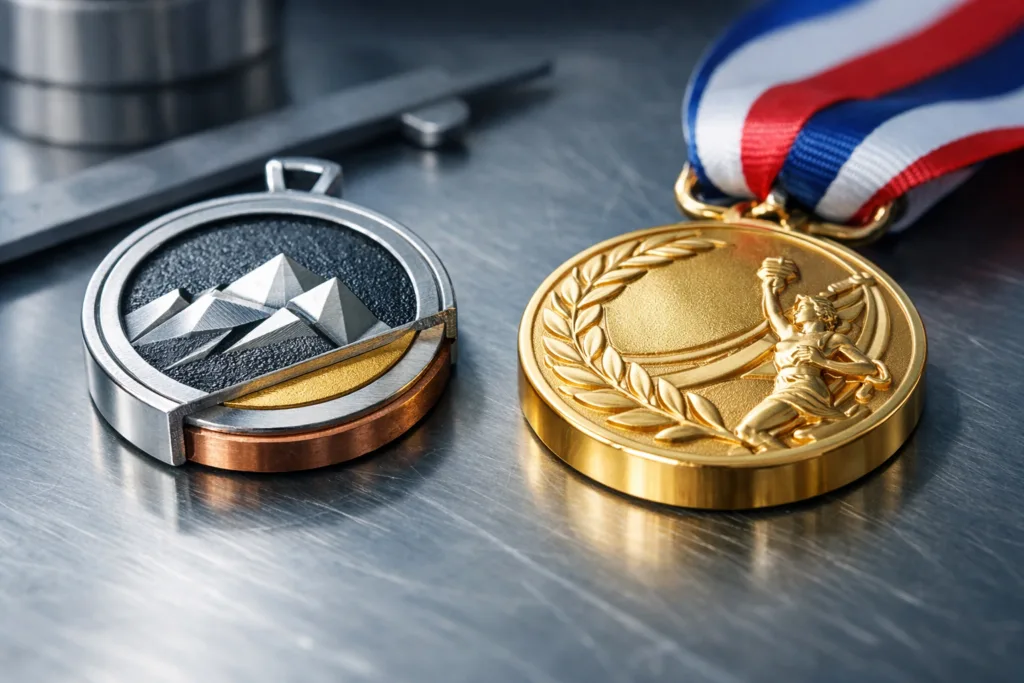
Custom medallions for brands and events borrow Olympic logic: layering precious or durable metals to create lasting impact. Learn more in how commemorative medallions inspire branding and collectors.
Material Quality vs Surface Finish: The Ultimate Medal Showdown
While surface treatment gets the glory, core material quality is often the unsung hero. Premium medals combine both—using fine alloys and multi-stage finishes to create lasting awards.
Frequently Asked Questions
Are Olympic gold medals made of pure gold?
No, Olympic gold medals have a sterling silver core and are plated with a minimum of 6 grams of pure gold, rather than being solid gold.
Why are bronze medals not pure bronze?
Bronze medals use a copper-tin alloy for strength and durability because pure bronze is more prone to corrosion and less cost-effective.
How is the surface of Olympic medals finished?
Surfaces are finished through polishing, plating, and clear coatings. Gold medals use gold plating, silver medals are polished, and bronze medals may have patina or brushed finishes.
Can commercial medals match Olympic medal quality?
Yes, if specified and budgeted. Premium makers like Gairun use jewelry-grade materials, precise molds, and rigorous finishing to match Olympic standards for custom awards.
What impacts the durability of a medal?
Durability depends on the core metal, surface plating thickness, and the quality of finishing processes. High purity and proper treatment ensure medals last decades.
Is recycled material commonly used for Olympic medals?
Increasingly, yes. Recent Games, like Tokyo 2020, have sourced precious metals from recycled electronics, promoting sustainability while maintaining material standards.
Related Reading
- Legacy and Design: How Olympic Medals Shape Custom Awards for Events
- Expert Strategies to Maximize Value When Ordering Medals in Bulk
- Unlock the Secrets: Choosing the Right Medal Finish for Your Brand
- How Custom Logo Medals Elevate Brand Excellence at Events
- Collector’s Guide: Medallions for Branding and Event Storytelling