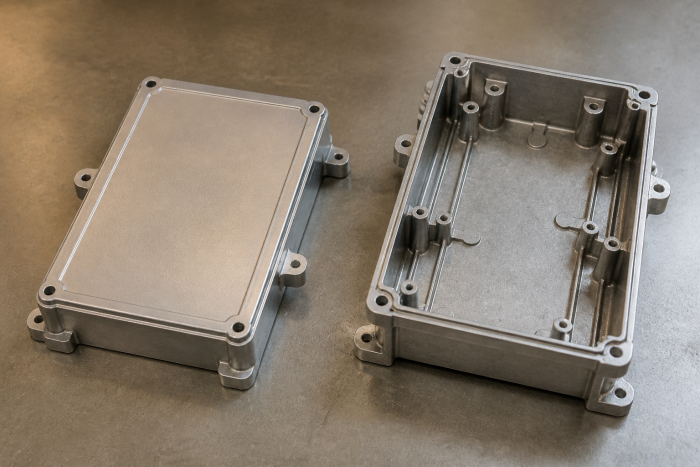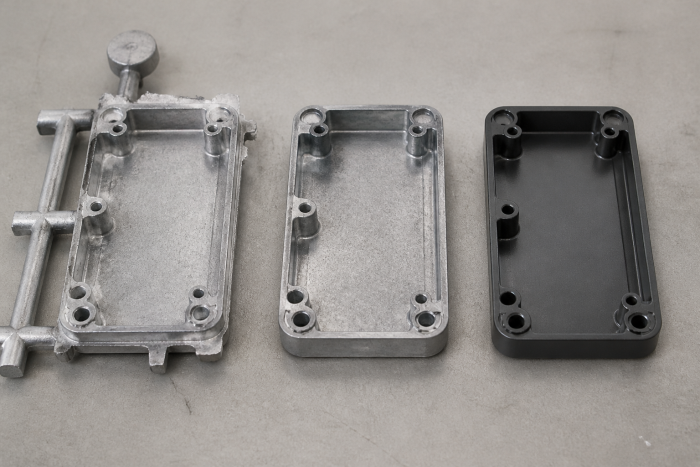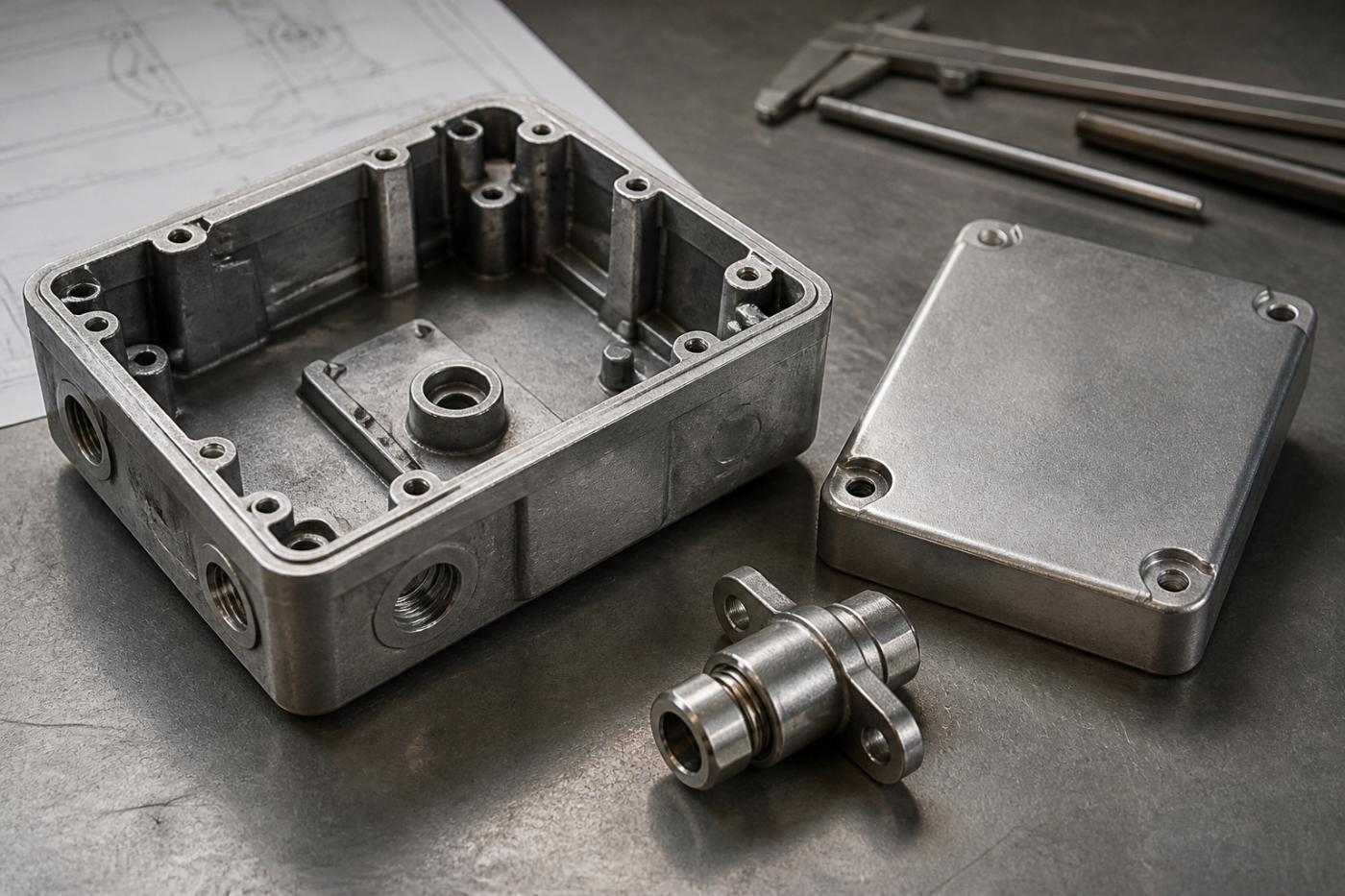
Choose a zinc die casting alloy by starting with what the finished part must do. A visible housing may be limited by what the finish reveals; a loaded fitting may be limited by how far it moves under a sustained load. Both can be described as “zinc alloy” on a quote, but that description tells you neither which material you are buying nor what evidence will come with it.
Identify the Zinc Alloy Families
Zinc die casting alloys are zinc-base metals formulated to be injected into a die. The additions matter: they influence how the alloy casts, how the finished part responds to load, and which production routes are practical. Start with the alloy family to narrow the options, then specify the individual grade. A family name is useful for a conversation but too broad for a purchase requirement.
What is Zamak? Zamak is a family of zinc-base alloys whose name refers to zinc, aluminum, magnesium and copper. Zamak 2, 3, 5 and 7 are distinct grades, not quality levels. Their numbers do not tell you which gives the best finish, the longest service life or the lowest finished-part cost. These grades are typically associated with hot-chamber die casting.
What does ZA mean? ZA refers to zinc-aluminum alloys with higher aluminum content than the conventional Zamak grades. ZA-8, ZA-12 and ZA-27 are separate designations. ZA-8 is commonly associated with hot-chamber die casting, while ZA-12 and ZA-27 are associated with cold-chamber die casting. The route matters because it changes which production setup can be considered; it is not just a different name for the same process.
Use International Zinc Association (IZA) and Eastern Alloys guidance to orient the family and process shortlist. For the method basics, see how the zinc die casting process works. In a hot-chamber machine the injection mechanism is immersed in the melt; in a cold-chamber setup, molten metal is transferred into a separate shot chamber. Use current supplier product documents to confirm the exact designation available, whether the document covers ingot or castings, and which machine route is proposed for your part. A published grade or a documented machine route does not establish that a particular supplier offers that combination.
Compare Named Grades by Application
The table is a shortlist, not a ranking. The machine column summarizes typical die casting routes described in industry guidance from IZA and Eastern Alloys. The application column gives a reason to investigate a grade, not a promise that it will fill your geometry, accept your finish or pass your service tests. Confirm those points on the proposed production route.
| Grade | Typical machine route | Application driver | When to investigate |
|---|---|---|---|
| Zamak 2 | Hot chamber | Strength and hardness among conventional Zamak options | When those properties matter to a hardware feature; verify dimensional stability under the service conditions rather than relying on hardness alone. |
| Zamak 3 | Hot chamber | General-purpose balance of casting and mechanical properties | As a baseline for a housing or general hardware part with no demonstrated need for a higher-strength grade. |
| Zamak 5 | Hot chamber | Higher strength and hardness than Zamak 3, with lower ductility | When strength is a priority but you can check whether the part still accommodates the deformation imposed during assembly. |
| Zamak 7 | Hot chamber | Fluidity for filling thin sections and fine detail | When a trial indicates a fill concern or when geometry makes fill a priority; do not treat the grade as a minimum-wall guarantee. |
| ZA-8 | Hot chamber | A ZA candidate where hot-chamber processing is wanted | When load requirements justify comparing ZA with Zamak but retaining a hot-chamber route matters. |
| ZA-12 | Cold chamber | A balance of strength and castability within the ZA family | When a load-bearing component warrants a ZA review and the supplier can support cold-chamber die casting for the part. |
| ZA-27 | Cold chamber | High strength and wear-oriented applications within the ZA family | When wear or strength drives the shortlist and the proposed casting, finishing and validation routes can be checked together. |
If the initial choice is between the two general hardware candidates, compare Zamak 3 and Zamak 5. The useful question is whether the part needs the added strength enough to justify checking the ductility trade-off. For example, an assembly that deliberately deforms a cast feature calls for a different comparison from one that simply bolts a finished cover into place.
A named grade gives engineering and purchasing a common reference. “Zinc,” “die-cast zinc” and “zinc alloy” are descriptions, not grade designations. Even a named grade in the quote does not show which specification governs acceptance or which lot went into the samples. If one offer says Zamak 3 and another says only zinc alloy, ask the second supplier to identify its proposed grade before comparing property data or price. If a quote uses an alternate designation, request the applicable standard and revision and check the requirements before treating the two names as equivalent.
Read Alloy Properties in Their Test Context
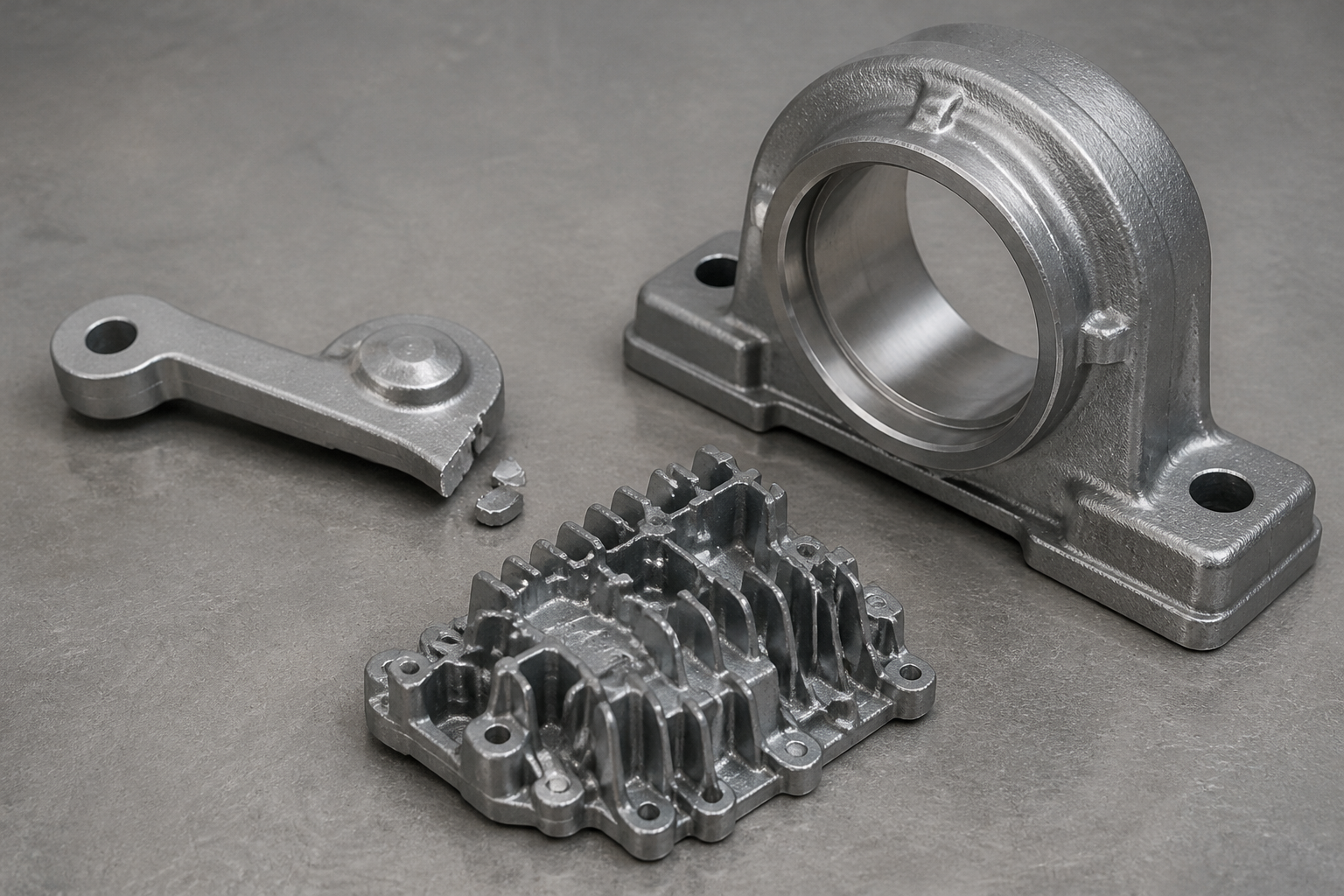
Before comparing two rows of data, check what each value describes. A supplier sheet, a casting test report and a material certificate have different jobs. A sheet may describe typical results under stated conditions; a test report records results for the specimens tested; a certificate addresses the material and requirements identified on that document. None automatically establishes an allowable load for the finished component.
- Composition and designation: Confirm the full grade and governing specification behind each dataset. If data are listed for a family rather than a grade, do not assign them to a specific alloy.
- Casting state: Check the process and condition represented. Values from a separately cast test bar or another casting method should not be assumed to describe a thin area next to a boss on your die casting.
- Test method: Match the property definition and method. For example, tensile strength, yield measures and hardness answer different questions. Check whether a value is typical, a specified minimum or a measured result for an identified specimen.
- Temperature and specimen condition: Match the test temperature, specimen geometry and preparation, and any stated aging or conditioning. If time under load matters, also look for the applied stress, duration and the way deformation was measured.
Short-term strength is not a sustained-load limit
Consider a fitting that retains a spring in an enclosure. A short pull test can show whether the assembly withstands a specified installation force. In service, a smaller force may act on the same feature continuously, including while the enclosure is warm. The metal may deform gradually under that sustained load, a behavior known as creep. The fitting could lose preload or move out of alignment without fracturing. A higher short-term tensile result by itself does not tell you which grade will move less under those conditions.
Define an acceptance criterion tied to the failure mode: for example, the displacement or retained preload the assembly must meet after an agreed load, temperature and hold duration. Then ask for comparable creep data or plan a test of representative castings assembled as intended. A short overload test can remain part of the plan, but it answers a separate question. If sustained-load data are missing, mark that gap in the selection record rather than converting a tensile value into a service rating.
Apply the same discipline to thickness and exposure. A published test-bar result is not a minimum castable wall thickness; review fill and local geometry on the actual design. An exposure result on a coated coupon is not a corrosion or aging rating for a different substrate, coating stack or service environment. If a proposed test does not represent the intended exposure or has not been correlated with it, report what the test covers without extrapolating a service life.
Link Alloy Choice to Casting and Finishing
Visible housing: develop the finish on a representative casting
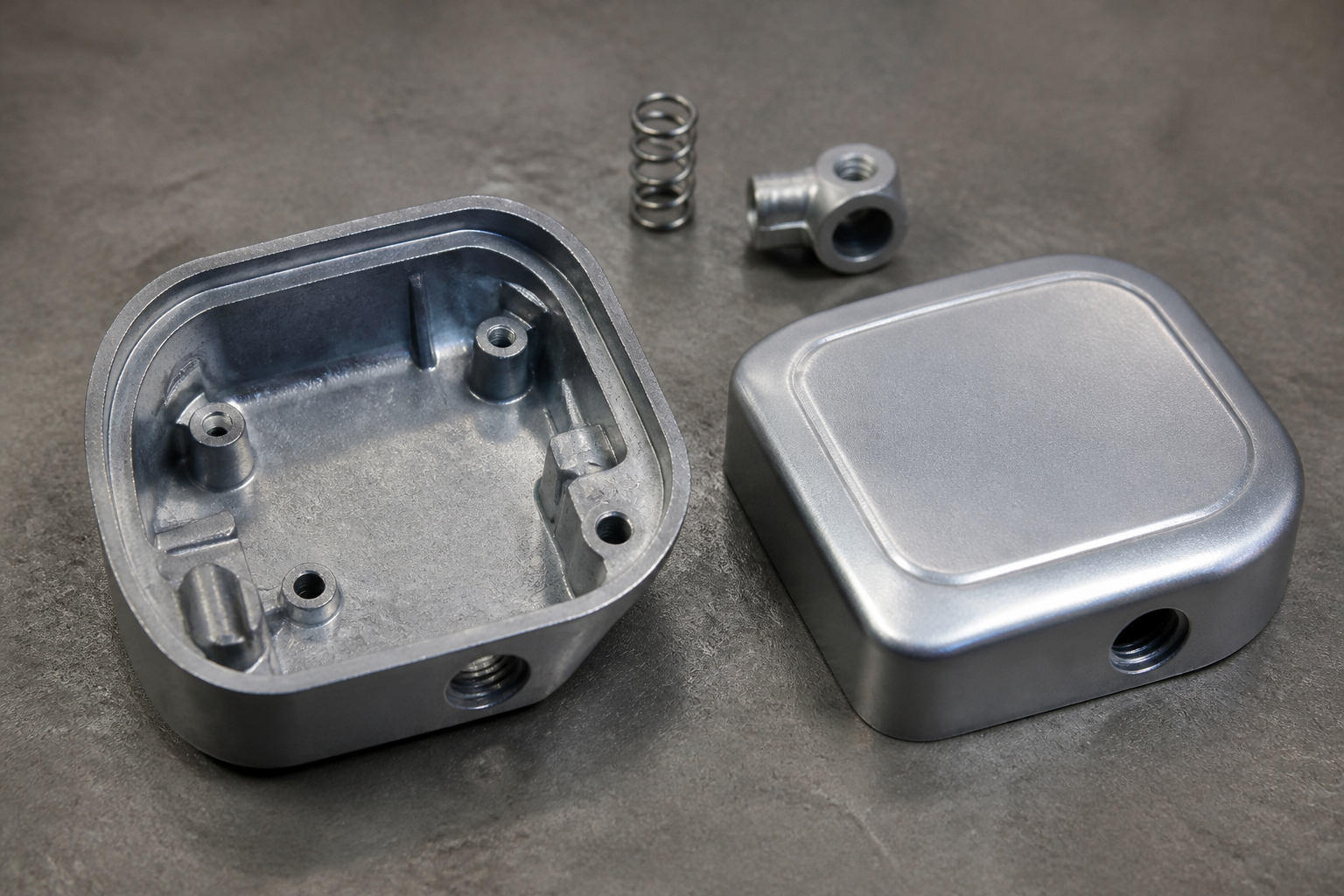
Suppose a control housing has a visible front face, a recessed edge and concealed mounting bosses. If its primary duties are appearance and fit, Zamak 3 is a reasonable starting candidate for hot-chamber review. If the design has difficult-to-fill details, first ask how the wall transitions, gate location and venting are expected to affect fill. Zamak 7 is worth investigating if fill remains a concern and the supplier can confirm the grade and proposed route. A grade change is not a substitute for reviewing the geometry.
Mark the visible face and critical edges on the drawing before the tooling review. Agree where the gate, parting line and ejector marks may appear, and identify seating or mating surfaces that need protection during finishing. If the design calls for decorative plating, ask the finisher to confirm surface preparation and the proposed coating stack on the specific alloy. Polishing can change edge definition, and plating cannot be relied on to hide all casting defects. A polished flat coupon can help communicate appearance, but it will not show how the finish looks around the housing recess or at a trimmed gate.
Review the trial housing as cast, then review a finished sample made by the proposed sequence. This helps separate casting marks from polishing or coating defects. Agree the visual inspection conditions, including which faces are judged and against what approved reference. Check fit after finishing where coating buildup or polishing could affect assembly. If the housing faces handling, cleaning or another defined exposure, decide what finish validation is needed for that use.
Loaded fitting: validate the load path before committing to a grade
For the spring-retaining fitting, start by mapping the installation force, the continuous force and the expected temperature at the loaded feature. Locate the bearing area and abrupt section changes where deformation would threaten retention. If the load is concentrated at a small contact or a narrow root, consider spreading it over a wider seat, changing the section transition or moving the sustained load into a separate insert before trying to solve the problem with an alloy change.
If the load review justifies comparing ZA grades, ZA-8 offers a hot-chamber candidate. Moving to ZA-12 or ZA-27 means checking the proposed cold-chamber setup and any tooling implications before treating it as a drop-in substitution. Ask the finisher whether the selected coating can be applied to the actual grade and how it affects the loaded contact, threads or seating dimensions. A finish approved on another alloy or shape is not approval for this fitting.
For validation, use representative castings and the intended assembly hardware. Check installation and sustained loading separately, and measure the feature that controls retention rather than recording only whether the part broke. Compare the results with the agreed acceptance criteria before approving the grade and process. These examples illustrate selection decisions; they do not imply Gairun availability for every listed grade, machine route or finish.
Write a Grade and Material Evidence Request
Put the material requirements in the RFQ before prices are compared. Ask suppliers to state exceptions in the offer, not after sample approval. A usable RFQ material record can include the following fields:
- Part and grade: Identify the part number and drawing revision, the required alloy designation, and the applicable standard and revision. State whether compliance applies to the finished casting, the feedstock or both. If the supplier proposes a grade, require approval before it becomes the order designation.
- Lot declaration: Ask the supplier to define a casting lot and explain how it links to the feedstock or melt records. Agree how mixed lots, if permitted, will be identified and how shipment documentation will map to the parts received.
- Approved evidence: Request the agreed material certificate or analysis report and clarify who issues it and what it covers. An ingot certificate can document the stated feedstock; it is not a chemical analysis of the finished casting. If casting-level analysis is required, agree on sampling, the test method and acceptance criteria before ordering.
- Sample documentation: Request a first-article record identifying the grade, casting lot, process route, drawing revision and finish used on the sample. Ask for the associated inspection and test results and note any differences from the planned production setup.
- Substitution control: Require written approval before a substitution. Ask the supplier to identify the proposed grade, any route or finish changes, and which evidence or validation would need to be repeated.
Keep dimensions, tolerances, datums and inspection states on the controlled drawing rather than inferring them from a material sheet. When you request grade and batch traceability, specify the records required with first articles and production shipments. At receiving, reconcile the shipment lot identifiers with those records before release. If the links are unclear, ask for clarification rather than assuming that an approved sample covers an unlinked lot.
Frequently Asked Questions
Does Zamak metal tarnish?
Yes. Bare Zamak can dull or discolor depending on moisture, handling and other exposure. On a plated part, the visible change may involve the coating rather than the zinc substrate. Confirm the actual grade, finish stack and exposure conditions before applying corrosion or aging data to your part.
Is Zamak expensive?
There is no single price ranking for Zamak grades in finished parts. Confirm grade availability and compare offers at the same quantity, with comparable tooling and downstream work. A housing that needs extensive polishing and plating can have a different cost breakdown from a similar casting supplied unfinished.
Does switching from Zamak 3 to Zamak 5 improve a decorative finish?
Not by itself. A switch made for strength does not establish a better appearance. If the existing surface problem is a visible gate mark or a blemish revealed by polishing, investigate tooling placement or surface preparation and compare finished parts under the same viewing conditions.
Can an approved sample replace the material certificate?
No. An approved sample records what was accepted for that sample, such as fit or appearance. It does not establish the grade or lot of a later shipment. If material identification matters, require order-specific records that connect delivered lots to the agreed material evidence.