
FACTORY-DIRECT OEM / ODM MANUFACTURING
Custom Metal Product Manufacturing Capabilities at Gairun
Gairun is an OEM and ODM metal crafts manufacturer with connected capabilities for tooling, metal forming, polishing, surface finishing, coloring, inspection, assembly and packing. We support procurement and technical teams that need to assess whether a factory can produce custom awards, recognition items and promotional metal products to a defined design.
Our approximately 3,000-square-meter factory is located in Shenzhen, China. It includes dedicated production areas for mold development, stamping, hydraulic pressing, zinc alloy die-casting, polishing, enamel work, epoxy application and quality control. Available metals include zinc alloy, brass, iron, stainless steel and aluminum.
Use the capability evidence below to identify a suitable production route, then submit your project specifications for a factory-fit review.
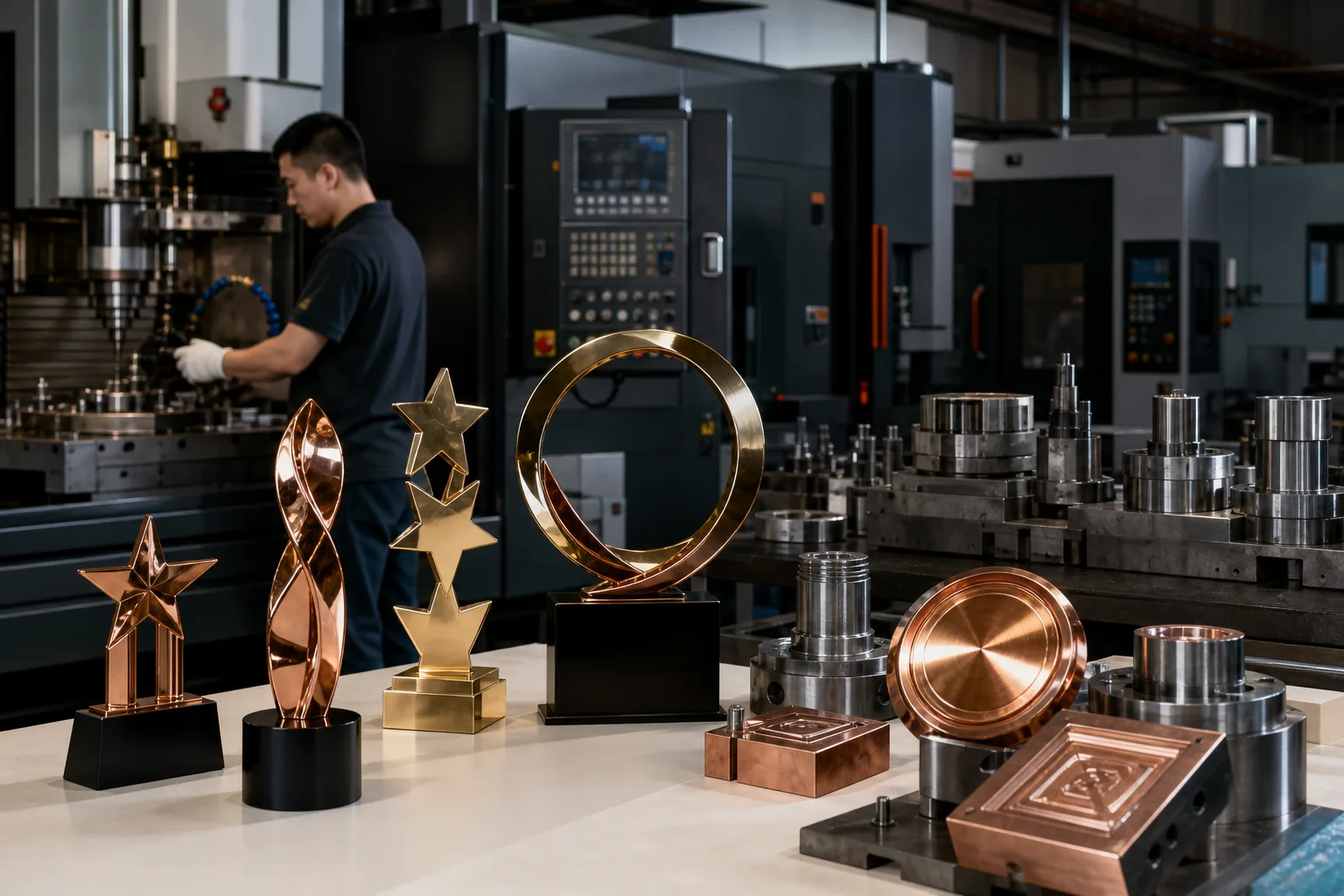
Production Moves Through Dedicated Shenzhen Workshops
Our custom metal product manufacturing capabilities are organized around a connected factory workflow. Separate work areas support each main stage while allowing formed parts, finish requirements and inspection records to move through a defined production sequence.
The facility includes the following areas:
Buyers conducting a facility assessment can review the Shenzhen factory and workshop layout in more detail.
01
Mold making and CNC engraving
tooling is developed for the intended shape, dimensions and relief.
02
Stamping and hydraulic pressing
metal is formed through die-struck or high-relief processes.
03
Zinc alloy die-casting
cast parts and dimensional structures are formed with dedicated equipment.
04
Polishing and surface treatment
formed parts are checked, polished and cleaned before decoration.
05
Enamel coloring and epoxy
color, printed graphics and clear coatings are applied as specified.
06
QC, assembly and packing
finished surfaces, attachments and assembled parts are inspected before packing.
07
Showroom and warehouse
samples and stored materials or goods are managed in designated areas.
CNC-Engraved Tooling Establishes the Product Geometry
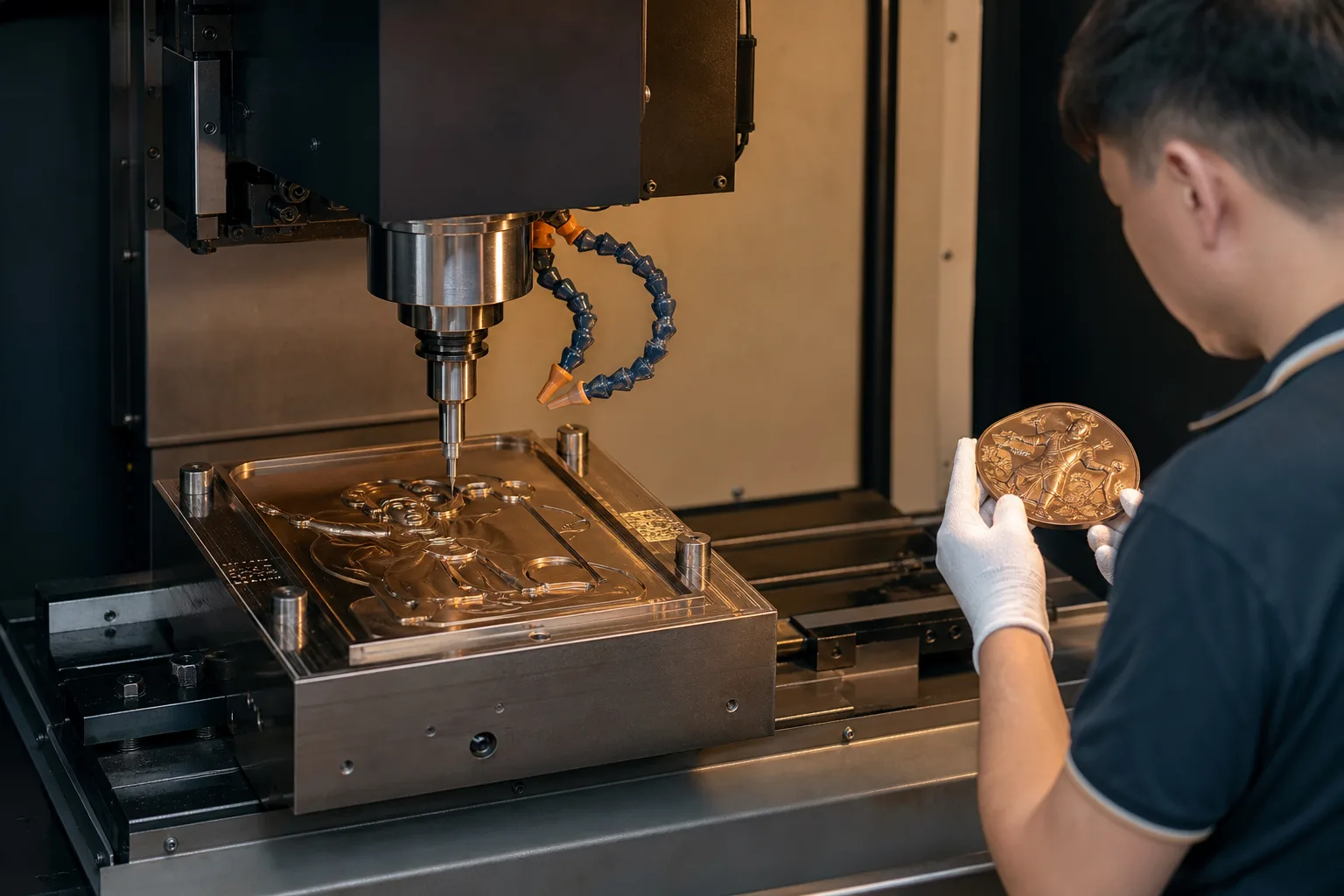
Mold development comes before metal forming when a custom design requires dedicated tooling. The mold defines physical features such as the outside shape, thickness and raised or recessed detail. Errors at this stage can continue through casting, stamping and finishing, so the tooling must reflect the agreed design.
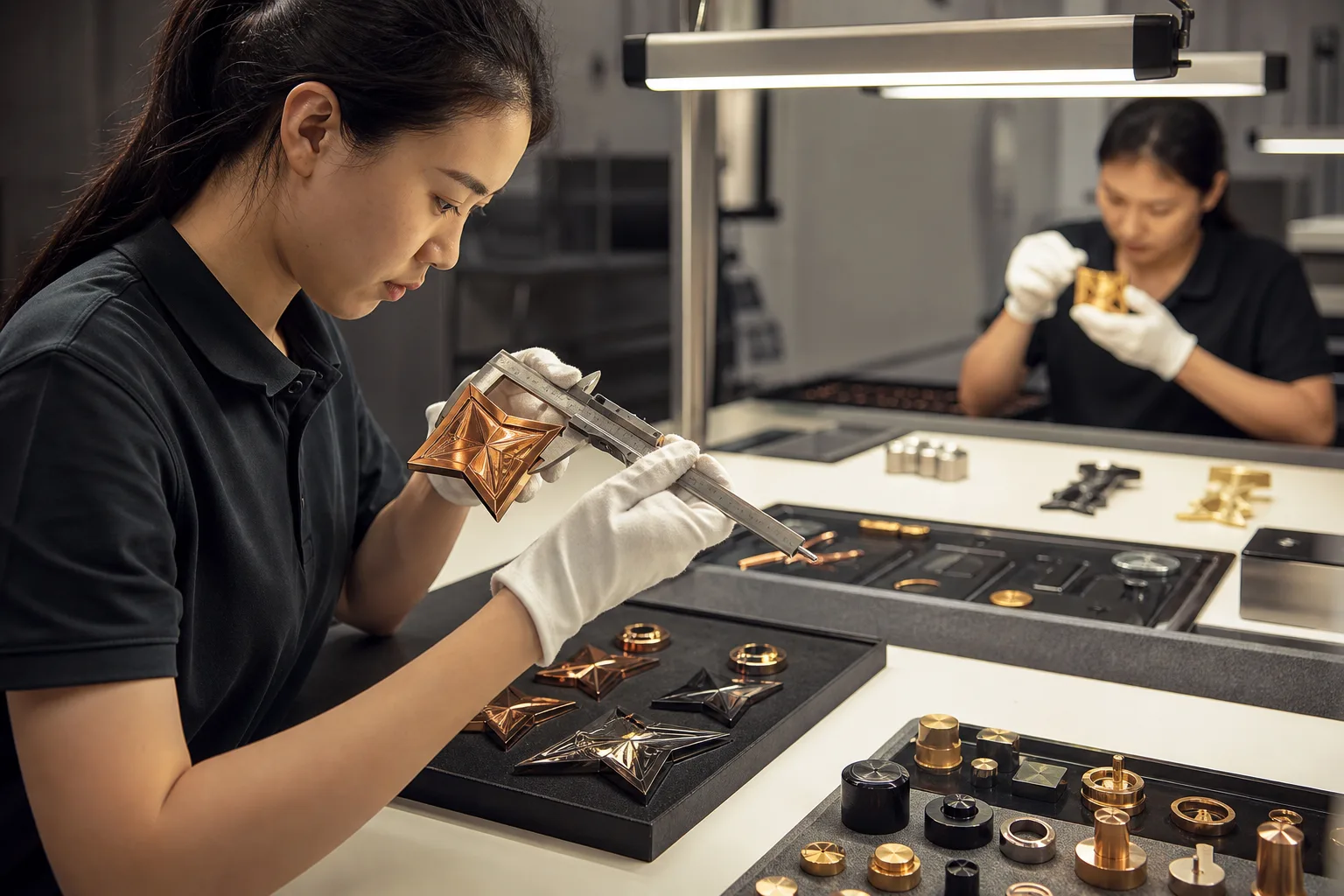
Gairun has a mold-making and CNC engraving workshop equipped with CNC engraving machines. After mold engraving and trial forming, the first article is compared with the approved 1:1 drawing. The inspection covers dimensions, thickness and relief detail.
This first-article check creates a technical control point between tooling and continued production. It does not replace the buyer*s artwork approval or the detailed engineering review that takes place before mold work. Those activities have separate service paths, while the mold-making and CNC capability covers the tooling and trial-forming stage.
Match the Metal and Forming Route to the Design
Gairun processes zinc alloy, brass, iron, stainless steel and aluminum. Available forming methods include zinc alloy die-casting, stamping or die-struck forming, photo etching and hydraulic high-relief forming.
The correct route depends on the required metal, part shape, relief structure and decoration plan. A dimensional cast part has different tooling and surface needs from a stamped metal piece. A high-relief design also requires a different forming assessment from a flat graphic intended for printing.
| Capability | Main design question | Downstream consideration |
|---|---|---|
| Zinc alloy die-casting | Does the part require a formed shape or dimensional structure? | Edges, openings, relief and attachment features must be reviewed. |
| Stamping or die-struck forming | Can the design be formed from metal through pressure and tooling? | Metal choice, thickness and relief layout affect the route. |
| Hydraulic high relief | Does the artwork require strongly raised metal detail? | Relief geometry must be checked against the intended finish. |
| Photo etching | Is the design based on controlled recessed or line detail? | The etched areas must coordinate with later color and surface work. |
This is a capability map rather than a universal material rule. Buyers who need to compare finished product formats can browse the custom metal product range.
Forming Equipment Supports Cast, Stamped and High-Relief Work
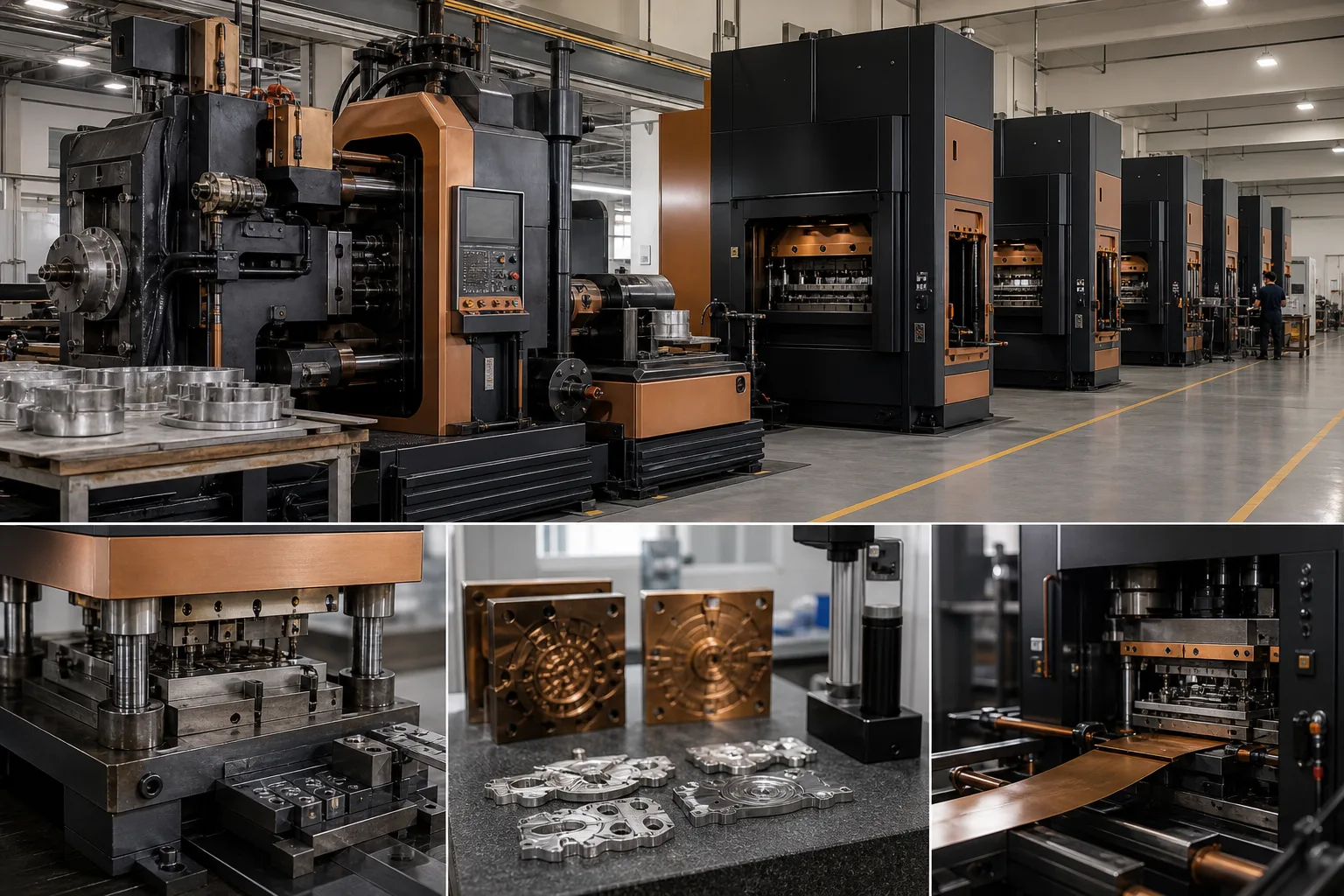
Concrete equipment information helps a technical team verify that a listed process is supported by factory machinery. Our forming equipment includes 88T and 160T zinc alloy die-casting machines, precision stamping presses, and 200T and 500T hydraulic presses.
The die-casting machines support zinc alloy forming. Precision stamping presses support stamped and die-struck work, while the hydraulic presses support pressure-forming operations, including hydraulic high relief. Equipment availability alone does not prove that every design fits a process. Part geometry, material, thickness, relief and later decoration still require project-specific review.
We do not apply one forming method across all custom products. The route is selected after the design and production requirements have been assessed. This avoids treating casting, stamping and hydraulic pressing as interchangeable processes.
Polishing and Cleaning Prepare Formed Metal for Finishing
Surface preparation connects metal forming with plating, coloring and printing. A part that leaves the die-casting or stamping stage may require burr inspection, polishing and cleaning before decorative work can begin.
Our in-process checks include inspecting cast and stamped parts for burrs. After polishing, the surface is checked for flatness. Automatic polishing equipment supports the polishing stage, and ultrasonic cleaning equipment removes residue before the next process.
The preparation method must account for the part*s geometry. Raised features, recessed areas, openings and connected components can affect tool access and the surfaces that need attention. The aim is to provide a suitable base for the specified finish without changing design details that must remain visible.
See the dedicated polishing and surface preparation capability for a closer review of these stages.
Plating and Surface Effects Define the Exposed Metal Areas
Available plating options include gold, silver, nickel, black nickel, antique bronze, antique silver and dual plating. Gairun can also apply sandblasting and matte finishes. These processes control the appearance of exposed metal and can help separate design areas through tone, texture or contrast.
Dual plating uses two plating appearances within one design. Antique effects create darkened contrast around recessed or textured features. Sandblasted and matte areas reduce surface shine compared with brighter plated sections. The final choice must be coordinated with relief, color areas and any printed detail.
During production, plated parts are checked for color difference and plating adhesion. Buyers seeking a detailed appearance comparison can review the plating and metal finish capability. Project-specific finish requirements should identify the intended plating tone and any areas that need a separate surface effect.
Enamel, Printing and Epoxy Add Color and Graphic Detail
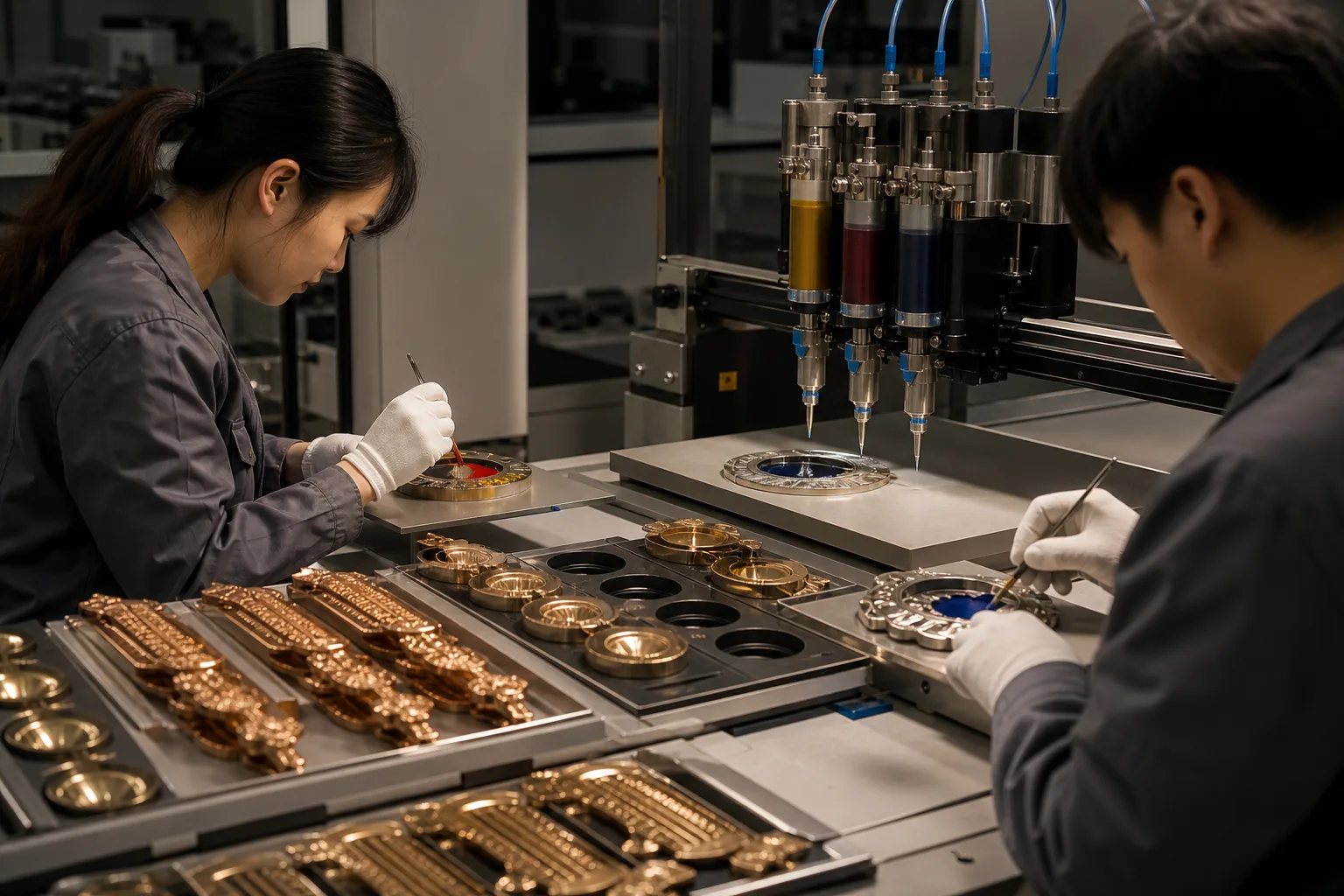
After metal forming and surface preparation, decoration can add brand colors, text, illustrations or protective surface coverage. Our factory has a dedicated enamel coloring and epoxy workshop, with automatic color dispensing machines as well as manual coloring capability.
Available decoration methods include:
- Soft enamel for color areas that remain recessed below raised metal borders.
- Imitation hard enamel for a smoother enamel presentation coordinated with the surrounding metal.
- Screen printing for defined printed graphics applied to the prepared surface.
- UV printing for artwork that requires printed detail or multiple tones.
- Clear epoxy coating for transparent coverage over a decorated surface.
The process must match the artwork rather than being chosen by name alone. Metal borders, color boundaries, gradients, small graphic elements and the intended surface appearance all affect feasibility. During in-process inspection, colored parts are checked for color overflow and areas with insufficient color.
Technical teams can examine the full enamel, printing and epoxy capability without turning the factory assessment into a product-style comparison.
Quality Checks Follow the Product Through Production
Inspection takes place at several points instead of being limited to finished goods. Gairun uses incoming material inspection, first-article inspection, in-process inspection and final inspection across the manufacturing flow.
Incoming material inspection
Zinc alloy ingots, brass sheets and iron sheets are checked for material purity and density before production.
First-article inspection
After mold engraving and trial pressing, the first article is compared with the approved 1:1 drawing. Inspectors review dimensions, thickness and relief details before the project continues.
In-process inspection
Checks are tied to the work being performed. Cast and stamped parts are inspected for burrs. Polished parts are checked for flatness. Plated surfaces are reviewed for color difference and adhesion, while colored areas are checked for overflow or missing color.
Final inspection and available tests
Finished products receive 100% visual inspection for surface scratches. Attachments such as medal ribbons, butterfly clutches and magnets are checked for secure fitting. Available physical tests include a cross-hatch tape test for plating adhesion, salt spray testing for oxidation and corrosion resistance, and pull testing for medal ribbon connections.
Test limits and acceptance criteria must be defined for the specific project rather than assumed from the name of a test. Review the quality control and product testing process for the complete inspection map.
Prepare a Technical Brief for Factory-Fit Review
A useful capability review connects the proposed design to the equipment and process sequence needed to make it. Procurement and engineering teams should define the product format, required metal or material preference, dimensions, relief direction and intended surface appearance.
The review should also identify the likely forming route, plating or surface effect, enamel or printing needs, clear epoxy requirements, attachments, assembled components and inspection scope. If the production method is not known, provide the design goal and let our team assess the available routes.
Use the Products hub to identify the closest custom metal product family. For a project-specific assessment, send the quantity, dimensions, material or process preference, finish, color requirements and supporting files through the Request a Quote page. You can also return to the Gairun manufacturer overview for the main company paths.