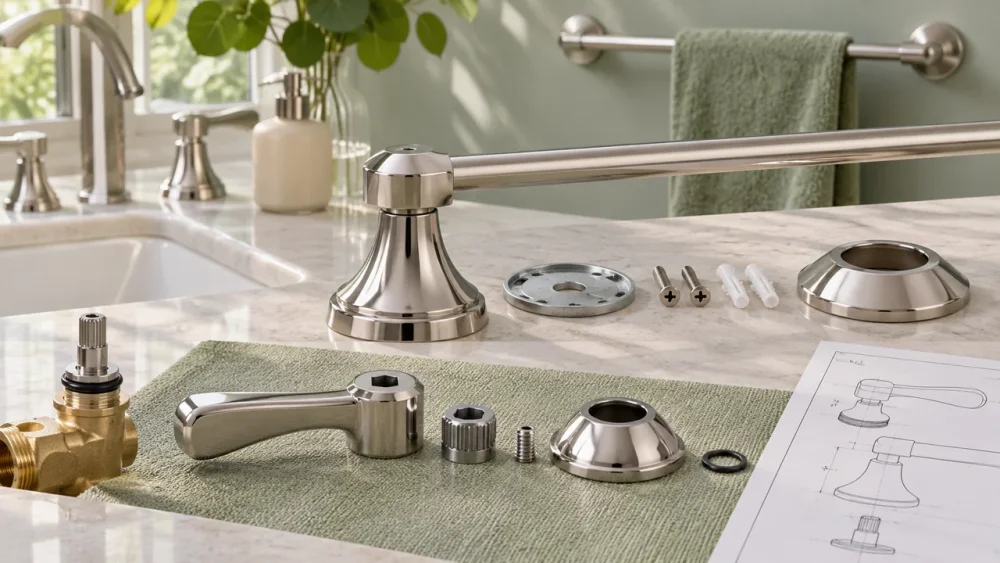
Custom Zinc Bathroom Handles, Bases and Accessory Mounts
Source defined bathroom hardware components, from external handles to towel bar bases. Clarify finish, mounting accessories and the required test scope.
Discuss your requirements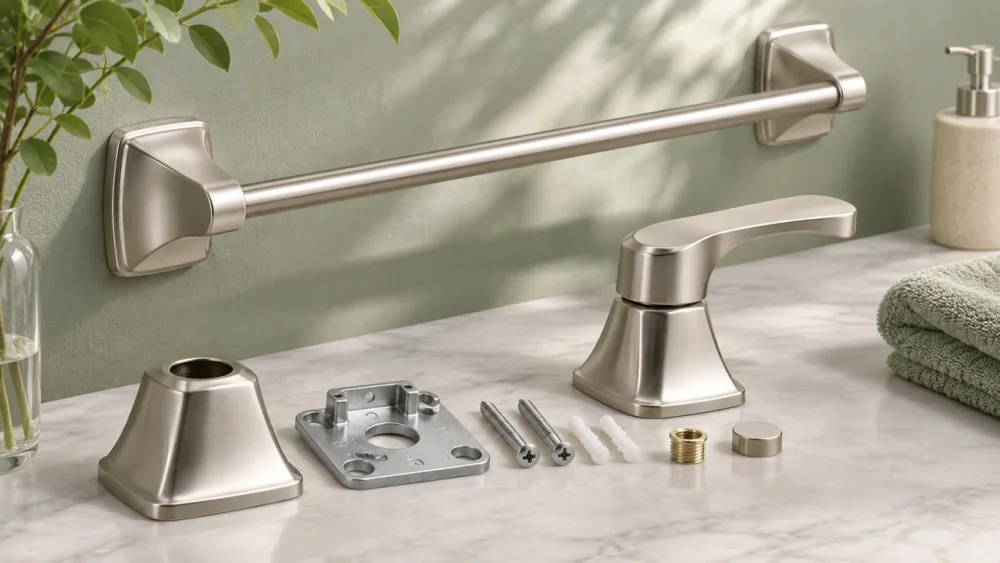
Custom zinc bathroom hardware enquiries can cover exterior faucet handles, towel bar bases and accessory mounts. Send Gairun the required metal component and its installation arrangement, identifying covers, working handles and load-bearing mounts separately. The quotation scope should follow that distinction.
For bathroom brands, the purchasing challenge is to match the collection while preserving fit and performance in moisture and cleaning exposure. External trim is different from a component carrying water. Any wetted or pressure-containing part needs its own material and product qualification before a zinc casting route is considered.
Define one collection without losing component differences
A towel bar base and a faucet handle may share a color but need different inspection.
The base depends on its wall fixing and bar connection; the handle depends on its shaft or cartridge interface. Give each item its own acceptance requirements while linking both to the same appearance reference.
State whether hidden mounting plates, screws, plugs or inserts are part of the requested supply.
A decorated cover alone can look like a complete accessory in a photograph. A component list prevents that ambiguity from reaching the purchase order.
Separate external trim from wetted parts
A faucet handle normally operates outside the water path, while a valve body may contact water directly.
Their material and compliance requirements are different. A manufacturing route considered for the handle should not be extended automatically to the wetted component.
Show the surfaces exposed during normal use and foreseeable cleaning.
Even an exterior part can encounter water, soap or cleaning products. The coating, substrate and any adhesive should be assessed against those conditions.
If the project involves drinking-water contact or another controlled use, identify the relevant market and product requirements explicitly.
The supplier should not infer suitability from a generic description such as bathroom-grade metal. The application owner must define the evidence needed for acceptance.
Handle and mount interfaces
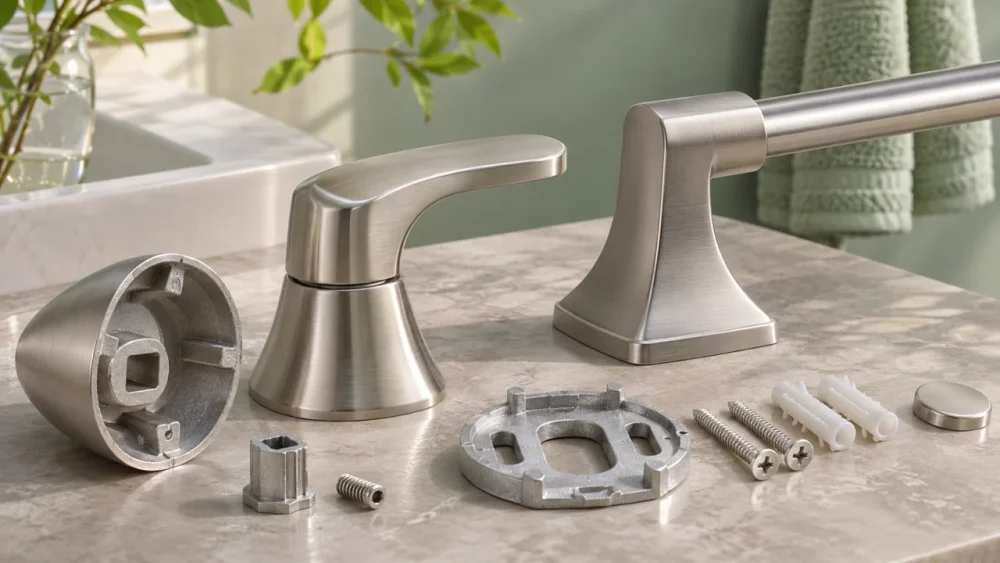
Handles need a controlled interface with the valve stem, cartridge or other operating element.
Provide the actual geometry, retaining method and available space. A visually similar handle may not fit or transmit motion correctly on a different mechanism.
Accessory mounts need the wall interface and fastening arrangement.
A towel-bar base, shower bracket and decorative cover may each carry different loads. Identify which component provides structural support and which conceals or decorates the fixing.
The installation sequence should be practical.
Screws must be reachable and covers must fit without damaging adjacent finishes. Review tool clearance and assembly order before the cast geometry is approved.
Moisture paths and cleaning chemistry
Consider where water can collect rather than only where it first contacts the product.
Cavities, joints and horizontal ledges can retain moisture. Drainage or geometry changes may be useful where they reduce persistent exposure at vulnerable interfaces.
Specify the cleaning conditions relevant to the intended product instructions.
Compatibility cannot be assumed for every household cleaner. Aggressive or concentrated chemicals may affect coatings and nonmetallic components differently.
Fasteners and adjoining metals should be included in the environmental review.
A coating can be damaged during installation, and the resulting joint may behave differently from an untouched sample. Evaluate the assembled condition where that difference matters.
Finish families and cosmetic standards
Bathroom collections often include several coordinated pieces.
Approve representative parts together so color, gloss and texture can be compared across their different shapes. A common marketing color name does not establish a complete finish specification.
Polishing access can influence the appearance of recessed or curved features.
Identify the primary visible faces and any areas that can accept a different preparation level. This helps preserve the design while avoiding unnecessary treatment of hidden surfaces.
The surface finishing page explains how appearance references differ from coating-performance requirements.
If corrosion, adhesion or chemical exposure testing is required, state the method and criterion separately from the desired color.
Installed checks and exposure testing
Fit the sample to the intended stem, mounting bracket or wall fixture.
Check operation, seating and retention using representative fasteners and substrates. A mounting component should be evaluated with the support arrangement that will actually carry the load.
Environmental tests should represent the required product behavior and applicable specification.
Salt spray can provide defined comparative information, but it is not a direct prediction of years in a bathroom. Chemical exposure and repeated cleaning may require separate assessment.
Document the tested finish and assembly.
Changes to plating, a retaining screw or an adhesive can affect previous conclusions. The coating test guide helps select and interpret evidence without turning a report into a universal durability claim.
Prepare the bathroom component brief
Send drawings, mating parts, installation details and the finish reference.
Include the intended market, exposure, expected quantities and required inspection or test records. Identify whether packaging must support retail presentation, assembly-line handling or both.
Send your bathroom hardware component list with the finish reference and installation details.
The enquiry should establish which visible parts, mounting components and checks belong in the proposed package.