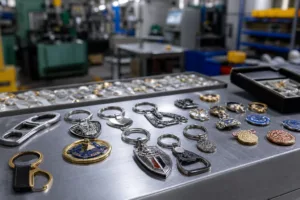
Hotel keytags sit at an interesting intersection of utility, branding, memory, and collectible design. For many travelers, hotel keytags are more than room identifiers: they are tactile objects that carry a hotel’s personality through shape, weight, typography, finish, and wear. From heavy brass fobs with large room numbers to slim acrylic tags designed for boutique interiors, these pieces reflect changing hospitality trends just as clearly as signage, stationery, or room décor. For buyers, designers, and collectors, understanding how styles evolved also helps explain why some tags feel nostalgic, why others feel premium, and what production choices affect durability in real use.
If you are comparing hotel keytag manufacturing options, it helps to look beyond appearance alone. Hotels and hospitality brands usually need a balance of visual identity, practical room labeling, comfortable hand feel, and resistance to daily handling, cleaning, and storage wear. At Gairun, we approach these projects from a manufacturer’s perspective by reviewing material choice, logo treatment, numbering, finish durability, sample approval, and bulk consistency before production starts, especially when a client wants either a vintage-inspired look or a more contemporary branded keytag program.
A brief history of hotel room keytags
Before electronic cards and mobile access became widespread, hotel room keys were usually attached to tags or fobs that made them easier to carry, harder to lose, and simpler for staff to identify. In many traditional properties, the keytag was intentionally oversized. That size was practical: it discouraged guests from walking off with the room key and made room return easier at the front desk.
Over time, the hotel keytag became more than a control device. It turned into a branded object. Room numbers became larger and more stylized. Hotel names were added more prominently. Return instructions appeared on many pieces. In some cases, city names, logos, and decorative borders reflected the hotel’s local identity or architectural style.
Vintage examples also show that material diversity was wider than many people expect. Alongside metal and molded plastic, some historic tags were made from leather and printed with hotel details, room numbers, and return wording. Archival records of vintage tag materials and maker marks are useful for understanding how older hotel pieces communicated ownership and room assignment in a compact format.
As access systems modernized, the role of the traditional room keytag changed. In many hotels it disappeared. In others, it survived as a deliberate design statement, especially in boutique hospitality, resorts, heritage properties, and lifestyle brands looking for a memorable guest touchpoint.
Why vintage hotel keytags still stand out
Defining features of vintage styles
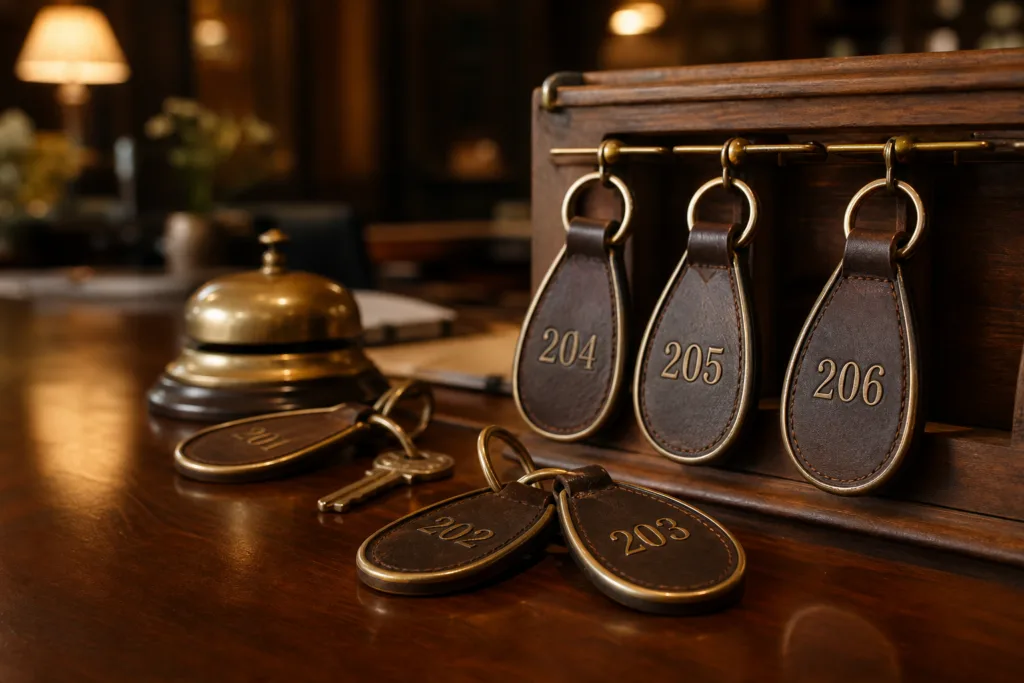
Vintage hotel keytags often feel distinctive because their design language was direct and practical. Large room numerals, serif typography, engraved or stamped lettering, substantial rings, and visibly aged surfaces all contribute to the familiar nostalgic look. Unlike many modern accessories, older tags were not trying to be subtle. They were meant to be read quickly, handled often, and associated with a specific place.
In our production work, when clients ask for a heritage look, they usually respond to four core features:
- Bold room numbering that remains readable at a distance
- Weight and thickness that create a solid hand feel
- Patina-style finishing such as antique brass or aged nickel
- Classic shapes including rectangles, ovals, shields, teardrops, and elongated fobs
Vintage-inspired tags also pair well with exposed edge lines, recessed logos, and darker enamel fills. In metal versions, surface imperfections are often controlled rather than removed entirely, because a slightly softened antique character can make the product feel more believable.
Materials commonly seen in older pieces
Historically, hotel keytags appeared in leather, brass-toned metals, molded plastics, and other practical materials available at the time. Leather examples are especially interesting because they show how hospitality products once balanced softness, printability, and portability. Metal tags, by contrast, tended to signal durability and permanence. Plastic versions often served more economical properties or later mass-adoption periods.
For today’s buyer, the main lesson is that “vintage” is not one material. It is a design direction created by the interaction of material, typography, color, edge treatment, and hardware choice.
Modern hotel keytags and current design preferences
Modern hotel keytags have moved in two different directions at once. One direction is minimal: clean shapes, restrained logos, quiet color palettes, and lighter materials. The other is expressive: custom silhouettes, mixed materials, oversized fobs, and boutique branding intended to be photographed and remembered.
Many contemporary hospitality brands use the keytag as part of the room experience. That means the object must work visually with interior design, front-desk presentation, and the hotel’s broader identity system. Some use matte black metal for urban properties. Others choose acrylic in soft pastel tones for beach or lifestyle brands. Luxury-oriented concepts may prefer polished brass or brushed stainless steel with engraved numbering.
When clients want a more dimensional appearance, die-cast logo keychain production is often suitable for sculpted forms, raised borders, recessed copy, and heavier, tactile structures. This process is especially useful when the keytag is expected to function as both a room marker and a brand object with souvenir appeal.
Common materials used in hotel keytags
Material selection is where visual direction and operational reality meet. Hotels may love the look of one substrate but need the wear profile of another. In manufacturing, we usually evaluate five factors first: target style, handling frequency, environment, branding method, and budget range.
| Material | Typical Look | Strengths | Limitations | Best Fit |
|---|---|---|---|---|
| Brass or zinc alloy | Classic, premium, vintage or luxury | Weight, durability, plating options, engraving depth | Higher unit weight and tooling considerations | Heritage hotels, boutique properties, collector-style tags |
| Stainless steel | Modern, clean, technical | Corrosion resistance, crisp engraving, stable appearance | Less warm visual tone than brass | Contemporary hotels, minimalist branding |
| Acrylic | Colorful, retro, playful | Wide color range, lightweight, cost-efficient | Scratch visibility, edge quality must be controlled | Boutique hotels, themed properties |
| Wood | Natural, rustic, eco-styled | Warm touch, distinctive grain | Moisture sensitivity, finish maintenance | Resorts, cabins, lifestyle hospitality |
| Leather | Soft, classic, heritage | Tactile appeal, refined branding | Can wear, stain, or deform over time | Decorative or lower-abuse applications |
| Plastic | Practical, budget-oriented | Economical, light, scalable | Lower perceived value in some segments | Functional room identification programs |
For metal keytags, finish selection matters as much as base material. Plating, coating, polishing, and texture affect not only appearance but also wear behavior. From a technical standpoint, decorative and protective surface treatments help metal components resist handling wear and corrosion while supporting the intended look; broader industrial references on wear-resistant finishes for metal keytags reinforce why coatings and metal-alloy finishing remain important in accessory production.
For projects leaning toward classic hospitality styling, antique brass finish keychain designs often work well because they combine a heritage tone with enough contrast to make engraved or recessed room numbers easier to read.
Functional role versus decorative role
A hotel keytag can serve two very different jobs. First, it is a room-management tool. Second, it is a guest-experience object. The right design depends on which role matters more.
When function comes first
In practical use, the keytag needs clear numbering, dependable attachment hardware, comfortable edges, and a size that staff can sort quickly. If tags are being used in real daily operations, buyers should think about:
- Whether room numbers must be read from both sides
- Whether the finish hides scratches or fingerprints
- Whether corners should be rounded for guest handling
- Whether attachment rings and jump rings can withstand repeated use
- Whether the chosen material remains stable in humid or outdoor settings
One overlooked detail is edge quality. A beautiful tag with rough cut edges or weak ring holes will feel poor in use, even if the front design looks strong on paper.
When décor or branding comes first
In display settings, gift shops, collector editions, or themed hospitality concepts, decorative appeal may lead the design. Here, unusual shapes, layered materials, oversized dimensions, and dramatic finishing become more acceptable. Some properties intentionally create keytags that echo old motel fobs, while others use minimalist metal forms that match architectural branding.
That decorative role also explains why vintage keychains inspired by hotel tags remain popular in souvenir, retail, and interior styling contexts. They reference travel culture while functioning as small branded objects.
How design trends shape hotel keytags
Minimalism
Minimalist tags emphasize negative space, controlled typography, one or two finishes, and precise proportions. These often use matte metal, brushed surfaces, or monochrome acrylic. The goal is quiet confidence rather than nostalgia.
Retro revival
Retro revival styles borrow heavily from classic motel and mid-century hotel aesthetics. Think thick numerals, warm brass tones, rounded rectangles, and slightly exaggerated fob sizes. This is where stamped metal and antique finishes have strong appeal. For properties trying to capture that older visual language, stamped metal key tag styles can be a practical direction because stamped structures often deliver clear lines, repeatable forms, and an authentic old-school visual feel.
Boutique branding
Boutique hotels often want the keytag to feel like a designed object, not just an accessory. This leads to custom silhouettes, local motifs, architectural references, and more expressive color palettes. In this category, packaging also matters. A keytag presented on a branded card or in a small tray can feel intentional and premium.
Luxury presentation
Luxury-oriented tags usually avoid visual clutter. Instead, they rely on material quality, subtle engraving, clean hardware, and disciplined finishing. Weight becomes important here. Even a small increase in thickness can change how premium a keytag feels in hand.
Examples of distinctive hotel keytag directions
Although styles vary widely, most hotel keytags fall into a few recognizable design families:
- Heritage hotel style: brass-toned metal, engraved room numbers, serif lettering, shield or oval forms
- Classic motel style: elongated plastic or acrylic fob, large block numerals, bold contrast colors
- Boutique urban style: matte black or brushed metal, small logo, clean modern geometry
- Resort style: wood or mixed material, local pattern references, softer edges, warmer color palette
- Collector-inspired style: oversized, numbered, custom-finished tags designed to feel like keepsakes
What separates a memorable version from a forgettable one is usually not the shape alone. It is the consistency between material, finish, typography, and brand story.
What makes a hotel keytag collectible
Collectors tend to value hotel keytags for the same reasons designers admire them: they are small objects with strong place identity. A collectible tag usually has at least one of the following traits:
- Connection to a well-known or now-closed hotel
- Distinctive typography or period styling
- Unusual material or construction
- Visible age with readable branding
- Limited surviving examples in good condition
Condition matters. Deep scratches, broken hardware, severe corrosion, cracked plastic, or lost numbering can reduce both display value and historical clarity. On the other hand, normal patina is often part of the appeal, especially on brass-toned pieces.
Collectors should also look for signs of authentic age rather than artificially distressed surfaces. Natural edge wear, consistent oxidation, and hardware that matches the period often tell a clearer story than exaggerated surface aging.
Tips for collectors and display-minded buyers
How to evaluate authenticity
Look closely at construction details. Is the room number printed, engraved, or stamped? Does the hardware feel period-appropriate? Are there maker marks, return instructions, or location details that fit the era? Materials should also make sense historically. A supposed early vintage piece with obviously modern printing quality may deserve closer scrutiny.
How to preserve vintage pieces
Preservation should be gentle. Avoid harsh polishing on patinated metal if the aged character is important. Leather should be stored away from direct sunlight and excessive humidity. Acrylic or plastic pieces should not rub against abrasive surfaces. If the item is framed or boxed, make sure it is not under tension from tight mounting.
How to display them at home or in hospitality décor
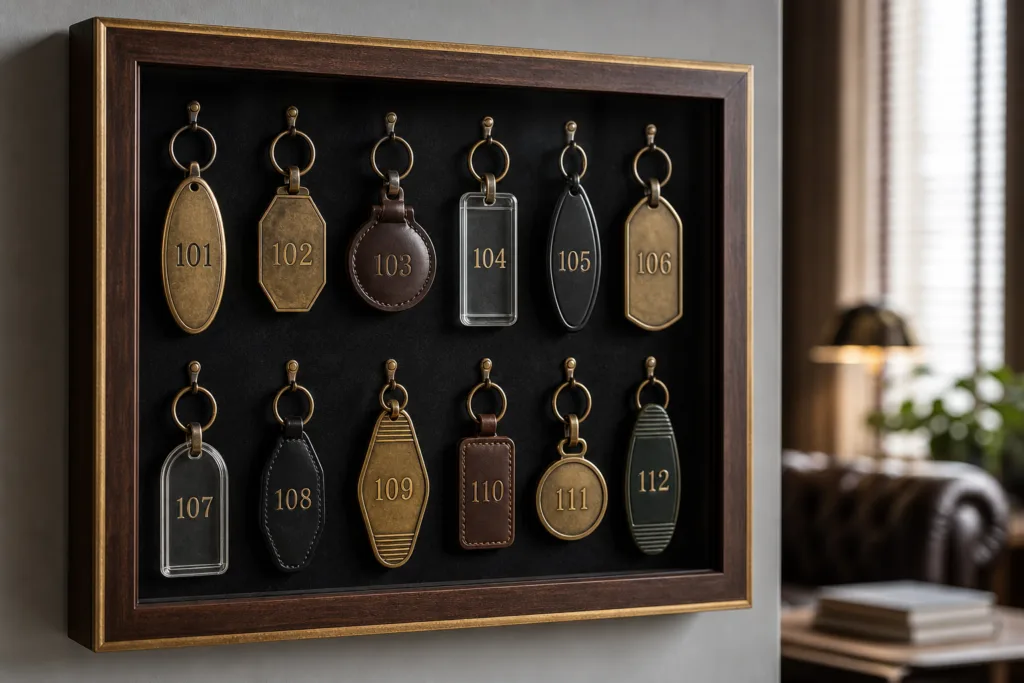
Keytags display well in shadow boxes, grid frames, drawer-top trays, and small wall arrangements sorted by city, era, or material. In hotel interiors, vintage-inspired collections can be used near reception, in corridor storytelling displays, or as room-themed decorative accents. The key is to protect readability while preserving the object’s original scale and charm.
Customization considerations for hotels and hospitality brands
Hotels creating their own keytags should think carefully about the relationship between branding and operation. A beautiful tag that is hard to identify at the front desk will create friction. A highly functional tag with no style signal can feel generic.
At Gairun, we typically guide buyers through a practical sequence: usage scenario, size, thickness, numbering logic, logo method, finish durability, attachment structure, sample review, and packaging. This helps avoid common issues such as room numbers that are too small, plating tones that do not match the interior concept, or shapes that look good in artwork but feel awkward in hand.
For hotels that need room-by-room control, serialized key tag customization can simplify identification and replacement planning. This is especially useful when tags need sequential numbering, department coding, or traceable batches across multiple properties.
Logo placement should never compete with room identification. In most successful layouts, the room number leads and the hotel name supports. If the tag is more decorative or retail-oriented, the logo can take a stronger role, but readability should still be protected.
Practical production factors that affect quality
Process choice
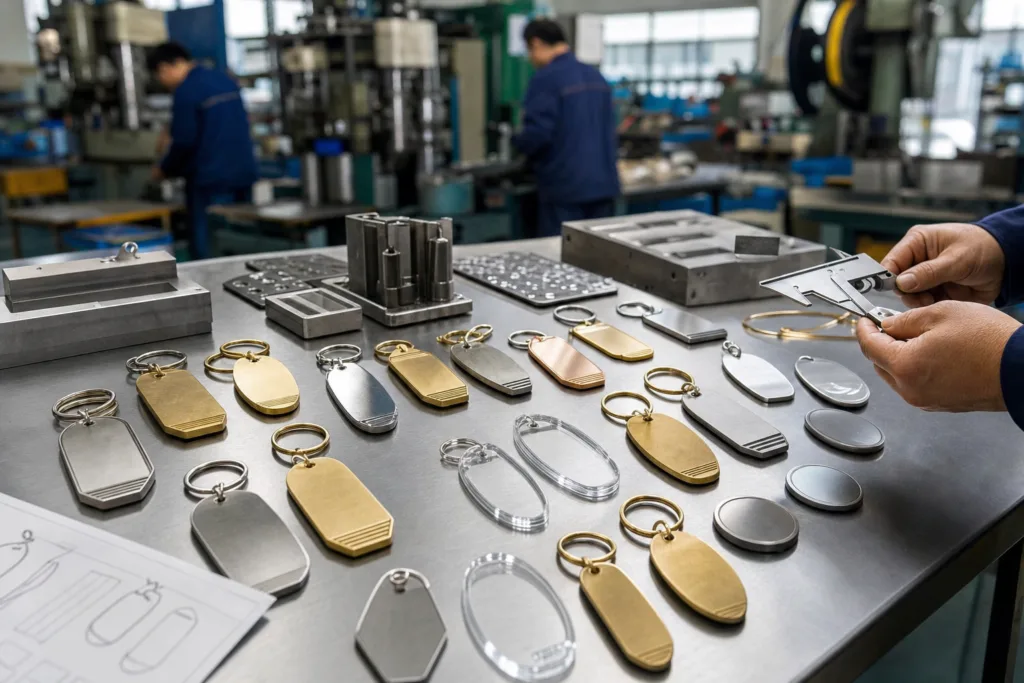
Different production methods create different visual and structural outcomes. Die casting is useful for dimensional shapes and sculpted detail. Stamping is efficient for flatter profiles with strong edge definition. Etching and engraving are ideal when fine lines or precise text matter. Printed color fills or enamel-like treatments can help distinguish room zones or reinforce branding.
Thickness and weight
Thickness changes both feel and durability. Thin tags may reduce cost and weight but can feel less substantial. Thick tags feel more premium but increase material usage and shipping load. For hospitality use, we generally advise balancing hand feel with operational practicality rather than choosing the heaviest possible structure.
Attachment and hardware
A strong front face is useless if the ring or loop fails first. Ring diameter, jump ring gauge, hole reinforcement, and edge deburring all matter. In higher-use projects, these small details often determine long-term satisfaction.
Surface treatment and wear
Finishes should be chosen based on touch frequency and expected abrasion. Mirror-polished surfaces can look elegant but show scratches faster. Matte and antique finishes usually hide handling marks better. Filled colors should be checked for adhesion and edge cleanliness during sampling.
Bulk consistency and quality control
For hotel programs, consistency matters because tags are seen side by side. We usually pay close attention to plating tone, room number alignment, logo depth, edge smoothness, and hardware assembly. Sample approval should cover not only the front design but also back details, ring connection, and packaging method. If multiple room-number versions are required, a numbering list should be confirmed carefully before bulk production begins.
Common mistakes when selecting hotel keytags
- Choosing style without considering handling: some finishes look excellent in mockups but wear poorly under constant use
- Overcomplicating the design: too many decorative elements can reduce legibility
- Ignoring hardware quality: weak rings create replacement problems quickly
- Using the wrong process for the detail level: fine copy may need engraving or etching rather than broad stamping
- Skipping sample review: color, weight, and edge feel are difficult to judge from artwork alone
- Underestimating packaging: even functional tags can benefit from organized bagging, numbering sets, or branded presentation
Conclusion
Hotel room keytags remain memorable because they compress identity, function, and material design into one small object. Whether the look is heritage brass, colorful acrylic, refined stainless steel, or a mixed-material boutique concept, the strongest results come from aligning style with actual use. For collectors, that means paying attention to era, material, typography, and condition. For hotels and hospitality brands, it means thinking through readability, finish durability, numbering, hardware, and production consistency from the start. When those choices are handled well, hotel keytags become more than accessories; they become part of the guest experience and, in some cases, lasting design artifacts.
FAQs
Are vintage hotel keytags still used?
Yes, but usually in selective ways. Some heritage hotels, boutique properties, and themed hospitality concepts still use traditional-style keytags for atmosphere and branding, while many others use them as decorative objects, retail souvenirs, or special room accessories rather than as the main security method.
What materials last longest for hotel keytags?
For heavy daily handling, metal materials such as brass-toned alloys, zinc alloy, and stainless steel generally offer the strongest combination of structure, edge stability, and long-term appearance when paired with a suitable finish. Acrylic and quality plastics can also perform well in lighter-weight applications, but they may show scratches more visibly over time.
How can a hotel create a distinctive keytag style?
A distinctive style usually comes from combining one clear shape, readable room numbering, a material that matches the property identity, and a finish that supports the intended mood. Hotels should avoid adding too many competing details and instead focus on proportion, texture, hardware quality, and typography that guests will notice immediately in hand.
What is the difference between stamped and die-cast hotel keytags?
Stamped keytags are typically flatter and work well for crisp outlines, straightforward numbering, and classic metal forms, while die-cast keytags are better for raised logos, sculpted borders, deeper relief, and more dimensional shapes. The better option depends on the design depth, weight target, and overall visual direction of the project.
What should collectors check before buying vintage hotel keytags?
Collectors should check material authenticity, room number clarity, hotel branding, hardware condition, and whether the wear looks natural for the claimed age. It is also worth reviewing maker marks, printing or engraving quality, and any return wording or location details that help confirm the piece fits its period.
Why is sample approval important before bulk production?
Sample approval helps confirm that size, thickness, finish tone, engraving depth, numbering clarity, attachment strength, and edge quality all match the intended result before larger production begins. This step reduces avoidable inconsistencies and is especially important when a hotel needs multiple room-number versions or a very specific vintage-inspired appearance.