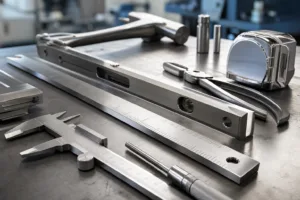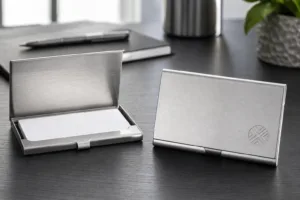
Commemorative tools occupy an unusual but important space in the building industry. A construction ruler, trowel, square, level, or measuring tool can begin life as a practical jobsite instrument, yet become something more when it marks a company anniversary, a landmark project, a union milestone, a retirement, a trade show, or a safety achievement. For buyers, collectors, and brands, commemorative tools are interesting because they combine utility, trade identity, and metal craftsmanship in one object. When designed well, they are not throwaway souvenirs. They become durable pieces that communicate skill, memory, and professional pride.
If you are evaluating this category from a sourcing perspective, a solid metal craft sourcing and production overview helps connect the idea stage with real manufacturing decisions. Many commemorative construction items depend on the same planning logic used in custom metal products: choosing the right alloy or steel, deciding between stamping, casting, engraving, and etching, confirming logo visibility, reviewing sample accuracy, and planning packaging for ceremonies, collector sets, distributor programs, or branded industrial gifting. From our production perspective, early clarity on use scenario and finish expectations makes a major difference to durability, appearance, and bulk consistency.
What commemorative tools and construction rulers really are
In simple terms, commemorative tools are functional or symbolic tools customized to represent a person, project, institution, event, or achievement. In the construction field, rulers and measuring tools are especially meaningful because measurement is central to the trade. A commemorative ruler can celebrate precision, reliability, craftsmanship, and the discipline required on real building projects.
These pieces usually fall into two broad categories. The first category is usable commemorative tooling: metal rulers, small squares, spirit-level style desk pieces, marked trowels, mini hammers, or compact measuring aids that still retain practical function. The second category is display-forward commemorative tooling: decorative replicas, ceremonial presentation pieces, anniversary plaques shaped like tools, and desk collectibles inspired by construction instruments.
What makes the category commercially interesting is that the same product can serve several audiences at once. A contractor may use it as a retirement award. A developer may include it in a project handover set. A trade association may issue it as limited-edition memorabilia. A collector may value it because it records a particular company era, building campaign, or workshop tradition.
Why construction tools become commemorative items
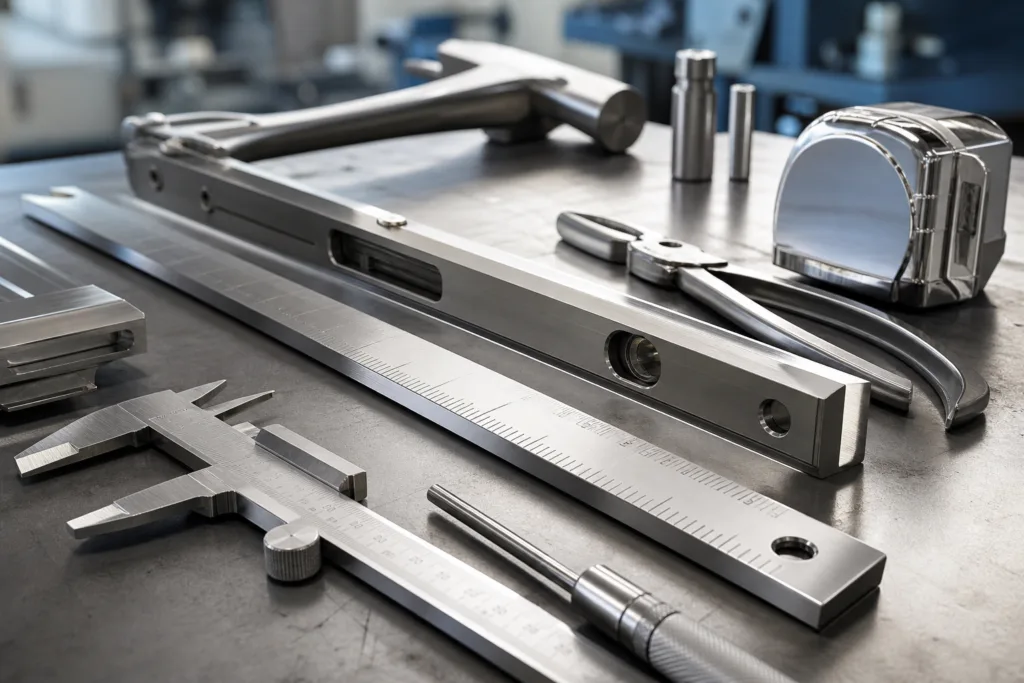
Construction tools become commemorative because they already carry meaning before any logo or date is added. They represent labor, accuracy, problem-solving, and physical creation. A wrench or trowel might be too broad in meaning for some programs, but rulers and measuring tools are particularly strong symbolic choices because they suggest standards, planning, and disciplined execution.
In our experience, buyers usually choose commemorative tools for one of five reasons:
- Project milestones: topping-out ceremonies, major infrastructure completion, factory openings, or landmark real estate delivery.
- Corporate history: company anniversaries, mergers, rebranding, or branch openings.
- Trade recognition: retirement awards, apprenticeship graduation, union service honors, or safety achievements.
- Marketing and distribution: dealer gifts, trade show releases, collector bundles, or limited-edition branded merchandise.
- Cultural memory: preserving the identity of a trade, workshop, local builder community, or historic construction method.
The emotional value grows when the object still feels connected to the job itself. That is why many organizations prefer tool-based commemorative pieces over generic trophies.
Practical function and symbolic value can coexist
A common mistake is assuming that a commemorative ruler must be either decorative or functional. In reality, the strongest designs often balance both. A metal ruler can carry an anniversary mark, founder signature, project coordinates, or award wording while still offering readable graduations and a straight, durable edge.
That balance matters to both end users and collectors. A purely decorative object may look attractive at first but lose interest quickly. A tool that remains credible in hand usually keeps its appeal longer. This is especially true for construction rulers, which people instinctively test for weight, edge quality, marking clarity, and straightness.
Measurement credibility is not just subjective. Guidance from precision ruler accuracy and calibration helps explain why graduation quality and dimensional control matter when a commemorative ruler is intended to be more than a novelty. For manufacturers, that means artwork placement cannot interfere with scale readability, and surface finishing cannot blur critical intervals.
Common types of commemorative construction tools
Metal rulers
These are the most direct expression of the category. They can be flat stainless rulers, plated zinc alloy desk rulers, fold-style commemorative measuring pieces, or compact souvenir rulers packaged in presentation boxes. Rulers are suitable for anniversaries, graduation gifts, and company heritage programs because they are easy to personalize with scales, logos, dates, and project details.
Squares and angle tools
Mini try-squares, angle gauges, or symbolic framing squares work well for architecture, carpentry, and structural trades. Their geometry gives designers more room for logo placement and engraved messaging.
Trowels
Commemorative trowels are widely used in groundbreaking or cornerstone ceremonies. They can be highly polished, engraved, plated, or packaged as presentation pieces. Their ceremonial visibility is strong, even when they are not intended for long-term jobsite use.
Levels and measuring aids
Desk-level style commemorative items can be built as collectible tools or executive gifts. They appeal to companies that want the symbolism of precision without needing a full-size field tool.
Tool-inspired plaques and hybrid metal crafts
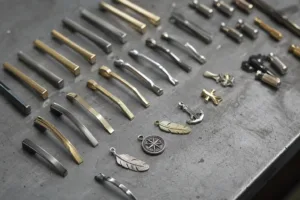
Some buyers do not need a fully usable instrument. Instead, they choose tool-shaped metal souvenirs, desk ornaments, or framed inserts. In such cases, surface detail and relief become more important than utility, and formats similar to stamped heritage souvenir designs can provide useful inspiration for creating pieces with stronger historical or display character.
Design features that make a commemorative tool memorable
Collectors and B2B buyers usually remember the details that make a tool specific rather than generic. A plain ruler with a logo is often not enough. The stronger approach is to build a layered design story into the object.
Engraving and etched detail
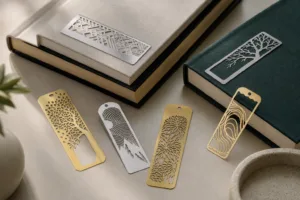
Engraving is one of the most effective ways to add permanence. It works well for names, dates, serial numbering, project titles, signatures, and technical line art. Etching can help when the design needs fine visual detail across a flatter surface.
Logos and identity marks
Corporate logos, union marks, civic emblems, architectural linework, or project symbols should be planned around the tool’s practical zones. On a ruler, for example, the artwork must not crowd the measurement field.
Dates and milestone text
Anniversary years, build completion dates, and retirement inscriptions are often the details that turn an item from branded merchandise into true memorabilia.
Limited-edition numbering
Sequential numbering can strengthen collectability, especially for trade associations, dealer programs, or historical project series. Numbering should be consistent, legible, and placed where it does not disrupt visual balance.
Finish selection
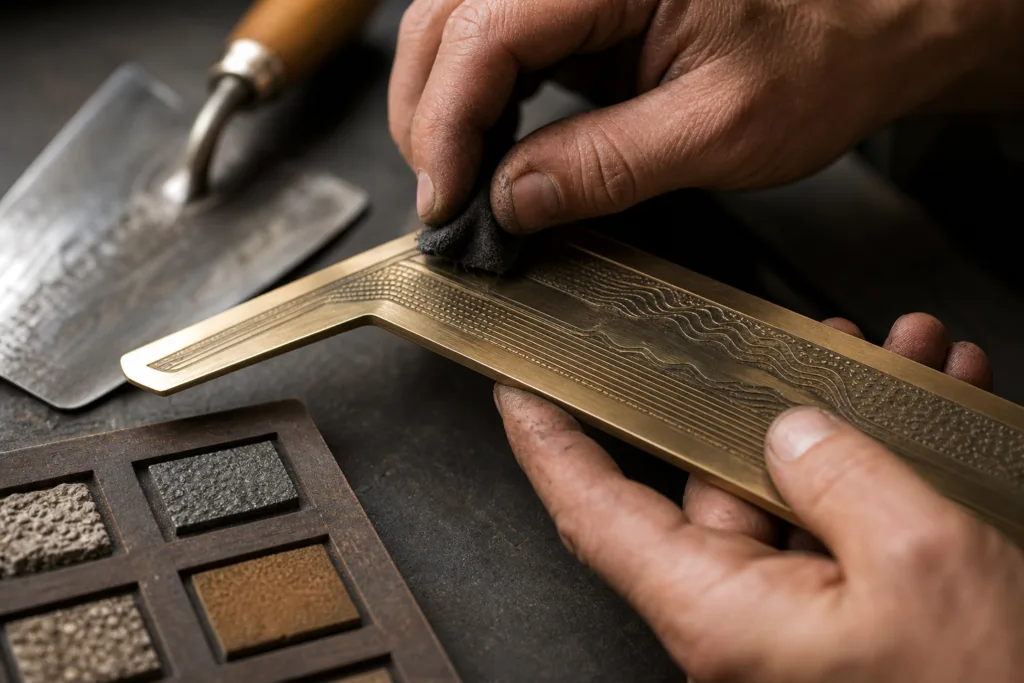
Bright polish creates presentation value, while matte, brushed, antique, or sandblasted finishes often communicate industrial authenticity more effectively. The finish should match the story. A modern engineering award may suit brushed stainless. A heritage contractor anniversary may suit antique brass or nickel tones.
Materials and manufacturing options for commemorative tools
The right material depends on whether the piece is fully functional, display-oriented, or a hybrid of both. At Gairun, we usually start by asking how the item will be used, handled, packaged, and stored.
| Material | Typical strengths | Best fit | Watch-outs |
|---|---|---|---|
| Stainless steel | Good rigidity, corrosion resistance, clean modern look | Functional rulers, measuring tools, engraved pieces | Can cost more than plated decorative options |
| Zinc alloy | Strong detail in casting, good for 3D forms | Display tools, mini levels, decorative hybrids | Less ideal when sharp precision edges are the main requirement |
| Brass | Premium feel, warm tone, strong engraving appeal | Ceremonial tools, collector editions | Needs finish planning for tarnish control |
| Iron or steel | Solid feel, traditional industrial character | Practical commemorative tools with plated finish | Corrosion protection is important |
| Aluminum | Lightweight, easy to handle, modern appearance | Promotional measuring tools, lighter gift programs | Less substantial feel for premium collector positioning |
Manufacturing methods also vary. Stamping is efficient for flatter forms and cleaner repeatability. Die casting suits thicker or more sculptural commemorative shapes. Laser engraving and chemical etching help add precise detail. Polishing, antique finishing, and plating then shape the final visual character.
For buyers comparing production routes, our custom metal craft manufacturing support perspective is that the product should be designed around both the tribute message and the physical behavior of the item in use. That means thinking about edge feel, weight, scale readability, and packaging from the beginning, not after the artwork is finished.
How customization affects appearance, durability, and collectability
Customization choices are not cosmetic only. They influence whether a commemorative tool feels credible, lasts well, and develops collector appeal over time.
Size and thickness
Thin pieces may reduce cost, but if a ruler flexes too easily or a ceremonial trowel feels light and hollow, the item may lose perceived value. Thickness should fit the expected handling experience. Display tools can tolerate more decorative structures, while usable rulers need better dimensional stability.
Edge quality
For rulers and squares, edge control matters visually and functionally. Burrs, uneven trimming, or over-rounded corners weaken quality perception. Buyers should ask how edges will be cut, polished, and inspected.
Graduation clarity
A commemorative ruler should not sacrifice readability for decoration. Fine marks, unit labels, and contrast must be checked during sampling. Even when the piece is mainly ceremonial, accurate-looking detail contributes to authenticity.
Plating and coating
Electroplating can create polished nickel, antique brass, gunmetal, black nickel, or gold-tone looks. Clear protective coatings may be used depending on the base material and finish target. Finish planning should consider handling, fingerprint visibility, and storage conditions.
Personalization structure
Individual names, serial numbers, branch names, or project lots increase relevance, but they also add complexity in proofing, data control, and final inspection. A supplier must be able to manage version control cleanly.
Historical and cultural significance in the building industry
Construction memorabilia matters because building work leaves physical marks on society. Roads, schools, bridges, factories, and civic spaces are collective memory made visible. Tools associated with those efforts naturally become artifacts of labor history. That is one reason even small commemorative pieces can carry surprising emotional weight.
There is also a broader cultural pattern behind this. Functional objects are often preserved because they represent identity, skill, and lived tradition. The U.S. National Park Service discussion of a functional object as a cultural artifact illustrates how craftsmanship and meaning can coexist in a tool-like object. In the construction world, commemorative rulers and tools can play a similar role: they reflect trade knowledge while also marking heritage, belonging, and memory.
Collectors often respond most strongly to pieces tied to a real story: a bridge opening, a contractor centennial, a vocational school cohort, or a regional builders association. Without context, a tool is just an object. With context, it becomes evidence of a specific chapter in industry culture.
Examples of design use in events, milestones, and recognition
Different events call for different product structures. A few practical patterns are common:
- Groundbreaking ceremony: polished or plated trowels with event date, site name, and dignitary names.
- Contractor anniversary: stainless or brass rulers with timeline engraving, founder signature, and numbered edition.
- Safety award: compact metal square or level with achievement wording and department identity.
- Dealer incentive: boxed commemorative measuring tools with private label packaging and serialized sets.
- Training graduation: tool-shaped collectible with class year, institution mark, and recipient name.
Some programs also add supporting pieces such as tags, case inserts, or certificate plates. In those situations, matching accessories such as engraved metal nameplate options can help create a more complete presentation set for frames, display boxes, or desktop stands.
What makes a high-quality commemorative tool
From a manufacturing standpoint, quality is not one thing. It is the combination of visual execution, physical handling, and production consistency. Buyers should assess the following points during sampling and pre-production review:
| Checkpoint | Why it matters | What to confirm |
|---|---|---|
| Straightness and alignment | Protects functional credibility | Flatness, warping risk, scale alignment |
| Surface finish | Drives first impression and durability | Uniform plating, polish consistency, no pits |
| Engraving definition | Preserves names and dates clearly | Stroke depth, contrast, small text readability |
| Edge treatment | Affects handling safety and quality feel | Smooth deburring, controlled corner shape |
| Color and fill quality | Important when logos or highlight marks are added | Clean fill lines, no overflow, good adhesion |
| Packaging fit | Protects presentation value | Insert stability, anti-scratch protection, label accuracy |
Where a project includes multiple matching components, plate and label coordination also becomes important. For example, commemorative tool sets for institutional archives or project equipment rooms may benefit from associated industrial identification plate solutions so item tracking, naming, and display information remain organized and durable.
What artisans and collectors usually value most
Artisan-minded buyers often focus on integrity of form. They care whether the tool still respects the logic of the original object. A ruler should feel straight and readable. A square should feel geometrically convincing. A trowel should have a balanced silhouette. Decorative additions are appreciated, but not if they make the tool feel fake.
Collectors, meanwhile, tend to evaluate five layers at once: provenance, production quality, scarcity, condition, and narrative significance. A limited-edition contractor anniversary ruler may attract attention because it combines all five. A mass giveaway with little story may not.
That does not mean every commemorative tool must be expensive or highly ornate. Some of the most effective pieces are simple, well-finished, and context-rich. A clean brushed ruler with deep engraving and exact dates can carry more long-term value than a heavily decorated piece with weak detail.
How to choose the right commemorative tool for a project or program
We usually suggest buyers work through selection in this order:
Start with the use scenario
Will the piece be used on a desk, in the field, on a display wall, in a ceremony, or inside a collector box set? This single question affects material, thickness, finish, and packaging.
Match the tool type to the message
Rulers symbolize precision and planning. Trowels symbolize building and groundbreaking. Squares suggest structure and discipline. Levels symbolize balance and accuracy. The symbolic fit helps the item feel intentional.
Define what is custom and what is standard
Fully custom forms offer stronger identity but require mold development and more review. Semi-custom pieces using standard tool forms with engraved or stamped branding may reduce development time.
Plan packaging early
A commemorative item is often judged first by how it is presented. Foam inserts, sleeves, gift boxes, certificate cards, and protective films all affect perceived value and transit safety.
Confirm production volume and timeline
MOQ, sample timing, tool-up needs, and plating schedules should be discussed before artwork is finalized. Custom molds, variable numbering, and mixed packaging sets can all extend lead time if added late.
Common mistakes to avoid
- Overloading the design: too much text, too many logos, and too many commemorative details can make the piece crowded.
- Ignoring handling feel: if the item is too light, too sharp, or awkward to hold, it will disappoint even if the artwork looks good.
- Choosing finish before function: a mirror finish may look premium but reveal scratches quickly in some use cases.
- Skipping scale review: ruler graduations, fonts, and logo size must be checked at real size, not only on screen.
- Underestimating packaging: an attractive tool can be damaged or devalued by weak packing.
- Not clarifying tolerance expectations: especially important when a commemorative ruler is expected to remain practically usable.
What buyers should ask a manufacturer before ordering
When buyers approach Gairun or any other metal product manufacturer, the most useful conversations are specific. Instead of asking only for price, ask how the product will actually be built and controlled.
- Which material is most suitable for this mix of display value and practical use?
- Should the product be stamped, cast, etched, engraved, or combined across methods?
- How will graduation marks or fine text be tested during sampling?
- What thickness is recommended for better straightness and feel?
- How will edges be deburred and corners controlled?
- What finish is likely to hold up better in handling and storage?
- Can serial numbering, individual naming, or mixed sets be managed accurately?
- What packaging protects both the finish and the presentation experience?
- What are the sample and mold approval steps before bulk production?
- Which QC checkpoints will be used before shipment?
In our own custom metal product development work, these questions usually reveal whether a project should stay simple and elegant or move toward a more layered collector-grade concept.
Display, preservation, and long-term care
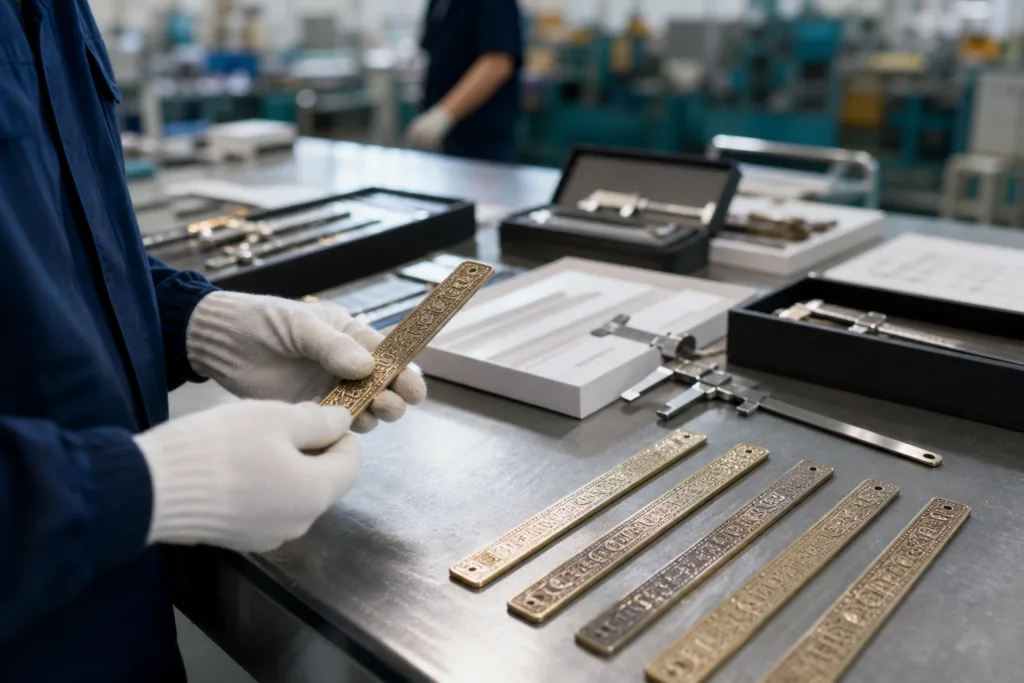
Collectors and institutions should also think beyond production. Preservation affects long-term appearance and perceived value. Keep pieces dry, clean, and protected from abrasive contact. For plated or polished surfaces, individual wrapping, soft inserts, or display recesses help reduce scratches. If the tool is framed or boxed, avoid pressure points on raised details. For archival or heritage collections, clear labeling of edition number, event name, and production year helps preserve context as much as the object itself.
Usable commemorative tools present a special case. If the recipient may actually use the ruler or square occasionally, choose a finish that tolerates handling and small marks more gracefully than highly reflective mirror polish. Antique, brushed, and satin effects often age better visually.
Conclusion
Commemorative tools are meaningful because they unite trade identity with tangible metal craftsmanship. In the building industry, construction rulers and related tools work especially well because they already symbolize precision, discipline, and real work. The strongest pieces respect both sides of the category: they look memorable, but they also feel believable as objects of the trade. For buyers planning anniversary gifts, ceremony tools, recognition programs, or collector editions, success usually comes from clear purpose, careful material choice, readable customization, and disciplined production review. When those elements come together, commemorative tools can become lasting records of projects, people, and professional pride.
FAQs
Can commemorative construction rulers still be used as real measuring tools?
Yes, they can, but only if the design and production process protect measurement readability and dimensional control. If a ruler is meant to remain practical, buyers should confirm material rigidity, graduation clarity, edge straightness, and whether decorative elements interfere with the scale. Some commemorative rulers are mainly symbolic, while others are designed to stay genuinely usable.
Which metal is usually best for commemorative tools?
There is no single best metal for every project. Stainless steel is often a strong choice for functional rulers because of its clean appearance and corrosion resistance, while brass can add a more premium ceremonial feel. Zinc alloy is useful for sculptural or display-oriented pieces, and plated steel or iron can suit industrial-style commemorative programs when finish protection is planned properly.
Do custom molds always need to be made for commemorative tools?
No. Some projects can use standard tool forms with custom engraving, etching, or nameplate additions, which reduces development time and cost. Fully custom shapes, 3D forms, or unique structures usually require mold development or dedicated tooling. The right route depends on how distinctive the product needs to be and how large the order volume is.
What details make a commemorative tool more collectible?
Collectors usually respond to a combination of context and execution: clear event or project relevance, limited-edition numbering, sharp engraving, good finish consistency, protected condition, and a documented story behind the piece. A simple ruler tied to a meaningful contractor milestone can be more collectible than a more decorative item with little historical context.
How should commemorative construction tools be packaged?
Packaging should match the item’s purpose. Presentation gifts often benefit from fitted boxes, foam or velvet inserts, protective sleeves, and a card or plate explaining the milestone. If the tool has polished or plated surfaces, anti-scratch protection is important. For distributor programs or private label projects, buyers should also plan branding, barcode, and carton organization early in production.
What should buyers review before approving bulk production?
Before bulk approval, buyers should check sample dimensions, engraving layout, logo position, finish color, edge smoothness, readability of scales or text, packaging fit, and any variable data such as names or serial numbers. It is also wise to confirm quality standards for surface defects, plating consistency, and count accuracy so the finished order matches both presentation needs and practical expectations.