For publishers, schools, libraries, and literacy programs, custom bookmarks can do more than hold a page. They can function as a long-lasting brand touchpoint, a commemorative reading accessory, a book fair giveaway, a donor item, or a practical piece of school identity. From our manufacturing perspective, metal bookmarks are especially useful when buyers want a product that feels more durable, more memorable, and more premium than paper or plastic alternatives.
If your project needs a branded reading accessory with custom shapes, engraved details, plated finishes, packaging support, or bulk production planning, our metal crafts manufacturing overview is a helpful starting point. It shows how we approach material selection, mold development, logo execution, sample approval, and quality control for custom metal products that need both visual appeal and repeatable mass production consistency.
What custom bookmarks are and why they matter for publishers and schools
Metal bookmarks are slim custom metal reading accessories designed to mark pages while also carrying brand, institutional, or event identity. In publishing, they are often used for title launches, collector editions, author events, subscription boxes, and bookstore promotions. In schools, they work well for reading campaigns, graduation gifts, library incentives, student recognition, alumni programs, and campus merchandise.
What makes them relevant for B2B buyers is not only appearance, but also usefulness over time. A paper bookmark may be inexpensive, but it is easy to bend, tear, stain, or discard. A well-designed metal bookmark can stay with the user much longer, which extends brand visibility. For a school or publisher, that means the item can keep delivering value after the initial event or campaign ends.
We usually advise buyers to think about the bookmark as a hybrid product: part reading tool, part branded metal craft. That affects decisions on thickness, weight, corner shape, edge smoothness, logo method, and packaging. The right design is not just attractive on a screen; it should feel comfortable inside a book and practical for regular handling.
Key advantages of metal bookmarks over paper, plastic, or fabric bookmarks
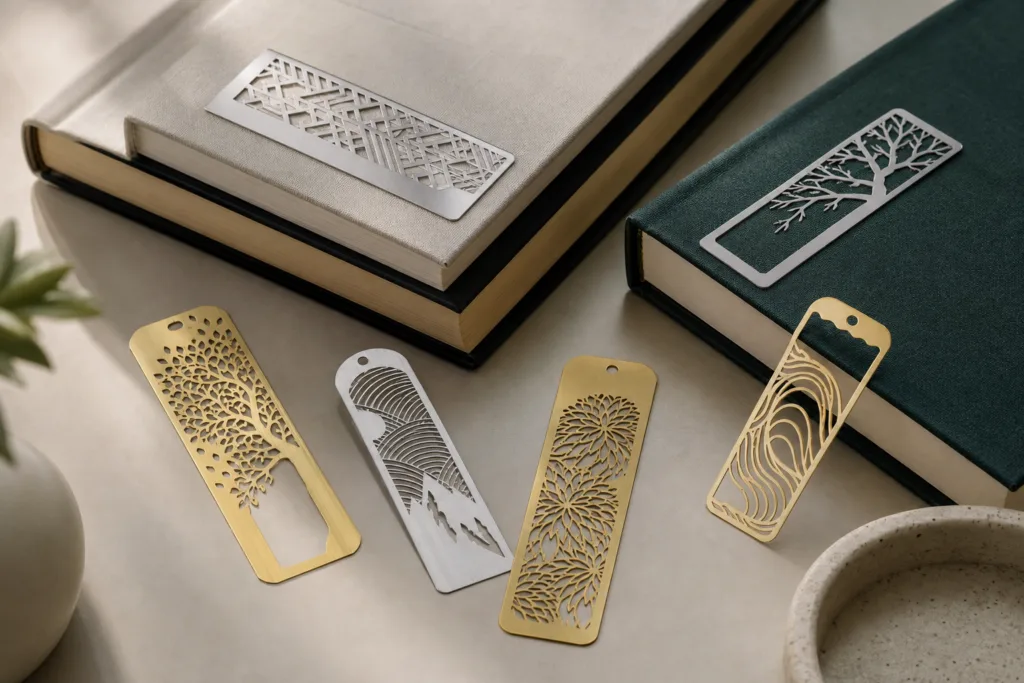
The strongest reason to choose metal is durability. Metal bookmarks resist tearing, moisture damage, and fast wear better than paper. Compared with many plastic options, they usually offer a more refined finish and stronger perceived value. Compared with fabric bookmarks, they can hold sharper logo detail and more structured decorative forms.
| Type | Main Strength | Main Limitation | Best Use Scenario |
|---|---|---|---|
| Paper bookmark | Low unit cost | Short lifespan | High-volume short-term campaigns |
| Plastic bookmark | Lightweight | Less premium feel | Budget school promotions |
| Fabric bookmark | Soft touch | Less logo precision | Textile-themed gifts |
| Metal bookmark | Durable and premium | Higher design planning needed | Branding, gifting, commemorative use |
Metal also supports a wider range of manufacturing expression. Buyers can choose etched cutouts, engraved text, enamel color filling, polished or matte surfaces, antique effects, tassel attachments, and custom silhouettes. This makes the product suitable for very different audiences, from young readers receiving a school reward to collectors buying a special edition release.
Another advantage is retention. In practical terms, products that feel substantial are less likely to be thrown away. For publishers and educational institutions, retention matters because the item continues to carry a logo, mascot, quote, or campaign message well beyond the first distribution moment.
How custom bookmarks support branding, reader engagement, and retention
A bookmark lives close to the reading experience. That gives it a different branding role than a flyer or a one-time insert. Every time the user opens the book, the bookmark reappears. That repeated contact can strengthen association with a publisher imprint, school library, reading challenge, or event theme.
For publishers, the product can reinforce edition identity through title motifs, character symbols, foil-like plating tones, or quote engraving. For schools, it can help unify reading programs with house colors, mascots, library slogans, or graduation year marks. Some institutions also use bookmark series, where each edition represents a reading milestone, subject department, or annual event.
When buyers compare design routes, it can help to review adjacent product categories with similar branding logic. Many of the same considerations used in custom metal tag production options also apply to bookmark development, especially when the goal is clean edge definition, durable logo presentation, and repeatable bulk finishing.
Reader engagement improves when the bookmark feels collectible or personalized. A standard rectangular piece may work for basic promotions, but a shaped bookmark inspired by a school crest, a book icon, a skyline, or an academic emblem often creates stronger emotional response. That is one reason we encourage buyers to clarify whether the item is meant to be functional only, gift-grade, or collectible.
Common use cases in publishing, schools, libraries, book fairs, and literacy campaigns
In publishing, common uses include launch-event inserts, preorder bonuses, premium retail add-ons, festival merchandise, and author-signing souvenirs. A metal bookmark is often a good fit when the book itself is positioned as a keepsake or collector item.
For schools and educational institutions, use cases tend to include:
- Library reading rewards
- Back-to-school welcome kits
- Graduation and recognition gifts
- Alumni and donor merchandise
- Literacy campaign handouts
- Book fair collectibles
- Competition or club souvenirs
Libraries may want more understated finishes and strong readability of names or themes. Book fairs may prefer eye-catching plated colors or themed shapes. Elementary school programs often need simple, safe, lightweight designs, while university bookstores can support more decorative or premium versions.
Audience age also matters. If a bookmark is intended for younger children, detachable ornaments should be reviewed carefully. For school-facing projects aimed at children, buyers should consider small-parts and age-safety guidance for school bookmarks, especially when designs include tassels, charms, or other small components that may affect age appropriateness.
Metal bookmark design options
Shapes and silhouettes
The most economical shapes are straight or gently contoured forms, because they simplify tooling and production control. However, custom bookmarks often become more distinctive when the silhouette echoes a book theme, crest, building outline, feather, pen nib, moon phase, or mascot. Complex outlines are possible, but buyers should balance decorative value against production complexity and edge comfort.
Thickness and weight
For bookmarks, thicker is not always better. The product should feel solid, but still sit comfortably between pages. Very thick construction may create too much page pressure in thinner books. Very thin construction may bend too easily or feel less valuable. In our production work, the right thickness depends on material choice, bookmark length, decorative cutouts, and intended audience.
Cutouts and openwork
Etched or stamped cutouts can make the piece lighter and visually elegant. This is useful for literary motifs, initials, school crests, and architectural themes. But buyers should remember that open areas change structural strength. Fine cutout sections need enough material support to avoid weak points during daily handling.
Tassels, charms, and inserts
Tassels can add softness and visual movement, especially for gift-oriented or classic reading aesthetics. Charms can strengthen theme identity, but also add complexity, assembly steps, and safety considerations for youth programs. Some buyers choose inserts such as backing cards, quote cards, or sleeve packaging to connect the bookmark to a specific title or school campaign.
Material choices for metal bookmarks
Material selection affects appearance, rigidity, detail capability, weight, and cost. The most suitable option depends on the design style and the expected user experience.
| Material | Typical Character | Good For | Watchpoints |
|---|---|---|---|
| Stainless steel | Slim, crisp, modern | Fine etching, sleek bookmarks | Usually less dimensional than cast designs |
| Brass | Warm, premium, classic | Elegant engraving and plating | Higher material cost in some projects |
| Zinc alloy | Flexible for shapes | Decorative cast elements | Can be heavier for large bookmarks |
| Aluminum | Lightweight | Large designs needing lower weight | Surface feel differs from brass or steel |
Stainless steel is often chosen for clean, flat bookmarks with precise etched patterns and a modern profile. Brass suits more premium or heritage-inspired projects. Zinc alloy can be useful when the design includes more sculptural forms or decorative raised areas. Aluminum works well where lower weight is important, especially for larger formats.
Material decisions can also overlap with logo execution. If a buyer wants very fine lines, commemorative dates, or crisp emblem detail, reviewing engraved logo detailing for premium branding can help clarify how subtle linework and text treatment translate into metal surfaces.
Customization methods: engraving, etching, enamel filling, printing, and plating
Laser engraving
Laser engraving is suitable for names, quotes, dates, serial information, and fine logo marks. It is often chosen when readability matters more than color. Schools may use it for house names, graduation years, or library branding. Publishers may use it for title lines, author signatures, or edition marks.
Etching
Etching is especially useful for flat bookmarks with precise linework, openwork patterns, and intricate silhouettes. It allows elegant visual detail without requiring a thick product body. For quote-heavy designs or fine illustration patterns, etched metal bookmarks can achieve a refined look while staying relatively slim.
Enamel filling and color accents
When buyers want school colors, mascot highlights, or visual emphasis on selected design areas, soft enamel or similar color filling can add contrast. This approach works best when the layout contains clearly separated color zones. Too many tiny color sections can raise reject risk and reduce visual clarity.
Printing
Printed elements can reproduce gradients or more complex graphics, but buyers should evaluate whether the use environment favors a more permanent metal-based decoration method. If long-term durability is a priority, engraved, etched, or recessed-and-filled designs are often more dependable than highly exposed printed surfaces.
Plating and tone selection
Gold tone, silver tone, black nickel tone, antique brass, antique silver, and similar finishes shape the bookmark’s personality. A school award item may need a classic plated look, while a modern publisher series may suit matte black or brushed steel tones better.
Finish and surface options
Surface finish changes how the product feels in the hand and how the light reveals detail. High polish brings reflectivity and gift appeal. Matte and brushed textures feel more contemporary and can reduce visible fingerprints. Antique finishes emphasize recessed areas and are useful for crest-style or literary-themed artwork.
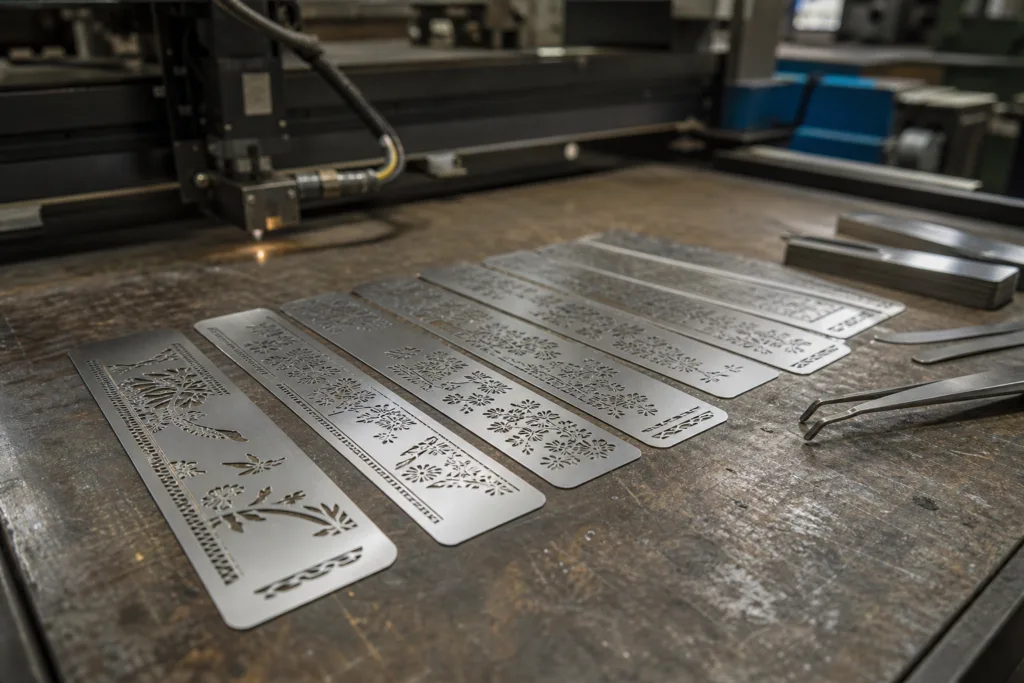
For decorative programs or collector editions, buyers sometimes choose premium plated finishing for gift-quality presentation to increase perceived value. That approach is usually most suitable when the bookmark is part of a boxed set, donor gift, commemorative release, or bookstore premium rather than a mass basic giveaway.
Sandblasted or textured fields can help contrast polished logos or borders. Mixed finishes are often effective, but they need careful artwork planning. If every area uses a different texture, the result can feel visually busy. In most cases, one dominant finish plus one contrast treatment gives a cleaner result.
How to add logos, school names, quotes, mascots, and event themes
The most successful layouts are usually simple. A bookmark has limited space, and readability matters. We recommend that buyers prioritize one primary identity element, such as a logo, crest, title motif, or quote, then support it with one or two secondary details. Trying to include too many messages often weakens the design.
For example, a school bookmark may combine a crest at the top, a short reading slogan in the center, and the school name at the base. A publisher edition may use a cutout title symbol, a quote line, and a subtle imprint mark. Sports day or literacy week versions may use event-year branding and mascot imagery.
Construction method matters here too. Some flatter designs benefit from stamped metal construction for durable designs, especially when the goal is clear recessed and raised areas, reliable outline definition, and efficient bulk production of repeat artwork.
Practical considerations for bulk orders
MOQ and production fit
MOQ depends on process, material, complexity, and packaging style. A simple flat design may support a different production threshold than a bookmark with custom shape, enamel fill, tassel assembly, and individual retail packaging. Buyers should define expected order volume early, because it influences whether a certain tooling and decoration route makes commercial sense.
Sample approval
We strongly recommend a pre-production sample for most custom projects. This is the stage where buyers should check size, thickness, line clarity, edge smoothness, plating tone, quote accuracy, color match, and attachment quality. Sampling helps prevent costly misunderstandings before mass production begins.
Lead time
Lead time is affected by mold making, artwork complexity, finish steps, quantity, and packaging requirements. If the project is tied to a school opening date, graduation, author tour, or book fair, buyers should allow enough time for revisions. Rush scheduling increases pressure on approvals and may limit finishing flexibility.
Packaging
Packaging can be simple or brand-enhancing. Options may include polybags, backing cards, paper sleeves, gift boxes, or branded presentation cards with title information or campaign messaging. Publishers often use packaging to tie the bookmark to a specific book line. Schools may prefer economical packs for easy event distribution.
Quality factors that affect appearance and daily durability
From a manufacturer perspective, the quality of a metal bookmark is judged by more than appearance in a product photo. Daily usability matters. Key checkpoints include edge smoothness, hole placement if tassels are added, plating consistency, readable small text, clean cutout areas, and resistance to obvious surface defects.
Thin products need special care in flatness control. If the part warps, user experience drops quickly. Decorative finishes should also be evaluated in relation to handling frequency. A highly reflective surface can look impressive, but if the bookmark will be used every day in a school library, a more forgiving matte or brushed finish may age more gracefully.
At Gairun, we encourage buyers to define quality priorities clearly before production begins: Is edge comfort more important than mirror polish? Is quote legibility more important than a textured background? Is low weight more important than strong dimensional relief? Those priorities guide process choice and inspection focus.
Cost drivers for custom metal bookmarks
Unit cost is shaped by several practical factors:
- Material type
- Bookmark size and thickness
- Custom shape complexity
- Cutouts and fine detail
- Engraving, enamel, or printing requirements
- Plating type and finish combinations
- Tassel or charm assembly
- Packaging format
- Order quantity
Buyers often save money not by removing all decorative value, but by simplifying the right variables. For example, choosing one plating tone instead of multiple finish effects may reduce complexity without sacrificing the overall impression. Likewise, keeping text concise and avoiding excessively tiny cutouts can improve both production efficiency and reject control.
How publishers and schools can choose the right bookmark style for different audiences
Audience fit should shape the design from the beginning. Younger readers usually benefit from simpler forms, lighter weight, rounded edges, and fewer detachable parts. Teen and university audiences may respond well to trend-driven silhouettes, darker finishes, or quote-led designs. Collector readers and donor audiences often value premium plating, stronger packaging, and edition-specific artwork.
For schools, a practical split is often:
- Elementary programs: simple, safe, bright, lightweight
- Middle and high school: identity-driven, mascot or house-themed
- University and alumni: premium, restrained, giftable
For publishers, the split may be:
- Mass promotional use: simple flat bookmark with brand mark
- Special edition support: custom shape with better finish
- Collector merchandise: decorative plating and premium packaging
The product should match not only the audience, but also the reading context. A daily-use school library bookmark and a boxed collector edition insert do not need the same construction strategy.
Common mistakes to avoid when sourcing custom bookmarks
One common mistake is treating the bookmark like a small plaque instead of a reading tool. If it becomes too thick, too heavy, or too sharp at the edges, usability suffers. Another mistake is overcrowding the artwork. Fine literary themes can look elegant in concept, but if too many words or tiny graphics are forced into a narrow shape, the final result may be difficult to read.
Other sourcing mistakes include:
- Skipping sample approval
- Ignoring packaging until late in the project
- Choosing finish before deciding audience positioning
- Using fragile attachments for children’s programs
- Submitting low-quality artwork files
- Underestimating lead time for event deadlines
We also see buyers focus only on unit price without comparing process fit. A cheaper method is not always cheaper if it increases defect risk, weakens the brand impression, or creates rework during approval.
Checklist for ordering metal bookmarks from a manufacturer
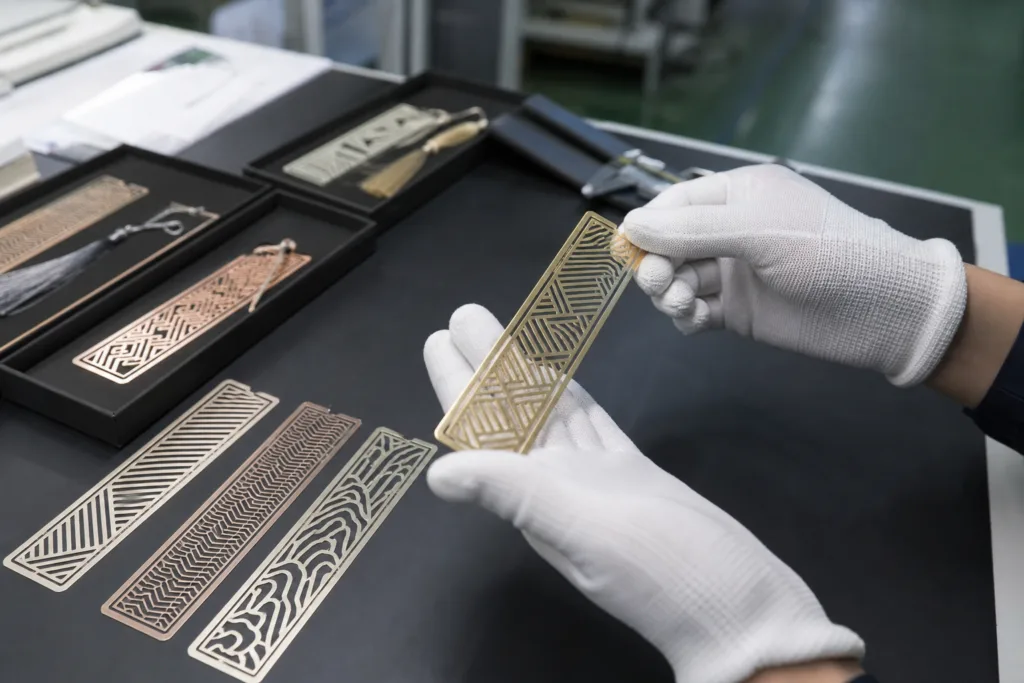
Before placing a bulk order, buyers should prepare a practical brief. The clearer the brief, the smoother the sampling and production process.
- Define target audience and use scenario
- Confirm size, shape, and approximate thickness
- Choose material based on appearance and weight goals
- Specify logo method: engraving, etching, enamel, or printing
- Select finish and plating tone
- Confirm whether tassels, charms, or cards are needed
- Provide clean vector artwork where possible
- Set delivery deadline and target quantity
- Request sample review before mass production
- Clarify packaging and carton packing requirements
When these details are aligned early, the manufacturer can recommend a more suitable structure, process route, and QC plan. That reduces revision loops and helps publishers and schools get a product that fits both budget and purpose.
Conclusion
Custom bookmarks made in metal give publishers and schools a practical way to combine reading utility with lasting brand presence. The right project starts with clear priorities: who will use the bookmark, how premium it should feel, what message it should carry, and what production method supports those goals best. When material, finish, logo method, and packaging are matched carefully to the audience, metal bookmarks can become far more than a giveaway. They can become a durable extension of the reading experience.
FAQs
What is the best material for custom metal bookmarks?
The best material depends on the design goal. Stainless steel is often a strong choice for slim, precise, modern bookmarks with etched detail, while brass suits warmer and more premium-looking projects. Zinc alloy can work for more decorative shapes, and aluminum is useful when lower weight matters. The right choice should balance appearance, rigidity, detail level, and budget.
Can schools add mascots, reading slogans, or student names to metal bookmarks?
Yes, schools can customize metal bookmarks with mascots, logos, mottos, reading quotes, graduation years, club names, and even individual names in some projects. The key is to keep the layout readable and suitable for the bookmark’s narrow format. For variable data such as names, buyers should confirm early whether engraving, serialization, or another marking method is the most efficient approach.
Are metal bookmarks suitable for younger students?
They can be suitable if the design is planned carefully. For younger users, rounded corners, lighter weight, smooth edges, and minimal detachable parts are important. If the product is intended for children, buyers should also review age appropriateness and avoid small removable components that could create safety concerns in school distribution environments.
How long does it usually take to produce custom bookmarks in bulk?
Production time depends on tooling, material, finish, quantity, sampling, and packaging. A project with a custom shape, engraved or etched details, tassels, and branded cards will usually take longer than a basic flat design. Buyers should leave enough time for sample approval and revisions, especially when ordering for book fairs, school events, launches, or graduation deadlines.
What affects the cost of metal bookmarks the most?
The biggest cost factors are usually material, size, thickness, custom shape complexity, decoration method, plating, attachments, packaging, and order volume. Costs can often be managed by simplifying specific variables, such as reducing unnecessary cutouts or using one finish instead of several, rather than removing all premium features from the design.
What should publishers and schools check before approving a sample?
Before approving a sample, buyers should check dimensions, thickness, edge smoothness, flatness, logo clarity, spelling accuracy, plating color, finish consistency, attachment quality, and packaging fit. It is also important to place the sample inside an actual book to confirm that the bookmark feels comfortable in use and matches the intended user experience.